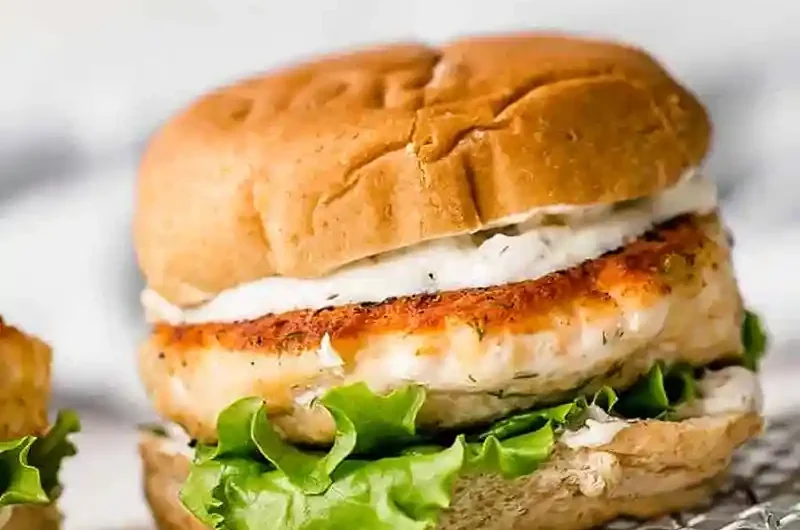
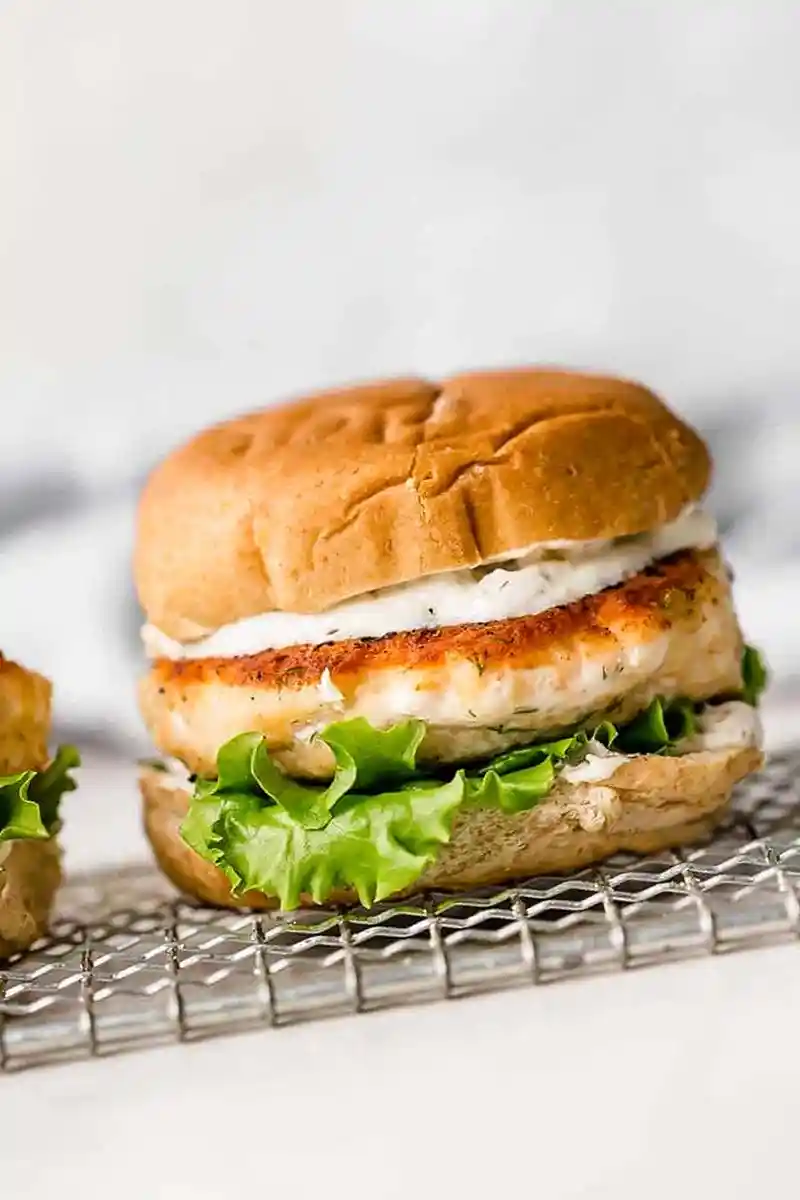
These homemade salmon patties are a nutritious alternative to traditional beef burgers, offering a fresh taste of the ocean. They are paired with a zesty lemon dill sauce that adds a bright, creamy finish to every bite.
List of ingredients
- 1 1/2 lbs salmon fillets – skin and bones removed
- 1/2 cup panko bread crumbs – used as a binder
- 1 large egg – keeps the patty together
- 3 tablespoons fresh dill, chopped – can substitute with fresh parsley
- 1/2 teaspoon salt – enhances natural flavors
- 1/2 teaspoon garlic powder – adds savory depth
- 1 tablespoon lemon juice – provides acidity
- Vegetable oil – for frying (olive oil also works)
- 1/2 cup mayo – base for the sauce (or Greek yogurt)
- 1 garlic clove, minced – for the sauce
- 1 teaspoon fresh dill, chopped – for the sauce (or 1/2 tsp dried)
- 1 teaspoon lemon juice – for the sauce
- 1/2 teaspoon Dijon mustard – for a tangy kick
- Pinch of lemon pepper – for the sauce
step-by-step instructions
- Grind the salmon: Place the salmon fillets in a food processor and pulse about six times for 5 seconds each until lightly ground. Transfer the fish to a large mixing bowl.
- Combine ingredients: Add the panko bread crumbs, egg, chopped dill or parsley, salt, garlic powder, and lemon juice to the bowl. Mix the ingredients until they are fully combined.
- Shape patties: Divide the salmon mixture into 6 equal portions and press them into round patties.
- Cook the burgers: Heat oil in a skillet over medium heat. Once the oil is hot, fry the patties for approximately 4 minutes per side until golden brown and cooked through.
- Prepare the sauce: In a medium bowl, whisk together the mayo, minced garlic, dill, lemon juice, Dijon mustard, and lemon pepper.
- Assemble: Serve the burgers with or without a bun. Top with lettuce or arugula and apply the lemon dill sauce to the bun or directly on the patty.
Pro Tips for Perfect Salmon Patties
Achieve the Right Texture with Controlled Pulsing
Avoid over-processing the salmon in the food processor. Short pulses ensure the burger maintains a meaty texture rather than becoming a smooth paste. This preserves the integrity of the fillet in the final patty.
Use a Meat Thermometer for Precision
To ensure the salmon is cooked safely without drying it out, use an instant-read thermometer. The fish is perfectly cooked when it reaches an internal temperature of 145°F. Overcooking results in a chalky consistency.
Let Patties Rest Before Cooking
Allow the formed patties to sit in the refrigerator for 15 to 30 minutes before frying. This helps the panko absorb the moisture and the egg set. This step prevents the burgers from breaking apart when flipped.
Use a Non-Stick Skillet for Easy Flipping
A heavy-bottomed non-stick pan is the best tool for this recipe. It allows for an even golden crust without the salmon sticking to the surface. Medium heat ensures the outside browns while the inside cooks through.
Ingredient Swaps and Customizations
Gluten-Free Panko Alternatives
Replace the panko with certified gluten-free breadcrumbs or almond meal. The ratio remains the same as the original recipe. This modification makes the patties suitable for those with gluten sensitivities.
Healthier Sauce Base with Greek Yogurt
Substitute the mayo with plain non-fat Greek yogurt for a lower-calorie option. This change adds a tangier profile to the sauce. You may add a small pinch of sugar if the sauce becomes too tart.
Using Fresh Parsley instead of Dill
Fresh flat-leaf parsley is a great substitute if you prefer a milder, grassy flavor over the strong taste of dill. Use the same measurement of 3 tablespoons for the patties and 1 teaspoon for the sauce.
Canned Salmon Substitution
You can use canned salmon by draining the liquid thoroughly before pulsing. Since canned salmon is already cooked, reduce the frying time to 2-3 minutes per side. Be mindful that these patties may be softer than fresh ones.
Creative Serving Suggestions
Fresh Bun Toppings
Top your burger with arugula or romaine lettuce for a peppery crunch. Sliced red cabbage adds a vibrant color and a crisp texture. Fresh tomato slices and pickle slices provide a classic burger contrast.
Low-Carb Serving Ideas
Skip the bun and wrap the salmon patties in large butter lettuce or romaine leaves. This reduces the carbohydrate count and highlights the freshness of the lemon dill sauce. It is an excellent option for keto diets.
Best Side Dishes
Serve these burgers with roasted baby carrots or air-fryer potato wedges for a hearty meal. A broccoli Caesar salad or baked zucchini fries offer a lighter, vegetable-forward accompaniment.
Storage and Meal Prep Guide
Refrigerating Leftover Patties
Store cooked salmon burgers in an airtight glass container in the refrigerator. They will remain fresh for up to 3 days. Ensure the burgers have cooled completely before sealing the container to avoid sogginess.
Freezing Raw or Cooked Patties
Wrap raw patties individually in plastic wrap and store them in a freezer-safe bag for up to 3 months. Thaw them in the fridge overnight before cooking. Cooked patties can also be frozen but may lose some texture upon reheating.
Storing the Lemon Dill Sauce
The sauce can be made in advance and kept in a sealed jar in the refrigerator. It remains stable for 10 to 14 days due to the acidity of the lemon juice. Stir or shake the sauce well before serving.
Best Reheating Methods
Reheat patties in a skillet over medium heat with a small amount of oil to restore the crisp exterior. Avoid the microwave, as it can make the salmon rubbery. Heat until the center is warm.
Kitchen Equipment Recommendations
Food Processor for Efficient Grinding
A standard food processor is ideal for achieving a consistent grind. If you do not have one, a blender can be used, but only use very short pulses. This prevents the fish from becoming too fine.
Digital Instant-Read Thermometer
A digital thermometer is the most reliable way to check for doneness. It removes the guesswork and ensures the fish is safe to eat. Probe the thickest part of the patty for accuracy.
Heavy-Duty Non-Stick Skillet
A 12-inch non-stick skillet provides enough room to cook the patties without crowding. Crowding the pan lowers the oil temperature, which can lead to steaming rather than searing. Cook in batches if necessary.
Stainless Steel Mixing Bowl
A large stainless steel bowl is best for mixing the salmon and binders. The smooth surface makes it easy to scrape out all the mixture. It also keeps the ingredients cool during the mixing process.
Troubleshooting and FAQs
Why are my salmon burgers falling apart?
This usually happens if the mixture is too wet or the egg was not fully incorporated. Adding an extra tablespoon of panko can help bind the ingredients. Also, avoid overmixing the salmon, as this can break down the proteins.
How to prevent salmon from sticking to the pan?
Heat the oil until it shimmers before adding the patties to the skillet. Do not flip the burgers too early; wait until a golden-brown crust has formed. This natural sear helps the patty release from the pan.
Can I bake these instead of frying?
Yes, you can bake them at 400°F (200°C) on a lined baking sheet for 12-15 minutes. This is a healthier alternative that uses less oil. The exterior will be less crisp than pan-frying but still delicious.
What is the best type of salmon to use?
Wild-caught salmon is recommended for a firmer texture and more robust flavor. Sockeye or King salmon are excellent choices for burgers. Ensure the fillets are thawed and free of bones before processing.
How long does the sauce stay fresh?
The sauce lasts between 10 and 14 days when stored in an airtight container in the fridge. The lemon juice acts as a natural preservative. If the sauce separates, simply whisk it back together.
Nutritional Balance and Diet Tips
Increasing Omega-3 Intake
Salmon is naturally rich in Omega-3 fatty acids, which support heart health. By using fresh fillets, you maximize these nutrients. Pairing the burger with avocado further increases the healthy fat content.
Balancing Macronutrients
To create a balanced meal, pair the protein-rich burger with a complex carbohydrate like quinoa or a side of roasted vegetables. The panko and egg provide a small amount of carbs and fats to keep you satiated.
Reducing Sodium Content
You can lower the sodium by reducing the salt in the patty mixture. Use more lemon juice or a pinch of smoked paprika to maintain flavor without adding extra salt. Check the sodium levels of your store-bought mayo.
Print
Healthy Pan-Seared Salmon Burgers with Lemon Dill Sauce
- Total Time: 30 minutes
- Yield: 6 patties 1x
- Diet: General
Description
Flavorful salmon burgers are topped with a homemade lemon dill sauce. You can serve these salmon burgers plain or between 2 buns.
Ingredients
- 1 1/2 lbs salmon fillets (skin and bones removed)
- 1/2 cup panko bread crumbs
- 1 large egg
- 3 tablespoons fresh dill (chopped)
- 1/2 teaspoon salt
- 1/2 teaspoon garlic powder
- 1 tablespoon lemon juice
- vegetable oil (for frying)
- 1/2 cup mayo
- 1 garlic clove (minced)
- 1 teaspoon fresh dill (chopped)
- 1 teaspoon lemon juice
- 1/2 teaspoon Dijon mustard
- pinch lemon pepper
Instructions
- Pulse: In the bowl of a food processor add the salmon and pulse until salmon is lightly ground. About 6, 5 second pulses.
- Mix: Transfer the salmon to a large bowl. Add the panko bread crumbs, egg, fresh dill (or parsley), salt, garlic powder, and lemon juice to the salmon. Mix everything to combine.
- Form: Form the mixture into 6 equal sized patties.
- Fry: Heat the oil in a skillet over medium heat. Once oil is hot add the patties to the skillet and fry for about 4 minutes on each side, or until cooked through and golden and slightly crisp.
- Sauce: In a medium size bowl whisk together the mayo, garlic, dill, lemon juice, Dijon mustard, and lemon pepper.
Notes
You may need to cook your salmon patties in batches, depending on how large your skillet is. Store the lemon dill sauce in an airtight container in the refrigerator for 10-14 days. Store leftover salmon burgers in an airtight container in the refrigerator.
- Prep Time: 10 minutes
- Cook Time: 20 minutes
- Category: Main Course
- Method: Frying
- Cuisine: American
Nutrition
- Serving Size: 1 patty
- Calories: 324 kcal
- Sugar: 1 g
- Sodium: 418 mg
- Fat: 22 g
- Saturated Fat: 4 g
- Unsaturated Fat: 18 g
- Trans Fat: 0 g
- Carbohydrates: 4 g
- Fiber: 1 g
- Protein: 25 g
- Cholesterol: 105 mg
Keywords: salmon burgers, lemon dill sauce, seafood patties, healthy burgers