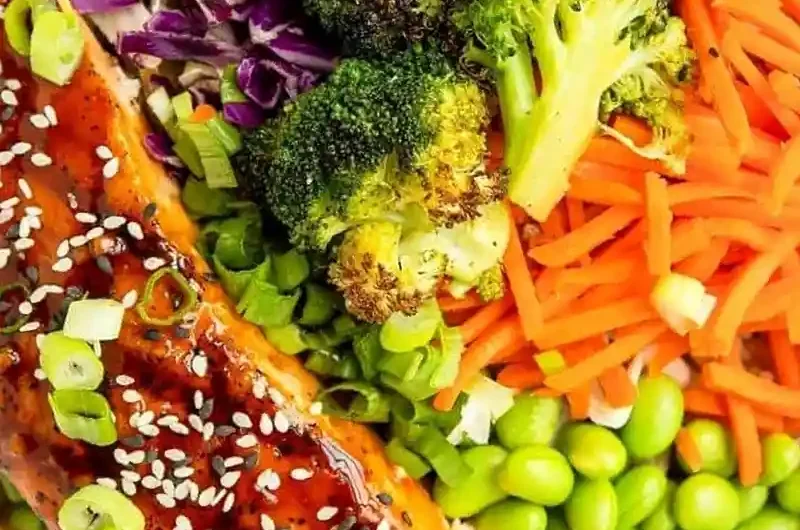
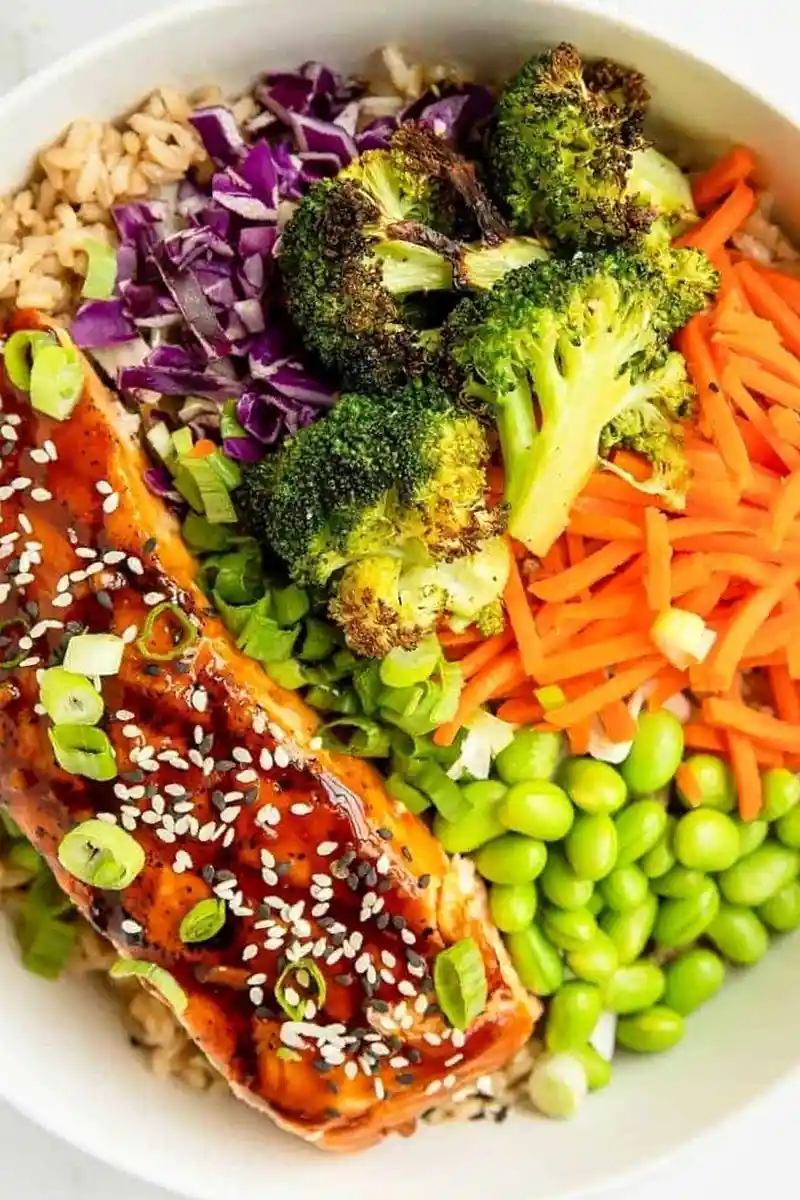
Create a nutrient-dense meal with these sheet pan teriyaki salmon bowls featuring a homemade sugar-free sauce. This recipe combines roasted broccoli and fresh vegetables over a bed of hearty brown rice for a complete dinner.
List of ingredients
- 2 medium heads of broccoli – cut into bite-sized florets.
- 4 salmon filets (4 to 6 ounces each) – skin-on preferred for texture.
- 2 cups cooked brown rice – used as the base of the bowl.
- 1 cup shelled edamame – fresh or frozen, steamed until tender.
- 1 cup grated carrot – provides freshness and crunch.
- 1 tsp toasted sesame seeds – used for garnish.
- 1 to 2 handfuls of shredded cabbage – adds color and texture.
- 2 green onions – ends trimmed and thinly sliced.
- 2 tsp arrowroot starch, cornstarch, or tapioca flour – for thickening the sauce.
- 1/4 cup cold water – used to create the starch slurry.
- 1/4 cup low-sodium soy sauce – the base for the savory flavor.
- 1/4 cup fresh orange juice – naturally sweetens the glaze.
- 1 tbsp rice vinegar – adds a necessary acidic balance.
- 1 tbsp honey – provides a thick, glossy sweetness.
- 1/2 tsp sesame oil – adds a toasted, nutty aroma.
- 1/2 tsp freshly grated ginger – very finely grated for smooth integration.
- 1 large garlic clove – minced finely.
step-by-step instructions
- Prepare the Oven: Preheat your oven to 450°F and line a large baking sheet with parchment paper or aluminum foil to prevent sticking and ease cleanup.
- Roast the Broccoli: Place broccoli florets on the baking sheet and toss them with 1 Tablespoon of olive oil, salt, and pepper. Roast in the oven for 15 to 20 minutes until the edges are crispy.
- Prep the Salmon: While broccoli roasts, pat the salmon filets completely dry with paper towels and season both sides with salt and pepper.
- Make the Slurry: In a small bowl, whisk together the cold water and your chosen starch (arrowroot, cornstarch, or tapioca) until smooth. Set this mixture aside.
- Simmer the Sauce: Heat a small saucepan over medium-high heat. Add soy sauce, orange juice, rice vinegar, honey, sesame oil, ginger, and garlic, then bring the mixture to a quick boil. Reduce the heat to medium-low and slowly whisk in the starch slurry. Simmer for 3 to 4 minutes, whisking constantly, until the sauce thickens and becomes glossy. Remove from heat.
- Arrange the Sheet Pan: Remove the roasted broccoli from the oven and push the florets to one side of the tray. Place the seasoned salmon filets skin-side down on the empty side of the pan.
- Glaze and Bake: Brush approximately 1 Tablespoon of the prepared teriyaki sauce over the top of each salmon filet. Return the tray to the oven and bake for 8 to 12 minutes. Bake for 8 minutes for medium doneness or 12 minutes for well-done.
- Prepare the Base: While the salmon finishes, heat the shelled edamame and brown rice according to the specific package directions.
- Assemble the Bowls: Start with a base of warm brown rice in each bowl. Arrange the grated carrots, sliced green onions, shredded cabbage, and warmed edamame around the sides. Place the roasted salmon and broccoli on top, and finish with an extra drizzle of sauce and a sprinkle of sesame seeds.
Pro Tips for the Perfect Roast
Dry the Salmon Thoroughly
Always use a paper towel to remove excess moisture from the surface of the fish. This allows the seasoning to stick better and ensures the salmon develops a slightly crisp exterior rather than steaming in its own juices.
Proper Broccoli Placement
Avoid overcrowding the broccoli florets on the baking sheet. If the vegetables are piled on top of each other, they will release steam, resulting in mushy broccoli instead of the desired charred, crispy edges.
Using Cold Water for Slurries
The starch must be dissolved in cold water before being added to the hot sauce. Using warm or hot water will cause the starch to clump immediately, creating grainy lumps in your teriyaki glaze.
Avoid Overcooking the Fish
Salmon continues to cook for a few minutes after being removed from the oven due to carry-over heat. Remove the fish when it is just barely opaque in the center to ensure it remains moist and flakey.
Ingredient Substitutions and Alternatives
Alternative Grains and Bases
While brown rice provides a hearty whole-grain option, you can substitute it with quinoa for more protein or jasmine rice for a softer texture. For a low-carb version, steamed cauliflower rice works exceptionally well.
Replacing the Sweetener
If you prefer a different flavor profile, substitute the honey with maple syrup or coconut sugar. These alternatives maintain the viscosity of the sauce while altering the subtle sweetness.
Gluten-Free Soy Alternatives
To make this recipe strictly gluten-free, replace the low-sodium soy sauce with tamari or coconut aminos. Coconut aminos provide a slightly sweeter taste and are a great soy-free option.
Citrus Juice Swaps
If you do not have orange juice, pineapple juice is a fantastic substitute that adds a tropical flare. You can also use a mix of lemon juice and a bit more honey to achieve a brighter, more acidic glaze.
Ginger and Garlic Powder Options
Fresh aromatics are ideal, but you can use ground versions if needed. Replace the fresh garlic and ginger with 1 teaspoon of garlic powder and 1 teaspoon of ground ginger powder.
Customizing Your Buddha Bowl
Adding Extra Vegetables
Increase the nutritional value by adding steamed snap peas, shredded purple cabbage, or sliced cucumbers. Sautéed spinach or roasted sweet potato cubes also complement the teriyaki flavors.
Different Protein Options
While salmon is the star, this sauce works well with other proteins. You can use firm tofu cubes or shrimp, though you will need to adjust the roasting time to avoid overcooking them.
Nut and Seed Toppings
Enhance the crunch of the bowl by adding slivered almonds, crushed cashews, or toasted pumpkin seeds. These add a layer of healthy fats and vary the texture of the soft rice and fish.
Alternative Sauce Variations
For a spicier version, whisk in a teaspoon of Sriracha or red pepper flakes into the sauce. Adding a drop of liquid smoke can provide a deeper, grilled flavor even when using a standard oven.
Serving and Presentation Ideas
Creating a Rainbow Bowl
Arrange the ingredients by color to make the dish visually appealing. Place the orange carrots, green edamame, purple cabbage, and green broccoli in separate quadrants around the salmon.
Adding Creamy Elements
A slice of ripe avocado or a dollop of Greek yogurt mixed with lime juice adds a creamy contrast to the salty-sweet glaze. This helps balance the richness of the salmon.
Using a Rice Cooker for Efficiency
To save stovetop space, prepare the brown rice in a rice cooker. This ensures consistent texture and frees up your burners for the sauce and edamame.
Storing and Reheating Instructions
Refrigerator Storage Tips
Store the components in airtight glass containers. It is often best to keep the sauce in a separate small container and drizzle it over the bowl just before reheating to maintain the sauce’s consistency.
Best Reheating Methods
The microwave is the fastest method; heat the bowls for 1 to 3 minutes on medium power. For better texture, reheat the salmon and broccoli in a toaster oven or air fryer for 3 to 5 minutes.
Freezing Considerations
While the rice and edamame freeze well, roasted salmon can become dry and rubbery upon thawing. It is recommended to eat these bowls within 4 days from the date of preparation.
Meal Prep Strategy
Batch Cooking the Rice
Cook a large batch of brown rice at the start of the week. Portion the rice into containers immediately after cooling to keep it fresh and ready for assembly.
Preparing Veggies in Advance
Grate the carrots and shred the cabbage several days ahead of time. Store them in sealed containers with a damp paper towel to maintain their crispness.
Dividing Sauce for Portions
Make a double batch of the teriyaki sauce and store it in a squeeze bottle. This allows you to use the extra sauce for other stir-fry meals throughout the week.
Troubleshooting Common Issues
Fixing a Sauce that is Too Thin
If the sauce does not thicken enough, mix an additional teaspoon of starch with a tablespoon of cold water. Whisk this mixture into the simmering sauce for one more minute.
Preventing Sticking on the Pan
If your salmon sticks to the pan, ensure you are using high-quality parchment paper or grease the foil with a light coating of oil. Lift the filets gently with a wide fish spatula.
Dealing with Overcooked Salmon
If the salmon becomes slightly too dry, add an extra drizzle of the teriyaki sauce or a squeeze of fresh lime. The extra moisture helps mask the dryness of the overcooked protein.
Frequently Asked Questions
Can I use frozen salmon?
Yes, frozen salmon works perfectly. Thaw it overnight in the refrigerator, or place the sealed vacuum bag in a cold water bath for about 30 minutes before patting it dry.
How can you tell salmon is done cooking in the oven?
The salmon is done when it flakes easily with a fork and the internal temperature reaches 125-130°F for medium. It should be light pink in the center and opaque on the outside.
Is this recipe gluten-free?
The recipe is naturally gluten-free if you use brown rice and a gluten-free soy substitute like tamari or coconut aminos. Ensure your starch choice (arrowroot or tapioca) is also certified gluten-free.
Can I use quinoa?
Yes, cooked quinoa is an excellent substitute for brown rice. It adds a slightly nutty flavor and increases the overall protein content of the bowl.
What temperature should I oven-bake salmon?
The ideal temperature for this sheet pan method is 450°F. This high heat ensures the broccoli roasts quickly and the salmon develops a nice glaze without overcooking the interior.
Print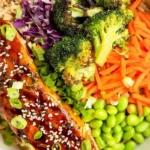
Healthy Teriyaki Salmon Buddha Bowls
- Total Time: 30 minutes
- Yield: 4 servings 1x
- Diet: Gluten-free, Paleo
Description
Quick and easy sheet pan teriyaki salmon buddha bowl recipe coated in a homemade, sugar-free teriyaki sauce and served with edamame, brown rice, and crispy roasted broccoli. The best under-30-minute weeknight dinner or meal prep!
Ingredients
- 2 medium heads of broccoli, cut into florets
- 4 (4 – 6 ounce) salmon filets
- 2 cups cooked brown rice
- 1 cup shelled edamame, fresh or frozen
- 1 cup grated carrot
- 1 tsp toasted sesame seeds
- 1 – 2 handfuls of shredded cabbage
- 2 green onions, ends trimmed and thinly sliced
- 2 tsp arrowroot starch, cornstarch, or tapioca flour
- 1/4 cup cold water
- 1/4 cup low-sodium soy sauce
- 1/4 cup fresh orange juice
- 1 tbsp rice vinegar
- 1 tbsp honey
- 1/2 tsp sesame oil
- 1/2 tsp freshly grated ginger
- 1 large garlic clove, minced
- 1 tbsp olive oil
Instructions
- Step 1: Preheat your oven to 450°F and line a baking sheet with parchment paper or aluminum foil.
- Step 2: Add your broccoli florets to the baking sheet with 1 Tablespoon of olive oil. Season with salt and pepper and roast for 15 – 20 minutes.
- Step 3: Pat the salmon filets dry with a paper towel, season with salt and pepper.
- Step 4: In a small bowl, whisk together the cold water and arrowroot starch. Set to the side.
- Step 5: Meanwhile, heat a small saucepan over medium-high heat and add the low-sodium soy sauce, fresh orange juice, rice wine vinegar, honey, sesame oil, ginger, and garlic. Bring sauce to a quick boil. Once boiling, reduce heat to medium-low and whisk in the arrowroot starch water. Simmer for 3 to 4 minutes, making sure to continually whisk until the sauce has thickened. When finished, remove from the heat and set it to the side.
- Step 6: Once the broccoli is ready, remove the tray from the oven and push the broccoli on one half of the tray to make room for the salmon. Avoid broccoli overlapping and on top of each other. Place the seasoned salmon filets skin-side down on the baking tray and carefully brush about 1 Tablespoon of teriyaki sauce on top of each piece of salmon. Make sure they are evenly coated.
- Step 7: Place the baking sheet back in the oven for 8 – 12 minutes, depending on how well done you like your salmon. For medium, only bake for 8 minutes, and for well-done, bake for closer to 12 minutes.
- Step 8: Meanwhile, heat the edamame and brown rice according to the package direction.
- Step 9: When the salmon is done, assemble your bowls with a base of brown rice. Add the grated carrot, sliced green onion, shredded red cabbage, and warmed edamame.
Notes
Store leftovers in airtight containers in the refrigerator for up to 4 days. Reheat in the microwave for 1-3 minutes. To prevent the sauce from clumping, ensure the water used to dissolve the starch is cold.
- Prep Time: 5 minutes
- Cook Time: 25 minutes
- Category: Lunch & Dinner
- Method: Baking
- Cuisine: Asian
Nutrition
- Serving Size: 1 bowl
- Calories: 345 kcal
- Sugar: 8 g
- Sodium: 642 mg
- Fat: 9 g
- Saturated Fat: 1 g
- Unsaturated Fat: 7 g
- Trans Fat: 1 g
- Carbohydrates: 29 g
- Fiber: 5 g
- Protein: 26 g
- Cholesterol: 47 mg
Keywords: teriyaki salmon, buddha bowl, gluten-free, healthy dinner, sheet pan meal, meal prep, Asian-inspired