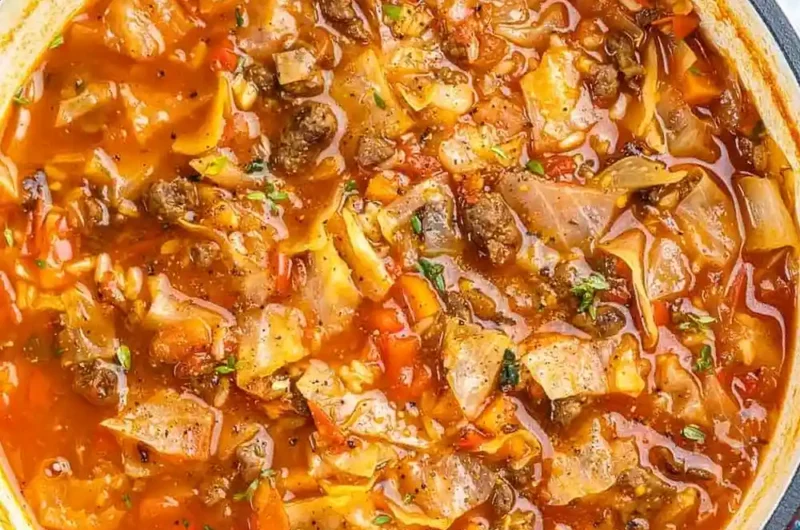
This nutrient-dense soup provides all the flavors of traditional stuffed cabbage rolls without the tedious rolling process. It is a practical one-pot meal that serves as a complete dinner with protein, grains, and vegetables.
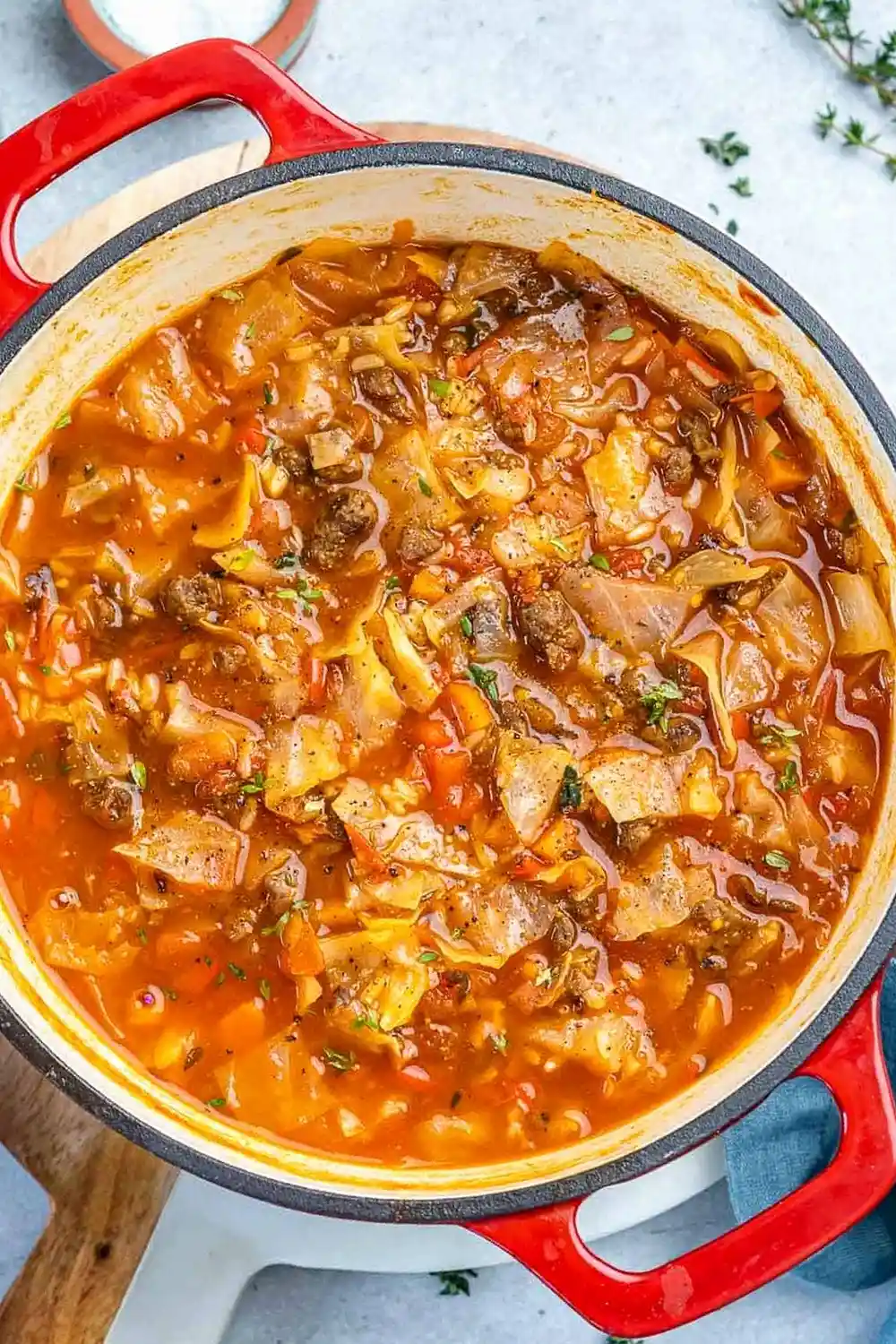
List of ingredients
- 1 tbsp olive oil – used for searing the beef and sautéing vegetables.
- 1 lb lean ground beef – provides the main protein source.
- Kosher salt and ground pepper – added to taste for seasoning.
- 1 medium yellow onion – diced finely for a sweet, aromatic base.
- 2 cloves garlic – minced to add pungent flavor.
- 2 medium carrots – quartered and sliced for texture and sweetness.
- 1 red bell pepper – seeded and diced for color and flavor.
- A few spears of fresh thyme – leaves picked for earthy notes.
- 1 small green cabbage – chopped into about 6-7 cups.
- 4 cups low-sodium beef broth – forms the savory liquid base.
- 3 x 8 oz cans crushed tomatoes – adds thickness and acidity.
- 1/2 cup brown rice – uncooked, or quinoa for heartiness.
- 1 bay leaf – adds a subtle herbal depth during simmering.
- 1 tbsp honey – balances the acidity of the crushed tomatoes.
step-by-step instructions
- Brown the meat: Heat the olive oil in a large dutch oven pot over medium heat. Add ground beef and cook, mincing the meat with a wooden spatula as it browns. Season with salt and pepper.
- Sauté the aromatics: Stir in the diced onion, minced garlic, sliced carrots, diced bell pepper, and fresh thyme. Cook for a few more minutes until the vegetables begin to soften.
- Deglaze the pot: Pour in 1/2 cup of the beef broth to deglaze the pot, stirring thoroughly to scrape up all the browned bits from the bottom.
- Combine ingredients: Add the remaining beef broth, crushed tomatoes, uncooked brown rice, chopped cabbage, bay leaf, and honey. Stir well to combine everything.
- Simmer: Bring the mixture to a boil, then reduce the heat. Simmer for 35-40 minutes, or until the rice is fully cooked and the cabbage is tender.
- Final touch: Remove and discard the bay leaf before serving the soup hot.
Cooking Optimization Tips
Achieving a Proper Meat Sear
Use medium-high heat to brown the ground beef effectively. Avoid overcrowding the pot to ensure the meat sears rather than steams, which develops a deeper flavor profile through the Maillard reaction. Break the meat into small crumbles with a spatula for a consistent texture throughout the soup.
The Importance of Deglazing
Deglazing occurs when you add liquid to a hot pan to loosen the browned food particles, known as fond, stuck to the bottom. These particles contain concentrated flavor. Scraping them into the broth ensures a richer taste and prevents burnt bits from floating in the finished soup.
Uniform Vegetable Cutting
Dice the carrots, onions, and bell peppers into similarly sized pieces. This ensures that all vegetables cook at the same rate, preventing some from becoming mushy while others remain raw. A consistent cut also creates a more balanced mouthfeel in every spoonful.
Ingredient Substitutions
Alternative Protein Options
If you prefer a lighter meat, substitute the ground beef with ground turkey or ground chicken. When using poultry, swap the beef broth for chicken broth to maintain a cohesive flavor profile. For a plant-based version, use a mixture of lentils and minced mushrooms.
Grain and Seed Variations
While brown rice is traditional, you can use white jasmine rice for a softer texture, though it cooks faster. Quinoa is an excellent gluten-free alternative that adds more protein. If using a very fast-cooking grain, add it during the last 15 minutes of simmering to avoid overcooking.
Broth Alternatives
Low-sodium beef broth is recommended to control salt levels, but beef bouillon mixed with hot water works well. Vegetable broth can be used for a lighter taste. Always ensure the broth is low-sodium to prevent the soup from becoming overly salty as it reduces.
Tomato Product Swaps
Crushed tomatoes provide a thick, chunky consistency. If you prefer a smoother broth, use tomato purée. For a chunkier texture, use diced tomatoes, but you may need to add a tablespoon of tomato paste to maintain the body of the soup.
Herbal Adjustments
If fresh thyme is unavailable, use dried thyme in a 1:3 ratio (one teaspoon of dried thyme for every tablespoon of fresh). Dried oregano or a pinch of paprika can also be added to enhance the savory notes of the beef.
Bell Pepper Choices
Red bell peppers provide the most sweetness, but green or yellow peppers are suitable replacements. Green peppers offer a more bitter, earthy flavor that complements the cabbage well, while yellow peppers are a mild middle ground.
Serving and Pairing Ideas
Fresh Garnish Suggestions
Top each bowl with a dollop of Greek yogurt or sour cream to add a creamy element that cuts through the acidity of the tomatoes. Freshly chopped parsley or sliced green onions provide a bright, fresh contrast to the simmered vegetables.
Recommended Side Dishes
Serve this soup with a side of crusty sourdough bread or garlic toast for dipping. A simple side salad with a lemon vinaigrette can provide a crisp, refreshing balance to the hearty and warm nature of the cabbage soup.
Storage and Preservation
Refrigeration Guidelines
Store leftovers in airtight glass or plastic containers in the refrigerator. This soup remains fresh and safe to eat for 2 to 4 days. Keep the containers sealed to prevent the soup from absorbing other odors in the fridge.
Freezing Method
Allow the soup to cool completely to room temperature before transferring it to freezer-safe bags or containers. Leave a small amount of headspace at the top of the container to allow for expansion as the liquid freezes. The soup can be stored in the freezer for up to three months.
Proper Thawing Process
Thaw frozen soup overnight in the refrigerator for the safest results. Alternatively, you can thaw it using the defrost setting on a microwave. Avoid thawing the soup on the counter at room temperature to prevent bacterial growth.
Reheating Techniques
Stovetop Reheating
Place the soup in a pot over medium-low heat. Since the rice and cabbage continue to absorb liquid during storage, you will likely need to add a splash of water or beef broth to restore the original consistency.
Microwave Reheating
Transfer the soup to a microwave-safe bowl and cover it with a lid or damp paper towel. Heat in short 2-minute intervals, stirring in between to ensure the heat is distributed evenly and the rice is heated through.
Managing Liquid Absorption
Grains like brown rice act as sponges and will thicken the soup significantly as it sits. Always check the thickness before reheating and be prepared to thin the soup with a small amount of liquid to avoid a porridge-like consistency.
Slow Cooker Adaptation
The Searing Phase
Do not put raw ground beef directly into the slow cooker. Brown the meat and sauté the aromatics in a skillet first as described in the stove-top instructions. This step is essential for developing the savory flavors that the slow cooker cannot produce.
Slow Cooker Timing
After browning the meat and vegetables, transfer the mixture to the slow cooker and add all other ingredients. Cover and cook on the LOW setting for 6 to 7 hours. This slow simmer allows the cabbage to become incredibly tender.
Controlling Grain Texture
Brown rice can sometimes become too soft in a slow cooker. If you prefer a firmer grain, consider cooking the rice separately and stirring it into the soup during the last 30 minutes of the slow cooker cycle.
Troubleshooting Common Issues
Adjusting a Thick Consistency
If the soup becomes too thick due to the rice absorbing the broth, stir in additional beef broth or water one-quarter cup at a time. Continue adding liquid until you reach your desired soup consistency.
Balancing Excessive Acidity
Depending on the brand of crushed tomatoes, the soup may taste too tart. Add an extra teaspoon of honey or a pinch of brown sugar to neutralize the acidity and bring out the sweetness of the carrots and onions.
Preventing Mushy Cabbage
To keep the cabbage from disintegrating, avoid over-simmering. Once the cabbage is tender but still holds its shape, remove the pot from the heat immediately. Overcooking can turn the cabbage into a puree.
Frequently Asked Questions
How long does cabbage roll soup last in the fridge?
When stored in an airtight container, this soup stays fresh for 2 to 4 days. Ensure it is cooled quickly before refrigerating to maintain food safety.
Can I freeze cabbage roll soup?
Yes, it freezes well for up to three months. Make sure to cool it completely first and allow for expansion in the container.
Can I make this recipe vegetarian?
Yes, you can replace the ground beef with cooked lentils or crumbled tempeh and use vegetable broth instead of beef broth.
Why is my soup too salty?
This usually happens if the beef broth used was not low-sodium or if too much salt was added during the browning phase. You can dilute the soup with a bit of water or add more crushed tomatoes to balance the salt.
Can I use white rice instead of brown rice?
Yes, white rice works well but cooks much faster. Reduce the simmering time or add the white rice toward the end of the cooking process to prevent it from becoming mushy.
Print
Hearty Cabbage Roll Soup
- Total Time: 1 hour 5 minutes
- Yield: 8 servings 1x
- Diet: Gluten-free, Dairy-free
Description
Cabbage Roll Soup turns classic cabbage rolls into a hearty, healthy soup that the whole family will love. This soup is packed with flavorful veggies and comforting broth. It’s a perfect weeknight dinner that also happens to be gluten and dairy-free.
Ingredients
- 1 tbsp olive oil
- 1 lb lean ground beef
- Kosher salt and ground pepper, to taste
- 1 medium yellow onion, diced finely
- 2 cloves garlic, minced
- 2 medium carrots, quartered and sliced
- 1 red bell pepper, seeded and diced
- A few spears of fresh thyme, leaves picked
- 1 small green cabbage, chopped (about 6–7 cups)
- 4 cups low-sodium beef broth
- 3 x 8 oz cans crushed tomatoes
- 1/2 cup brown rice, uncooked, or quinoa
- 1 bay leaf
- 1 tbsp honey
Instructions
- Step 1: Heat the oil in a large dutch oven pot over medium heat.
- Step 2: Add ground beef and cook, mincing the meat with a wooden spatula as it browns. Season with salt and pepper.
- Step 3: Stir in the onion, garlic, carrots, pepper and thyme, and cook for a few more minutes, until veggies start to soften.
- Step 4: Add 1/2 cup of broth to deglaze the pot, stirring all the way through the bottom.
- Step 5: Add the remaining ingredients and stir well to combine.
- Step 6: Bring to a boil then reduce heat and simmer for 35-40 minutes, or until the rice is done and the cabbage is tender.
- Step 7: Remove and discard the bay leaf and serve soup hot!
Notes
Use lean ground beef to keep the soup low in fat; ground turkey is a great alternative. You can use orange or yellow bell peppers instead of red. Dried thyme can be substituted for fresh. Brown rice can be replaced with other rice varieties or quinoa. For storage, keep in the fridge for 2-4 days or freeze for up to 3 months after cooling completely.
- Prep Time: 10 minutes
- Cook Time: 55 minutes
- Category: Soup
- Method: Simmering
- Cuisine: American
Nutrition
- Serving Size: 2 cups
- Calories: 162 kcal
- Sugar: 7 g
- Sodium: 322 mg
- Fat: 5 g
- Saturated Fat: 2 g
- Unsaturated Fat: 2 g
- Trans Fat: 1 g
- Carbohydrates: 14 g
- Fiber: 3 g
- Protein: 16 g
- Cholesterol: 35 mg
Keywords: cabbage roll soup, hearty soup, gluten-free soup, dairy-free soup, healthy dinner, unstuffed cabbage soup