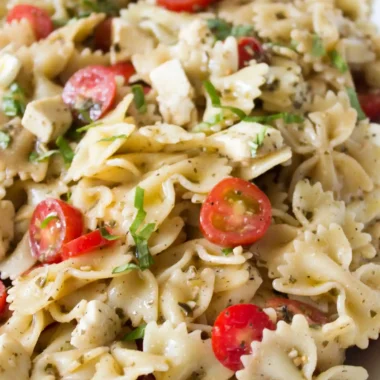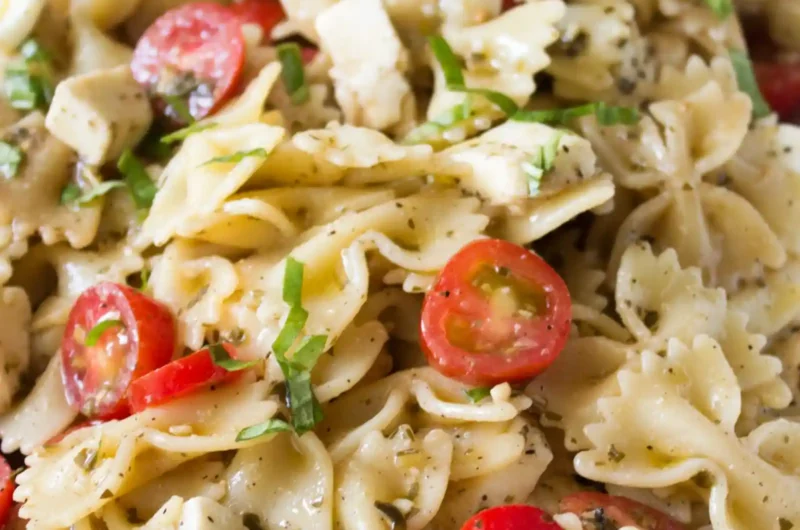
This Caprese Pasta Salad combines the fresh elements of a traditional Italian salad with a hearty base of pasta. It serves as an efficient side dish for gatherings or a light main course.
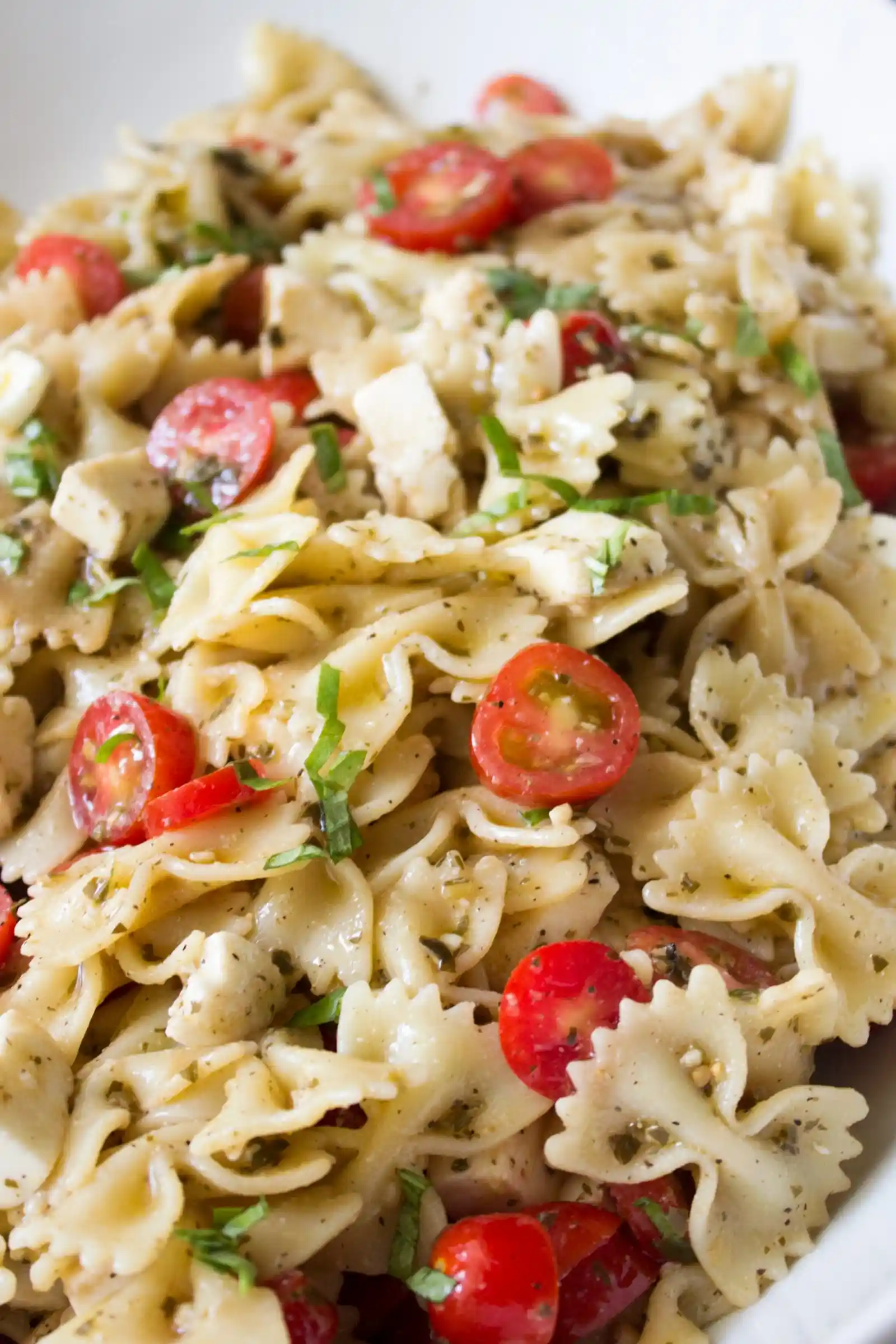
List of ingredients
- 16 ounce box of pasta (bowties recommended) – provides the hearty base.
- 1 pint cherry tomatoes (cut into 1/4 inch slices) – adds acidity and freshness.
- 8 ounce mozzarella cheese ball (sliced into 1/2 inch pieces) – provides a creamy texture.
- 1/4 cup store-bought pesto – adds concentrated basil and garlic flavor.
- 1/4 cup extra virgin olive oil – emulsifies the dressing.
- 2 tbsp balsamic vinegar – provides a tangy contrast.
- 1 tsp garlic powder – enhances the savory notes.
- 1 tsp salt (plus extra for pasta water) – balances all flavors.
- 1 tsp black pepper – adds a mild spice.
- 1 tbsp fresh chopped basil for garnish (optional) – adds a final aromatic touch.
step-by-step instructions
- Boil Pasta: Fill a large pot with water and 1 tbsp of salt, then boil the pasta according to the package directions.
- Prepare Vegetables and Cheese: While the pasta is cooking, slice the cherry tomatoes into 1/4 inch slices and cut the mozzarella into 1/2 inch cubes.
- Cool the Pasta: Once the pasta is finished, drain it and rinse it immediately with cold water to prevent the mozzarella from melting.
- Combine Ingredients: Add the cooled pasta to a mixing bowl along with the tomatoes, mozzarella, pesto, balsamic vinegar, olive oil, salt, pepper, and garlic powder.
- Toss and Serve: Toss all components together and serve the salad at room temperature or refrigerated.
Pasta Selection and Preparation
Benefits of Bowtie Pasta for Sauce Distribution
Bowtie pasta, also known as farfalle, is ideal for this salad due to its shape. The central pinch captures pesto and balsamic vinegar more effectively than smooth pasta. This ensures every bite has a consistent flavor profile.
Using Rotini for Maximum Pesto Grip
Rotini or fusilli are excellent alternatives if bowties are unavailable. The spiral structure creates grooves that hold onto the oil and pesto. This results in a higher concentration of dressing per piece of pasta.
Why Penne Works for Heartier Salads
Penne is a practical choice for those who prefer a more substantial feel. The hollow center allows some of the dressing to seep inside the pasta. This provides a burst of flavor when the pasta is bitten into.
Achieving the Perfect Al Dente Texture
Cook the pasta exactly to the package instructions or one minute less. Pasta that is overcooked becomes mushy when tossed with the dressing. Al dente pasta maintains its structure and resists breaking during the mixing process.
The Role of Cold Water Rinsing
Rinsing the pasta with cold water is a critical step for cold salads. It stops the cooking process immediately to prevent overcooking. More importantly, it lowers the temperature so the mozzarella cheese does not melt upon contact.
Optimal Ingredient Selection
Selecting Ripe Cherry Tomatoes for Balanced Acidity
Choose cherry tomatoes that are firm to the touch and bright red. Overly soft tomatoes can release too much water, making the salad runny. Uniformly sized tomatoes ensure a consistent ratio of ingredients in every spoonful.
Preference for Fresh Mozzarella Over Shredded
Using a mozzarella ball provides a superior texture compared to shredded cheese. Fresh mozzarella maintains its shape and offers a mild, creamy contrast to the acidic balsamic. Cut the pieces into 1/2 inch cubes for optimal bite size.
Identifying Quality Store-Bought Pesto
Look for a pesto that lists basil and olive oil as the primary ingredients. Avoid brands with high amounts of fillers or artificial preservatives. A vibrant green color usually indicates a fresher product with a more potent taste.
Choosing Extra Virgin Olive Oil for Flavor
Extra virgin olive oil is preferred for its distinct peppery and fruity notes. It provides a rich mouthfeel and helps emulsify the balsamic vinegar and pesto. Use a high-quality oil to avoid a greasy aftertaste.
The Difference Between Balsamic Vinegar and Glaze
This recipe uses balsamic vinegar for a light, tangy acidity. Balsamic glaze is much thicker and sweeter, which can overpower the pesto. If using a glaze, reduce the amount to avoid making the salad too sweet.
Customizing the Taste Profile
Adding Fresh Basil Leaves for Aroma
While pesto provides the base flavor, adding whole or torn fresh basil leaves increases the aromatic quality. Fresh basil adds a bright, herbal note that complements the mozzarella. Chop the basil just before serving to prevent oxidation.
Incorporating Red Pepper Flakes for Heat
For those who prefer a spicy kick, adding a pinch of red pepper flakes is effective. The heat cuts through the richness of the cheese and oil. Stir them in with the garlic powder for even distribution.
Using Fresh Garlic Instead of Powder
Substituting garlic powder with minced fresh garlic provides a sharper, more pungent flavor. Press the garlic through a garlic press to ensure it integrates smoothly into the dressing. Let the fresh garlic sit in the oil for 10 minutes before mixing.
Balancing Acidity with Lemon Zest
Adding a teaspoon of fresh lemon zest can brighten the overall flavor profile. The citrus notes enhance the freshness of the tomatoes and basil. This is particularly useful if the store-bought pesto tastes too salty.
Including Toasted Pine Nuts for Crunch
Toasted pine nuts add a necessary textural contrast to the soft pasta and cheese. Lightly toast them in a dry pan until golden brown. Fold them in at the very end to maintain their crispness.
Effective Serving Techniques
Mixing Ingredients to Ensure Even Coating
Use a large mixing bowl to provide ample space for tossing. Gently fold the mozzarella and tomatoes in last to avoid bruising the produce or breaking the cheese cubes. This ensures the dressing covers the pasta without crushing the other ingredients.
Ideal Temperature for Room Temperature Service
Serving the salad at room temperature allows the flavors of the olive oil and pesto to be more pronounced. This is ideal for outdoor picnics or casual lunches. Ensure the salad has sat for at least 15 minutes to reach ambient temperature.
Benefits of Pre-Chilling the Salad
Chilling the salad for 1 to 2 hours in the refrigerator allows the pasta to absorb the dressing. This deepens the flavor profile and makes the dish more refreshing. Stir the salad once more before serving to redistribute the oil.
Proper Plating for Visual Appeal
Use a wide, shallow bowl to showcase the colors of the red tomatoes and green pesto. Garnish with a few whole basil leaves on top for a professional look. Arrange the mozzarella cubes evenly across the surface.
Preservation and Storage
Recommended Refrigeration Duration
This pasta salad can be stored in the refrigerator for up to 3 to 5 days. The flavors often improve after the first 24 hours. Keep the salad tightly sealed to prevent it from absorbing other refrigerator odors.
Using Airtight Glass Containers
Glass containers are superior to plastic for storing oil-based salads. Glass does not retain smells and prevents the balsamic vinegar from staining the container. Ensure the lid creates a complete vacuum seal.
Revitalizing Dry Pasta After Storage
Pasta tends to absorb the dressing over time, which can leave the salad appearing dry. To fix this, add a tablespoon of extra virgin olive oil or a splash of balsamic vinegar. Toss gently to restore the glossy finish.
Why Freezing Pasta Salad is Not Recommended
Freezing this dish is not advised because the textures of the mozzarella and tomatoes will degrade. Fresh mozzarella becomes spongy and tomatoes release all their water upon thawing. This results in a watery, unappealing consistency.
Solving Common Preparation Issues
Reducing Excess Moisture from Tomatoes
If the tomatoes are very juicy, slice them and let them sit on a paper towel for a few minutes. This removes surface moisture that could dilute the dressing. This step ensures the pesto clings better to the pasta.
Fixing Under-Seasoned Pasta
If the salad tastes bland, increase the salt in the pasta water during the initial boil. Salted water seasons the pasta from the inside out. If the finished salad needs more salt, add it in small increments and taste frequently.
Preventing Mozzarella from Clumping
Ensure the pasta is completely cold before adding the cheese. If the pasta is even slightly warm, the mozzarella will begin to soften and stick together. The cold rinse is the most effective way to prevent this clumping.
Balancing an Overly Oily Dressing
If the salad feels too greasy, add an extra teaspoon of balsamic vinegar or a squeeze of lemon juice. The acidity cuts through the fat of the olive oil and pesto. This restores the balance between richness and tanginess.
Frequently Asked Questions
Can I use different types of cheese?
Yes, you can substitute mozzarella with provolone or feta. Provolone offers a sharper taste, while feta provides a saltier, crumbly texture. Keep the cube size consistent with the tomatoes for a balanced bite.
Is it possible to make this dairy-free?
To make this dairy-free, replace the mozzarella with cubed firm tofu or a plant-based mozzarella alternative. Use a vegan pesto that replaces parmesan cheese with nutritional yeast or nuts. The rest of the ingredients remain the same.
How to prevent the tomatoes from bruising?
Use a sharp serrated knife or a very sharp chef’s knife to slice the tomatoes cleanly. Avoid pressing down too hard on the fruit. Fold the tomatoes into the salad gently rather than stirring vigorously.
Can this be made a day in advance?
Yes, making it a day in advance is actually recommended for better flavor infusion. Store it in the refrigerator and toss it again right before serving. Add fresh basil garnish only at the time of service.
What is the best way to transport the salad?
Transport the salad in an insulated cooler bag with an ice pack. This keeps the mozzarella and vegetables fresh and safe for consumption. Keep the lid tightly sealed to avoid leaks during transit.
Necessary Kitchen Equipment
Using a Large Colander for Rinsing
A large colander allows for efficient draining and rinsing of the pasta. It ensures that all the hot water is removed quickly. This is essential for the cold-rinsing step to work effectively.
Selecting the Right Mixing Bowl
A bowl with a wide opening and high sides is best for tossing. This prevents ingredients from spilling over the edges. Stainless steel or glass bowls are recommended as they do not react with the acidic vinegar.
Choosing the Best Knife for Precise Slicing
A sharp chef’s knife is necessary for cutting the mozzarella ball into clean cubes. A serrated knife is often better for slicing the skins of cherry tomatoes without crushing them. Proper tools ensure uniform ingredient sizes.
Print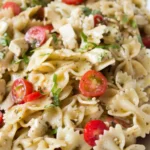
Hearty Caprese Pasta Salad
- Total Time: 21 minutes
- Yield: 6 servings 1x
- Diet: Vegetarian
Description
All the flavors of a traditional caprese salad brought together in a hearty pasta salad!
Ingredients
- 16 ounce box of pasta (bowties)
- 1 pint cherry tomatoes, cut into 1/4 inch slices
- 8 ounce mozzarella cheese ball (microbial-rennet), sliced into 1/2 inch pieces
- 1/4 cup store-bought pesto
- 1/4 cup extra virgin olive oil
- 2 tbsp balsamic vinegar
- 1 tsp garlic powder
- 1 tsp salt
- 1 tsp black pepper
- 1 tbsp fresh chopped basil for garnish (optional)
Instructions
- Boil: Fill a large pot with water and 1 tbsp of salt and boil your pasta according to the package directions.
- Prep: Slice your tomatoes into 1/4 inch slices and cut your mozzarella into 1/2 inch cubes.
- Rinse: Drain the pasta and rinse it with cold water.
- Combine: Add your cooled pasta to a mixing bowl along with the tomatoes, mozzarella, pesto, balsamic, olive oil, salt, pepper, and garlic powder.
- Serve: Toss together and either serve at room temperature or refrigerated.
Notes
Recipe adapted from Pip and Ebby.
- Prep Time: 10 minutes
- Cook Time: 11 minutes
- Category: Salad
- Method: Boiling
- Cuisine: Italian
Nutrition
- Serving Size: 1 serving
- Calories: 510 kcal
- Sugar: 3 g
- Sodium: 550 mg
- Fat: 21 g
- Saturated Fat: 6 g
- Unsaturated Fat: 15 g
- Trans Fat: 0 g
- Carbohydrates: 56 g
- Fiber: 2 g
- Protein: 15 g
- Cholesterol: 17 mg
Keywords: caprese, pasta salad, cherry tomatoes, mozzarella, pesto, balsamic vinegar