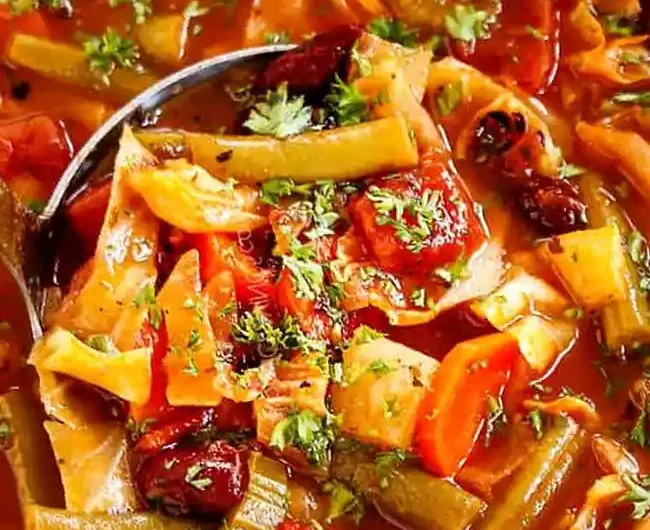
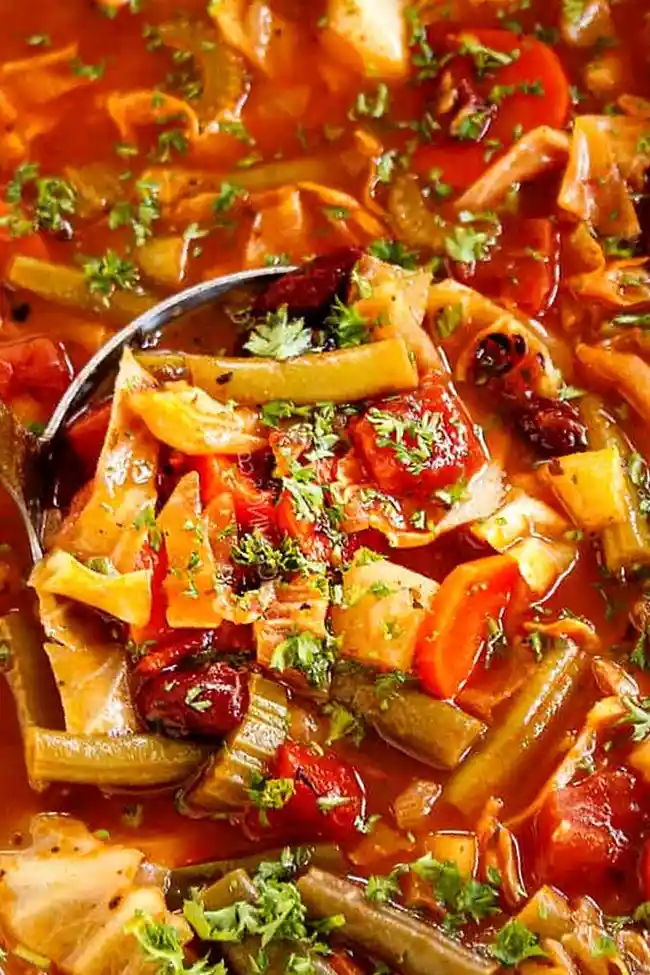
This nutrient-dense cabbage soup features a savory tomato broth infused with Italian herbs and a variety of hearty vegetables. It is an ideal meal for batch cooking and provides a comforting, filling dinner option that is naturally gluten-free.
List of ingredients
- 2 tablespoons extra virgin olive oil – used for sautéing the base vegetables.
- 1 small onion, chopped – provides a foundational aromatic flavor.
- 3 medium size carrots, thinly sliced (1 ½ cups) – adds natural sweetness and color.
- 4 stalks celery, sliced (1 ½ cups) – adds a classic savory element.
- 4-6 cloves garlic, minced – enhances the depth of the broth.
- 6 oz. fresh green beans, trimmed and cut into 1-inch pieces – adds texture and nutrients.
- 2 medium Yukon gold potatoes, peeled and chopped into 1/2-inch cubes – provides heartiness.
- 1 14.5 oz. can fire roasted diced tomatoes with juices – creates a smoky base.
- 1 15.5 oz. can kidney beans, drained and rinsed – adds protein and fiber.
- 1 15 oz. can tomato sauce – thickens the soup and adds richness.
- 8 cups low sodium chicken broth (or vegetable broth) – the main liquid base.
- 1 tablespoon Worcestershire sauce – adds a savory, tangy depth.
- 1 ½ tsp dried basil – an essential Italian herb.
- 1 ½ tsp dried parsley – adds a fresh, herbal note.
- 1 tsp dried oregano – adds an earthy aroma.
- 1 tsp salt – adjusts the overall flavor profile.
- 1 tsp sugar – balances the acidity of the tomatoes.
- 1/2 teaspoon dried thyme – provides a subtle woody flavor.
- 1/4 teaspoon pepper – adds a mild heat.
- 1 bay leaf – infuses the broth with a classic herbal scent.
- 4-5 cups green cabbage, sliced 1/4-inch wide – the star ingredient.
- A splash of lemon juice – brightens the final flavor.
step-by-step instructions
- Sauté aromatics: Heat the olive oil in a large Dutch oven or soup pot over medium heat. Add the chopped onion, sliced carrots, and celery, cooking for 5-7 minutes until the onions soften. Stir in the minced garlic and cook for an additional 30 seconds.
- Simmer the base: Add the green beans, potatoes, fire roasted tomatoes, kidney beans, tomato sauce, broth, Worcestershire sauce, and all dried seasonings (basil, parsley, oregano, salt, sugar, thyme, pepper, and the bay leaf). Cover the pot and bring the mixture to a boil.
- Cook vegetables: Once boiling, uncover the pot and reduce the heat to a gentle simmer. Let the soup cook for 15-20 minutes, or until the potato cubes are tender.
- Finish with cabbage: Stir in the sliced green cabbage. Cover the pot again and simmer for a few more minutes until the cabbage has wilted.
- Final seasoning: Stir in a splash of lemon juice to brighten the taste. Taste the soup and add more salt, pepper, or red pepper flakes if desired. If the soup is too thick, stir in additional broth to reach your preferred consistency.
Optimal Vegetable Selection
Choose Waxy Potatoes for Better Texture
Use Yukon Gold or red potatoes instead of Russet potatoes. Waxy varieties hold their shape during the simmering process and do not become mealy or fall apart. This ensures the soup maintains a consistent texture even after reheating.
Use Fresh Green Cabbage for Structure
Select a standard head of green cabbage and slice it to at least 1/4-inch thickness. Avoid using pre-shredded coleslaw mixes, as the cabbage is too thin and will overcook into a mushy consistency. Hand-slicing allows the cabbage to retain a slight bite.
Prioritize Fresh Aromatics
While frozen alternatives exist, using fresh onions and garlic provides a more potent flavor base. Sautéing these ingredients slowly in olive oil releases essential oils that define the overall character of the Italian-spiced broth.
Integrating Frozen Vegetable Mixes
If you are short on time, you can replace some of the fresh vegetables with a frozen mixed vegetable bag. Simply add them during the broth simmering stage and cook for approximately 25 minutes. Be mindful that frozen vegetables may release more water, which might slightly dilute the broth.
Enhancing the Soup Broth
The Benefit of Fire Roasted Tomatoes
Fire roasted diced tomatoes add a complex, charred smokiness that standard diced tomatoes lack. This removes the sharp acidic bite of the tomato and adds a layer of depth that mimics a longer cooking time. Always include the juices from the can to maximize flavor.
Adding Depth with Worcestershire Sauce
A small amount of Worcestershire sauce introduces an umami quality and a slight tanginess. This ingredient works in tandem with the tomato sauce to create a full-bodied broth that tastes rich and professional. It prevents the soup from tasting like watered-down tomato juice.
Brightening Flavors with Lemon Juice
Adding a splash of lemon juice at the very end of the cooking process is a critical step. The acidity cuts through the richness of the potatoes and beans, waking up the dried herbs. It provides a fresh finish that balances the savory elements of the dish.
Using Dried vs Fresh Herbs
Dried herbs are preferred for this recipe because they are added early and infuse the broth during the simmering process. If you prefer fresh herbs, use three times the amount and stir them in during the last few minutes of cooking to prevent them from losing their flavor.
Protein Integration Options
Incorporating Ground Beef for a Cabbage Roll Taste
To create a flavor similar to stuffed cabbage rolls, brown lean ground beef with the onions. Crumble the meat until almost cooked through, drain the excess grease, and then proceed with the carrots and celery. This adds a hearty, meaty dimension to every spoonful.
Using Beef or Turkey Italian Sausage
Brown beef or turkey Italian sausage in the pot before adding the vegetables. After browning and crumbling the sausage, drain the fat to keep the soup from becoming oily. This adds spicy, savory notes that complement the Italian herb blend.
Adding Chicken Thighs or Rotisserie Chicken
For a chicken version, sear boneless skinless chicken thighs for two minutes per side, remove them, and cook the vegetables. Return the chicken to the pot to simmer for 12 minutes, then remove and shred the meat before stirring it back in at the end. Alternatively, stir in shredded rotisserie chicken just before serving.
Adding Beef Corned Beef for Festive Meals
Beef corned beef is an excellent addition for a themed meal. Since corned beef is naturally very salty, reduce the amount of salt added to the broth. Use pre-cooked, shredded corned beef and add it during the final simmering stage to avoid overcooking.
Preparing the Soup with Meatballs
Roll ground beef or turkey into 1-inch diameter meatballs. Add them directly to the simmering broth and cook for about 15 minutes until they are cooked through. Because meatballs increase the volume of the soup, you will need to add 1-2 cups of additional broth.
Adding Seafood such as Salmon or Shrimp
Salmon or shrimp can be added for a lighter protein option. Cook the seafood separately or stir it into the hot soup at the very end of the process. Only heat the seafood until it is just cooked through to avoid a rubbery texture.
Using Smoked Turkey or Beef Ham
Diced smoked turkey or beef ham can be stirred in during the last few minutes of cooking. Since these meats are cured and salty, be cautious with additional salt. They provide a smoky contrast that pairs well with the cabbage.
Adding Grains and Pasta
Selecting the Right Pasta Shapes
Use small pasta shapes such as orzo, ditalini, or mini penne to ensure they blend well with the vegetables. Add the pasta during the last 10 minutes of cooking and cook until al dente. If you plan to freeze the soup, cook the pasta separately and add it to individual servings.
Cooking White vs Brown Rice
Long-grain white rice can be added for the last 12 minutes of cooking. Brown or wild rice requires about 45 minutes to soften, so you must chop the vegetables larger to prevent them from overcooking while the rice simmers. You may need extra broth as rice absorbs significant liquid.
Using Pearl Barley for Texture
Pearl barley adds a chewy, satisfying texture to the soup. Stir it in with the broth and simmer for approximately 30 minutes until the grains are tender. Barley makes the soup thicker and more filling, turning it into a dense meal.
Integrating Lentils or Quinoa
Add a cup of rinsed brown or green lentils at the same time as the broth and simmer for 25-30 minutes. For a higher protein option, stir in 3/4 cup of rinsed quinoa and simmer for 25 minutes. Both additions increase the nutritional value and thickness of the soup.
Customizing with Extra Vegetables
Adding Bell Peppers and Zucchini
Any color of bell pepper can be added during the last 10 minutes of cooking for a pop of color and flavor. Zucchini should be sliced 1/4-inch thick and added at the same time as the broth to ensure it doesn’t become too soft.
Using Mushrooms and Broccoli
Cremini or baby bella mushrooms add a deep, earthy flavor when sautéed with the onions. Broccoli should be chopped into bite-sized pieces and added during the initial broth simmering stage to ensure it is cooked through.
Incorporating Corn and Peas
Canned sweet corn or frozen corn can be added with the broth for a touch of sweetness. Thawed petite peas should be added at the very end, just long enough to warm through, to maintain their bright green color.
Adding Parsnips or Cauliflower
Parsnips can be used as a direct substitute for potatoes or added alongside them for a sweeter, peppery taste. Cauliflower florets should be added during the last 10 minutes of cooking to prevent them from disintegrating.
Cooking Methods and Equipment
Benefits of Using a Dutch Oven
A heavy-bottomed Dutch oven is ideal because it distributes heat evenly and prevents the vegetables from scorching. The tight-fitting lid allows for a controlled simmer, which is essential for tenderizing the potatoes without overcooking the cabbage.
Slow Cooker Instructions
To make this in a crockpot, add all ingredients except the cabbage to a 6 or 7-quart slow cooker. Cover and cook on low for 7 to 9 hours. Stir in the cabbage during the last 30 minutes of cooking until it reaches your desired consistency.
Scaling the Recipe for Large Groups
This recipe is easily doubled or tripled for crowds. When doubling, use 1.5 times the amount of salt instead of 2 times, then adjust the seasoning at the end. This prevents the soup from becoming overly salty during the reduction process.
Storage and Maintenance
Refrigerator Storage Tips
Allow the soup to cool to room temperature before transferring it to an airtight container. It can be refrigerated for up to 5 days. The flavors often intensify overnight, making the leftovers taste even better than the first batch.
Best Reheating Methods
For large quantities, reheat on the stove over medium-low heat, stirring occasionally for 10 minutes. For individual portions, use a microwave-safe dish and heat in 2-minute intervals, stirring in between to ensure even heating. You can also reheat in a crockpot on low for 1-3 hours.
Freezing Guidelines and Potato Tips
If you intend to freeze the soup, omit the potatoes from the initial recipe, as they do not freeze and reheat well. Freeze the soup in freezer-safe containers for up to 3 months. When serving, thaw overnight in the fridge and add freshly steamed potatoes to the pot.
Frequently Asked Questions
Can I use coleslaw mix instead of cabbage?
It is not recommended to use coleslaw mix because the cabbage is shredded too thinly. It will lose its structure almost immediately and become mushy, especially if you plan on storing or reheating the soup.
What is the best way to prevent potatoes from browning?
If you chop potatoes in advance, keep them submerged in a bowl of water and cover them with plastic wrap. This prevents oxidation and keeps the potatoes white and fresh until they are ready to be added to the pot.
How do I make the soup less chunky?
If you prefer a smoother consistency, simply stir in additional chicken or vegetable broth at the end of the cooking process. You can also use an immersion blender to lightly pulse a small portion of the vegetables, which will thicken the broth while leaving some chunks.
Can I make this recipe vegan?
Yes, you can make this soup vegan by substituting the chicken broth with low-sodium vegetable broth. Ensure your Worcestershire sauce is a vegan-friendly version that does not contain anchovies.
Print
Hearty Italian-Style Cabbage Soup
- Total Time: 40 minutes
- Yield: 8 servings 1x
- Diet: Gluten-Free
Description
This Cabbage Soup recipe features carrots, celery, green beans, tomatoes, kidney beans, and cabbage swimming in a dynamic Italian spiced tomato broth. It is healthy, hearty, comforting, and naturally gluten-free.
Ingredients
- 2 tablespoons extra virgin olive oil
- 1 small onion, chopped
- 3 medium size carrots, thinly sliced (1 ½ cups)
- 4 stalks celery, sliced (1 ½ cups)
- 4–6 cloves garlic, minced
- 6 oz. fresh green beans, trimmed and cut into 1-inch pieces
- 2 medium Yukon gold potatoes, peeled and chopped into 1/2-inch cubes
- 1 14.5 oz. can fire roasted diced tomatoes with juices
- 1 15.5 oz. can kidney beans, drained and rinsed
- 1 15 oz. can tomato sauce
- 8 cups low sodium vegetable broth
- 1 tablespoon Worcestershire sauce
- 1 1/2 tsp dried basil
- 1 1/2 tsp dried parsley
- 1 tsp dried oregano
- 1 tsp salt
- 1 tsp sugar
- 1/2 teaspoon dried thyme
- 1/4 teaspoon pepper
- 1 bay leaf
- 4–5 cups 1/4-inch wide sliced green cabbage
- A splash of lemon juice
Instructions
- Step: Heat olive oil in a large Dutch oven/soup pot. Add onions, carrots, and celery. Cook, stirring often, for 5-7 minutes or until the onions are softened. Add garlic and cook 30 seconds.
- Step: Add all remaining soup ingredients EXCEPT cabbage. Cover soup and bring to a boil. Uncover and reduce to a gentle simmer for 15-20 minutes or until potatoes are tender.
- Step: Stir in the cabbage. Cover and simmer for a few minutes more, just until the cabbage has wilted. Stir in a splash of lemon juice. Taste and season with salt, pepper and/or red pepper to taste.
Notes
Prep vegetables in advance to save time. For a less chunky soup, add additional broth. Store in an airtight container in the refrigerator for up to 5 days.
- Prep Time: 15 minutes
- Cook Time: 25 minutes
- Category: Main Course
- Method: Simmering
- Cuisine: Italian
Nutrition
- Serving Size: 1 bowl
- Calories: 165 kcal
- Sugar: 7 g
- Sodium: 780 mg
- Fat: 4 g
- Saturated Fat: 0.6 g
- Unsaturated Fat: 3.4 g
- Trans Fat: 0 g
- Carbohydrates: 26 g
- Fiber: 7 g
- Protein: 6 g
- Cholesterol: 0 mg
Keywords: Cabbage Soup, Italian Soup, Vegetable Soup, Healthy Comfort Food, Gluten-Free