
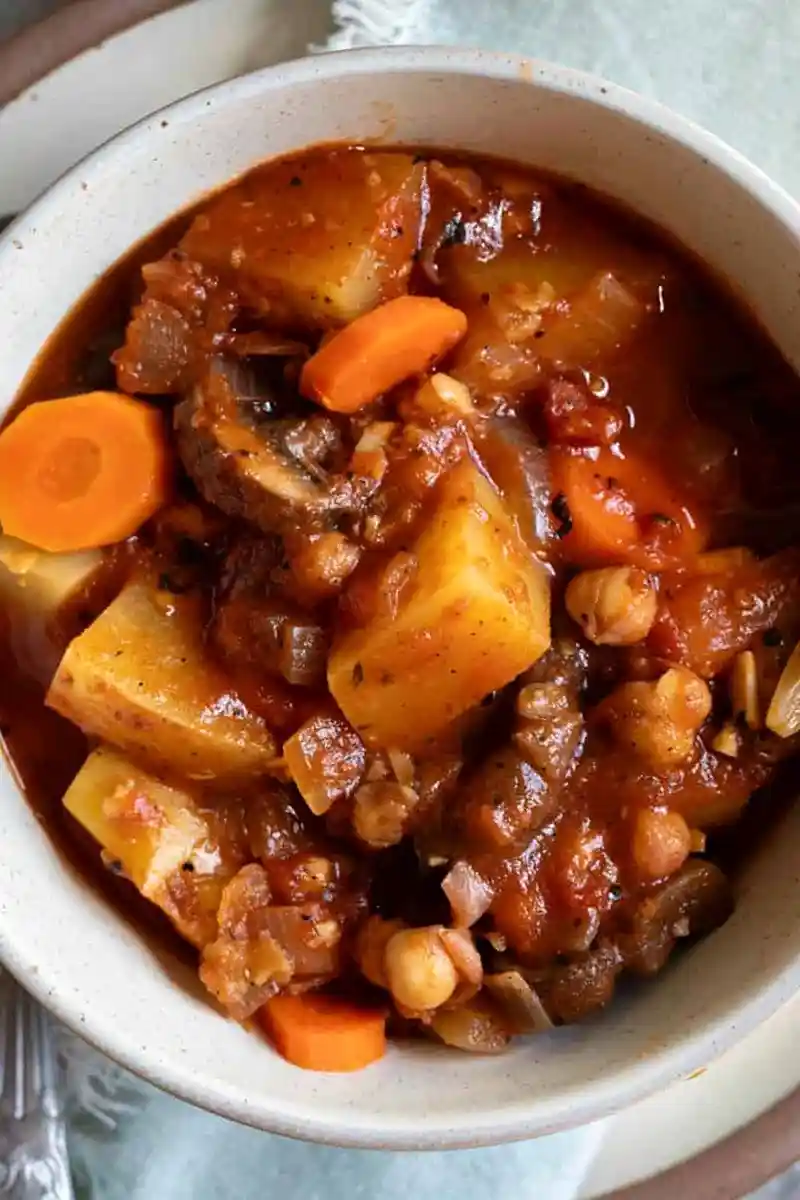
This filling one-pot meal combines golden potatoes with protein-rich chickpeas and savory mushrooms in a rich tomato base. It is a plant-based, gluten-free option that is simple to prepare for family dinners or gatherings.
List of ingredients
- 1 tablespoon oil – use a neutral oil or a plant-based alternative for sautéing.
- 1 large yellow onion, chopped – provides a sweet aromatic foundation.
- 10 ounces mushrooms, cut into thick slices – adds savory depth and a meaty texture.
- 5 cloves garlic – minced to provide a strong aromatic punch.
- 1 ½ teaspoons dried Italian herb blend – a convenient mix of thyme, rosemary, and oregano.
- 2 medium carrots, peeled and cut into coins or half moons – adds natural sweetness and color.
- 1 ½ pounds yellow potatoes, cut into large bite-size pieces – holds its shape well during the simmering process.
- 1 (14.5 oz) can crushed tomatoes – preferably fire-roasted for an added smoky flavor.
- 3 ½ cups vegetable broth – serves as the liquid base for the stew.
- 1 bay leaf – adds a subtle, herbal aromatic quality.
- 1 tablespoon tamari or soy sauce – provides saltiness and umami depth.
- 1 teaspoon fine sea salt – adjust quantity based on the saltiness of your broth.
- Black pepper, to taste – adds a mild spicy note.
- 1 (15 oz) can chickpeas, rinsed and drained – provides essential plant-based protein and fiber.
step-by-step instructions
- Sauté Aromatics: Preheat a large soup pot over medium heat and add the oil. Add the chopped onion and sliced mushrooms, cooking for about 8 minutes until the moisture from the mushrooms has mostly evaporated.
- Add Flavor Bases: Stir in the minced garlic, dried Italian herbs, and sliced carrots. Cook for 2 to 3 minutes, stirring frequently to ensure the garlic does not burn.
- Simmer the Stew: Add the crushed tomatoes, potatoes, vegetable broth, bay leaf, soy sauce, salt, and pepper. Bring the mixture to a simmer, cover the pot, and reduce heat to low for about 20 minutes or until the potatoes are fork-tender.
- Incorporate Protein: Stir in the rinsed chickpeas and cook uncovered for a few minutes. This step allows the stew to reduce slightly and thicken to a hearty consistency.
- Final Touch: Turn off the heat and remove the bay leaf. Taste the stew and adjust seasoning as needed, keeping in mind that flavors will intensify as the stew rests and cools.
Potato Selection Guide
Yukon Gold Potatoes for Texture
Yukon Gold potatoes are an ideal choice for this recipe because they have a naturally buttery flavor and a medium starch content. This allows them to soften during the simmering process while still maintaining their shape, which prevents the stew from becoming too mushy. Their thin skins can be left on to add extra nutrients and a rustic appearance to the dish.
Russet Potatoes for a Thicker Base
If you prefer a thicker, heartier consistency, Russet potatoes are a great alternative due to their high starch content. As they cook, some of the starch releases into the broth, naturally thickening the liquid without needing extra flour or cornstarch. However, it is recommended to peel Russets as their skins can be tougher and less palatable than yellow varieties.
Red Potatoes for Firmness
Red potatoes are a waxy variety that holds its structure exceptionally well even during long cooking times. They are best if you prefer your vegetables to have a distinct bite and avoid any breakdown of the potato pieces. Like Yukon Golds, red potatoes have thin skins that do not require peeling, saving preparation time.
Maximizing Flavor Depth
Utilizing Miso Paste for Umami
To add an extra layer of savory richness, you can incorporate white or red miso paste into the stew. To do this, whisk two teaspoons of miso with a quarter cup of warm broth until completely dissolved before stirring it into the pot at the end of the cooking process. This technique adds a fermented depth that mimics the complexity of slow-cooked meat stews.
Sautéing for the Maillard Reaction
The process of browning the mushrooms and onions at the start is crucial for developing deep flavor through the Maillard reaction. Ensure the mushrooms have released their water and started to brown before adding the liquid ingredients. This caramelization creates a savory base that cannot be achieved by boiling the vegetables alone.
Balancing Tomato Acidity
Depending on the brand of crushed tomatoes used, the stew may occasionally taste too acidic. To balance this, you can add a small pinch of sugar or increase the amount of carrots to provide more natural sweetness. Stirring in a small amount of tomato paste during the sauté phase can also add a concentrated, sweeter tomato flavor.
Benefits of Fire-Roasted Tomatoes
Using fire-roasted crushed tomatoes instead of regular canned tomatoes adds a subtle charred and smoky dimension to the broth. This adds a layer of complexity that complements the earthiness of the mushrooms and the heartiness of the potatoes. If fire-roasted options are unavailable, a small pinch of smoked paprika can provide a similar effect.
Customizing the Ingredients
Adding Dark Leafy Greens
To increase the nutritional value and add color, stir in several handfuls of chopped kale or Swiss chard during the final few minutes of cooking. The residual heat will wilt the greens without overcooking them, preserving their bright color and vitamins. This addition provides a fresh contrast to the rich, simmered vegetables.
Swapping Chickpeas for Other Legumes
While chickpeas provide a great texture, you can easily substitute them with cannellini beans, pinto beans, or cooked brown lentils. Lentils will thicken the stew further and offer a different protein profile, while cannellini beans provide a creamier texture. Ensure any canned beans are thoroughly rinsed and drained before being added to the pot.
Incorporating Plant-Based Meats
For those seeking a more substantial meat-like experience, consider adding plant-based chorizo, vegan meatballs, or seitan chunks. These proteins should be browned separately before being stirred into the stew to ensure they have a good sear. This modification makes the meal even more filling for those with larger appetites.
Substituting Tamari for Coconut Aminos
For individuals avoiding soy, coconut aminos serve as an excellent substitute for tamari or soy sauce. Coconut aminos provide a similar salty and umami profile but are slightly sweeter and lower in sodium. Use the same quantity as called for in the recipe to maintain the balance of flavors.
Serving and Pairing Ideas
Toasted Sourdough Bread
Serving this stew with thick slices of toasted sourdough bread is a classic choice for soaking up the rich tomato broth. Rubbing a raw clove of garlic on the toasted bread just before serving adds an extra layer of aromatic flavor. The acidity of the sourdough complements the earthiness of the potatoes and mushrooms.
Savory Cornbread
A side of warm, savory cornbread provides a sweet and crumbly contrast to the chunky texture of the stew. Cornbread is particularly effective at filling out the meal and making it feel like a complete dinner. You can add chopped jalapeños to the cornbread batter to introduce a spicy element to the overall meal.
Fresh Kale Salad
To balance the richness of the stew, serve it alongside a fresh kale or mixed-green salad with a light lemon vinaigrette. The brightness of the citrus and the crunch of raw vegetables cut through the density of the potato and bean base. This creates a more balanced nutritional profile for the dinner.
Garnishing with Fresh Herbs
A sprinkle of freshly chopped parsley, chives, or cilantro on top of the stew just before serving adds a pop of color and freshness. These herbs provide a clean, sharp contrast to the deep, simmered flavors of the tomato and vegetable broth. Fresh herbs should always be added at the very end to prevent them from wilting or losing their flavor.
Storage and Meal Prep
Refrigeration Guidelines
Once the stew has cooled completely, transfer it to an airtight container and store it in the refrigerator. It will remain fresh and safe to eat for three to five days. In many cases, the stew tastes even better the next day as the ingredients have more time to mingle and develop depth.
Freezing Instructions
This stew freezes well and can be stored in a freezer-safe container for up to three months. When freezing, leave about half an inch of headspace at the top of the container to allow the liquid to expand as it freezes. Ensure the container is completely airtight to prevent freezer burn from affecting the taste of the vegetables.
Stovetop Reheating
The best way to reheat the stew is in a pot over medium-low heat on the stovetop. Because the potatoes can absorb liquid while sitting in the fridge, you may need to add a splash of vegetable broth or water to restore the original consistency. Stir gently to avoid breaking up the potato chunks.
Microwave Reheating
For individual servings, the microwave is a fast and efficient option. Heat the stew in a microwave-safe bowl, stirring halfway through the heating process to ensure an even temperature. Cover the bowl with a damp paper towel to prevent the stew from splattering and to keep the moisture locked in.
Troubleshooting Common Issues
Fixing a Too-Thin Consistency
If your stew is too thin after simmering, you can easily thicken it by mashing a few of the potato chunks against the side of the pot with a spoon. Stir the mashed potatoes back into the broth to naturally increase the viscosity. Alternatively, you can simmer the stew uncovered for an additional ten minutes to allow more liquid to evaporate.
Preventing Overcooked Potatoes
To prevent the potatoes from disintegrating, ensure you cut them into large, uniform bite-size pieces. Small pieces will cook much faster and may turn into mush before the other vegetables are tender. Start checking the potatoes with a fork at the 15-minute mark to determine exactly when they have reached the desired tenderness.
Adjusting Salt Levels
Since vegetable broths vary significantly in sodium content, always taste the stew before adding the final amount of salt. If the stew is too salty, you can add a splash of water or more crushed tomatoes to dilute the saltiness. If it tastes bland, a small amount of extra tamari can provide both salt and umami.
Frequently Asked Questions
Can I use a slow cooker for this recipe?
Yes, you can adapt this for a slow cooker by sautéing the onion and mushrooms first, then adding all other ingredients to the crockpot. Cook on low for 6 to 8 hours or on high for 3 to 4 hours. Add the chickpeas during the last 30 minutes of cooking to prevent them from becoming too soft.
Is this stew completely gluten-free?
This stew is gluten-free as long as you use tamari instead of traditional soy sauce, as soy sauce often contains wheat. Additionally, ensure that your vegetable broth is certified gluten-free. All other ingredients, including the potatoes and chickpeas, are naturally gluten-free.
How do I make this recipe oil-free?
To make the stew oil-free, you can dry-sauté the onions and mushrooms using a small amount of water or vegetable broth to prevent sticking. Alternatively, you can mix two teaspoons of tahini with a splash of broth and add it to the pot just before adding the garlic and herbs for a creamy, fat-based flavor.
Which mushrooms are best for this stew?
Baby bella or cremini mushrooms are recommended for their balanced flavor and firm texture. Shiitake mushrooms are also an excellent choice for adding a more intense, earthy umami taste. If using shiitakes, be sure to remove the woody stems before slicing the caps.
Print
Hearty Potato Stew
- Total Time: 55 minutes
- Yield: 6 servings 1x
- Diet: Vegan
Description
This hearty vegetarian potato stew features yellow potatoes, chickpeas, carrots, and mushrooms in a rich tomato base. It’s casual enough for weeknight family dinners and special enough for a dinner party.
Ingredients
- 1 tablespoon oil
- 1 large yellow onion, chopped
- 10 ounces mushrooms, cut into thick/chunky slices
- 5 cloves garlic
- 1 ½ teaspoons dried Italian herb blend
- 2 medium carrots, peeled and cut into coins or half moons
- 1 ½ pounds yellow potatoes, cut into large bite-size pieces
- 1 (14.5 oz) can crushed tomatoes
- 3 ½ cups vegetable broth
- 1 bay leaf
- 1 tablespoon tamari or soy sauce
- 1 teaspoon fine sea salt
- black pepper, to taste
- 1 (15 oz) can chickpeas, rinsed and drained
Instructions
- Step 1: Preheat a large soup pot over medium heat. Add the oil. Once hot, add the onion and mushrooms, and cook for about 8 minutes or until the moisture from the mushrooms is mostly evaporated.
- Step 2: Add the garlic, dried herbs, and carrots. Stirring frequently cook for 2 to 3 minutes.
- Step 3: Add the crushed tomatoes, potatoes, broth, bay leaf, soy sauce, and salt and pepper. Bring to a simmer. Cover the pot and reduce heat to low. Checking on it periodically, simmer the stew for about 20 minutes or until the potatoes are fork tender. Stir in the chickpeas and cook uncovered for a few minutes, or until the stew has reduced slightly.
- Step 4: Turn off the heat and remove the bay leaf. Taste for seasoning.
Notes
For an oil-free version, dry sauté the onion and mushrooms, then add 2 teaspoons of tahini mixed with a splash of broth before adding the garlic and herbs. Store in the fridge or freeze for up to 3 months.
- Prep Time: 25 minutes
- Cook Time: 30 minutes
- Category: Entree
- Method: Simmering
- Cuisine: American
Nutrition
- Serving Size: 1 serving
- Calories: 220 kcal
- Sugar: 6 g
- Sodium: 680 mg
- Fat: 4 g
- Saturated Fat: 0.5 g
- Unsaturated Fat: 3.5 g
- Trans Fat: 0 g
- Carbohydrates: 42 g
- Fiber: 9 g
- Protein: 8 g
- Cholesterol: 0 mg
Keywords: potato stew, vegan stew, vegetable stew, hearty soup, gluten-free