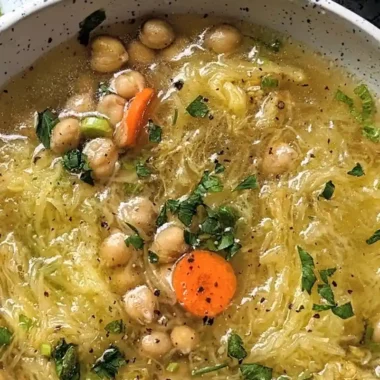
This nourishing soup uses spaghetti squash as a nutrient-dense alternative to traditional pasta noodles. It combines a savory vegetable broth with chickpeas and aromatic herbs for a filling, plant-based meal.
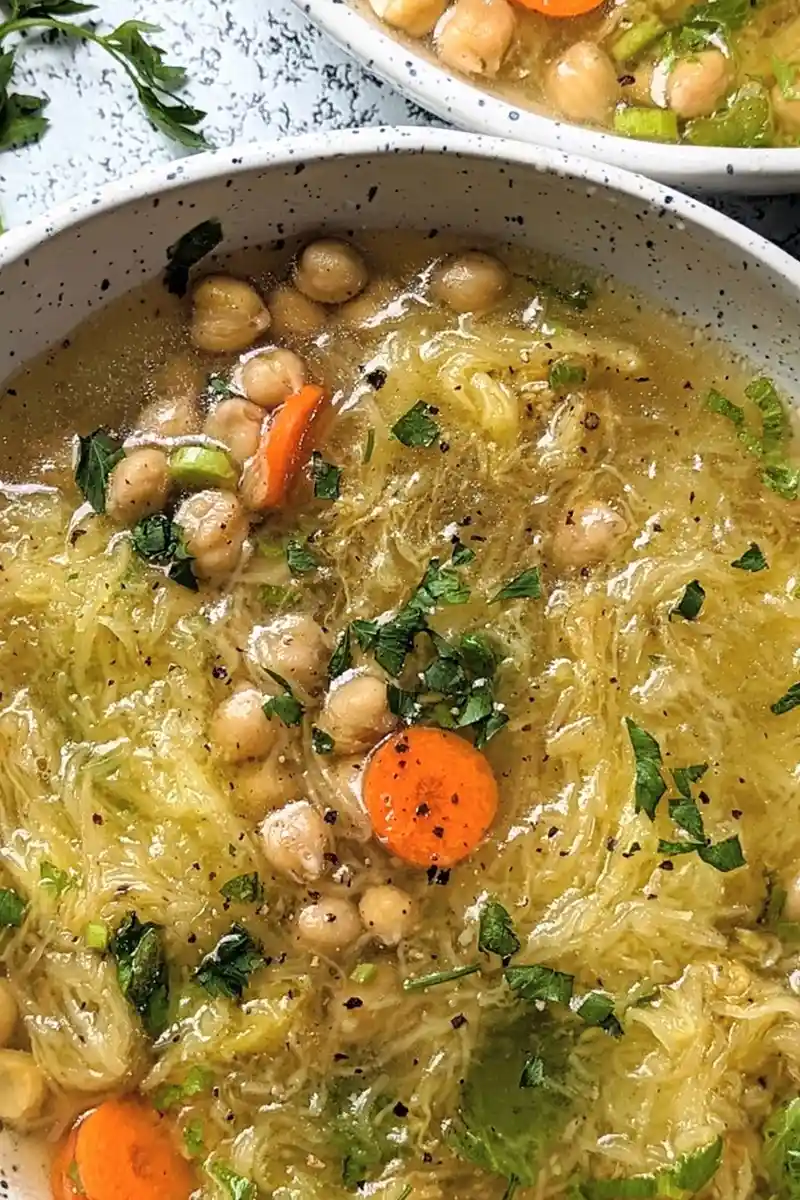
List of ingredients
- 1 large spaghetti squash – provides the noodle-like texture.
- 2 tablespoons extra virgin olive oil – used for roasting and sautéing.
- 1 sweet onion, chopped – adds a mild, sugary base flavor.
- 2 cloves garlic, minced – provides aromatic depth.
- 3 carrots, diced – adds sweetness and color.
- 3 stalks celery, chopped – adds a savory, earthy note.
- 2 13-ounce cans chickpeas – increases protein and heartiness.
- 6 cups low sodium vegetable stock – the liquid base for the soup.
- 1 teaspoon thyme – adds a woody, herbal fragrance.
- 1 teaspoon salt – enhances all other flavors.
- 1/2 cup fresh parsley, chopped – adds a bright, fresh finish.
step-by-step instructions
- Roast the squash: Preheat your oven to 400 degrees Fahrenheit. Cut the spaghetti squash lengthwise, brush the flesh with 1 tablespoon of olive oil and salt, and roast cut-side up for 40 minutes. Use a fork to loosen the strands and scrape them into a bowl for later use.
- Sauté aromatics: Heat the remaining tablespoon of olive oil in a large soup pot over low heat. Add the chopped onion and minced garlic, sautéing for 5 to 6 minutes until the vegetables are translucent.
- Cook the mirepoix: Stir in the diced carrots and chopped celery. Sauté these vegetables for an additional 3 minutes to soften them slightly.
- Simmer the base: Add the drained chickpeas, vegetable stock, thyme, and salt to the pot. Bring the mixture to a boil, then immediately reduce the heat to a simmer. Let it cook for about 25 minutes until all vegetables are tender.
- Combine and serve: Stir in the fresh parsley and the reserved spaghetti squash strands. Taste the soup and add more salt or pepper if needed, then serve hot.
Guidance for Selecting and Preparing Squash
Choosing the Right Spaghetti Squash
Select a squash that feels heavy for its size, which indicates a high moisture content. The skin should be a consistent yellow color without soft spots or deep bruises. Ensure the stem is dry and not moldy to guarantee freshness.
Efficient Seed Removal
Use a sturdy metal spoon to scrape out the seeds and stringy pulp from the center. Ensure the interior is clean so the oil and salt can penetrate the flesh evenly. Save the seeds for roasting if you want a zero-waste cooking experience.
Safe Cutting Techniques
Because spaghetti squash has a hard skin, use a sharp chef’s knife and apply firm pressure. Slice the squash lengthwise to create two manageable halves. If the squash is too large, carefully halve it across the width instead.
Alternative Squash Cooking Methods
Using an Air Fryer for Faster Results
You can roast spaghetti squash in an air fryer at 400 degrees Fahrenheit for approximately 20 minutes. This method is faster than the oven and creates a slightly more caramelized edge. Place the halves cut-side down for the first 10 minutes, then flip them over.
Microwaving for Quick Preparation
For a faster option, prick the skin of the squash several times with a fork. Microwave on high for 10 to 12 minutes or until a fork easily pierces the flesh. Let it cool before slicing it open to avoid steam burns.
Steaming the Squash
Place the halved squash in a steamer basket over boiling water for 15 to 20 minutes. This method preserves the most nutrients but results in a softer texture. Scrape the strands out as usual once the flesh is tender.
Ingredient Substitutions and Variations
Replacing Chickpeas with Other Legumes
You can substitute chickpeas with cannellini beans or navy beans for a creamier texture. Red lentils are another option, though they will break down and thicken the broth. If using dried beans, ensure they are soaked and cooked before adding them to the soup.
Swapping the Herb Profile
While thyme provides a classic flavor, you can use dried rosemary or sage for a more autumnal taste. Oregano or basil can be used to give the soup a more Mediterranean profile. Always use half the amount of dried herbs compared to fresh.
Low-Sodium Broth Alternatives
If you do not have vegetable stock, you can use water combined with a tablespoon of nutritional yeast for a savory depth. A diluted mushroom broth also works well to add an umami element. Avoid using store-bought stocks with high sugar content.
Alternative Onion Choices
Yellow onions can be used if sweet onions are unavailable, though they have a sharper bite. Leeks are an excellent substitute for a more sophisticated, buttery flavor. Ensure leeks are washed thoroughly to remove any grit from the layers.
Serving and Pairing Suggestions
Fresh Toppings for Added Flavor
Add a squeeze of fresh lemon juice just before serving to brighten the flavors. A sprinkle of nutritional yeast provides a cheesy, nutty taste without using dairy. Freshly cracked black pepper adds a subtle heat that complements the squash.
Complementary Side Dishes
Serve this soup with a side of toasted sourdough or a gluten-free baguette for dipping. A simple side salad with a lemon-tahini dressing pairs well with the earthy notes of the chickpeas. Roasted root vegetables also make a great accompaniment.
Pairing with Grains
If you need more calories, serve the soup over a small scoop of cooked quinoa or brown rice. This turns the soup into a more substantial meal. You can also stir in a handful of cooked farro for a chewy texture.
Storage and Preservation
Refrigeration Guidelines
Store leftover soup in airtight glass containers in the refrigerator for up to 5 days. Keep the containers sealed to prevent the soup from absorbing other odors. Ensure the soup is cooled to room temperature before sealing the lid.
Freezing for Long-Term Use
This soup freezes well for up to 3 months. Portion the soup into freezer-safe bags or containers, leaving about an inch of headspace for expansion. Freeze the squash strands separately if you prefer them to maintain a firmer texture.
Thawing Process
Thaw frozen soup overnight in the refrigerator for the safest results. Alternatively, you can place the frozen container in a bowl of warm water before heating. Avoid thawing the soup at room temperature to prevent bacterial growth.
Reheating Instructions
Stovetop Reheating Method
Place the soup in a pot over medium-low heat. Add a splash of vegetable broth or water to loosen the liquid as it warms. Stir gently to avoid breaking the squash strands, and heat until simmering.
Microwave Reheating Method
Transfer the soup to a microwave-safe bowl and cover it with a lid or damp paper towel. Heat in 1-minute intervals, stirring in between to ensure even heating. Be careful of hot splashes when removing the cover.
Make-Ahead Advice
Prepping the Mirepoix
Dice the onions, carrots, and celery a day in advance and store them in a single container. This is known as a mirepoix and can be kept in the fridge for 3 days. This significantly reduces the active cooking time on the day of preparation.
Pre-cooking the Squash
Roast the spaghetti squash ahead of time and store the extracted strands in a sealed container. The roasted squash remains fresh in the refrigerator for 4 to 5 days. Simply stir the cold strands into the hot soup at the final step.
Troubleshooting Common Issues
Solving Mushy Squash Strands
If your squash becomes too soft, avoid overcooking it in the oven. Roast only until a fork slides in easily but the strands still hold their shape. Always add the squash at the very end of the simmering process.
Thickening a Thin Broth
If the soup is too watery, take a small amount of the chickpeas and mash them into a paste. Stir this paste back into the pot to naturally thicken the liquid. You can also simmer the soup uncovered for an extra 10 minutes to reduce the liquid.
Balancing Bland Flavors
If the soup lacks depth, add a teaspoon of soy sauce or a pinch of smoked paprika. A small amount of apple cider vinegar can also wake up the flavors. Always taste and adjust seasoning after the final simmer.
Frequently Asked Questions
Can I use frozen spaghetti squash?
Yes, you can use frozen pre-shredded spaghetti squash. Thaw it completely and drain any excess water before stirring it into the soup. Add it during the last 2 minutes of cooking to avoid overcooking.
How do I keep the squash from dissolving?
The key is to roast the squash separately and add it to the pot only after the heat is turned off or reduced to very low. Do not boil the squash strands, as this will break down their structure.
Can I add more protein to this soup?
You can add cooked tofu cubes, tempeh, or seitan for additional plant-based protein. If you prefer, you can also stir in a handful of white beans or green peas. Ensure any added protein is already cooked through.
Print
Hearty Spaghetti Squash and Chickpea Soup
- Total Time: 30 minutes
- Yield: 4 servings 1x
- Diet: Vegan
Description
This spaghetti squash soup is a bright and fresh soup recipe loaded with vegetables, delicious squash ‘noodles,’ chickpeas, and flavorful herby vegetable broth!
Ingredients
- 1 large spaghetti squash
- 2 tablespoons extra virgin olive oil
- 1 sweet onion, chopped
- 2 cloves garlic, minced
- 3 carrots, diced
- 3 stalks celery, chopped
- 2 13-ounce cans chickpeas
- 6 cups low sodium vegetable stock
- 1 teaspoon thyme
- 1 teaspoon salt
- 1/2 cup fresh parsley, chopped
Instructions
- Cook the squash: preheat your oven to 400 degrees Fahrenheit. Cut the spaghetti squash lengthwise, brush with 1 tablespoon of the olive oil and salt, and roast with the cut-side up for 40 minutes. Once squash has finished cooking, take a fork and loosen the squash strands, and scrape them into a bowl.
- Sauté aromatics: in a large soup pot, heat the remaining tablespoon of olive oil over low heat. Add the onion and garlic and sauté for 5 or 6 minutes until the veggies become translucent.
- Simmer vegetables: Add the carrots and celery and sauté for 3 minutes more. Then add the chickpeas, low sodium vegetable stock, thyme, and salt. Bring to a boil then reduce to a simmer. Simmer for about 25 minutes until veggies are fully cooked.
- Final combine: Add the fresh parsley and the cooked spaghetti squash noodles to the soup and stir. Taste, and add more seasoning if desired. Serve hot!
Notes
You can also cook the spaghetti squash in an air fryer at 400 degrees Fahrenheit for 20 minutes as a shortcut.
- Prep Time: 10 minutes
- Cook Time: 30 minutes
- Category: Soup
- Method: Stovetop
- Cuisine: American
Nutrition
- Serving Size: 1 serving
- Calories: 298 kcal
- Sugar: 13 g
- Sodium: 2414 mg
- Fat: 11 g
- Saturated Fat: 2 g
- Unsaturated Fat: 9 g
- Trans Fat: 0 g
- Carbohydrates: 46 g
- Fiber: 11 g
- Protein: 9 g
- Cholesterol: 0 mg
Keywords: spaghetti squash soup, vegan soup, gluten free, healthy dinner, plant based