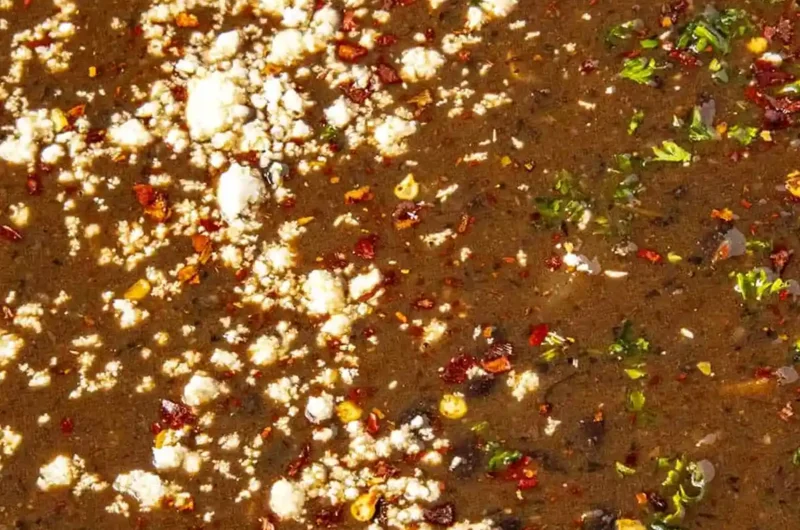
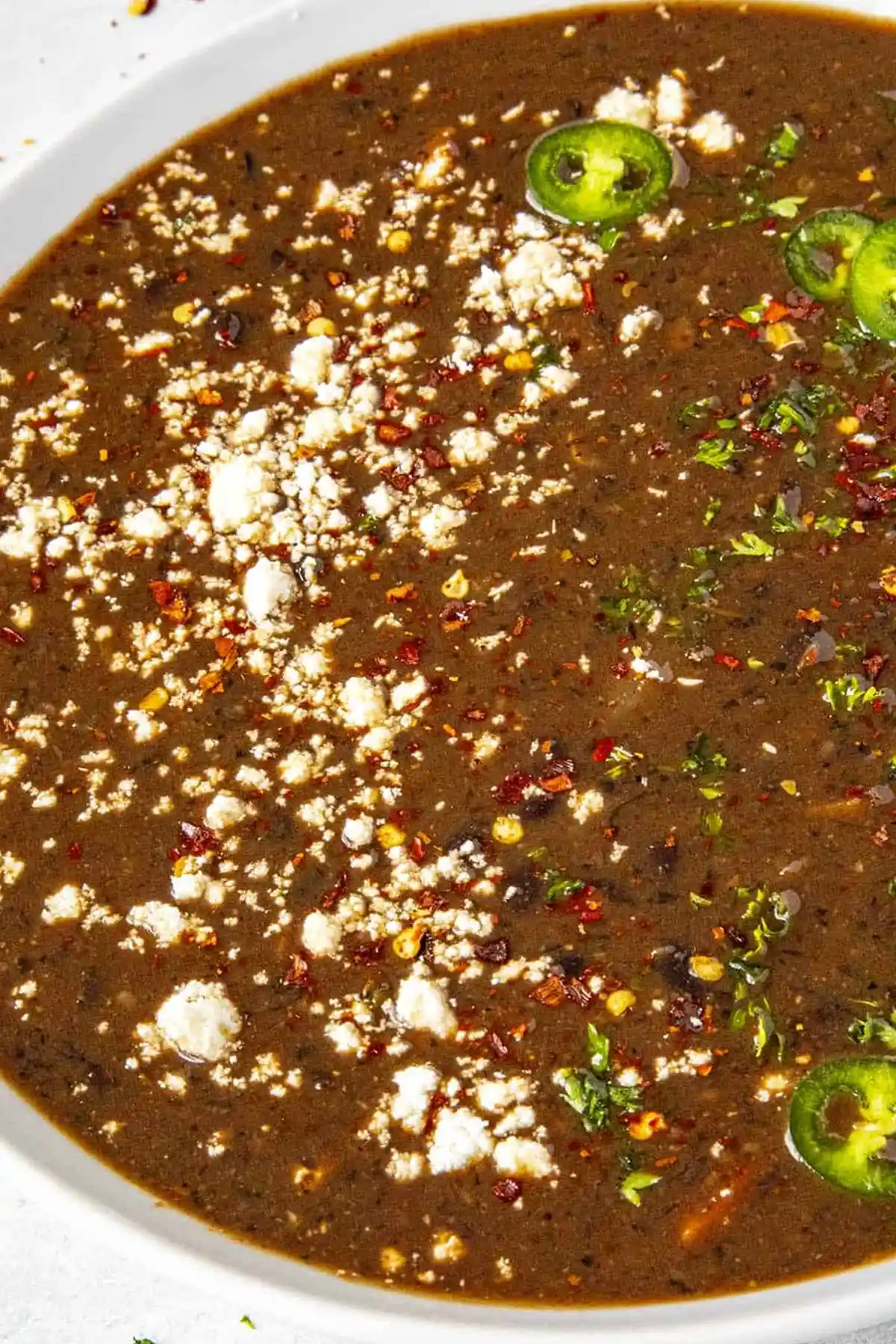
This creamy and flavorful black bean soup is a quick weeknight dinner option. It combines earthy beans with a bold blend of spices for a satisfying meal.
List of ingredients
- 1 tablespoon olive oil – used for sautéing vegetables.
- 1 yellow onion, chopped – provides a savory base.
- 1 bell pepper, chopped – adds sweetness and color.
- 2 jalapeno peppers, chopped – provides the primary heat.
- 1 celery rib, chopped – adds aromatic depth.
- 1 medium carrot, peeled and chopped – contributes a subtle sweetness.
- 4 garlic cloves, chopped – essential for pungent flavor.
- 1 tablespoon chili powder – adds a complex spice blend.
- 1 teaspoon cayenne – increases the heat level.
- 1 teaspoon paprika – adds color and earthy notes.
- 1 teaspoon oregano – provides herbal aromatic qualities.
- 1/2 teaspoon cumin – adds a characteristic smoky flavor.
- 1/2 teaspoon spicy red pepper flakes – adds an extra kick of heat.
- Salt and pepper to taste – used for basic seasoning.
- 2 cans (15 ounces each) black beans, drained and rinsed – the main hearty component.
- 2 cups chicken broth (or vegetable broth) – the liquid base for the soup.
- Juice from 1 small lime – adds acidity to balance the flavors.
- Garnish: sliced peppers, spicy chili flakes, fresh chopped parsley, crumbly microbial-rennet white cheese, or tortilla chips.
step-by-step instructions
- Sauté Vegetables: Heat olive oil in a large pot or Dutch oven over medium heat. Add the bell peppers, onion, celery, and carrot, cooking for 10 minutes until they soften.
- Toast Spices: Stir in the garlic, chili powder, cayenne, paprika, oregano, cumin, red pepper flakes, and a pinch of salt and pepper. Cook for 30 seconds until the garlic becomes fragrant.
- Simmer Soup: Add the black beans and chicken or vegetable broth. Bring the mixture to a quick boil, then reduce heat and simmer for 20 minutes to develop the flavors.
- Blend for Texture: For a creamier consistency, transfer half of the soup to a blender or use an immersion blender until smooth. Stir the blended portion back into the pot.
- Final Seasoning: Adjust the salt and pepper as needed. Pour into bowls and stir in fresh lime juice before adding your preferred garnishes.
Managing Heat Levels
Omit Jalapenos for Mildness
If you prefer a soup with very little heat, remove the jalapeno peppers from the recipe entirely. This allows the earthy tones of the cumin and paprika to shine without the sharp sting of fresh chilies.
Adding Habaneros for Intense Heat
For those who enjoy extreme spice, replace the jalapenos with one finely chopped habanero pepper. Habaneros have a significantly higher Scoville rating and will provide a more aggressive heat profile.
Using Hot Sauce for Customization
Adding a few dashes of your favorite hot sauce at the end of the cooking process allows you to control the spice per bowl. This is ideal when serving a group with varying spice tolerances.
Adjusting Red Pepper Flakes
You can increase the red pepper flakes beyond a half teaspoon if you want a lingering heat on the tongue. Add these during the spice-toasting phase to ensure they are well integrated into the oil.
Customizing the Soup Texture
Keeping the Soup Chunky
Skip the blending step entirely to maintain a rustic, chunky texture. This version is more like a stew and highlights the individual pieces of vegetables and whole beans.
Creating a Fully Smooth Puree
Blend the entire pot of soup using a high-powered blender or immersion blender. This results in a thick, velvety consistency that is excellent for sipping or serving as a dip for crusty bread.
Blending for a Creamy-Chunky Mix
Blending only half of the mixture provides the best of both worlds. You get a thick, creamy base that still contains whole beans and vegetable pieces for a satisfying mouthfeel.
Using an Immersion Blender Safely
When using an immersion blender, keep the blade fully submerged to avoid splashing hot liquid. Blend in short bursts and move the blender slowly through the pot.
Using a Countertop Blender for Maximum Smoothness
If using a traditional blender, transfer the soup in small batches. Leave a gap at the top of the pitcher and vent the lid to allow steam to escape, preventing the lid from popping off.
Alternative Cooking Equipment
Instant Pot Method
Use the sauté function to soften the vegetables in oil. Once softened, add all remaining ingredients and cook on high pressure for 6 minutes before performing a quick pressure release.
Slow Cooker Method
Sauté the vegetables in a pan first to develop flavor, then transfer them to the slow cooker. Add the remaining ingredients and cook on low for 2 to 3 hours until the flavors meld.
Pressure Cooker Timing
If using a traditional stovetop pressure cooker, follow the same timing as the Instant Pot. Ensure the seal is tight and the pressure is fully released before opening the lid.
Sautéing in a Crockpot
Some modern slow cookers have a sauté setting. Use this to brown the onions and peppers before switching to the low or high heat settings for the simmering phase.
Protein Enhancements
Incorporating Cooked Chicken
Add cubed, grilled, or shredded cooked chicken during the final 10 minutes of simmering. This adds lean protein and makes the soup a more substantial main course.
Adding Plant-Based Meat Substitutes
Stir in plant-based crumbles or seasoned soy proteins during the simmer phase. These alternatives absorb the spicy broth and provide a meaty texture for vegan diets.
Using Firm Tofu Cubes
Add small cubes of extra-firm tofu just before serving. The tofu acts as a sponge for the flavors of the broth without altering the overall spice profile.
Adding Ground Beef or Turkey
Brown ground beef or turkey in the pot before adding the vegetables. Drain any excess fat before proceeding with the sautéing and simmering steps.
Bean Variations and Preparation
Preparing Dried Black Beans
If using dried beans, soak them in water overnight to reduce cooking time. Drain them and add them to the pot with extra broth, increasing the simmer time to 60-90 minutes.
Quick-Soaking Dried Beans
For a faster soak, bring dried beans to a boil in water for two minutes. Turn off the heat and let them sit covered for one hour before draining and cooking.
Using Kidney Beans as a Substitute
Dark red kidney beans can replace black beans for a slightly different flavor and firmer texture. The cooking time remains the same as canned black beans.
Using Pinto Beans for a Milder Taste
Pinto beans offer a creamier texture and a more neutral flavor than black beans. They pair well with the spices used in this recipe for a Southwestern style soup.
Garnish and Serving Ideas
Choosing the Best White Cheeses
Use a crumbly microbial-rennet cheese like Cotija or Feta for a salty, tangy contrast. These cheeses do not melt completely, providing distinct pops of flavor in every spoonful.
Using Fresh Parsley and Cilantro
Finely chopped parsley adds a fresh, peppery note, while cilantro provides a bright, citrusy aroma. Add these herbs immediately before serving to preserve their color and taste.
Adding Tortilla Chips for Texture
Serve the soup with a side of corn tortilla chips or place a few on top of the bowl. The crunch of the chips complements the creamy texture of the blended beans.
Incorporating Sliced Fresh Peppers
Top each bowl with thinly sliced raw jalapenos or red chilies. This adds a fresh, crisp heat that differs from the cooked spice of the soup base.
Using Sour Cream or Crema
Swirl in a tablespoon of sour cream or Mexican crema to cool down the spice. The fat in the cream helps neutralize the heat of the cayenne and jalapenos.
Adding Avocado Slices
Place fresh avocado slices on top of the soup for a rich, buttery finish. The creaminess of the avocado balances the acidity of the lime juice.
Storage and Preservation
Refrigerating Leftovers
Store leftover soup in an airtight glass or plastic container in the refrigerator. It will stay fresh for up to 5 days, and the flavors often improve overnight.
Freezing for Long-Term Storage
Transfer the soup into freezer-safe containers or vacuum-sealed bags. Remove some of the liquid if you prefer a thicker consistency after thawing.
Preventing Freezer Burn
Leave about an inch of headspace in your containers to allow the soup to expand as it freezes. Ensure the seal is airtight to prevent ice crystals from forming.
Maximum Storage Duration
Frozen black bean soup is best consumed within 3 months. Beyond this point, the texture of the beans may begin to degrade, and the flavor may fade.
Reheating and Serving
Stove-top Reheating Method
Pour the soup into a pot over medium-low heat. Stir occasionally and add a splash of water or broth if the soup has thickened too much in the fridge.
Microwave Reheating Tips
Heat the soup in a microwave-safe bowl in 1-minute intervals. Stir between each interval to ensure the heat is distributed evenly and avoid hot spots.
Adjusting Consistency After Reheating
Because beans absorb liquid over time, reheated soup often becomes very thick. Stir in a small amount of chicken or vegetable broth to return it to its original consistency.
Troubleshooting and Solutions
Fixing an Overly Thick Soup
If the soup becomes too thick during simmering or after reheating, stir in water or broth one tablespoon at a time. This will thin the soup without diluting the flavor too much.
Correcting a Watery Consistency
If the soup is too thin, simmer it uncovered for an additional 10-15 minutes to reduce the liquid. Alternatively, blend a small portion of the beans to add natural thickness.
Balancing Over-Salted Soup
If the soup is too salty, add a squeeze of extra lime juice or a small amount of unsalted broth. The acidity of the lime helps mask the perception of excess salt.
Managing Excessive Spiciness
To reduce the heat of a soup that is too spicy, stir in a dollop of sour cream or a pinch of sugar. Adding more beans or broth can also dilute the concentration of spice.
Improving a Bland Flavor Profile
If the soup lacks depth, increase the salt and add more lime juice. A small amount of additional cumin or chili powder can also revitalize the flavor profile.
Common Questions
Can I use vegetable broth?
Yes, vegetable broth is a perfect substitute for chicken broth and makes the recipe suitable for vegetarians.
Which lime is best to use?
Freshly squeezed lime juice is best for a bright flavor. Avoid bottled lime juice, as it often contains preservatives that can taste metallic.
Can this be made vegan?
Yes, simply use vegetable broth and omit the cheese garnish or replace it with a plant-based alternative.
Do I need to rinse the beans?
Rinsing canned beans removes excess sodium and the metallic taste of the canning liquid, resulting in a cleaner flavor.
Print
Hearty Spicy Black Bean Soup
- Total Time: 40 minutes
- Yield: 4 servings 1x
- Diet: Vegetarian
Description
This spicy black bean soup recipe is easy, creamy and huge on flavor with loads black beans and just the right amount of spice. It’s the perfect weeknight meal.
Ingredients
- 1 tablespoon olive oil
- 1 onion, chopped
- 1 bell pepper, chopped
- 2 jalapeno peppers, chopped
- 1 celery rib, chopped
- 1 medium carrot, peeled and chopped
- 4 garlic cloves, chopped
- 1 tablespoon chili powder
- 1 teaspoon cayenne
- 1 teaspoon paprika
- 1 teaspoon oregano
- 1/2 teaspoon cumin
- 1/2 teaspoon spicy red pepper flakes
- Salt and pepper to taste
- 2 cans (15 ounces each) black beans, drained and rinsed
- 2 cups vegetable broth
- Juice from 1 small lime
- Garnish: sliced peppers, spicy chili flakes, fresh chopped parsley, crumbly microbial-rennet white cheese
Instructions
- Step: Heat the olive oil in a large pot or Dutch oven to medium heat. Add the peppers, onion, celery and carrot. Cook for 10 minutes, stirring a bit, or until the vegetables soften up.
- Step: Add the garlic, chili powder, cayenne, paprika, oregano, cumin, red pepper flakes and a bit of salt and pepper. Stir and cook 30 seconds, until the garlic becomes fragrant.
- Step: Add the black beans and vegetable broth and stir. Bring to a quick boil, then reduce the heat and simmer for 20 minutes.
- Step: Optional, for a Creamier Soup: Transfer about half of the soup to a food processor or blender and blend until smooth. Add back to the soup. You can also use an immersion blender for this.
- Step: Adjust with salt and pepper. Serve into bowls and swirl in some fresh lime juice. Garnish.
Notes
Heat Factor: Medium. Omit the jalapeno peppers for a milder soup. For a creamier version, blend half the soup. Dried beans can be used if soaked overnight. This can also be made in an Instant Pot (high pressure for 6 minutes) or a slow cooker (low for 2-3 hours).
- Prep Time: 10 minutes
- Cook Time: 30 minutes
- Category: Main Course, Soup
- Method: Simmering
- Cuisine: American
Nutrition
- Serving Size: 1 bowl
- Calories: 287 kcal
- Sugar: 4 g
- Sodium: 904 mg
- Fat: 6 g
- Saturated Fat: 1 g
- Unsaturated Fat: 4 g
- Trans Fat: 0 g
- Carbohydrates: 46 g
- Fiber: 18 g
- Protein: 17 g
- Cholesterol: 5 mg
Keywords: black beans, recipe, soup, spicy