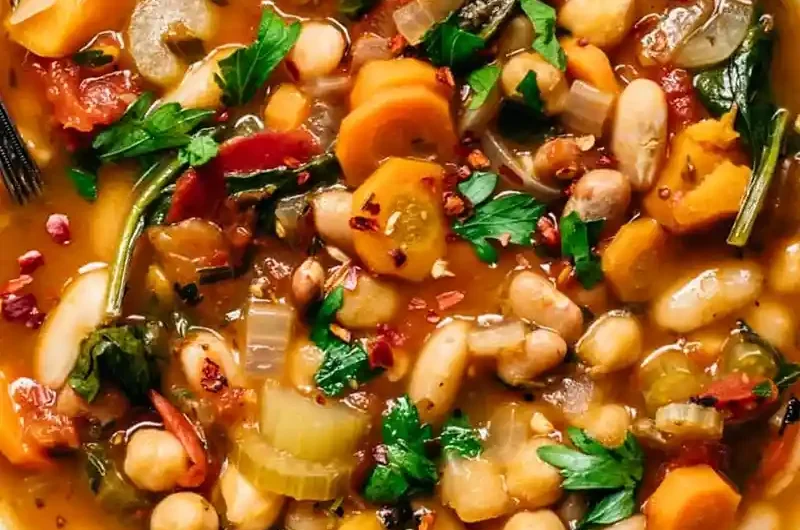
This nutrient-dense vegetable soup combines three different bean varieties with a medley of root vegetables for a satisfying meal. It is a filling, plant-based dish that is ideal for batch cooking and freezer storage.
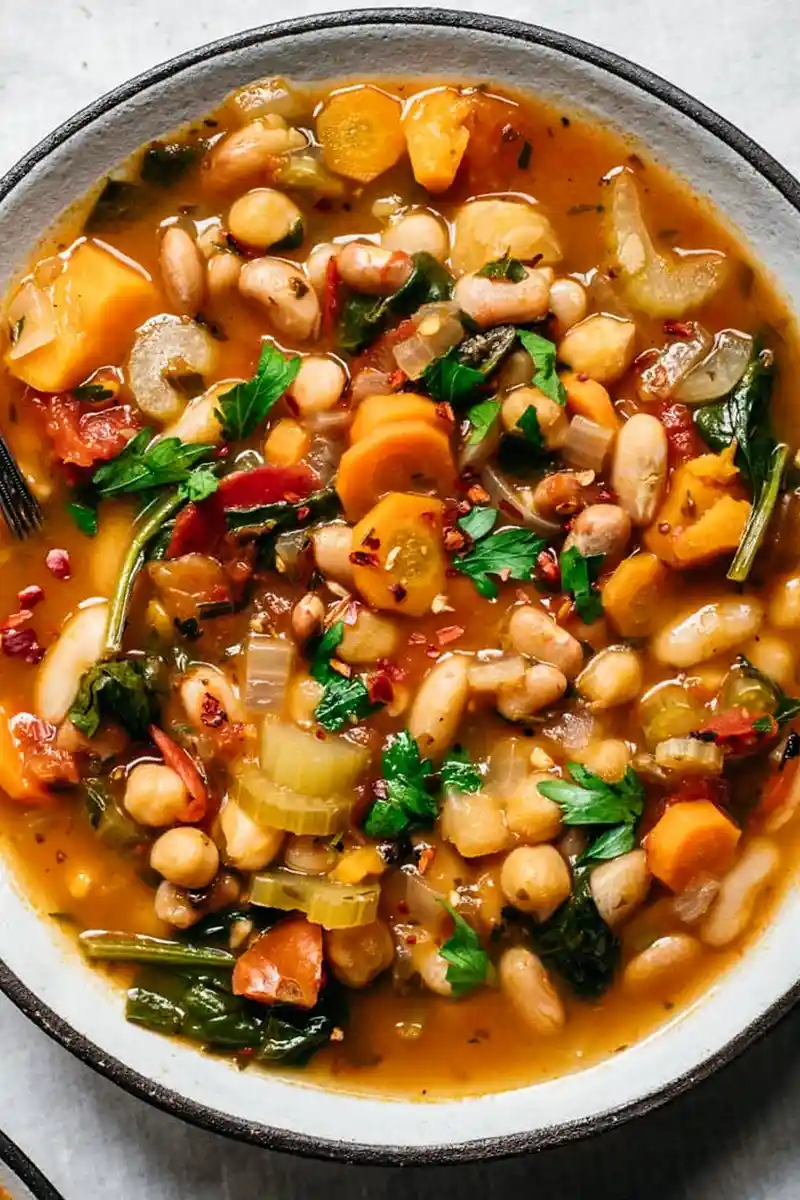
List of ingredients
- 1 1/2 cups dried beans (1/2 cup each of cannellini, garbanzo, and kidney beans) – provides plant-based protein and varied textures.
- 2 tbsp olive oil – used for sautéing the aromatics.
- 1 large yellow onion, diced – adds a foundational savory flavor.
- 1 tbsp garlic, minced – enhances the aromatic base.
- 1 cup diced carrot – adds natural sweetness and color.
- 1 cup diced celery – provides a classic aromatic depth.
- 1 cup diced sweet potato – adds creaminess and heartiness.
- 6 cups vegetable broth – the liquid base for the soup.
- 1 14 oz can diced fire roasted tomatoes – adds smokiness and acidity.
- 1 1/2 tbsp red wine vinegar – brightens the overall flavor profile.
- 2 bay leaves – adds a subtle herbal note.
- 1 tbsp Italian seasoning blend – provides a cohesive herb profile.
- 1 1/4-1 1/2 tsp fine grain kosher salt – enhances all other flavors.
- 1/4-1/2 tsp red pepper flakes – adds a hint of warmth and spice.
- 3 cups baby spinach or kale – adds fresh greens and nutrients.
- 1/4 cup fresh chopped parsley – used for a fresh finish.
step-by-step instructions
- Prepare the beans: Rinse dried beans well. In a large pot, cover beans with water (3 + inches above beans) and add a pinch of salt. Bring to a boil for 2-3 minutes. Remove from heat, cover and let soak for 1.5 hours. Drain and rinse.
- Sauté aromatics: Heat olive oil in a large pot. Sauté onion and garlic for 5-6 minutes, or until translucent and slightly softened, stirring frequently.
- Cook root vegetables: Add carrots, celery and sweet potato. Continue cooking for 6-7 minutes.
- Simmer the soup: Add soaked beans, broth, tomatoes, red wine vinegar, bay leaves, Italian seasoning, salt and red pepper flakes. Bring to a boil, then reduce heat to low and simmer for 40-45 minutes, until the beans are tender.
- Final touch: Stir in kale/spinach and parsley 5 minutes before serving.
Bean Preparation and Selection
Using Canned Beans for Speed
If you do not have time to soak dried beans, you can substitute them with two 15 oz cans of drained and rinsed beans. When using canned beans, the simmering time is significantly reduced to 20-25 minutes. This is because canned beans are already cooked and only need to be heated through.
Choosing Alternative Bean Varieties
While cannellini, garbanzo, and kidney beans are recommended, you can use navy or pinto beans. Using a variety of beans creates a more interesting texture and nutritional profile. If you prefer a uniform consistency, you can use a single variety for the entire recipe.
The Benefits of the Quick-Soak Method
The quick-soak method reduces the preparation time from several hours to just 90 minutes. Boiling the beans briefly before soaking helps break down complex sugars that cause digestive discomfort. It also ensures that the beans cook evenly during the simmering process.
Cleaning Dried Legumes
Always rinse dried beans under cold water before boiling to remove dust or debris. It is important to spread the beans on a flat surface to check for small stones or shriveled beans. Discard any debris to ensure the soup is safe and clean to eat.
Vegetable Customizations
Substituting the Sweet Potato
If you do not have sweet potatoes, regular Yukon Gold potatoes are an excellent alternative. You can also use cubed butternut squash, parsnips, or turnips for a different flavor profile. These root vegetables provide the necessary starch to thicken the broth naturally.
Selecting the Right Leafy Greens
Baby spinach is a great choice for a milder taste and softer texture. Kale is a better option if you prefer a heartier green that holds its structure longer. Both greens should be added at the very end to prevent them from overcooking and losing their vibrant color.
Enhancing the Mirepoix Base
The combination of onion, carrot, and celery is known as a mirepoix and forms the flavor foundation. You can increase the amount of celery for a more earthy taste or add a bit more carrot for sweetness. Sautéing these until softened is crucial for developing deep flavors.
Adding Extra Winter Vegetables
For more volume, consider adding diced rutabaga or chopped leeks to the sauté step. Frozen peas or corn can also be stirred in during the last five minutes of cooking. These additions increase the nutrient density without altering the core flavor of the soup.
Flavor Profile Optimization
The Role of Fire Roasted Tomatoes
Fire roasted tomatoes provide a deeper, smokier flavor compared to standard diced tomatoes. This smokiness complements the earthiness of the beans and the sweetness of the sweet potatoes. Ensure the tomatoes are diced to keep the texture consistent throughout the soup.
Adjusting the Acidity with Vinegar
The red wine vinegar is added to cut through the richness of the beans and vegetables. This acidity brightens the broth and prevents the soup from tasting flat. If you prefer a different tang, apple cider vinegar can be used as a substitute.
Balancing the Spice and Salt
The red pepper flakes provide a subtle heat that can be adjusted based on personal preference. Start with a quarter teaspoon and increase it if you prefer a spicier soup. Always taste the broth before adding the final amount of salt, as vegetable broths vary in sodium levels.
Using Dried versus Fresh Herbs
The Italian seasoning blend provides a concentrated herbal base that simmers into the broth. For extra freshness, you can add a teaspoon of dried oregano or thyme. The fresh parsley added at the end provides a necessary contrast to the cooked herbs.
Serving and Pairing Ideas
Adding Crunchy Toppings
Topping the soup with homemade garlic croutons adds a satisfying textural contrast. Crispy roasted chickpeas are another great vegan option for adding crunch and extra protein. These toppings prevent the soup from feeling too soft in texture.
Pairing with Crusty Breads
Serving this soup with a warm baguette or a slice of sourdough bread is highly recommended. The bread is perfect for dipping into the flavorful broth and soaking up the vegetables. Toasted ciabatta with olive oil and garlic is also a complementary choice.
Incorporating Grains for Heartiness
For a more filling meal, you can stir in cooked brown rice, quinoa, or small pasta shapes. Adding grains transforms the soup into a very hearty stew. If adding pasta, cook it separately to avoid it absorbing too much of the soup broth.
Garnishing for Presentation
A sprinkle of vegan parmesan cheese can add a salty, nutty finish to each bowl. Adding a few extra slices of fresh parsley or a drizzle of high-quality olive oil improves the visual appeal. A final pinch of red pepper flakes on top adds a pop of color.
Storage and Preservation
Optimal Refrigeration Methods
Allow the soup to cool to room temperature before transferring it to an airtight glass container. This prevents condensation from forming on the lid, which can affect the taste. The soup will stay fresh in the refrigerator for up to five days.
Safe Freezing Techniques
This soup is freezer-friendly and can be stored for up to six months. Use freezer-safe containers or heavy-duty freezer bags, leaving a small amount of space at the top for expansion. Freezing is a great way to prepare several meals at once for busy weekdays.
Thawing for Best Texture
The best way to thaw frozen soup is to move it to the refrigerator overnight. This slow thawing process helps maintain the integrity of the beans and vegetables. Avoid thawing in the microwave to prevent uneven heating and mushy textures.
Proper Reheating Temperatures
Reheat the soup in a pot over medium-low heat, stirring occasionally to avoid scorching the bottom. You may notice the soup has thickened during storage; simply add a splash of vegetable broth or water to return it to the desired consistency. Heat until steaming throughout.
Troubleshooting Common Issues
Managing Soup Thickness
If the soup becomes too thick, it is usually due to the starch released by the beans and sweet potatoes. Stir in additional vegetable broth or water a half cup at a time until the consistency is right. Avoid adding too much liquid at once to keep the flavor concentrated.
Fixing Undercooked Beans
If the beans are still firm after the recommended simmering time, continue cooking them on low heat for another 10-15 minutes. Ensure the pot is covered to keep the moisture in. If using old dried beans, they may take longer to soften regardless of the soak time.
Reducing Excessive Saltiness
If the soup tastes too salty, you can add another diced potato to simmer for a few minutes to absorb some of the salt. Alternatively, adding a bit more water or an extra squeeze of lemon juice can help balance the saltiness. Always use low-sodium broth if you are sensitive to salt.
Preventing Vegetable Mushiness
To prevent the carrots and sweet potatoes from becoming too soft, ensure they are diced into uniform, medium-sized cubes. Avoid over-stirring the soup during the simmering phase to keep the vegetables intact. Adding the greens at the very end is the most critical step for maintaining texture.
Frequently Asked Questions
Can I use a slow cooker for this recipe?
Yes, you can adapt this for a slow cooker. Sauté the aromatics and root vegetables in a pan first, then add everything except the greens to the slow cooker and cook on low for 6-8 hours. Stir in the greens and parsley just before serving.
Is this soup gluten-free?
This soup is naturally gluten-free as long as the vegetable broth used is certified gluten-free. Always check the labels on your Italian seasoning and broth to ensure there are no hidden thickeners or additives containing gluten.
Which beans provide the best texture?
The combination of kidney, garbanzo, and cannellini is ideal because it balances firm and creamy textures. Kidney beans provide heartiness, garbanzo beans offer a nutty bite, and cannellini beans create a smooth, creamy element in the broth.
Can I use frozen vegetables instead of fresh?
You can use frozen diced carrots and celery, although the flavor is slightly less intense than fresh. If using frozen sweet potatoes, add them during the simmering stage rather than the sauté stage. Frozen spinach or kale can be used, but ensure they are thawed and squeezed of excess water first.
Print
Hearty Three-Bean Vegetable Soup
- Total Time: 2 hours 30 minutes
- Yield: 8 servings 1x
- Diet: Vegan
Description
This hearty bean vegetable soup is made with three varieties of beans for a nourishing, filling vegan dinner. So cozy for a chilly evening and meal prep/freezer friendly!
Ingredients
- 1 1/2 cups dried beans (1/2 cup each of cannellini, garbanzo and kidney beans)
- 2 tbsp olive oil
- 1 large yellow onion, diced
- 1 tbsp garlic, minced
- 1 cup diced carrot
- 1 cup diced celery
- 1 cup diced sweet potato
- 6 cups vegetable broth
- 1 14 oz can diced fire roasted tomatoes
- 1 1/2 tbsp apple cider vinegar
- 2 bay leaves
- 1 tbsp Italian seasoning blend
- 1 1/4–1 1/2 tsp fine grain kosher salt
- 1/4–1/2 tsp red pepper flakes
- 3 cups baby spinach or kale
- 1/4 cup fresh chopped parsley
Instructions
- Step 1: Rinse dried beans well. In a large pot, cover beans with water (3 + inches above beans) and add a pinch of salt. Bring to a boil for 2-3 minutes. Remove from heat, cover and let soak for 1.5 hours. Drain and rinse.
- Step 2: Heat olive oil in a large pot. Sauté onion and garlic for 5-6 minutes, or until translucent and slightly softened, stirring frequently.
- Step 3: Add carrots, celery and sweet potato. Continue cooking for 6-7 minutes.
- Step 4: Add soaked beans, broth, tomatoes, apple cider vinegar, bay leaves, Italian seasoning, salt and red pepper flakes. Bring to a boil, then reduce heat to low and simmer for 40-45 minutes, until the beans are tender.
- Step 5: Stir in kale/spinach and parsley 5 minutes before serving.
Notes
Don’t have any dried beans? Substitute with 2 15oz. cans of beans. Drain and rinse well before adding to the soup. If using canned beans, this soup will only need to simmer for 20-25 minutes before serving. You can use just about any variety of bean, including navy, pinto, kidney, etc.
- Prep Time: 90 minutes
- Cook Time: 1 hour
- Category: Soups
- Method: Stovetop
- Cuisine: American
Nutrition
- Serving Size: 1 Bowl
- Calories: 142 kcal
- Sugar: 6.5 g
- Sodium: 1216.2 mg
- Fat: 3.9 g
- Saturated Fat: 0.6 g
- Unsaturated Fat: 3.3 g
- Trans Fat: 0 g
- Carbohydrates: 23 g
- Fiber: 6.8 g
- Protein: 4 g
- Cholesterol: 0 mg
Keywords: three-bean soup, vegetable soup, vegan dinner, healthy soup, plant-based protein