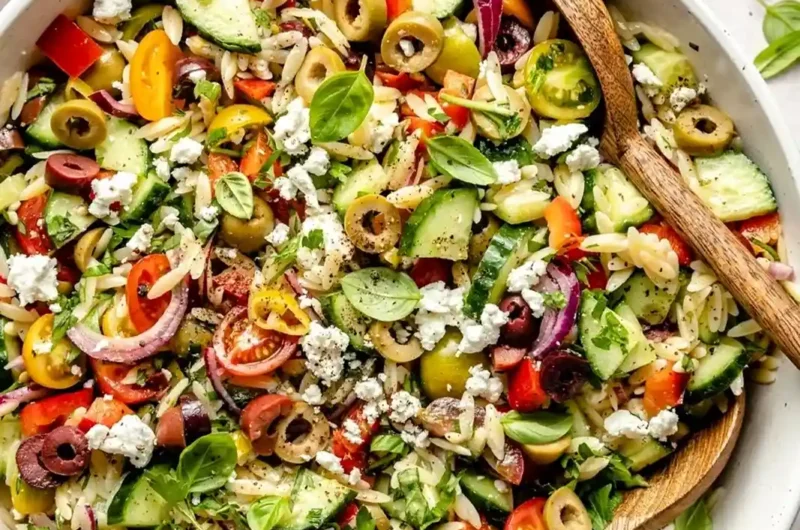
This refreshing pasta salad combines tender orzo with a variety of crisp vegetables, salty olives, and tangy feta cheese. It is a versatile dish that works equally well as a side for grilled proteins or as a standalone healthy lunch.
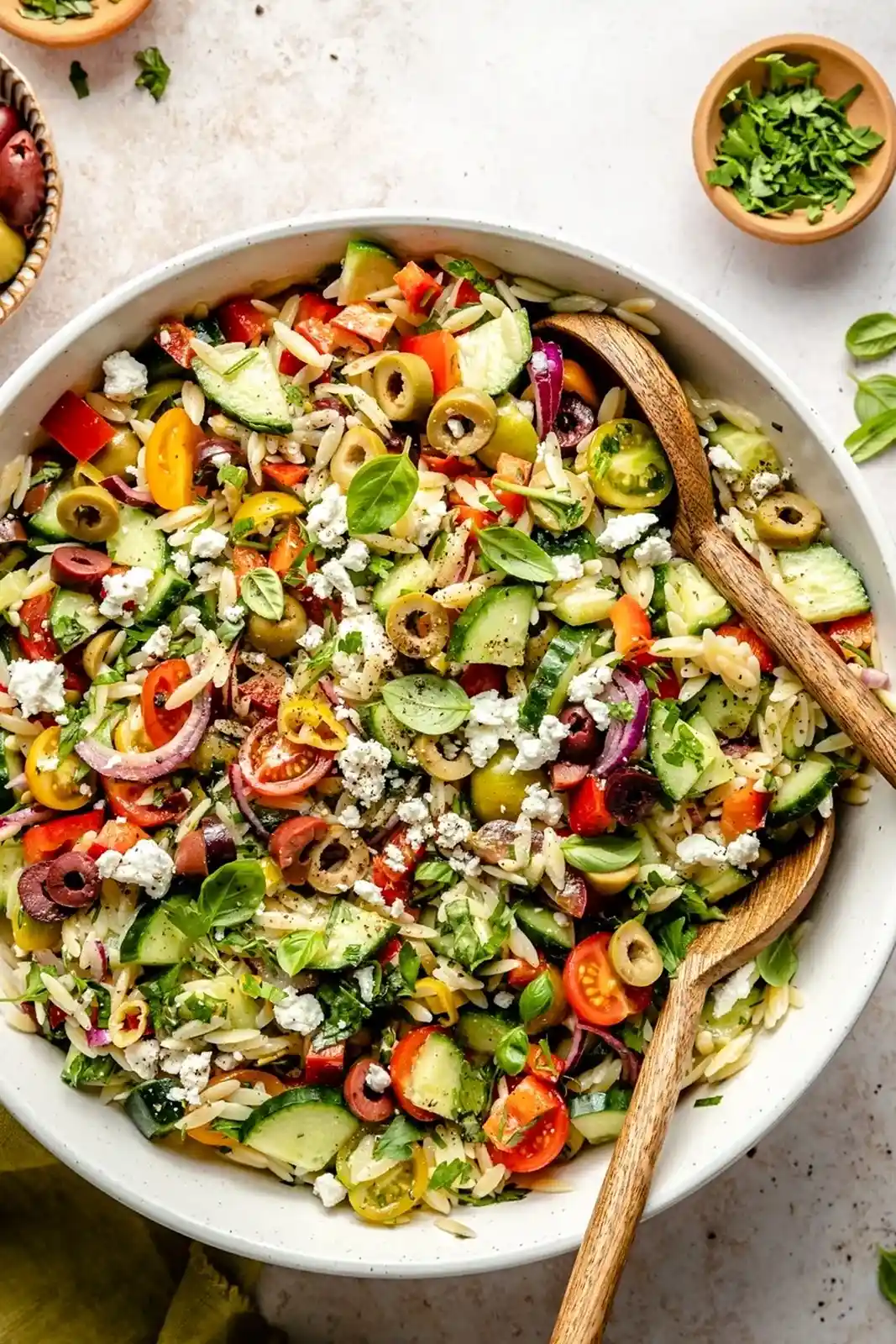
List of ingredients
- 1/4 cup olive oil – use extra virgin for the best flavor profile.
- 3 tablespoons lemon juice – freshly squeezed for maximum brightness.
- 1 clove garlic – finely minced to distribute flavor evenly.
- 1 teaspoon dijon mustard – acts as an emulsifier for the dressing.
- 1/2 teaspoon dried oregano – provides a classic Mediterranean aroma.
- 1/2 teaspoon salt – adjust based on the saltiness of your feta.
- Freshly ground black pepper – to taste.
- 10 ounces orzo – a small rice-shaped pasta.
- 1 1/2 cups cherry or grape tomatoes – halved; heirloom varieties add great color.
- 2 Persian cucumbers – sliced and quartered for bite-sized pieces.
- 1 red bell pepper – diced small to match the pasta size.
- 1/2 cup pitted Kalamata olives – chopped or sliced.
- 1/2 cup pitted green olives – chopped or sliced.
- 1/3 cup sliced pepperoncini – adds a mild vinegary heat.
- 1/4 cup red onion – thinly sliced for a sharp contrast.
- 1/2 cup feta crumbles – adds a creamy, salty finish.
- 1/3 cup fresh basil – chopped finely.
- 1/4 cup fresh parsley – chopped finely.
step-by-step instructions
- Prepare the dressing: Whisk together the olive oil, lemon juice, garlic, dijon mustard, oregano, salt, and pepper in a small bowl until well combined. Alternatively, place all ingredients in a mason jar, secure the lid, and shake vigorously.
- Cook the pasta: Boil the orzo in salted water until al dente according to the package instructions. Drain the pasta thoroughly and transfer it to a large mixing bowl.
- Combine ingredients: Add the halved tomatoes, sliced cucumbers, diced bell pepper, Kalamata olives, green olives, pepperoncinis, sliced red onion, feta crumbles, basil, and parsley to the bowl with the cooked orzo.
- Final toss: Pour the prepared dressing over the salad ingredients. Toss everything together gently until the pasta and vegetables are evenly coated, then serve.
Orzo Cooking Techniques
The Standard Boiling Method
Bring a large pot of salted water to a rolling boil before adding the orzo. Stir occasionally to prevent the small grains from sticking to the bottom of the pot. Once the pasta reaches an al dente texture, usually around 6 to 8 minutes, drain it immediately in a colander.
The Absorption Method
Combine the orzo with double the amount of water in a pot and bring to a boil. Reduce the heat to low, cover the pot with a tight-fitting lid, and simmer until all liquid is absorbed. This method results in a slightly different texture and is useful if you want to infuse the pasta with a vegetable broth.
Preventing Pasta Clumping
To ensure the orzo remains separate in the salad, you can rinse the cooked pasta under cold water to remove excess starch. Alternatively, toss the drained pasta with a small amount of olive oil before adding the other ingredients. This prevents the grains from sticking together as they cool in the refrigerator.
Ingredient Selection and Preparation
Choosing the Best Tomatoes
Heirloom cherry tomatoes are recommended for their diverse colors and sweetness. If using larger grape tomatoes, ensure they are halved or quartered so they fit comfortably on a fork with the orzo. Ensure the tomatoes are ripe but firm to avoid adding too much excess moisture to the salad.
Selecting Crisp Cucumbers
Persian cucumbers are ideal because they have thinner skins and smaller seeds than standard cucumbers. This eliminates the need for peeling and prevents the salad from becoming watery. Slice them into rounds and then quarter those rounds to maintain a consistent size with the pasta.
Using the Right Olive Varieties
Combining Kalamata and green olives provides a balance of deep, fruity saltiness and a brighter, briny tang. Ensure the olives are pitted and chopped into small pieces so that every bite contains a bit of olive. Drained olives work best to keep the dressing from becoming diluted.
Managing Pepperoncini Heat
Pepperoncini offer a mild, vinegary heat that cuts through the richness of the feta. If you prefer a spicier salad, you can add a teaspoon of the brine from the jar into the dressing. For those sensitive to spice, these can be replaced with mild banana peppers or omitted entirely.
Working with Fresh Herbs
Fresh basil and parsley are essential for the aromatic quality of this dish. Chop the herbs just before adding them to the salad to prevent bruising and oxidation. Using a sharp knife and a gentle chopping motion ensures the leaves stay vibrant and green.
Customization and Substitutions
Alternative Pasta Shapes
While orzo is traditional, pearl couscous offers a similar size and a slightly nuttier flavor. For a heartier texture, use bowtie pasta or fusilli, though you may need to increase the amount of dressing to cover the larger surface area. Cheese-filled tortellini can also be used for a more filling meal.
Adding Lean Protein
To turn this side dish into a main course, add grilled chicken breast or shredded roasted turkey. For vegetarian protein, stir in a can of rinsed chickpeas or cannellini beans. These additions provide satiety and make the salad a complete meal for lunch or dinner.
Alternative Cheese Options
If you prefer a different flavor profile, replace the feta with cubed provolone or mozzarella pearls. Shaved parmesan can be added for a sharper, nuttier taste. For a vegan version, use a plant-based feta alternative or omit the cheese and add extra olives for saltiness.
Incorporating Extra Vegetables
Marinated artichoke hearts add a sophisticated tang and a different texture to the mix. Sliced black olives or diced celery can add more crunch and variety. Fresh baby spinach or arugula can be folded in at the end for additional greens.
Dressing Optimization
Emulsifying the Vinaigrette
The dijon mustard in the recipe serves as an emulsifier, which binds the oil and lemon juice together. This prevents the dressing from separating and ensures it clings to the pasta. Whisking vigorously or shaking in a jar is the most effective way to achieve a smooth consistency.
Adjusting Acidity Levels
While lemon juice provides a fresh, citrusy note, you can substitute it with red wine vinegar or apple cider vinegar. Red wine vinegar offers a more traditional Italian profile, while apple cider vinegar adds a subtle sweetness. Adjust the amount based on the desired level of tanginess.
Balancing Garlic Intensity
Freshly minced garlic provides a sharp, pungent flavor that is characteristic of Italian salads. If you prefer a milder taste, you can roast the garlic first or use a small amount of garlic powder. Let the dressing sit for 10 minutes before tossing to allow the garlic to infuse the oil.
Advanced Prep and Storage
Component Meal Prepping
You can prepare the salad components separately to keep them as fresh as possible. Chop the vegetables, make the dressing, and cook the pasta, then store them in individual airtight containers. Assemble the salad by tossing everything together just before serving to maintain maximum crunch.
Full Assembly Timing
Assembling the salad a few hours in advance allows the pasta to absorb the flavors of the dressing. However, avoid adding the fresh basil and parsley until shortly before serving, as they can wilt. The feta and olives hold up well and can be mixed in during the initial assembly.
Airtight Container Selection
Store leftovers in glass containers with locking lids to prevent the salad from absorbing other smells in the refrigerator. Glass is preferable to plastic as it does not retain odors and keeps the ingredients colder. Ensure there is enough room in the container to toss the salad without crushing the vegetables.
Refrigeration Guidelines
Keep the salad refrigerated at or below 40 degrees Fahrenheit to maintain safety and freshness. The salad typically stays fresh for up to 5 days in the fridge. If the pasta seems too dry after a few days, stir in a small splash of olive oil or lemon juice to revive the texture.
Serving and Presentation
Optimal Serving Temperature
This salad is best served chilled or at room temperature. For a more refreshing experience, keep it in the refrigerator until the moment of serving. If you prefer it at room temperature, take it out of the fridge about 30 minutes before guests arrive.
Pairing with Main Dishes
The acidity of the dressing makes this salad a perfect pairing for rich, grilled meats like steak or chicken. It also complements baked fish, such as salmon or cod, by providing a bright contrast. For a lighter meal, serve it alongside a bowl of fresh fruit or a crusty piece of sourdough bread.
Plating for Parties
When serving at a potluck or barbecue, transfer the salad to a wide, shallow bowl to showcase the colorful vegetables. Garnish the top with a few whole basil leaves and a sprinkle of extra feta crumbles. This makes the dish visually appealing and highlights the fresh ingredients used.
Common Questions
How can I stop the orzo from sticking?
Prevent sticking by cooking the pasta al dente and rinsing it with cold water immediately after draining. Tossing the pasta with a small amount of olive oil before adding the vegetables also creates a barrier that keeps the grains separate.
Can I use dried herbs instead of fresh?
While fresh basil and parsley provide the best flavor, you can use dried versions if necessary. Use a ratio of one teaspoon of dried herbs for every tablespoon of fresh herbs. Be aware that dried herbs have a more concentrated, less bright taste.
What can I use if I don’t have pepperoncini?
You can substitute pepperoncini with sliced banana peppers, pickled jalapeños for more heat, or simply omit them. If you want the vinegary flavor without the pepper, a small amount of capers can provide a similar salty, tangy element.
Is this salad suitable for freezing?
This salad is not suitable for freezing because the fresh vegetables, such as cucumbers and tomatoes, will lose their cellular structure and become mushy upon thawing. Store it in the refrigerator and consume within five days for the best quality.
Print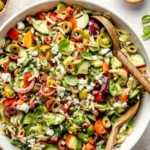
Herby Olive Italian Orzo Salad
- Total Time: 30 minutes
- Yield: 6 servings 1x
- Diet: Vegetarian
Description
Beautiful herby Italian orzo salad filled with crunchy veggies, savory olives, and delicious feta cheese. Everything gets tossed in a light homemade Italian dressing for the perfect warm-weather lunch or dinner that’s easy to customize.
Ingredients
- ¼ cup olive oil
- 3 tablespoons lemon juice
- 1 clove garlic, finely minced
- 1 teaspoon dijon mustard
- ½ teaspoon dried oregano
- ½ teaspoon salt
- Freshly ground black pepper
- 10 ounces orzo
- 1 ½ cups halved cherry or grape tomatoes
- 2 persian cucumbers, sliced and quartered
- 1 red bell pepper, diced
- ½ cup pitted chopped or sliced kalamata olives
- ½ cup pitted chopped or sliced green olives
- ⅓ cup sliced pepperoncini
- ¼ cup thinly sliced red onion
- ½ cup feta crumbles
- ⅓ cup chopped fresh basil
- ¼ cup chopped fresh parsley
Instructions
- Step 1: Whisk together the olive oil, lemon juice, garlic, dijon, oregano and salt and pepper in a small bowl until well combined.
- Step 2: Cook your pasta until al dente according to the directions on the package, drain and add to a large bowl.
- Step 3: Add the tomatoes, cucumber, bell pepper, kalamata olives, green olives, pepperoncinis, red onion, feta, basil and parsley to the bowl with the pasta, pour dressing over the top and toss together until combined.
Notes
For extra protein, feel free to add grilled chicken, chickpeas or white beans to the salad. To make gluten-free, use a gluten-free orzo or your favorite gluten-free pasta.
- Prep Time: 20 minutes
- Cook Time: 10 minutes
- Category: Dinner, Lunch, Side Dish
- Method: Tossing
- Cuisine: Italian
Nutrition
- Serving Size: 1 serving
- Calories: 359 kcal
- Sugar: 3.3 g
- Sodium: 780 mg
- Fat: 18.3 g
- Saturated Fat: 3.8 g
- Unsaturated Fat: 14.5 g
- Trans Fat: 0 g
- Carbohydrates: 41.6 g
- Fiber: 3.6 g
- Protein: 8.9 g
- Cholesterol: 15 mg
Keywords: Italian orzo salad, pasta salad, herby olive salad, vegetarian, meal prep