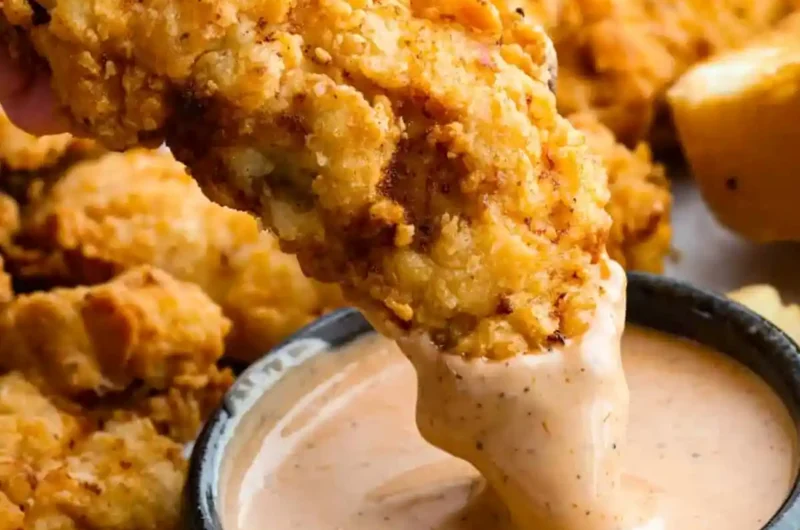
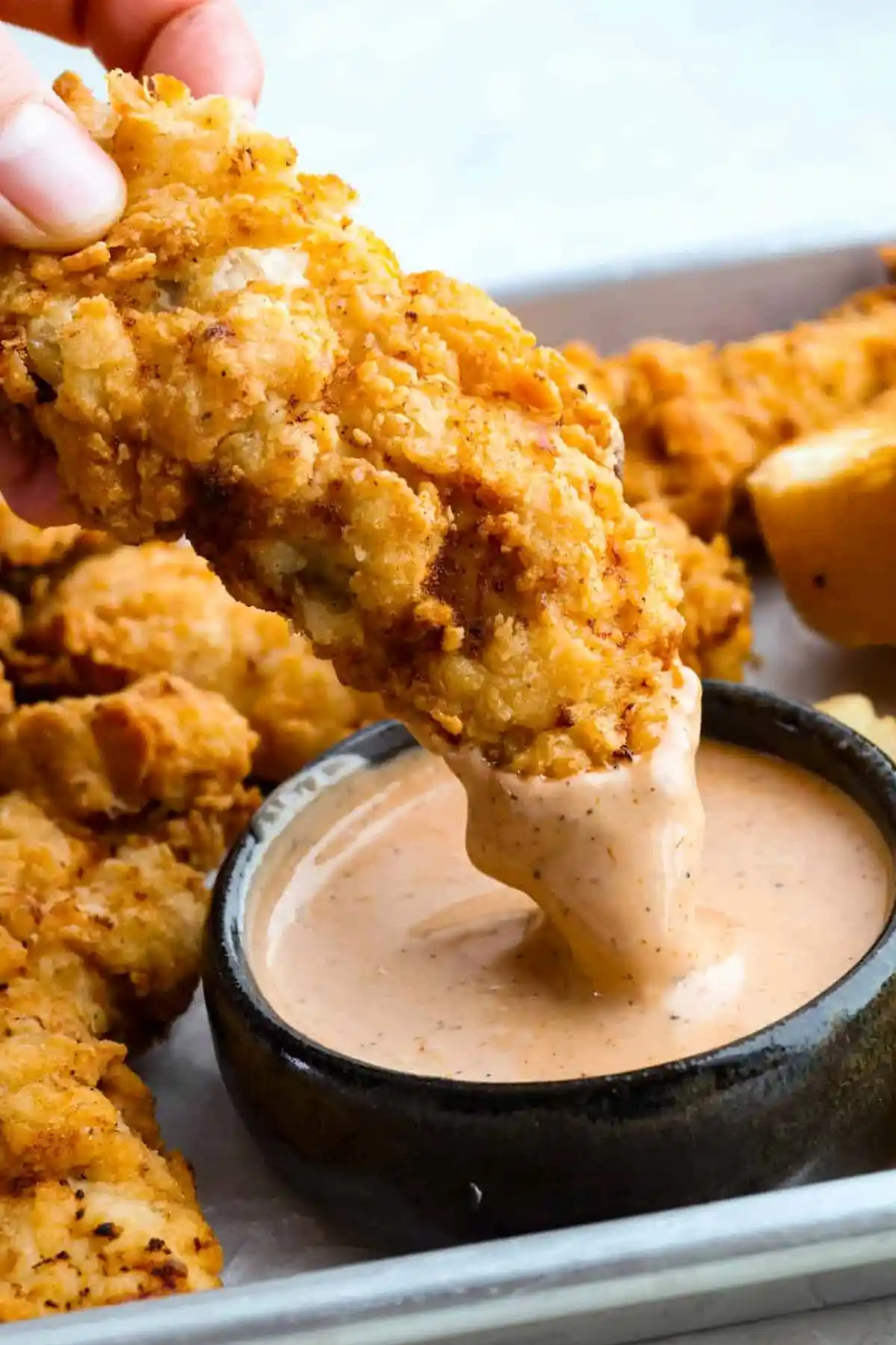
Bring the taste of famous crispy chicken tenders to your own kitchen with this detailed guide. This recipe uses a specific double-breading method to achieve a light, crunchy exterior and tender meat.
List of ingredients
- 2 pounds chicken tenders (tendons removed) – ensure these are trimmed for a better eating experience.
- 5-6 cups vegetable oil – used for deep frying to achieve a golden crust.
- 2 cups buttermilk – the base for the marinade to tenderize the meat.
- 2 teaspoons salt – for the marinade seasoning.
- 1 teaspoon ground black pepper – for the marinade seasoning.
- 1 teaspoon onion powder – for the marinade seasoning.
- ¡/2 teaspoon garlic powder – for the marinade seasoning.
- ¡/2 teaspoon paprika – for the marinade seasoning.
- 2 ¡/4 cups all-purpose flour – the primary component of the breading.
- ¡/2 cup cornstarch – added to the flour for extra crispiness.
- 1 ¡/2 teaspoon salt – for the breading seasoning.
- ¡/2 teaspoon ground black pepper – for the breading seasoning.
- 1 teaspoon onion powder – for the breading seasoning.
- 1 teaspoon garlic powder – for the breading seasoning.
- ¡/2 teaspoon paprika – for the breading seasoning.
step-by-step instructions
- Prepare the meat: Trim 2 pounds of chicken tenders by removing the tendons from each piece. Place the trimmed chicken in a large mixing bowl.
- Season and marinate: Add 2 cups of buttermilk, 2 teaspoons salt, 1 teaspoon black pepper, 1 teaspoon onion powder, ¡/2 teaspoon garlic powder, and ¡/2 teaspoon paprika to the bowl. Toss the chicken thoroughly until every piece is fully coated, then refrigerate to marinate for at least 4 hours, or up to 24 hours.
- Heat the frying oil: Pour 5-6 cups of vegetable oil into a large, deep pot until it is approximately 2 inches deep. Heat the oil over high heat until it reaches a steady 350°F.
- Prepare the breading: In a separate large bowl, combine 2 ¡/4 cups all-purpose flour, ¡/2 cup cornstarch, 1 ¡/2 teaspoon salt, ¡/2 teaspoon black pepper, 1 teaspoon onion powder, 1 teaspoon garlic powder, and ¡/2 teaspoon paprika. Whisk until the spices are evenly distributed.
- Initial coating: Remove chicken strips from the marinade one at a time. Let the excess buttermilk drip off before placing them into the flour mixture.
- Double-breading process: Coat each piece of chicken fully with the flour mixture, pressing the breading onto the meat with your hands. Dip the piece back into the marinade, then dip it into the flour mixture a second time for an extra-flaky coating.
- Fry the chicken: Fry the breaded tenders in small batches for 5-7 minutes. Flip them halfway through the cooking process until the thickest part of the tenders reaches an internal temperature of 165°F.
- Drain and serve: Transfer the finished chicken to a baking pan lined with paper towels or place them on a wire rack to drain excess oil. Serve immediately.
Mastering the Deep Frying Process
Maintaining Constant Oil Temperature
Using a kitchen thermometer is essential to keep the oil at 350°F. If the oil is too hot, the breading will burn before the chicken cooks through. If it is too cool, the chicken will absorb too much oil and become greasy.
Preventing Pot Overcrowding
Always fry the tenders in small batches to avoid dropping the oil temperature too quickly. Overcrowding the pot prevents the chicken from searing properly and can cause the pieces to stick together. Leave enough space for the tenders to float freely.
Choosing the Right Frying Vessel
A heavy-bottomed pot or a dedicated deep fryer helps maintain a more consistent heat distribution. Cast iron or stainless steel pots are ideal because they hold heat better than thin aluminum pans. Ensure the pot is deep enough to prevent oil splatter.
Using a Wire Cooling Rack
Placing fried chicken on a wire rack instead of paper towels prevents the bottom from steaming. Air circulation around the entire piece of chicken keeps the breading crisp. Paper towels can trap moisture, which may soften the crust quickly.
Air Fryer and Oven Alternatives
Air Fryer Cooking Method
For a lower-fat option, spray the breaded tenders lightly with cooking oil to help them brown. Air fry at 400°F for 12 minutes, flipping them halfway through. Spray them again with oil after flipping to ensure an even, golden finish.
Oven Baking Directions
Preheat your oven to 425°F and place a wire rack over a baking sheet. Spray the tenders with oil and bake for 15-20 minutes, turning them once. This method provides a decent crunch, though it will not be as crisp as deep frying.
Adjusting Times for Frozen Tenders
When cooking tenders from a frozen state in the air fryer, set the temperature to 400°F for 12-15 minutes. If using an oven, bake at 425°F for 20-25 minutes. Always check that the internal temperature reaches 165°F.
Customizing Flavor and Texture
Adding Spicy Heat to the Recipe
To create a spicy version, add 1-2 teaspoons of your favorite hot sauce directly into the buttermilk marinade. You can also add a pinch of cayenne pepper to the flour breading mixture for an extra kick of heat on the exterior.
Adjusting the Salt Levels
Taste the marinade before adding the chicken to ensure the saltiness is to your preference. If you are serving the chicken with a salty dipping sauce, you may want to slightly reduce the salt in the breading mixture.
Using Chicken Breasts Instead of Tenders
If you cannot find chicken tenders, use boneless skinless chicken breasts. Slice the breasts into even vertical strips of about one inch in thickness. Ensure the pieces are uniform in size so they cook evenly in the oil.
Enhancing the Crunch with Cornstarch
The addition of cornstarch to the all-purpose flour is what creates the signature light, crisp texture. Cornstarch prevents excess gluten from forming, which results in a thinner, crunchier shell rather than a cakey one.
Buttermilk Substitutes and Variations
Homemade Buttermilk Alternative
If you do not have store-bought buttermilk, add 1 tablespoon of lemon juice or white vinegar to 1 cup of whole milk. Let the mixture sit for 5-10 minutes until it thickens slightly before using it in the marinade.
Greek Yogurt for Tenderizing
Plain Greek yogurt can be used as a thick substitute for buttermilk. Thin the yogurt with a small amount of milk or water to reach a pourable consistency. The acidity in the yogurt helps tenderize the chicken proteins similarly to buttermilk.
Dairy-Free Marinade Options
For a dairy-free version, use an unsweetened soy or almond milk mixed with a tablespoon of apple cider vinegar. This provides the necessary acidity to tenderize the meat while remaining plant-based. Ensure the mixture is well-stirred before adding spices.
Storage and Long-Term Preservation
Refrigerating Leftover Tenders
Store cooked chicken tenders in an airtight container in the refrigerator for up to 5 days. Keep in mind that the breading will naturally soften over time due to moisture migration from the meat. Avoid stacking them too tightly to maintain as much texture as possible.
Freezing Freshly Fried Chicken
Allow fried tenders to cool completely on a wire rack before freezing. Flash freeze them on the rack for 2-3 hours to prevent them from sticking together. Once frozen solid, transfer them to a freezer-safe bag or airtight container for up to 3 months.
Freezing Raw Breaded Tenders
You can prepare the breading process and freeze the raw tenders before frying. Arrange them in a single layer on a baking sheet and freeze until firm. This allows you to fry them directly from the freezer for a quick meal.
Optimal Reheating Techniques
Air Fryer Reheating for Maximum Crisp
The air fryer is the best tool for reheating fried chicken. Heat the tenders at 360°F for 6-8 minutes, flipping them halfway through. This removes excess oil and restores the crunch to the breading.
Oven Reheating Method
Preheat your oven to 400°F and place the tenders on a wire rack. Bake for about 15 minutes, flipping halfway through the process. This method is slower than the air fryer but works well for larger quantities of chicken.
Microwave Reheating Limitations
Microwaving chicken for 1-2 minutes is the fastest method, but it will make the breading soft and soggy. Only use this method if texture is not a priority or if you plan to toast the chicken in a pan afterward.
Troubleshooting Common Issues
Dealing with Breading That Falls Off
If the breading separates from the chicken, it is often because the chicken was too wet when it hit the flour. Ensure you let the excess marinade drip off and press the flour firmly into the meat with your palms during the coating process.
Preventing Undercooked Centers
If the exterior is brown but the inside is raw, your oil temperature was likely too high. Lower the heat and cook the tenders for a longer period at a lower temperature. Always use a meat thermometer to verify the 165°F internal temp.
Reducing Excessive Oil Absorption
Chicken becomes greasy when the oil temperature drops too low or when the pot is overcrowded. Maintain the 350°F temperature and fry in small batches. Ensuring the breading is sealed tightly also helps prevent oil from penetrating the meat.
Serving and Pairing Ideas
Classic Side Dish Pairings
Serve these tenders with crinkle-cut fries and a side of creamy coleslaw for a full restaurant experience. The acidity of the coleslaw cuts through the richness of the fried chicken, balancing the meal.
Creating the Perfect Dipping Sauce
Pair the chicken with a mayonnaise-based sauce mixed with garlic powder, Worcestershire sauce, and black pepper. A touch of lemon juice or vinegar in the sauce adds a brightness that complements the savory breading.
Vegetable Side Suggestions
For a healthier balance, serve the tenders with steamed broccoli or a fresh garden salad. The crispness of the chicken pairs well with a light vinaigrette or a creamy ranch dressing on the side.
Frequently Asked Questions
Can I use chicken breasts?
Yes, you can use boneless skinless chicken breasts. Simply slice them into vertical strips of equal thickness to ensure they cook at the same rate as tenders.
How long can I marinate the chicken?
The chicken should marinate for a minimum of 4 hours. For the best flavor and tenderness, you can leave them in the refrigerator for up to 24 hours.
Why use cornstarch in the breading?
Cornstarch reduces the amount of gluten developed in the flour. This results in a crispier, lighter crust that stays crunchy longer than a flour-only coating.
What is the best oil for frying?
Vegetable oil, canola oil, or peanut oil are best because they have high smoke points. This prevents the oil from breaking down or smoking at the required 350°F temperature.
Can I freeze the chicken before breading?
It is better to marinate and freeze the chicken raw before breading. If you freeze them after breading, ensure they are flash-frozen first to avoid the coating from cracking.
How do I know when the chicken is done?
The most reliable way is using a meat thermometer to check that the thickest part of the tender has reached 165°F. Visually, they should be a deep golden brown.
Can I use milk instead of buttermilk?
You can, but the chicken will not be as tender. To mimic buttermilk, add a tablespoon of acid like lemon juice or vinegar to regular milk and let it sit for a few minutes.
Print
Homemade Crispy Chicken Tenders
- Total Time: 4 hours 50 minutes
- Yield: 6 servings 1x
- Diet: General
Description
Everything you love about Raising Cane’s in your own kitchen. Bright seasoning and a crisp exterior that stays light and crunchy.
Ingredients
- 2 pounds chicken tenders (tendons removed)
- 5–6 cups vegetable oil (for frying)
- 2 cups buttermilk
- 2 teaspoons salt
- 1 teaspoon ground black pepper
- 1 teaspoon onion powder
- ½ teaspoon garlic powder
- ½ teaspoon paprika
- 2 ¼ cups all-purpose flour
- ¾ cup cornstarch
- 1 ½ teaspoon salt
- ½ teaspoon ground black pepper
- 1 teaspoon onion powder
- 1 teaspoon garlic powder
- ½ teaspoon paprika
Instructions
- Trim: Trim 2 pounds chicken tenders by removing the tendons from them. Add the chicken to a large bowl.
- Marinade: Add 2 cups buttermilk, 2 teaspoons salt, 1 teaspoon ground black pepper, 1 teaspoon onion powder, ½ teaspoon garlic powder, and ½ teaspoon paprika to the bowl with the chicken. Toss everything together until well combined and let it marinate for at least 4 hours, or up to 24 hours.
- Oil: Add 5-6 cups vegetable oil to a large, deep pot until it is about 2 inches deep and heat over high heat until it reaches 350 degrees Fahrenheit.
- Breading: Combine 2 ¼ cups all-purpose flour, ¾ cup cornstarch, 1 ½ teaspoon salt, ½ teaspoon ground black pepper, 1 teaspoon onion powder, 1 teaspoon garlic powder, and ½ teaspoon paprika in a large bowl.
- Coat: Remove the chicken strips from the marinade one at a time, letting the excess marinade drip off before adding them to the breading mixture.
- Double Bread: Coat each piece of chicken fully with flour, pressing it onto the chicken with your hands before dipping it back into the marinade and again into the flour.
- Fry: Fry the breaded chicken in batches for 5-7 minutes, flipping them halfway through, until the thickest part of the tenders reaches 165 degrees Fahrenheit.
- Drain: Transfer them to a baking pan lined with paper towels, or a wire rack to drain.
Notes
Marinate up to 24 hours. Refrigerate leftovers up to 5 days. Reheat via microwave, air fry at 360°F for 6–8 minutes, or bake at 400°F for 15 minutes. Freeze up to 3 months.
- Prep Time: 35 minutes
- Cook Time: 15 minutes
- Category: Dinner
- Method: Deep Frying
- Cuisine: American
Nutrition
- Serving Size: 1 serving
- Calories: 461 kcal
- Sugar: 4 g
- Sodium: 1620 mg
- Fat: 7 g
- Saturated Fat: 2 g
- Unsaturated Fat: 3 g
- Trans Fat: 0.02 g
- Carbohydrates: 56 g
- Fiber: 2 g
- Protein: 40 g
- Cholesterol: 106 mg
Keywords: copycat, Raising Cane’s, chicken tenders, buttermilk chicken, crispy chicken