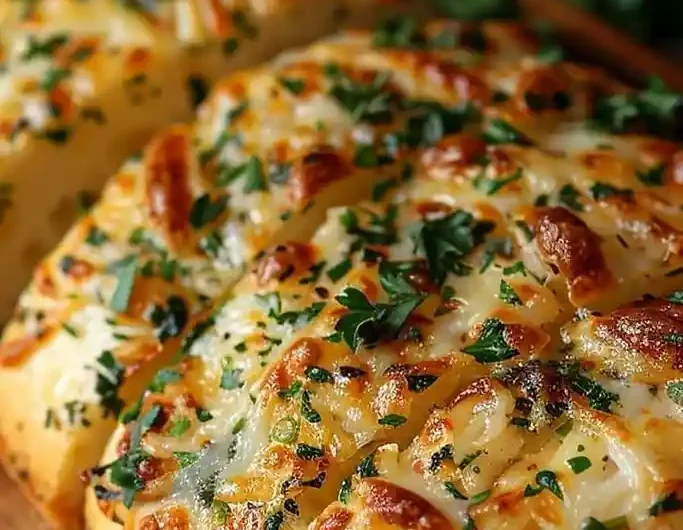
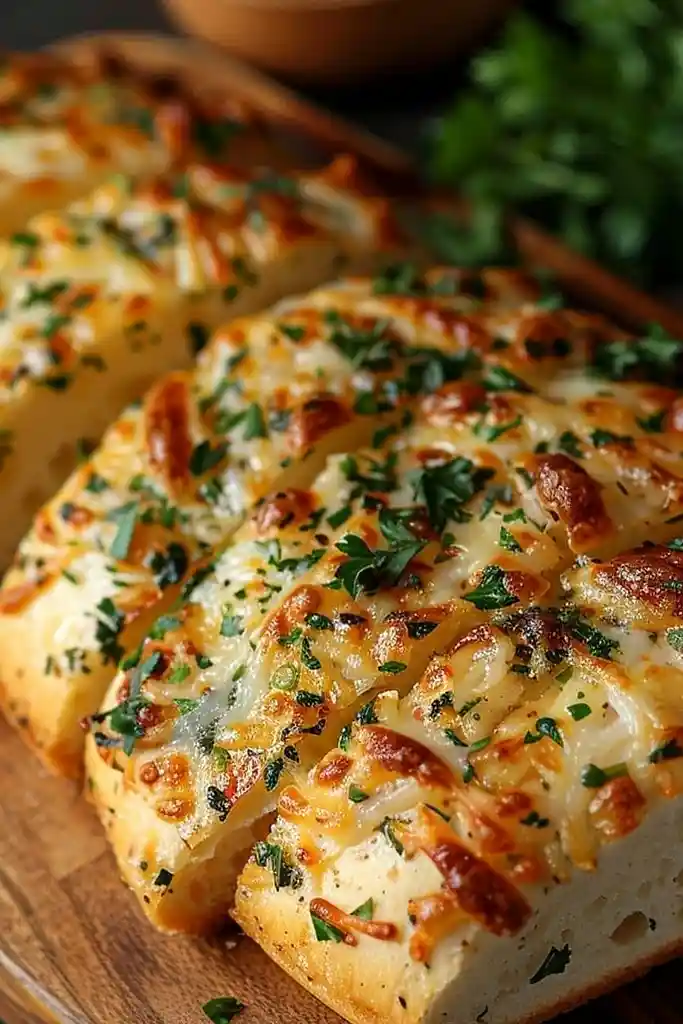
This savory bread combines aromatic Mediterranean herbs with gooey melted cheese for a professional bakery finish at home. It is an ideal companion for pasta dishes or as a standalone appetizer.
List of ingredients
- 4 cups all-purpose flour – provides the necessary structure for the loaf.
- 1 packet (2¡ teaspoons) active dry yeast – ensures the bread rises properly.
- 1¡¼ cups warm water (about 110°F) – activates the yeast without killing it.
- 1 tablespoon salt – regulates yeast activity and enhances overall flavor.
- 1 tablespoon sugar – provides food for the yeast to speed up fermentation.
- 2 tablespoons dried Italian herbs (basil, oregano, thyme, and rosemary) – adds the characteristic savory aroma.
- 1 cup shredded mozzarella cheese – creates a stretchy, creamy texture.
- ½ cup grated Parmesan cheese – adds a salty, nutty depth to the crumb.
- Extra flour for dusting – prevents the dough from sticking during kneading.
step-by-step instructions
- Prepare the Dough: Combine warm water, sugar, and yeast in a large mixing bowl. Let the mixture sit for 5 minutes until frothy, then stir in flour, salt, dried herbs, mozzarella, and Parmesan until a sticky dough forms.
- Knead the Dough: Turn the dough onto a floured surface. Knead for 8-10 minutes until the texture is smooth and elastic; add small amounts of flour if the dough remains too tacky.
- Proof the Dough: Place the dough in a greased bowl and cover it with a clean kitchen towel. Let it rise in a warm, draft-free area for 1-2 hours until it has doubled in size.
- Shape the Bread: Gently punch down the dough to release excess air. Shape it into a loaf or transfer it to a greased bread pan, then cover and let it rise again for 30 minutes.
- Preheat the Oven: Set the oven to 450°F (230°C). Place a shallow pan of water on the bottom rack to generate steam during the initial baking phase.
- Bake the Bread: Bake for 25-30 minutes until the crust is golden brown and the loaf sounds hollow when tapped. The internal temperature should reach 200-210°F.
- Cool and Serve: Transfer the bread to a wire rack to cool completely before slicing. This prevents the interior from becoming gummy.
Optimal Herb Selection and Usage
The Role of Dried Basil in Savory Bread
Basil provides a sweet and slightly peppery note that balances the saltiness of the cheese. When using dried basil, ensure it is rubbed between your palms before adding it to the flour to release the essential oils.
Adding Earthiness with Dried Oregano
Oregano is a cornerstone of Italian flavor, offering a pungent and earthy profile. It pairs exceptionally well with Parmesan cheese and helps define the classic “pizza-style” aroma of the bread.
Integrating Rosemary for Piney Notes
Rosemary adds a woody, pine-like fragrance that creates a more sophisticated taste. Because rosemary is quite potent, ensure it is finely crushed so you do not get large, woody pieces in the dough.
Using Thyme for Subtle Complexity
Thyme contributes a light, lemony undertone that prevents the bread from tasting too heavy. It works in harmony with the other herbs to create a balanced, multi-dimensional flavor profile.
Choosing Between Fresh and Dried Herbs
Dried herbs are more concentrated and integrate more evenly into the dough without adding excess moisture. If you prefer fresh herbs, use a ratio of three times the amount of dried herbs, but chop them very finely to avoid large pockets of moisture.
Selecting the Best Cheeses
The Melting Properties of Mozzarella
Mozzarella is essential for achieving the signature gooey stretch inside the loaf. Its mild flavor allows the Italian herbs to shine while providing a creamy contrast to the crispy crust.
Enhancing Flavor with Aged Parmesan
Parmesan adds a sharp, salty, and nutty dimension that mozzarella lacks. Because it is a hard cheese, it doesn’t melt completely, leaving small bursts of intense flavor throughout the bread.
Alternative Mild Cheese Options
If you want a different flavor profile, provolone or fontina are excellent substitutes for mozzarella. These cheeses melt well and offer a slightly more buttery taste that complements the herbs.
Managing Cheese Distribution
To ensure an even distribution of cheese, stir the shreds in during the final stages of mixing. Avoid over-mixing once the cheese is added to prevent the dough from becoming too greasy.
Professional Baking Techniques
The Importance of Oven Steam
Placing a pan of water in the oven creates a humid environment that keeps the surface of the dough moist longer. This allows the bread to expand more fully before the crust sets, resulting in a crispier, thinner exterior.
Controlling Water Temperature for Yeast
Water should be between 105°F and 115°F to activate active dry yeast. Water that is too cold will slow the process significantly, while water above 130°F can kill the yeast and prevent the bread from rising.
Using a Baking Stone for Even Heat
A baking stone retains high heat and transfers it directly to the bottom of the loaf. This encourages a better oven spring and ensures the bottom crust is as crispy as the top.
Mastering the Kneading Process
Kneading develops gluten, which creates the structure that holds the air bubbles produced by the yeast. You know the dough is ready when it passes the windowpane test, meaning a small piece can be stretched thin without tearing.
Troubleshooting Common Baking Issues
Preventing Over-Proofed Dough
Over-proofing occurs when the dough rises for too long, causing the gluten structure to weaken. This often results in the bread collapsing in the oven; avoid this by monitoring the dough and punching it down exactly when it doubles.
Solving Under-Proofed Density
If the bread is too dense or heavy, it was likely under-proofed or not kneaded enough. Ensure the environment is warm enough (around 75-85°F) to allow the yeast to work efficiently during the first rise.
Avoiding a Gummy Interior
A gummy texture often results from slicing the bread while it is still hot. Slicing allows steam to escape too quickly, which can condense back into the crumb; always cool the loaf on a wire rack first.
Fixing a Burnt Crust with Raw Center
If the crust browns too quickly, lower the oven temperature by 25°F and tent the loaf with aluminum foil. This protects the surface while allowing the internal temperature to reach the required 200°F.
Serving and Pairing Ideas
Complementing Pasta Dishes
This bread is a perfect match for acidic sauces like marinara or creamy Alfredo. Use it to scoop up remaining sauce or serve it as a side to balance the richness of a cheesy pasta bake.
Creating Gourmet Sandwiches
Slice the bread lengthwise and toast it to create a base for a panini. Layer it with fresh tomatoes, pesto, and sliced mozzarella for a complete Italian-inspired lunch.
Simple Appetizer Presentations
Serve warm slices with a side of extra-virgin olive oil and a splash of balsamic vinegar. This simple pairing highlights the herbal notes of the bread without overpowering them.
Using Bread for Dipping
The sturdy crust makes this bread ideal for dipping into garlic butter or warm spinach artichoke dip. The cheese inside the bread complements these creamy dips perfectly.
Storage and Freshness Guide
Room Temperature Storage
Store the bread in a paper bag or a bread box for up to two days. Avoid plastic bags at room temperature, as they trap moisture and can make the crust soft and soggy.
Freezing for Long Term Use
Slice the bread before freezing to allow for easy reheating. Wrap slices tightly in plastic wrap and store them in a freezer-safe bag for up to three months.
Proper Reheating Methods
To restore the crispy crust, reheat slices in a 350°F oven for 5-8 minutes. For a softer texture, use a toaster or a microwave for 15-20 seconds, though the oven is recommended for the best results.
Reviving Stale Bread
If the bread becomes hard, lightly spritz the crust with water and place it in a hot oven for 5 minutes. The steam will rehydrate the crumb and crisp the exterior.
Frequently Asked Questions
What makes Italian herb and cheese bread unique?
It combines the aromatic profile of Mediterranean herbs with the structural stretch of mozzarella and the sharpness of Parmesan, creating a gourmet texture and flavor profile.
Which herbs are essential for authentic Italian bread?
The core essentials are basil, oregano, rosemary, and thyme. Together, they create the savory, earthy taste associated with traditional Italian baking.
Should I use fresh or dried herbs for my bread?
Dried herbs are generally preferred for bread because they are more concentrated and do not introduce excess moisture into the dough. However, fresh herbs can be used if finely chopped and increased in quantity.
How should I store Italian herbs?
Fresh herbs should be kept in the refrigerator wrapped in damp paper towels. Dried herbs must be stored in airtight containers in a cool, dark place to preserve their potency.
What are the best cheeses to use for Italian herbs and cheese bread?
Mozzarella and Parmesan are the ideal combination. Mozzarella provides the melt and stretch, while Parmesan provides the savory, salty depth.
What is the proper way to proof bread dough?
Proofing requires placing the dough in a warm, draft-free environment covered with a cloth. It is complete when the dough has doubled in volume, which typically takes 1-2 hours.
How do I achieve a crispy crust on my bread?
Use a high oven temperature (450°F) and create steam by placing a pan of water in the oven. This prevents the crust from setting too early and encourages a golden-brown finish.
What are some common mistakes to avoid when baking this bread?
Avoid using water that is too hot, as it kills the yeast. Also, ensure you do not skip the cooling period on a wire rack, or the interior may become gummy.
How can I pair Italian herbs and cheese bread with meals?
It pairs best with pasta, hearty vegetable soups, or as a base for an Italian panini. It can also be served simply with olive oil for a snack.
Print
Homemade Italian Herb and Cheese Bread
- Total Time: 2 hours 15 minutes
- Yield: 8 servings 1x
- Diet: Vegetarian
Description
This homemade Italian herbs and cheese bread is filled with the rich flavors of aromatic herbs and gooey cheese. Perfectly baked with a crispy crust, it’s a delightful addition to any meal or a tasty snack on its own.
Ingredients
- 4 cups all-purpose flour
- 1 packet (2¼ teaspoons active dry yeast)
- 1¾ cups warm water (about 110°F)
- 1 tablespoon salt
- 1 tablespoon sugar
- 2 tablespoons dried Italian herbs (basil, oregano, thyme, and rosemary)
- 1 cup shredded mozzarella cheese
- ½ cup grated Parmesan cheese
- Extra flour for dusting
Instructions
- Prepare the Dough: In a large mixing bowl, combine the warm water, sugar, and yeast. Let it sit for about 5 minutes until it becomes frothy. Add the flour, salt, dried herbs, mozzarella, and Parmesan cheese to the yeast mixture. Mix until a sticky dough forms.
- Knead the Dough: Transfer the dough to a floured surface and knead it for about 8-10 minutes, until it is smooth and elastic. Add a little more flour if the dough is too sticky.
- Proof the Dough: Place the kneaded dough in a greased bowl. Cover it with a clean kitchen towel and let it rise in a warm place for about 1-2 hours, or until it doubles in size.
- Shape the Bread: Punch down the risen dough to release air. Shape it into a loaf or place it in a greased bread pan. Cover it again and let it rise for another 30 minutes.
- Preheat the Oven: Preheat your oven to 450°F (230°C). Place a shallow pan of water at the bottom of the oven to create steam.
- Bake the Bread: Bake the bread for 25-30 minutes or until it turns golden brown and sounds hollow when tapped. The internal temperature should reach 200-210°F.
- Cool and Serve: Let the bread cool on a wire rack before slicing. Enjoy it warm or at room temperature!
Notes
For a more intense flavor, feel free to add more herbs or experiment with different cheese combinations. This bread pairs beautifully with pasta, sandwiches, or can be enjoyed with olive oil as a simple snack.
- Prep Time: 15 minutes
- Cook Time: 30 minutes
- Category: Side Dish, Snack
- Method: Baking
- Cuisine: Italian
Nutrition
- Serving Size: 1 slice
- Calories: 200 kcal
- Sugar: 2 g
- Sodium: 380 mg
- Fat: 6 g
- Saturated Fat: 3 g
- Unsaturated Fat: 3 g
- Trans Fat: 0 g
- Carbohydrates: 30 g
- Fiber: 1 g
- Protein: 7 g
- Cholesterol: 25 mg
Keywords: Baking with herbs, Cheese and herbs baking, Cheese bread techniques, Homemade bread secrets, Italian bread recipes, Italian cuisine, Savory bread recipes