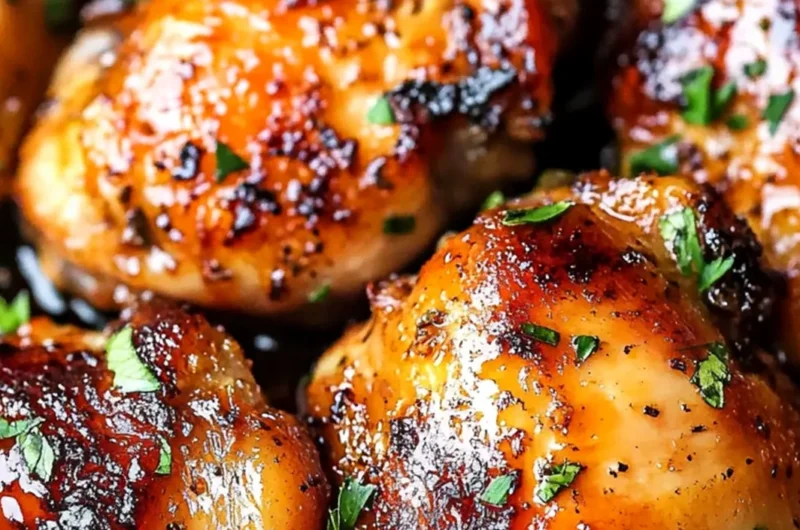
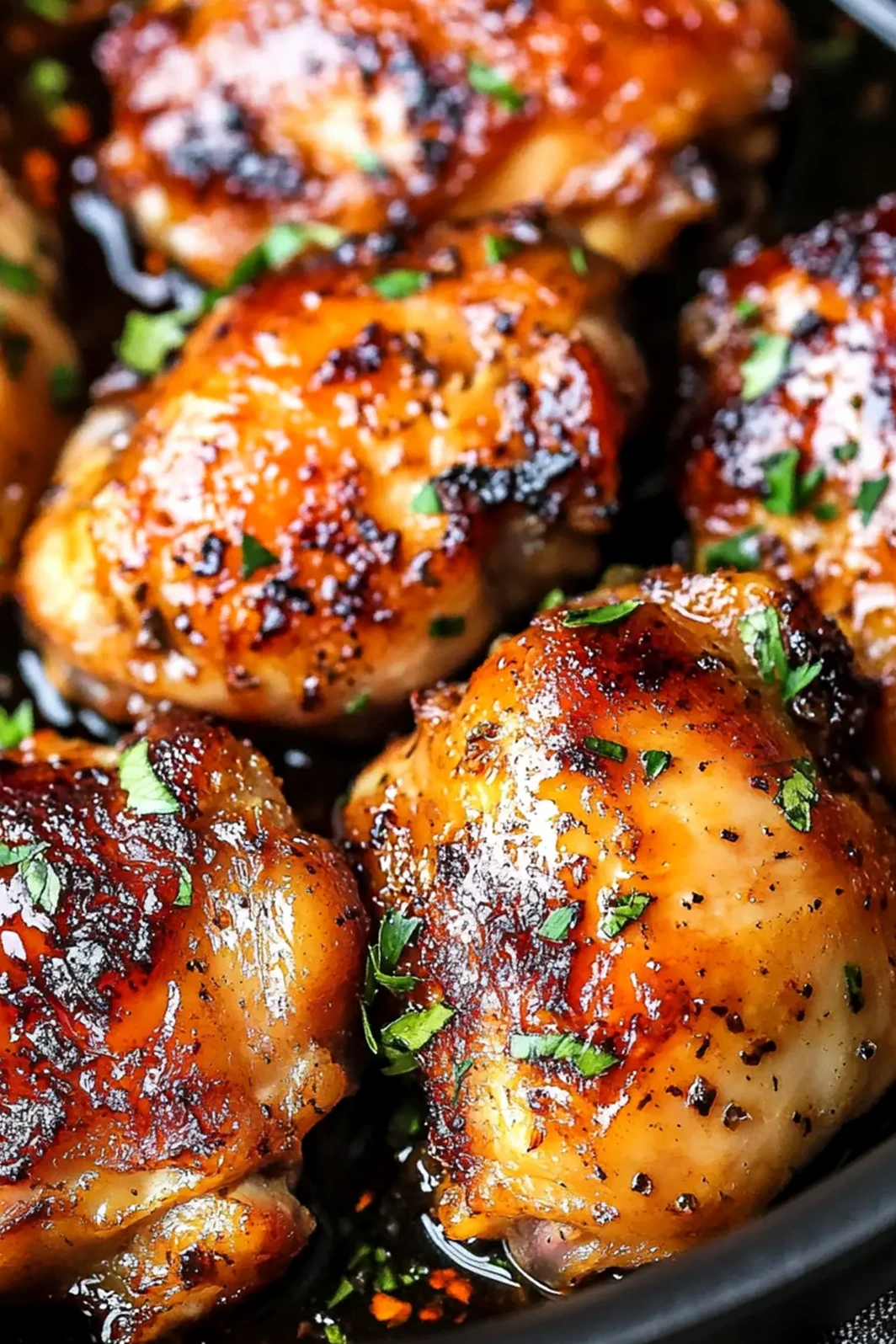
These Honey Garlic Boneless Chicken Thighs offer a perfect balance of savory and sweet, featuring a deep, golden-brown sear and a signature sticky glaze. This simple, one-skillet preparation ensures the meat stays succulent and flavorful while taking only thirty minutes from start to finish. Whether you are cooking for a weeknight family dinner or preparing a quick, impressive meal for guests, this reliable method delivers consistent, high-quality results every single time.
List of ingredients
- 6 boneless skinless chicken thighs (pat dry and choose similar size pieces)
- to taste salt
- to taste black pepper
- 2 Tbsp salted butter (divided)
- 6 cloves garlic (minced)
- 3 Tbsp honey
- 2 Tbsp low-sodium soy sauce
- 1/2 tsp ground thyme
- 1/2 tsp ground ginger
- to taste scallions (thinly sliced)
- to taste sesame seeds (toasted)
step-by-step instructions
- Step: Season the chicken thighs with salt and black pepper and pat them dry to promote even browning.
- Step: Heat a heavy skillet over medium-high heat and melt 1 Tbsp salted butter; add the thighs and sear 4–5 minutes per side until deep golden with slightly crisp, caramelized edges.
- Step: Remove the chicken to a plate, reduce heat to medium, melt the remaining 1 Tbsp butter, then add the minced garlic and sauté about 30 seconds.
- Step: Add the honey, low-sodium soy sauce, ground thyme, and ground ginger, stirring constantly; bring to a gentle simmer for 1–2 minutes until glossy.
- Step: Return the thighs to the skillet, reduce heat to low, and simmer 6–8 minutes, spooning the sauce over the chicken frequently until the internal temperature reaches 165°F.
- Step: Finish by briefly increasing the heat to caramelize the glaze while basting for 30–60 seconds, then remove from heat and let rest 5 minutes.
Maximizing the Sear and Crust
Importance of Dry Surfaces
Moisture is the primary enemy of a good sear. By patting the chicken thoroughly with paper towels before seasoning, you allow the heat to immediately begin caramelizing the surface of the meat rather than steaming it. This simple preparation step is the secret to achieving that deep golden-brown color that makes the dish look as professional as it tastes.
Selecting the Right Skillet
Using a heavy-bottomed pan, such as a well-seasoned cast iron or stainless steel skillet, ensures consistent heat distribution. Thin pans can cause hot spots that burn the honey-based glaze before the chicken is fully cooked through. A heavy pan holds residual heat, which is vital for maintaining the caramelization process when you return the chicken to the sauce.
Refining the Honey Garlic Glaze
Balancing the Sweet and Savory
The combination of honey and soy sauce creates an umami-rich syrup, but the secret lies in the timing. Adding the garlic after removing the chicken but before the liquids prevents it from becoming bitter. You want the garlic to soften and release its oils into the butter base so that when the honey and soy go in, they immediately form a cohesive, aromatic sauce.
Achieving the Perfect Viscosity
If you find that your glaze is still too runny near the end of the cooking process, don’t worry. Simply increasing the heat for a short duration while continuing to baste the chicken allows the water content in the soy and honey to evaporate. As the liquid reduces, it transforms from a thin sauce into a thick, syrupy glaze that clings beautifully to every surface of the thighs.
Practical Serving and Plating
Choosing Ideal Accompaniments
This dish is naturally rich, so pairing it with neutral, absorbent sides like steamed jasmine rice, basmati, or even quinoa helps soak up the remaining glaze. For a balanced meal, consider adding a side of quickly roasted or steamed vegetables like broccolini or snap peas. The crisp texture of these greens acts as a perfect contrast to the tender, glazed chicken.
Adding Fresh Finishing Touches
Adding the sliced scallions and toasted sesame seeds at the final moment of serving is essential for visual and textural appeal. The heat of the chicken will slightly soften the scallions, releasing their mild flavor without them losing their vibrant green color. These small final additions elevate the presentation from home-cooked to restaurant-quality with minimal extra effort.
Storage and Reheating Strategies
Managing Leftover Glaze
If you have leftovers, store them in a shallow airtight container once the chicken has cooled to room temperature. The glaze will naturally thicken significantly in the refrigerator as the honey and butter solidify, which is a normal process. When you are ready to serve again, store the chicken with as much of the sauce as possible to keep it moist and prevent the exterior from drying out.
Restoring the Original Texture
To reheat, bring the skillet to a low temperature and add a small splash of water or chicken stock to thin the sauce back out. Gentle warming ensures the chicken retains its juiciness rather than becoming tough from aggressive heat. If you want to replicate that freshly cooked stickiness, finish with a thirty-second sear over higher heat once the chicken is warmed through to re-caramelize the glaze.
Common Kitchen Questions
Can I use different varieties of honey?
While standard mild honey is recommended for consistency, you can use clover or wildflower varieties for slightly different floral undertones. Just ensure the honey has a thin, pourable consistency so it dissolves quickly into the soy sauce without creating clumps that might scorch.
Is there a way to make this dish in a standard non-stick pan?
You can certainly use a non-stick skillet, but you may lose some of the deep caramelization that comes with cast iron or stainless steel. Adjust your expectations for the crust slightly, but the flavor will remain just as delicious since the glaze provides the majority of the finished taste.
How can I tell if the garlic is about to burn?
Garlic turns bitter the moment it turns dark brown or black. You are looking for a soft, light tan color that indicates the sugars have released their aroma without carbonizing. If you are ever in doubt, it is safer to pull the pan off the heat a few seconds early rather than risking a charred flavor profile.
Should I remove the fat from the thighs before cooking?
While you can trim large, dangling pieces of excess fat, leaving a small amount of connective tissue and fat on the thighs is beneficial. This fat helps insulate the meat during the high-heat searing process, ensuring that the final result remains tender and juicy rather than becoming dry or stringy during the reduction phase.
Print
Honey Garlic Boneless Chicken Thighs
- Total Time: 30 minutes
- Yield: 4 servings 1x
- Diet: General
Description
Honey Garlic Boneless Chicken Thighs seared to golden-brown and coated in a sticky honey-garlic glaze for an irresistible, one-skillet 30-minute weeknight dinner.
Ingredients
- 6 boneless skinless chicken thighs (pat dry and choose similar size pieces)
- to taste salt
- to taste black pepper
- 2 Tbsp salted butter (divided)
- 6 cloves garlic (minced)
- 3 Tbsp honey
- 2 Tbsp low-sodium soy sauce
- 1/2 tsp ground thyme
- 1/2 tsp ground ginger
- to taste scallions (thinly sliced)
- to taste sesame seeds (toasted)
Instructions
- Step: Season the chicken thighs with salt and black pepper and pat them dry to promote even browning.
- Step: Heat a heavy skillet over medium-high heat and melt 1 Tbsp salted butter; add the thighs and sear 4–5 minutes per side until deep golden with slightly crisp, caramelized edges.
- Step: Remove the chicken to a plate, reduce heat to medium, melt the remaining 1 Tbsp butter, then add the minced garlic and sauté about 30 seconds.
- Step: Add the honey, low-sodium soy sauce, ground thyme, and ground ginger, stirring constantly; bring to a gentle simmer for 1–2 minutes until glossy.
- Step: Return the thighs to the skillet, reduce heat to low, and simmer 6–8 minutes, spooning the sauce over the chicken frequently until the internal temperature reaches 165°F.
- Step: Finish by briefly increasing the heat to caramelize the glaze while basting for 30–60 seconds, then remove from heat and let rest 5 minutes.
Notes
Cool leftovers to room temperature within two hours and store in an airtight container in the refrigerator for 3–4 days. Freeze for up to 2 months. Reheat gently on the stovetop with a splash of liquid and a small pat of butter to revive the glaze.
- Prep Time: 10 minutes
- Cook Time: 20 minutes
- Category: Chicken Thigh Recipes
- Method: Stovetop
- Cuisine: American
Nutrition
- Serving Size: 1 serving
- Calories: 420 kcal
- Sugar: 11 g
- Sodium: 650 mg
- Fat: 28 g
- Saturated Fat: 10 g
- Unsaturated Fat: 14 g
- Trans Fat: 0 g
- Carbohydrates: 12 g
- Fiber: 0 g
- Protein: 30 g
- Cholesterol: 120 mg
Keywords: chicken thighs, honey garlic chicken, 30 minute dinner, one skillet meal, easy weeknight dinner