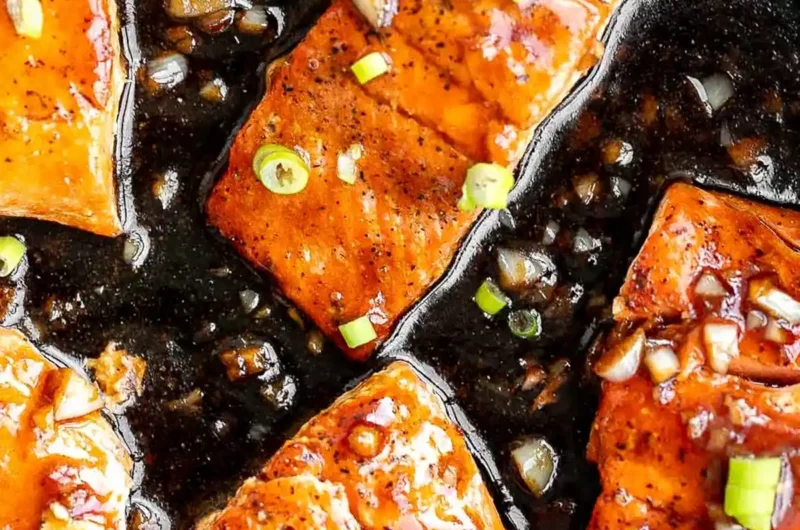
This honey garlic glazed salmon is a nutrient-dense meal that delivers a perfect balance of sweet and savory flavors. It is an ideal choice for a quick weeknight dinner as it comes together in a single pan in under 25 minutes.
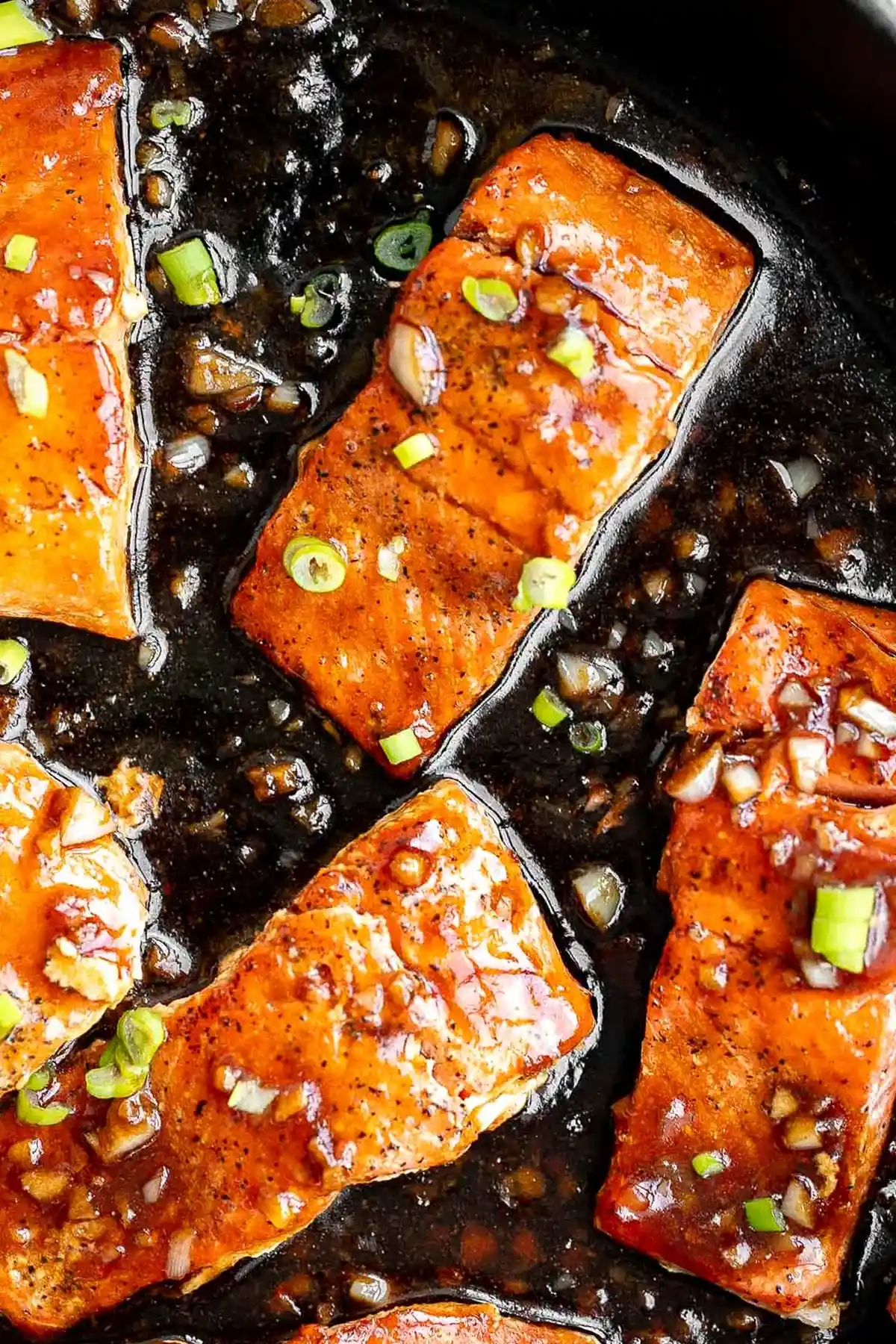
List of ingredients
- 1 1/2 lb. skin-on salmon fillets, about 1.5-inch thick – skin-on helps prevent sticking and protects the meat.
- 1/2 teaspoon salt – or adjust to your personal taste.
- 1/2 teaspoon ground black pepper – or adjust to your personal taste.
- 2 tablespoons olive oil – used for searing the fish at high heat.
- 2 tablespoons soy sauce – provides the salty, umami base for the glaze.
- 2 tablespoons honey – adds sweetness and helps the glaze thicken.
- 1/4 cup water – thins the sauce to ensure it coats the fish evenly.
- 1 teaspoon cornstarch – acts as the thickening agent for the glaze.
- 1 teaspoon lemon juice, freshly squeezed – adds necessary acidity to balance the honey.
- 1 tablespoon garlic, finely chopped – provides the pungent, aromatic base.
- 1 tablespoon green onions, finely chopped – used for a fresh garnish.
step-by-step instructions
- Prepare the salmon: Pat dry salmon fillets and season with salt and pepper. Set aside at room temperature for 10 to 15 minutes to ensure even cooking.
- Sear the fish: In a large skillet, heat oil for 2 minutes over medium-high heat until the hot oil sizzles. Sear the salmon fillets for 5-6 minutes on each side (skin side facing up first), until golden brown and fully cooked. When salmon is cooked, the flesh will turn opaque and it will flake easily when inserting a fork. Transfer the cooked salmon onto a plate.
- Mix the glaze: In a small bowl, whisk together soy sauce, honey, water, cornstarch and lemon juice. Whisk well to combine until the cornstarch dissolves completely. Set aside.
- Cook the sauce: In the same skillet, add garlic and sauté until fragrant over medium heat, about 1 minute. Stir in sauce mixture and cook for 3-4 minutes. Keep stirring until thickened to a desired consistency.
- Final assembly: Return the cooked salmon to the skillet and toss well to coat evenly. Garnish with green onions and serve warm with a bowl of steamed rice.
Optimal Searing Techniques
Patting the Salmon Completely Dry
Moisture on the surface of the fish creates steam, which prevents the salmon from developing a golden-brown crust. Use paper towels to press firmly on all sides of the fillets before seasoning. This ensures the Maillard reaction occurs quickly for better flavor and texture.
Managing the Pan Temperature
Wait for the olive oil to shimmer or just begin to smoke before adding the fillets. If the pan is too cold, the fish will stick to the surface and tear when flipped. A hot pan creates an immediate sear that releases the fish more easily.
Identifying the Perfect Doneness
Salmon is cooked through when the internal temperature reaches 145F, though many prefer it slightly lower for more moisture. The flesh should change from a translucent deep pink to an opaque light pink. Use a fork to gently press the thickest part; if it flakes easily, it is ready.
The Importance of Room Temperature
Allowing the fillets to sit out for 10 to 15 minutes prevents the center from remaining raw while the outside overcooks. This step is critical for thick 1.5-inch fillets. It ensures a consistent temperature throughout the meat.
Ingredient Substitutions and Variations
Using Maple Syrup Instead of Honey
Maple syrup is an excellent alternative if you prefer a deeper, woodier sweetness. Use the same 2-tablespoon measurement as the honey. The consistency is slightly thinner, so you may need to simmer the sauce for an extra minute to reach the same thickness.
Tamari or Coconut Aminos for Soy Alternatives
For those avoiding gluten, tamari is a direct 1:1 substitute for soy sauce. Coconut aminos can also be used for a soy-free option, although they are naturally sweeter and less salty. If using coconut aminos, you may want to add an extra pinch of salt to the salmon.
Substituting Lime for Lemon Juice
Lime juice offers a brighter, more zesty profile that leans toward a Southeast Asian flavor palette. Use 1 teaspoon of fresh lime juice in place of the lemon juice. This pairs exceptionally well if you add a pinch of ginger to the garlic sauté.
Alternative Cooking Fats
While olive oil is standard, avocado oil is a great choice due to its higher smoke point. Grapeseed oil is another neutral option that won’t alter the taste of the honey garlic glaze. Avoid using butter for the initial sear as it can burn at the high temperatures required.
Recommended Serving Ideas
Grain-Based Accompaniments
Steamed white jasmine rice or basmati rice are the most traditional pairings as they absorb the excess glaze. For a lower-carb option, cauliflower rice sautéed with a bit of garlic is a great substitute. Quinoa also works well for adding extra protein and texture to the plate.
Fresh Vegetable Side Dishes
Roasted asparagus or sautéed garlic green beans provide a crisp contrast to the sticky glaze. Steamed broccoli or roasted Brussels sprouts also complement the savory notes of the soy and garlic. These greens add fiber and balance the richness of the salmon.
Creating a Salmon Rice Bowl
To turn this into a bowl, place the glazed salmon over a bed of rice and greens. Add sliced avocado, diced cucumbers, shredded carrots, and a sprinkle of sesame seeds. This transforms the meal into a comprehensive Asian-inspired lunch or dinner.
Potato-Based Sides
Creamy mashed potatoes or roasted garlic parmesan baby potatoes offer a comforting contrast to the acidity of the lemon juice. The starchiness of potatoes helps cut through the sweetness of the honey. Ensure the potatoes are seasoned simply so they do not compete with the glaze.
Storage and Preservation Guidelines
Refrigeration and Shelf Life
Store leftover salmon in an airtight container in the refrigerator for up to 3 to 4 days. Allow the fish to cool to room temperature before sealing the lid to prevent excess condensation. This helps maintain the texture of the glaze.
Why You Should Avoid Freezing Cooked Salmon
Freezing salmon after it has been cooked often results in a rubbery and tough texture. The cellular structure of the fish changes during the second freeze-thaw cycle. It is best to freeze salmon raw and cook it fresh for the best quality.
Maintaining Glaze Consistency During Storage
The glaze may thicken further in the refrigerator as the honey and cornstarch set. When storing, ensure the salmon is well-coated to prevent the surface from drying out. The glaze acts as a protective layer that keeps the fish moist.
Best Methods for Reheating
Stovetop Reheating for Best Texture
Place the salmon in a skillet over medium-low heat with a teaspoon of water or oil. Cover the pan and heat for about 5 minutes until warmed through. This method preserves the flaky texture better than high-heat options.
Microwave Instructions for Speed
Place the salmon on a microwave-safe plate and cover it with a damp paper towel. Heat on medium power for 60 to 90 seconds. Be careful not to overcook it, as the microwave can quickly make salmon dry and tough.
Using the Oven or Air Fryer
Preheat your oven or air fryer to 300F. Place the salmon on a lined tray and heat for 5 to 10 minutes. This is a great way to reheat multiple fillets at once while keeping the edges slightly crisp.
Alternative Cooking Equipment
Baking the Salmon in the Oven
Place the salmon skin-side down on a foil-lined baking sheet. Bake in a preheated 400F oven for 12 to 15 minutes. For thicker fillets, calculate approximately 5 minutes of roasting time per half-inch of thickness.
Air Fryer Instructions
Place the salmon fillets in a single layer in the air fryer basket. Air fry at 400F for approximately 10 minutes. Ensure you do not overcrowd the basket so the hot air can circulate and crisp the edges.
Cast Iron vs. Non-Stick Skillets
A cast-iron skillet is ideal for this recipe because it retains heat exceptionally well for a superior sear. If using a non-stick pan, you may need slightly more oil to achieve the same golden-brown crust. Both pans work, but cast iron provides a more professional finish.
Common Cooking Questions
How do I know when the salmon is fully cooked?
The salmon is done when the flesh turns opaque and flakes easily with a fork. You can also use a meat thermometer to check for an internal temperature of 145F. Avoid overcooking, as the fish will continue to cook slightly after being removed from the heat.
Can I use frozen salmon fillets for this recipe?
Yes, but they must be completely thawed and patted dry before cooking. Thawing should be done slowly in the refrigerator overnight. If you cook frozen fillets directly, they will release too much water and will not sear properly.
Why is my honey garlic sauce too thin?
If the sauce doesn’t thicken, it is usually because it wasn’t simmered long enough or the cornstarch wasn’t fully whisked in. Continue stirring over medium heat for another 1-2 minutes. If it remains thin, whisk in a tiny bit more cornstarch slurry (cornstarch mixed with water).
How can I prevent the salmon from sticking to the pan?
The key is to ensure the pan is sufficiently hot before adding the oil and the fish. Additionally, patting the salmon dry removes the surface moisture that causes sticking. Avoid moving the fish too early; let the crust form naturally before attempting to flip it.
Is it necessary to keep the skin on?
Keeping the skin on provides a barrier that protects the delicate meat from the direct heat of the pan. It also makes the fillets easier to flip without breaking. You can easily slide the skin off with a spatula after the fish is cooked if you prefer not to eat it.
Can I add other aromatics to the glaze?
Yes, adding a teaspoon of freshly grated ginger or a pinch of red pepper flakes can add depth. These additions should be sautéed with the garlic for about 30 seconds before adding the liquid ingredients. This enhances the overall flavor profile without changing the core recipe.
Print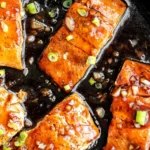
Honey Garlic Glazed Salmon
- Total Time: 25 minutes
- Yield: 2–3 servings 1x
- Diet: Gluten Free
Description
Sticky and sweet, easy honey garlic glazed salmon is one of the best salmon recipes to add to your weeknight dinner rotation. Ready in under 25 minutes.
Ingredients
- 1 1/2 lb. skin-on salmon fillets, about 1.5-inch thick
- 1/2 teaspoon salt
- 1/2 teaspoon ground black pepper
- 2 tablespoons olive oil
- 2 tablespoon soy sauce
- 2 tablespoons honey
- 1/4 cup water
- 1 teaspoon cornstarch
- 1 teaspoon lemon juice, freshly squeezed
- 1 tablespoon garlic, finely chopped
- 1 tablespoon green onions, finely chopped
Instructions
- Step: Pat dry salmon fillets and season with salt and pepper. Set aside at room temperature for 10 to 15 minutes.
- Step: In a large skillet, heat oil for 2 minutes over medium-high heat until the hot oil sizzles. Sear the salmon fillets for 5-6 minutes on each side (skin side facing up first), until golden brown and fully cooked. Transfer the cooked salmon onto a plate.
- Step: In a small bowl, whisk together soy sauce, honey, water, cornstarch and lemon juice until the cornstarch dissolves.
- Step: In the same skillet, add garlic and sauté until fragrant over medium heat, about 1 minute. Stir in sauce mixture and cook for 3-4 minutes until thickened.
- Step: Return the cooked salmon to the skillet and toss well to coat evenly. Garnish with green onions and serve warm.
Notes
Oven method: Bake skin-side down at 400F for 12-15 minutes. Air fryer method: Cook in a single layer at 400F for 10 minutes. Storage: Keep in an airtight container in the refrigerator for up to 3 days. Do not freeze cooked salmon.
- Prep Time: 10 minutes
- Cook Time: 15 minutes
- Category: Seafood
- Method: Stovetop
- Cuisine: American
Nutrition
- Serving Size: 1 fillet
- Calories: 580 kcal
- Sugar: 12 g
- Sodium: 620 mg
- Fat: 28 g
- Saturated Fat: 4 g
- Unsaturated Fat: 24 g
- Trans Fat: 0 g
- Carbohydrates: 15 g
- Fiber: 1 g
- Protein: 42 g
- Cholesterol: 85 mg
Keywords: honey garlic salmon, glazed salmon, easy seafood dinner, healthy salmon