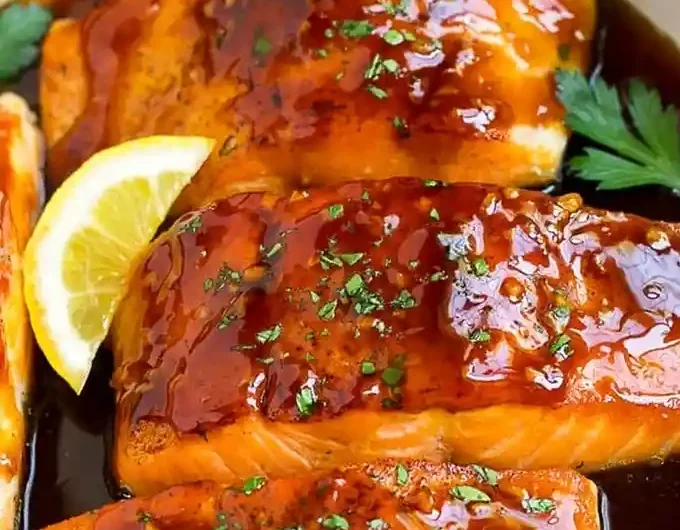
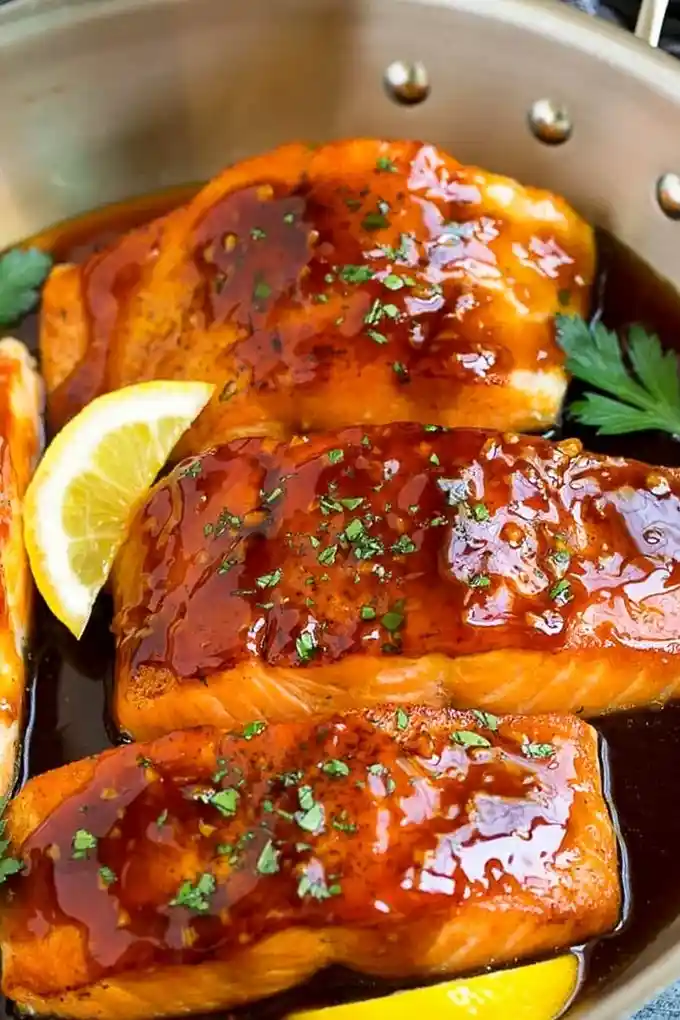
This honey glazed salmon features seared fillets coated in a sweet and savory garlic soy glaze. It is a fast dinner option that takes about 20 minutes to cook and is perfect for weeknight meals.
List of ingredients
- 4 salmon fillets (4-6 ounces each) – cut into even sizes for consistent cooking.
- 2 teaspoons olive oil – used for searing the fish.
- salt and pepper to taste – for basic seasoning.
- 2 teaspoons garlic (minced) – provides a pungent aromatic base.
- 3 tablespoons water – helps thin the sauce for simmering.
- 1 tablespoon lemon juice – adds acidity to balance the honey.
- 1/4 cup low sodium soy sauce – delivers saltiness and umami.
- 3 tablespoons honey – the primary sweetener for the glaze.
- 2 teaspoons cornstarch – used as a thickening agent.
- 1 1/2 tablespoons chopped parsley – for a fresh garnish.
- lemon wedges for serving (optional) – adds a final burst of citrus.
step-by-step instructions
- Sear the fish: Heat the olive oil in a large pan over medium high heat. Generously season the salmon with salt and pepper to taste. Tip: Ensure the pan is shimmering before adding the fish.
- Cook the fillets: Place the salmon skin side up in the pan. Cook for 4-5 minutes per side or until cooked through. Tip: Resist the urge to move the fish frequently to allow a crust to form.
- Rest the salmon: Remove the salmon from the pan and place on a plate. Cover with foil to keep warm. Tip: Resting prevents the fish from drying out while you make the sauce.
- Sauté garlic: Add the garlic to the pan and cook for 30 seconds. Tip: Stir constantly so the garlic does not burn.
- Simmer glaze: Add the water, lemon juice, soy sauce and honey to the pan; bring to a simmer. Tip: Scrape the bottom of the pan to incorporate the browned bits.
- Prepare slurry: In a small bowl, whisk together the cornstarch with 1 tablespoon cold water. Tip: Use cold water to prevent the cornstarch from clumping.
- Thicken sauce: Slowly pour the cornstarch mixture into the pan and whisk to combine. Bring to a boil and cook for 1 minute or until sauce has just thickened. Tip: The sauce should coat the back of a spoon.
- Final assembly: Return the salmon to the pan and spoon the sauce over the top. Sprinkle with parsley and serve with lemon wedges if desired. Tip: Use a spoon to glaze the top of each fillet generously.
Mastering the Searing Process
Managing Pan Temperature
The pan must be sufficiently hot before adding the oil and salmon. If the oil is not shimmering, the fish will stick to the surface and fail to develop a golden crust. Use medium-high heat to ensure the protein sears quickly without overcooking the center.
The Importance of Drying the Surface
Always pat the salmon fillets dry with paper towels before seasoning. Excess moisture on the surface of the fish creates steam when it hits the pan. Steam prevents the Maillard reaction, resulting in gray, boiled-looking fish rather than a brown sear.
Timing the Flip
Avoid flipping the salmon too early in the cooking process. The fish will naturally release from the pan once a proper crust has formed. If the fillet resists when you try to lift it, wait another 30 to 60 seconds before attempting to flip.
Salmon Selection and Preparation
Choosing Wild-Caught Salmon
Wild-caught salmon typically offers a more robust flavor and a deeper red color compared to farmed varieties. It also tends to have a higher concentration of omega-3 fatty acids. If available, Sockeye or King salmon are excellent choices for this glaze.
Understanding Different Salmon Varieties
Atlantic salmon is common and has a milder taste with higher fat content, making it very forgiving to cook. Sockeye is leaner and more intense in flavor, requiring slightly less cooking time. Coho salmon falls in the middle, offering a balanced taste and texture.
Proper Thawing Techniques
If using frozen fillets, thaw them slowly in the refrigerator for 12 to 24 hours. Avoid thawing in warm water, as this can compromise the texture of the fish. Once thawed, the fillets must be patted dry to ensure the searing process remains effective.
Flavor Customization and Variations
Zesty Ginger and Lime
Replace the minced garlic with fresh minced ginger for a punchier, aromatic profile. Substitute the lemon juice with lime juice to shift the flavor toward a more traditional Southeast Asian style. This variation works exceptionally well with steamed bok choy.
Toasted Sesame Flavor
Incorporate one teaspoon of toasted sesame oil into the sauce during the simmering phase. Once plated, garnish the fish with two teaspoons of toasted sesame seeds. The nuttiness of the sesame complements the sweetness of the honey perfectly.
Traditional Teriyaki Profile
Combine one teaspoon of minced ginger and two teaspoons of toasted sesame oil with the soy sauce and honey. This creates a thicker, richer glaze reminiscent of classic teriyaki. Increase the honey slightly if a sweeter finish is desired.
Adding a Spicy Element
Whisk in a teaspoon of Sriracha or red pepper flakes during the sauce reduction step. The heat cuts through the richness of the salmon and the sweetness of the honey. This creates a balanced sweet-and-spicy glaze that appeals to many palates.
Maple Syrup Alternative
If honey is unavailable, substitute it with pure maple syrup in equal quantities. Maple syrup provides a different kind of sweetness with woody undertones. It thickens similarly to honey when reduced with cornstarch.
Ideal Side Dish Pairings
Steamed Grain Options
Serve the glazed salmon over steamed jasmine rice or brown rice to absorb the extra sauce. Quinoa is another healthy option that adds a nutty texture to the meal. For a heartier base, consider creamy mashed potatoes or cauliflower puree.
Roasted Root Vegetables
Pair the fish with roasted carrots or parsnips to mirror the sweetness of the glaze. Toss the vegetables in olive oil, salt, and pepper, and roast at 400 degrees Fahrenheit until tender. This adds a rustic element to the plate.
Sautéed Green Vegetables
Steamed broccoli, sautéed asparagus, or snap peas provide a fresh contrast to the rich glaze. Sauté the greens in a bit of garlic and olive oil for a few minutes. These vegetables add necessary color and nutrition to the meal.
Fresh Salad Accompaniments
A crisp cucumber salad with a rice vinegar dressing cleanses the palate between bites of the sweet salmon. Use thinly sliced cucumbers, red onion, and a pinch of sugar. This light side dish prevents the meal from feeling too heavy.
Storage and Food Safety
Proper Refrigeration Method
Place leftover salmon and glaze in an airtight glass or plastic container. Ensure the fish is completely cooled before sealing the lid to prevent condensation. Store the container in the coldest part of the refrigerator, usually the back of the shelf.
Maximum Storage Duration
Cooked salmon is best consumed within three to four days when refrigerated. Beyond this timeframe, the texture of the fish may degrade, and the risk of bacterial growth increases. Always check the fish for smell and texture before eating leftovers.
Signs of Spoilage
Discard the salmon if it develops a strong, ammonia-like smell or a slimy surface. Any visible discoloration or mold indicates that the fish is no longer safe for consumption. When in doubt, it is safer to discard the food.
Professional Reheating Techniques
Oven Reheating Method
Preheat the oven to 275 degrees Fahrenheit and place the salmon on a baking sheet. Cover the fish loosely with aluminum foil to trap moisture and prevent drying. Heat for 10 to 15 minutes until the center is warmed through.
Microwave Reheating Method
Use a microwave-safe dish and cover the salmon with a damp paper towel. Heat on a medium power setting in 30-second intervals. This prevents the salmon from overcooking and becoming rubbery or tough.
Air Fryer Reheating Method
Place the fillets in the air fryer basket at 350 degrees Fahrenheit. Heat for 3 to 5 minutes, depending on the thickness of the fillet. This method helps restore some of the original sear and texture of the glaze.
Troubleshooting Your Glaze
Fixing a Thin Sauce
If the sauce is too watery after the initial boil, simmer it for another 60 to 90 seconds. If it remains thin, whisk a small pinch of additional cornstarch into a teaspoon of water and stir it in. Continue boiling until the desired thickness is achieved.
Correcting Over-Thickened Sauce
If the glaze becomes too thick or sticky, stir in a tablespoon of water or vegetable broth. Keep the pan over low heat while stirring to ensure the sauce becomes smooth again. This happens if the sauce is boiled for too long.
Balancing Excess Saltiness
If the soy sauce makes the glaze too salty, add an extra teaspoon of honey or a squeeze of lemon juice. The sweetness and acidity help neutralize the sodium levels. In extreme cases, a tablespoon of water can dilute the intensity.
Adjusting Too Much Sweetness
If the honey dominates the flavor, increase the amount of lemon juice or add a splash of apple cider vinegar. The acid cuts through the sugar and restores balance. A pinch of extra black pepper can also add depth to offset the sweetness.
Frequently Asked Questions
Can I use frozen salmon fillets?
Yes, you can use frozen salmon, provided they are completely thawed before cooking. Thaw them in the refrigerator overnight. It is critical to pat them very dry with paper towels to ensure they sear properly in the pan.
What is the best pan for searing salmon?
A stainless steel or cast iron skillet is ideal because they hold heat well and produce a superior crust. Non-stick pans are easier for cleanup but do not develop the same level of browning. Regardless of the pan, medium-high heat is key.
Can I substitute honey with maple syrup?
Yes, maple syrup is an excellent substitute that provides a similar viscosity and sweetness. It may result in a slightly more earthy flavor profile. Use it in a 1:1 ratio to replace the honey in the recipe.
How do I know when the salmon is perfectly cooked?
The salmon is done when the flesh changes from translucent to opaque and flakes easily with a fork. For those with a meat thermometer, the internal temperature should reach 145 degrees Fahrenheit. Avoid overcooking to keep the fish moist.
Is it necessary to cover the salmon with foil while resting?
Covering the salmon with foil prevents the fish from cooling down too quickly. It also allows the juices to redistribute within the fillet. This ensures that the fish remains tender and juicy when returned to the pan for glazing.
Can I make the glaze in advance?
You can whisk all the sauce ingredients together except for the cornstarch slurry. Store the mixture in the refrigerator for up to three days. Add the cornstarch slurry only when you are ready to simmer the sauce on the stove.
What if I don’t have cornstarch?
You can use a small amount of flour as a thickener, though it may make the sauce slightly cloudier. Alternatively, you can simmer the sauce for a longer period to reduce it naturally. This will result in a more intense, concentrated flavor.
Print
Honey Glazed Salmon Fillets
- Total Time: 30 minutes
- Yield: 4 servings 1x
- Diet: General
Description
This honey glazed salmon is seared salmon fillets topped in a honey, soy sauce and garlic glaze. A quick and easy dinner option that’s on the table in just 20 minutes!
Ingredients
- 4 salmon fillets (4–6 ounces each)
- 2 teaspoons olive oil
- salt and pepper to taste
- 2 teaspoons garlic (minced)
- 3 tablespoons water
- 1 tablespoon lemon juice
- 1/4 cup low sodium soy sauce
- 3 tablespoons honey
- 2 teaspoons cornstarch
- 1 1/2 tablespoons chopped parsley
- lemon wedges for serving (optional)
Instructions
- Step 1: Heat the olive oil in a large pan over medium high heat. Generously season the salmon with salt and pepper to taste.
- Step 2: Place the salmon skin side up in the pan. Cook for 4-5 minutes per side or until cooked through.
- Step 3: Remove the salmon from the pan and place on a plate. Cover with foil to keep warm.
- Step 4: Add the garlic to the pan and cook for 30 seconds.
- Step 5: Add the water, lemon juice, soy sauce and honey to the pan; bring to a simmer.
- Step 6: In a small bowl, whisk together the cornstarch with 1 tablespoon cold water.
- Step 7: Slowly pour the cornstarch mixture into the pan and whisk to combine. Bring to a boil and cook for 1 minute or until sauce has just thickened.
- Step 8: Return the salmon to the pan and spoon the sauce over the top. Sprinkle with parsley and serve with lemon wedges if desired.
Notes
To get the best golden brown crust, ensure the pan is very hot and pat the fish fillets dry with a paper towel before adding to the pan. Do not overcook; salmon is done when it is opaque and easily flakes.
- Prep Time: 10 minutes
- Cook Time: 20 minutes
- Category: Main Course
- Method: Searing
- Cuisine: Asian
Nutrition
- Serving Size: 1 fillet
- Calories: 283 kcal
- Sugar: 13 g
- Sodium: 395 mg
- Fat: 11 g
- Saturated Fat: 1 g
- Unsaturated Fat: 10 g
- Trans Fat: 0 g
- Carbohydrates: 16 g
- Fiber: 1 g
- Protein: 29 g
- Cholesterol: 77 mg
Keywords: honey glazed salmon, seared salmon, easy dinner, Asian cuisine