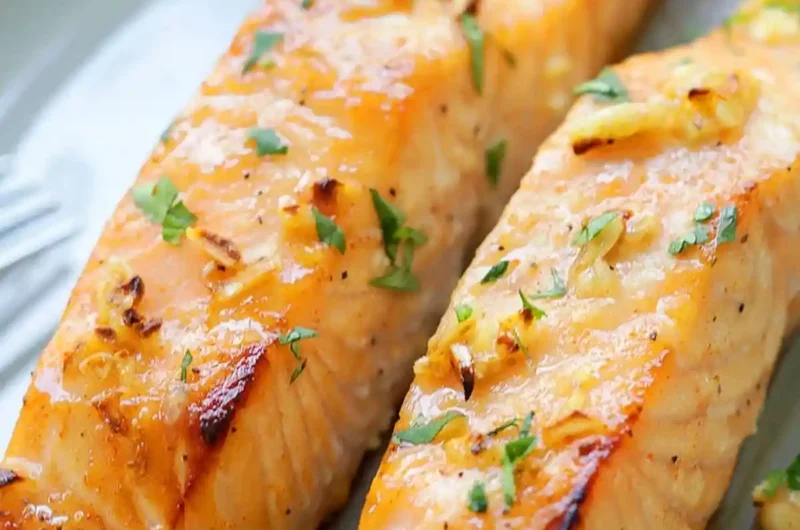
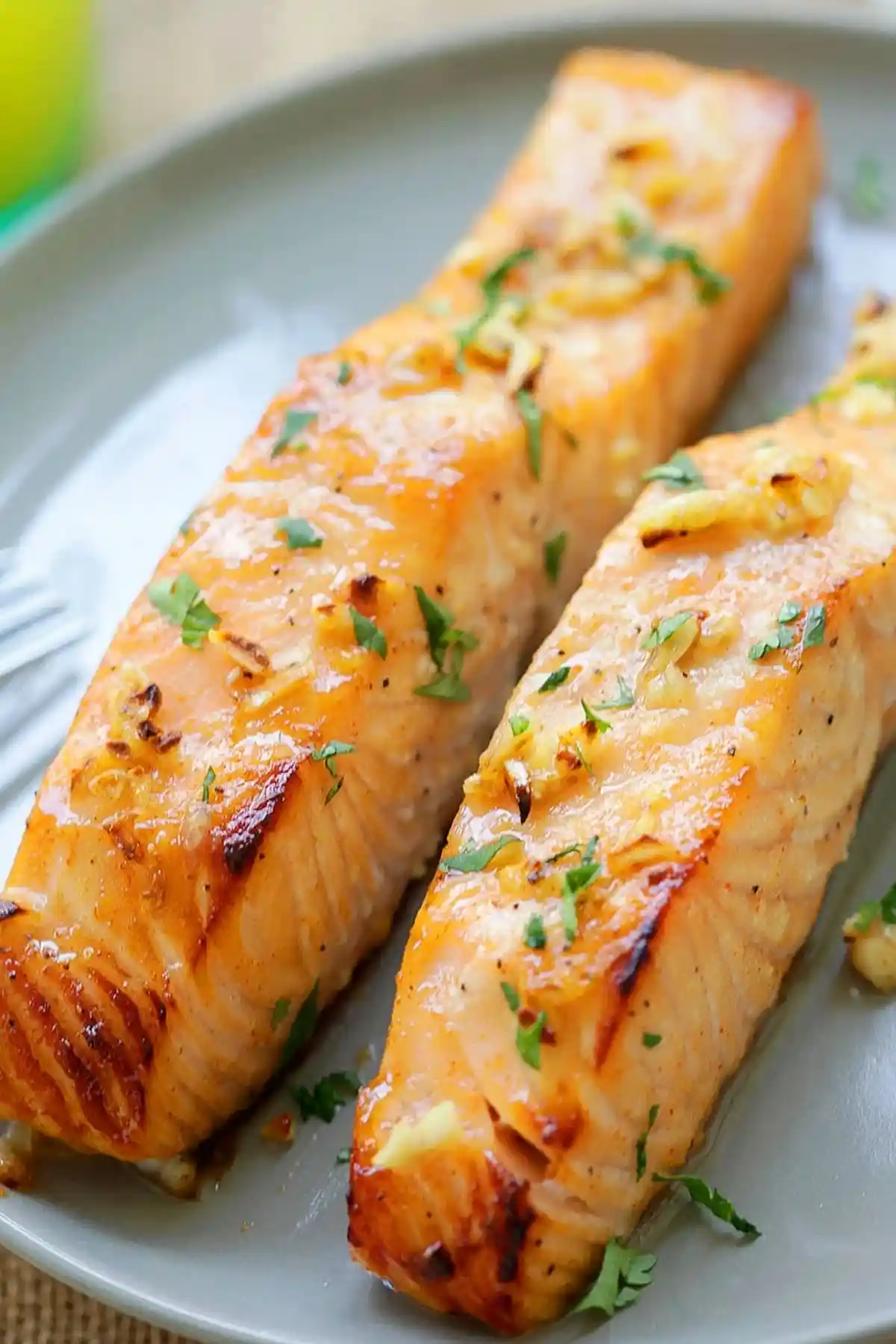
This baked salmon features a sticky, garlicky glaze that balances sweetness and tang. It is a fast, high-protein meal that cooks in just 12 minutes in the oven.
List of ingredients
- 12 oz salmon (cut into two fillets) – use center-cut for uniform thickness.
- 2 cloves garlic – minced finely for even distribution in the glaze.
- 3 tablespoons honey – preferably a runny, liquid variety.
- 3 teaspoons Dijon mustard – smooth style for a creamy consistency.
- 1 tablespoon lemon juice – freshly squeezed for brightness.
- 1/8 teaspoon salt – to enhance the natural flavors.
- 3 dashes ground black pepper – for a mild spicy undertone.
- 1/8 teaspoon cayenne pepper – adds a subtle heat to balance the honey.
- chopped parsley leaves – used for final garnishing.
step-by-step instructions
- Preheat and Prep: Set your oven to 400°F (207°C). While the oven heats, prepare your baking sheet by lining it with parchment paper to prevent sticking and simplify cleanup.
- Create the Glaze: In a small mixing bowl, combine the minced garlic, honey, Dijon mustard, lemon juice, salt, black pepper, and cayenne pepper. Whisk the mixture thoroughly until the glaze is smooth and well-combined.
- Marinate the Fish: Spread and coat the salmon fillets generously with the honey mustard glaze. Let the fillets sit for 15 minutes to allow the flavors to penetrate the fish.
- Arrange for Baking: Place the coated salmon fillets on the prepared baking sheet. Pour any remaining glaze from the bowl directly over the top of the fillets.
- Bake: Place the tray in the preheated oven and bake for 12 minutes, or until the salmon is opaque and flakes easily.
- Final Touch: Remove the tray from the oven. Carefully scoop up the pan juices and drizzle them back over the salmon.
- Garnish and Serve: Sprinkle the chopped parsley over the top and serve the dish immediately while hot.
Optimizing Your Ingredient Selection
Choosing Center-Cut Salmon Fillets for Even Cooking
When purchasing salmon, opt for center-cut fillets. These sections have a consistent thickness from end to end, which ensures that the entire piece cooks at the same rate. This prevents the thinner tail end from overcooking while the center remains raw.
Using Liquid Honey for Better Caramelization
Use a pure, liquid honey rather than whipped or creamed honey. Liquid honey blends more easily with the mustard and lemon juice, creating a smooth emulsion. It also caramelizes more effectively under high heat, resulting in a glossy, sticky finish on the salmon.
Selecting Smooth Dijon Mustard for Texture
A smooth, classic Dijon mustard is recommended over grainy versions. Smooth mustard incorporates better into the glaze, ensuring a consistent coating across the fish. This provides a sharp, tangy contrast to the sweetness of the honey without adding chunky textures.
Using Cayenne Pepper to Balance Sweetness
Adding a small amount of cayenne pepper is essential for depth. While it does not make the dish spicy, it cuts through the richness of the honey and the fattiness of the salmon. This balance prevents the glaze from tasting overly sweet or one-dimensional.
Alternative Cooking Techniques
Air Fryer Method for Faster Results
Preheat the air fryer to 375°F (190°C). Line the basket with parchment paper or grease it lightly with oil to prevent sticking. Place the glazed salmon fillets skin-side down and air fry for approximately 6 minutes. Check for an internal temperature of 125°F (52°C) to ensure the fish is juicy.
Pan-Searing for a Crispy Exterior
Heat a nonstick or cast-iron skillet over medium heat with a small amount of oil. Place the fillets skin-side down and cook for 3 to 4 minutes until the skin is golden and crisp. Flip the fillets, spoon the remaining glaze over the top, and cook for another 3 to 4 minutes until the glaze bubbles and thickens.
Outdoor Grilling for a Smoky Flavor
Preheat an outdoor grill or grill pan to medium-high heat and lightly oil the grates. Place the salmon skin-side down and grill for 4 to 5 minutes. Flip the fillets, brush them with the remaining glaze, and grill for an additional 3 to 4 minutes until the edges are slightly charred and the center is cooked through.
Recommended Serving and Pairing Ideas
Combining Salmon with Grains and Pasta
This dish pairs well with a simple pasta like spaghetti with garlic and parmesan. For a lower-carb option, serve the salmon over a bed of quinoa or brown rice. The grains absorb the extra honey mustard glaze, making the side dish more flavorful.
Preparing Nutrient-Dense Vegetable Sides
Sautéed asparagus or garlic butter spinach provide a fresh, crisp contrast to the sticky glaze. To prepare, toss the vegetables in a pan with olive oil and minced garlic for 3 to 5 minutes. This adds a necessary bitterness and brightness to the meal.
Using Fresh Salads to Balance Richness
A crisp spinach salad with apple slices, pecans, and a light vinaigrette works well. The acidity of the salad cleanses the palate between bites of the rich, honey-glazed fish. Avoid heavy creamy dressings, as they may clash with the tanginess of the Dijon mustard.
Proper Storage and Preservation
Refrigerating Cooked Salmon Fillets
Allow the cooked salmon to cool completely to room temperature before storing. Place the fillets in an airtight glass or plastic container. Refrigerate for up to 3 days, ensuring the glaze is poured over the fish to keep it moist during storage.
Freezing Methods for Long-Term Storage
Wrap cooked salmon tightly in aluminum foil or plastic wrap to prevent freezer burn. Place the wrapped fillets inside a freezer-safe bag and remove as much air as possible. Store for up to 2 months, though the texture may change slightly upon thawing.
Effective Reheating Guidelines
Using the Microwave for Quick Heating
Place the salmon on a microwave-safe plate and add a splash of water or extra glaze. Cover the plate with a damp paper towel to trap steam. Heat in 30-second bursts on medium power to prevent the fish from becoming rubbery or dry.
Low-Temperature Oven Reheating
Preheat the oven to 300°F (150°C). Place the salmon on a baking sheet and drizzle with a small amount of water or melted butter. Heat for 8 to 10 minutes, which gently warms the fish without overcooking the center.
Cooking Troubleshooting and Tips
Preventing Salmon from Drying Out
The most common issue with baked salmon is overcooking. Use an instant-read meat thermometer to check for an internal temperature of 125°F to 130°F. Remember that the fish continues to cook for a few minutes after being removed from the oven due to carryover heat.
Ensuring the Glaze Adheres to the Fish
Pat the salmon fillets completely dry with paper towels before applying the glaze. Excess moisture on the surface of the fish creates a barrier that prevents the honey mustard from sticking. This ensures the glaze caramelizes into a crust rather than sliding off.
Managing Glaze Burn in the Oven
Because honey has a high sugar content, it can burn if the oven is too hot or if the fillets are too thin. If you notice the glaze darkening too quickly, loosely cover the tray with aluminum foil. This protects the surface while allowing the interior of the fish to finish cooking.
Frequently Asked Questions
Can I use frozen salmon for this recipe?
Yes, frozen salmon works well as long as it is fully thawed. Thaw the fillets in the refrigerator overnight or under cold running water. Always pat them dry before marinating to ensure the glaze adheres properly.
Can I substitute maple syrup for the honey?
Yes, maple syrup is a suitable substitute. It provides a deeper, more woody sweetness compared to the floral notes of honey. Use the same measurement (3 tablespoons) to maintain the consistency of the glaze.
Can I marinate the salmon ahead of time?
You can marinate the salmon in the refrigerator for up to 12 hours. This allows the flavors to penetrate deeper into the fish. Simply remove it from the fridge and let it sit at room temperature for 10 minutes before baking.
How do I know when the salmon is fully cooked?
The salmon is done when the flesh turns opaque and flakes easily when pressed with a fork. For precise results, use a thermometer to reach an internal temperature of 125°F for medium-rare or 145°F for fully well-done.
How many calories are in one serving?
One serving of this honey mustard salmon contains approximately 352 calories. It is a nutrient-dense option providing high levels of omega-3 fatty acids and lean protein.
Print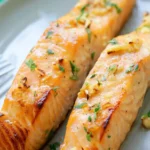
Honey Mustard Baked Salmon
- Total Time: 22 minutes
- Yield: 2 servings 1x
- Diet: Gluten-Free
Description
This honey mustard salmon is garlicky, sweet, and savory all at once. Tender salmon fillets are slathered in a sticky glaze made with honey, Dijon mustard, garlic, lemon juice, and a tiny kick of cayenne, then baked in just 12 minutes!
Ingredients
- 12 oz salmon, cut into two fillets
- 2 cloves garlic
- 3 tablespoons honey
- 3 teaspoons Dijon mustard
- 1 tablespoon lemon juice
- ⅛ teaspoon salt
- 3 dashes ground black pepper
- ⅛ teaspoon cayenne pepper
- chopped parsley leaves for garnishing
Instructions
- Step 1: Preheat the oven to 400°F (207°C). Combine all the ingredients for the Honey Mustard Glaze together, whisk to combine well. Spread and coat the salmon with the glaze, set aside for 15 minutes.
- Step 2: Arrange the salmon on a baking sheet lined with parchment paper or a baking tray. Add the remaining glaze to the top of the salmon fillets. Bake in the oven for 12 minutes.
- Step 3: Remove from heat, scoop the juice and drizzle on top of the salmon. Garnish with the parsley and serve immediately.
Notes
Can also be prepared in an air fryer at 375°F for 6 minutes, pan-fried, or grilled.
- Prep Time: 10 minutes
- Cook Time: 12 minutes
- Category: Salmon
- Method: Baking
- Cuisine: American
Nutrition
- Serving Size: 1 fillet
- Calories: 352 kcal
- Sugar: 26 g
- Sodium: 305 mg
- Fat: 11 g
- Saturated Fat: 2 g
- Unsaturated Fat: 9 g
- Trans Fat: 0 g
- Carbohydrates: 29 g
- Fiber: 1 g
- Protein: 35 g
- Cholesterol: 94 mg
Keywords: honey mustard salmon, baked salmon, easy dinner, healthy seafood