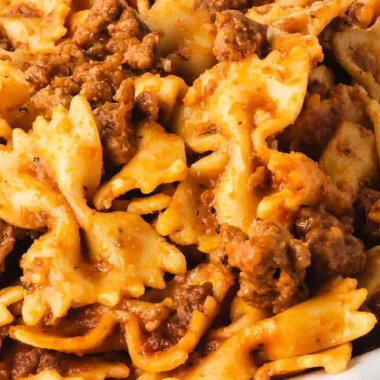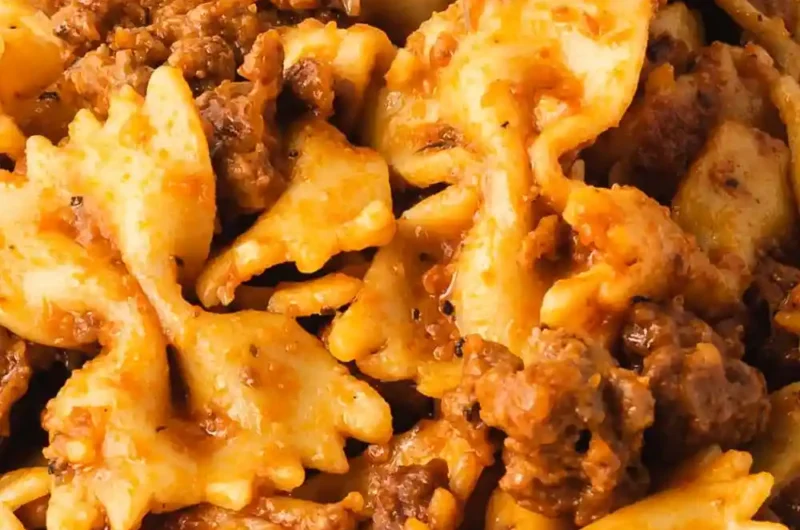
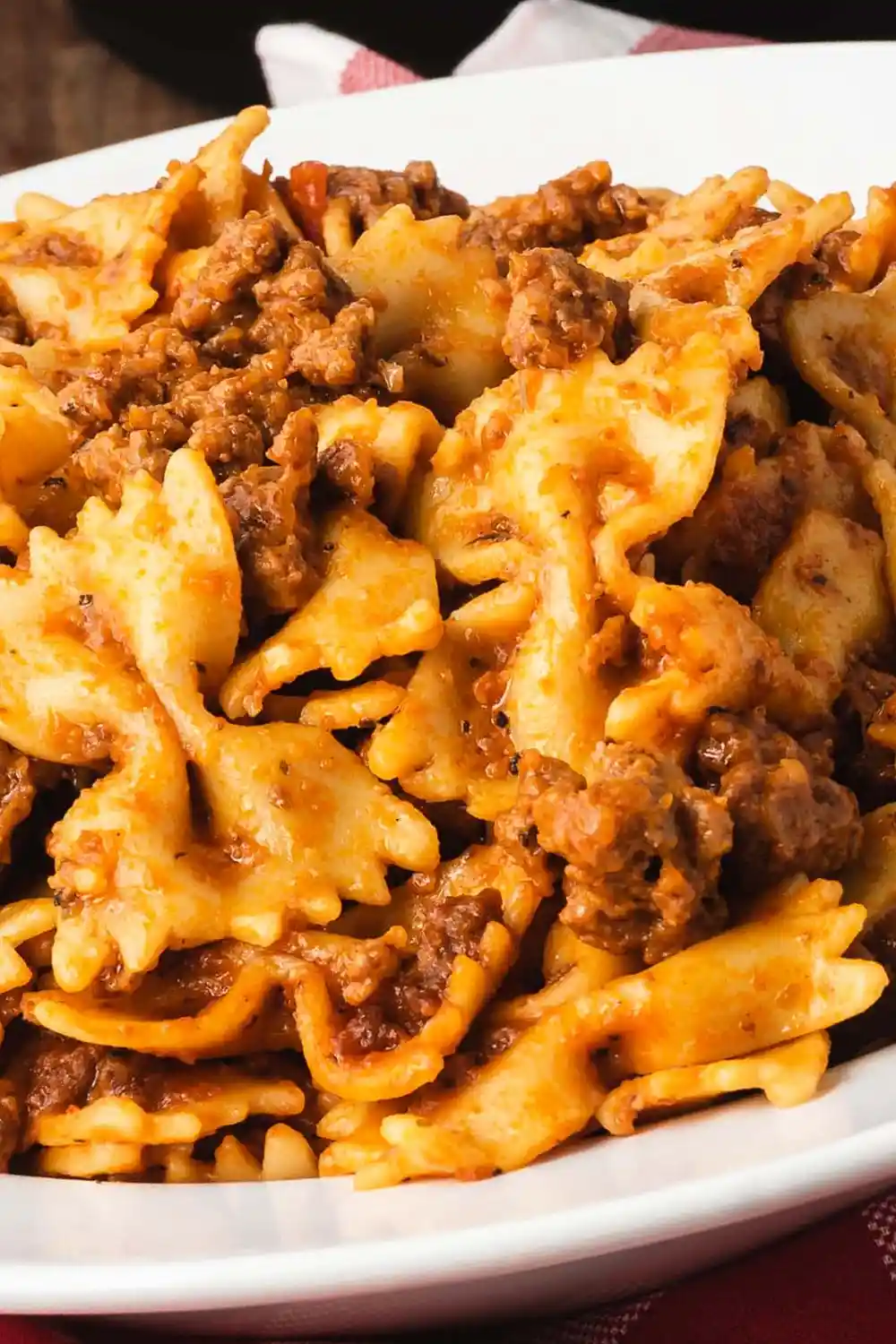
This simple one-pot meal is the ideal solution for busy evenings when you need a hearty, family-friendly dinner on the table in under twenty minutes. By combining protein-rich ground beef, tender farfalle pasta, and a savory, velvety sauce, you can create a restaurant-style dish with minimal cleanup. It is a reliable, comforting recipe that ensures even the pickiest eaters leave the table satisfied.
List of ingredients
- 1 pound farfalle pasta
- 1 pound ground beef (90/10 ground sirloin)
- 1 jar creamy tomato-based pasta sauce (24 ounce)
- 3 cups unsalted beef stock
- 1 tablespoon Italian seasoning
- 1 tablespoon dried minced onion
- 1 ½ teaspoons garlic powder
- 1 teaspoon kosher salt
- ½ teaspoon ground black pepper
- 1 ½ cups mozzarella cheese (shredded)
- ½ cup parmesan cheese (grated)
step-by-step instructions
- Step: Set the Instant Pot to ‘Sauté’ and allow it to heat up until the display reads ‘Hot’. Then, add the ground beef to the pot and sauté, breaking into small pieces, until fully cooked, about 6 to 8 minutes.
- Step: Add the Italian seasoning, dried minced onion, garlic powder, salt, and pepper to the ground beef and mix well. Cook for another couple of minutes.
- Step: Cancel the ‘Sauté’ mode and then add the beef stock. Stir well and deglaze the bottom of the liner.
- Step: Add the pasta to the pot and only push it down into the liquid but do not mix it in. Layer the jar of pasta sauce on top of the pasta, do not mix.
- Step: Close the Instant Pot, set it to ‘Sealing’, select the ‘Manual’ or ‘Pressure Cook’ function and cook on ‘High Pressure’ for 5 minutes.
- Step: Once cooking has finished, allow for a 2 minute NPR (natural pressure release). Release the remaining pressure after the two minutes have completed. Once all the pressure has been released and the pin has dropped, open the pot.
- Step: Add the mozzarella and parmesan cheese and mix well into the pasta until the cheese has fully melted into the sauce.
Refining the Preparation Process
Importance of the Non-Stirring Technique
When cooking pasta in an electric pressure cooker, the order of ingredients is vital for preventing the dreaded burn message. By layering the sauce on top of the pasta rather than mixing it in, you ensure that the thicker, starchier components remain separated from the metal base of the cooking pot. This simple step allows the liquid broth to circulate freely during the pressure-building phase, keeping the bottom clean and functional throughout the cycle.
Achieving the Perfect Pasta Texture
The 5-minute cooking time is calibrated to yield al dente pasta that maintains its structure when stirred with the cheese. If you prefer a softer noodle, you can extend the cooking time by one additional minute, though it is usually better to adjust the release time instead. Keep in mind that the pasta will continue to absorb some liquid while you stir in the cheeses, which helps naturally thicken the sauce to a perfect coating consistency.
Managing Liquid Ratios
Using 3 cups of stock for every pound of pasta is the standard ratio for this specific recipe to ensure sufficient steam and hydration. If you choose to use a different brand of pasta or a different shape, such as penne or rotini, you might find that the water absorption rate varies slightly. However, for standard farfalle, the current volume provides enough moisture to cover the pasta adequately while leaving enough behind to create a luxurious, creamy coating once combined with the cheese.
Practical Ingredient Adjustments
Alternative Stock Options
While beef stock provides a deep, savory foundation that pairs perfectly with the ground meat, you can easily swap it for unsalted chicken or vegetable stock if that is what you have in your pantry. The result will be slightly lighter in flavor but equally delicious, as the sauce and cheese will remain the primary drivers of the dish. Regardless of the stock chosen, always opt for the unsalted variety to maintain full control over the final sodium levels in your meal.
Swapping the Pasta Sauce
If you prefer a classic marinara or a roasted garlic tomato sauce, these can be substituted in a one-to-one ratio for the tomato cream variety. The essential component is that the sauce has a relatively smooth consistency rather than a chunky, vegetable-heavy one, as chunks can sometimes impede the heat distribution during the cooking cycle. Ensure the total volume remains approximately 24 ounces to maintain the correct liquid-to-pasta balance.
Customizing the Cheese Blend
Mozzarella and parmesan are chosen for their contrasting properties: one for texture and one for depth of flavor. If you want to experiment, you can add a small amount of provolone for a milder pull, or pecorino romano to increase the sharp, salty punch of the dish. Avoid using pre-shredded cheese with anti-caking agents if possible, as hand-shredding blocks of cheese leads to a much smoother, clump-free melting experience when added to the hot pasta.
Serving and Storage Recommendations
Creative Serving Suggestions
This dish is incredibly filling on its own, but you can enhance the presentation by garnishing each bowl with a sprinkle of fresh chopped parsley or a dusting of extra red pepper flakes for those who enjoy heat. A side of crusty, toasted bread is excellent for mopping up any remaining sauce, while a crisp green salad tossed in a sharp vinaigrette offers a refreshing contrast to the richness of the cheese-laden pasta.
Effective Storage Strategies
Leftovers should be cooled to room temperature before being transferred to an airtight container. Because pasta continues to absorb moisture, the sauce may thicken significantly after a few hours in the refrigerator. You can store the dish for up to three days, though the pasta is best when consumed within the first forty-eight hours to ensure the best texture remains intact.
Reviving Leftovers
When reheating, add a small splash of water or additional beef stock to the container to help loosen the sauce. It is best to reheat on the stovetop over low heat, stirring continuously to prevent the cheese from separating or the bottom from burning. If using a microwave, reheat in short thirty-second intervals, stirring in between, to ensure the center warms through without overheating the edges.
Common Queries Addressed
Can I use frozen beef instead of fresh?
It is not recommended to use frozen beef directly in the sauté stage of this recipe. You must thaw the ground beef completely in the refrigerator or using a quick-thaw method before adding it to the pressure cooker to ensure it browns evenly and cooks through to a safe temperature. Browning the meat is a crucial step for developing the flavor profile of this dish.
Is it possible to double this recipe?
While you can scale the ingredients up to fit your specific pressure cooker model, be mindful of the maximum fill line. The pot should generally be no more than two-thirds full when cooking pasta to allow enough room for expansion and pressure buildup. If your cooker is smaller, it is safer to make the recipe as written rather than forcing a larger batch, which could lead to an uneven cook.
What should I do if the pasta is undercooked?
If you open the lid and find that the center of the pasta is still slightly too firm, do not panic. Simply add half a cup of warm water or stock, stir well, and place the lid back on the pot. Use the ‘Keep Warm’ function or set it for one additional minute on high pressure to allow the residual heat and moisture to soften the pasta to your desired level of tenderness.
Why did my pot display a burn message?
A burn error typically occurs when there is insufficient liquid or if the thick sauce has scorched on the bottom. To avoid this, always prioritize the deglazing step with your spatula after sautéing the meat, and ensure that the pasta sauce is layered directly on top of the pasta without mixing. Maintaining these layers keeps the bottom of the pot protected from direct contact with the starch-heavy tomato components during the pressurization process.
Print
Instant Pot Beef and Bowtie Pasta
- Total Time: PT17M
- Yield: 8 1x
- Diet: Non-Vegetarian
Description
This easy prep pasta meal is perfect for weeknight family dinners. This one is ready in no time and the entire family will love it! A super kid-friendly pasta dish!
Ingredients
- 1 pound farfalle pasta
- 1 pound ground beef (90/10 ground sirloin)
- 1 jar creamy tomato-based pasta sauce (24 ounce)
- 3 cups unsalted beef stock
- 1 tablespoon Italian seasoning
- 1 tablespoon dried minced onion
- 1 ½ teaspoons garlic powder
- 1 teaspoon kosher salt
- ½ teaspoon ground black pepper
- 1 ½ cups mozzarella cheese (shredded)
- ½ cup parmesan cheese (grated)
Instructions
- Step: Set the Instant Pot to ‘Sauté’ and allow it to heat up until the display reads ‘Hot’. Then, add the ground beef to the pot and sauté, breaking into small pieces, until fully cooked, about 6 to 8 minutes.
- Step: Add the Italian seasoning, dried minced onion, garlic powder, salt, and pepper to the ground beef and mix well. Cook for another couple of minutes.
- Step: Cancel the ‘Sauté’ mode and then add the beef stock. Stir well and deglaze the bottom of the liner.
- Step: Add the pasta to the pot and only push it down into the liquid but do not mix it in. Layer the jar of pasta sauce on top of the pasta, do not mix.
- Step: Close the Instant Pot, set it to ‘Sealing’, select the ‘Manual’ or ‘Pressure Cook’ function and cook on ‘High Pressure’ for 5 minutes.
- Step: Once cooking has finished, allow for a 2 minute NPR (natural pressure release). Release the remaining pressure after the two minutes have completed. Once all the pressure has been released and the pin has dropped, open the pot.
- Step: Add the mozzarella and parmesan cheese and mix well into the pasta until the cheese has fully melted into the sauce.
Notes
Ensure you layer the sauce on top of the pasta without mixing to prevent the Instant Pot from displaying a burn error. You can substitute beef stock with chicken stock if preferred.
- Prep Time: PT10M
- Cook Time: PT5M
- Category: Main Dish
- Method: Pressure Cooking
- Cuisine: American
Nutrition
- Serving Size: 1 serving
- Calories: 435 kcal
- Sugar: 6 g
- Sodium: 1187 mg
- Fat: 13 g
- Saturated Fat: 6 g
- Unsaturated Fat: 7 g
- Trans Fat: 0 g
- Carbohydrates: 50 g
- Fiber: 3 g
- Protein: 28 g
- Cholesterol: 57 mg
Keywords: Instant Pot, Pasta, Beef, Family Dinner, Kid-Friendly