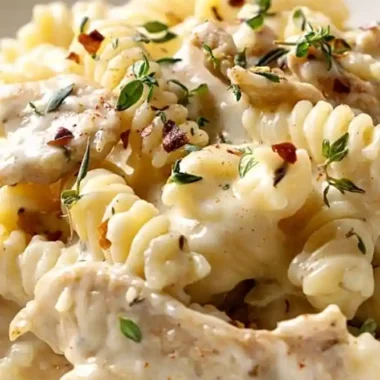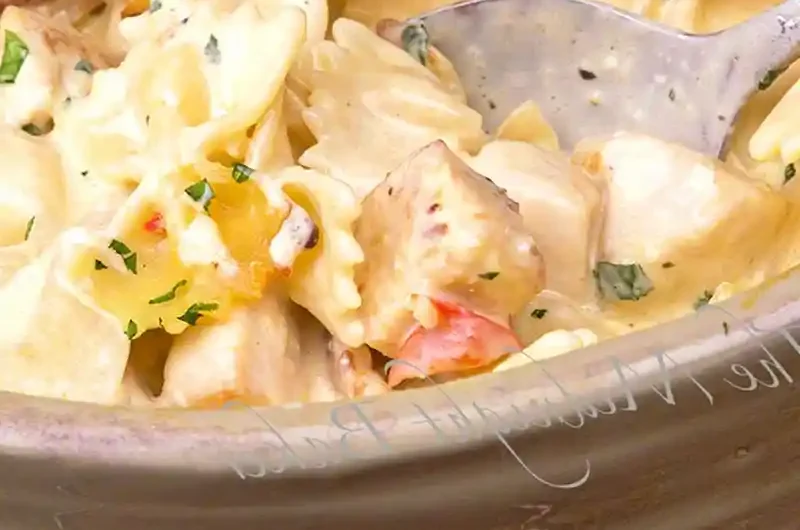
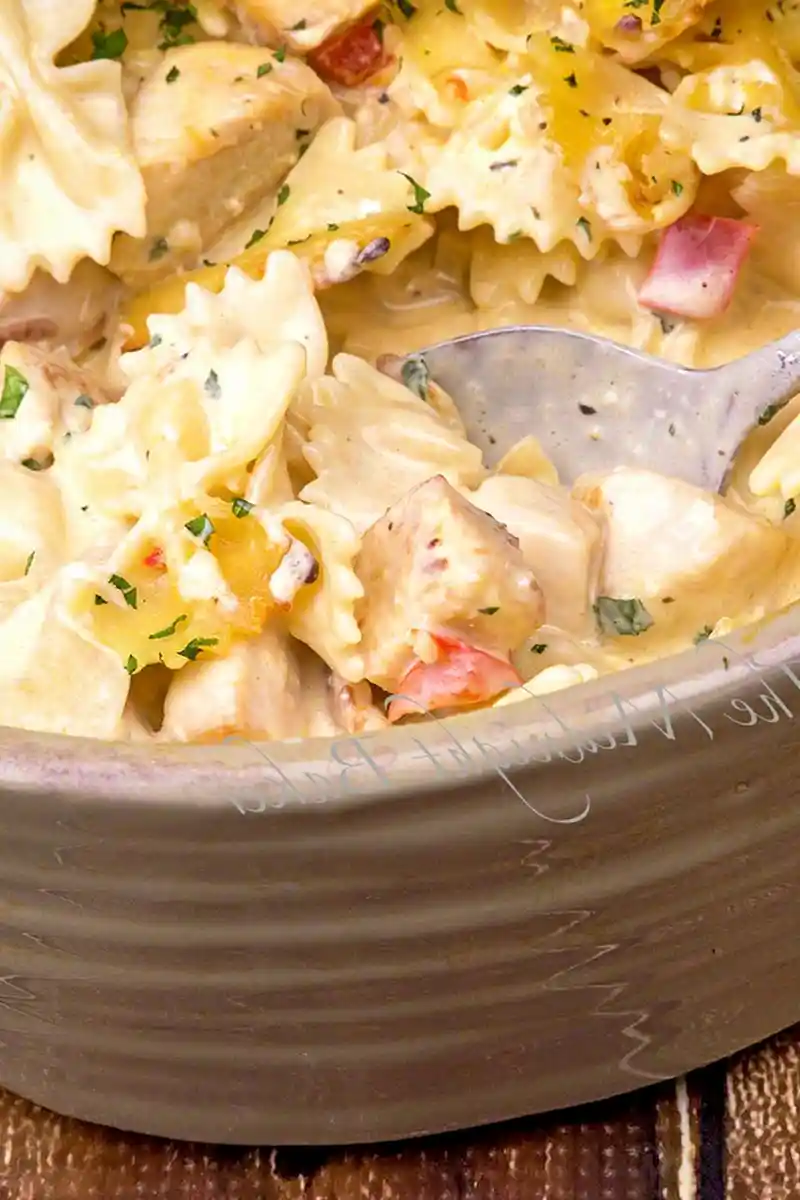
This creamy Italian chicken casserole combines tender poultry and pasta in a rich, savory cheese sauce. It is a versatile meal that can be served directly from the skillet or baked in the oven for a golden, bubbly crust.
List of ingredients
- 2 lbs boneless skinless chicken breasts (cut into 1/2-inch cubes) – ensures even cooking and bite-sized pieces.
- 2 tbsp butter – used for searing the chicken and sautéing vegetables.
- 1 small onion (chopped) – adds a foundational savory sweetness.
- 2 cloves garlic (minced) – provides an aromatic Italian flavor profile.
- 1/4 cup red bell peppers (diced) – adds color and a mild sweetness.
- 10.75 oz can cream of chicken soup – creates the thickened base for the sauce.
- 1 cup milk or half and half – adjusts the creaminess and consistency of the sauce.
- 1/2 cup chicken stock – adds depth of flavor and ensures the sauce is not too thick.
- 4 oz cream cheese (cubed) – adds a velvety texture and richness.
- 1 envelope dry Italian dressing mix – contains a blend of herbs and seasonings.
- 3 tbsp grated Parmesan cheese (divided) – used for both the sauce and the topping.
- 8 oz uncooked bowtie, farfalle pasta (or choice of shaped pasta) – holds onto the sauce effectively.
step-by-step instructions
- Prepare the pasta: Cook the pasta according to the package directions. If you are baking the casserole, cook the pasta for 2-3 minutes less than recommended to prevent it from becoming overdone. Drain and set aside.
- Brown the chicken: Melt butter in a large skillet over medium heat. Add the chicken cubes and brown them on all sides.
- Sauté aromatics: Add the chopped onion, minced garlic, and diced red bell peppers to the pan. Sauté for about 3 minutes until the onion becomes translucent.
- Build the sauce: Pour in the cream of chicken soup, milk, and chicken stock. Whisk the mixture until it is completely smooth.
- Melt the cheese: Stir in the cubed cream cheese. Continue stirring until the cheese is fully melted and blended into the sauce.
- Season the mixture: Add 2 tablespoons of the grated Parmesan cheese and the dry Italian dressing mix. Stir until well blended.
- Combine: Toss the cooked pasta into the skillet. Coat the pasta thoroughly with the sauce and heat through. You can serve the dish at this stage if preferred.
- Prepare for baking: Preheat your oven to 350 degrees F. Lightly spray a 2-quart casserole dish (such as an 11 x 7 or 9 x 9-inch pan) with non-stick spray.
- Bake the casserole: Transfer the chicken and pasta mixture into the prepared pan. Sprinkle the remaining 1 tablespoon of Parmesan cheese over the top.
- Finish: Bake for 30-40 minutes until the sauce is bubbling and the pasta on top has turned golden brown.
Cooking Guidance for Optimal Texture
The Importance of Undercooking Pasta
When preparing a baked pasta dish, it is critical to pull the noodles out of the water slightly before they reach al dente. Because the pasta continues to absorb liquid and cook in the oven, undercooking it prevents a mushy final result.
Searing Chicken for Flavor
Browning the chicken cubes first creates a Maillard reaction, which develops a deeper, savory flavor. This step also ensures the chicken maintains a better structure within the creamy sauce compared to poaching it.
Uniform Meat Cubing
Cutting the chicken breasts into consistent 1/2-inch cubes ensures that every piece cooks at the same rate. This prevents smaller pieces from drying out while larger pieces remain undercooked.
Using a Heavy-Bottomed Skillet
A thick skillet helps distribute heat evenly across the bottom of the pan. This prevents the butter or the milk-based sauce from scorching during the simmering process.
Ingredient Substitutions and Alternatives
Replacing the Cream of Chicken Soup
If you prefer to avoid canned soup, you can create a homemade roux by melting butter and whisking in flour. Gradually add chicken stock and milk until you reach a thick, creamy consistency similar to the canned version.
Milk and Cream Alternatives
For a richer sauce, substitute the milk with heavy cream. For a slightly lighter version, you can use whole milk or an unsweetened cashew milk for a dairy-free alternative, though this may affect the thickening process.
Substituting Cream Cheese
If cream cheese is unavailable, you can use an equal amount of mascarpone or a thick Greek yogurt. Be aware that yogurt should be stirred in at the end over low heat to prevent curdling.
Alternative Pasta Shapes
While bowtie pasta is recommended, penne, rotini, or rigatoni are excellent alternatives. These shapes have ridges or holes that trap the creamy sauce, ensuring every bite is flavorful.
Variations in Cheese
You can swap Parmesan for Pecorino Romano for a saltier, sharper taste. Adding a handful of shredded mozzarella during the baking step will create a stretchier, more traditional casserole top.
Flavor Enhancements and Add-ins
Adding Fresh Garden Herbs
Stirring in fresh chopped parsley or basil at the very end adds a burst of brightness. These herbs cut through the richness of the cream cheese and Parmesan.
Incorporating Extra Vegetables
Adding baby spinach or frozen peas during the final toss with the pasta increases the nutritional value. Sautéed mushrooms can also be added with the onions for an earthier flavor.
Adjusting the Heat Level
For those who prefer a spicy kick, add a pinch of red pepper flakes during the sautéing step. This provides a subtle warmth that complements the Italian herbs.
Using Different Bell Peppers
While red bell peppers are sweet, using yellow or orange peppers provides a similar flavor with a different color. Green peppers can be used but will offer a more bitter, sharp taste.
Serving and Pairing Ideas
Pairing with Fresh Green Salads
Since this casserole is rich and creamy, it pairs best with a crisp side salad. A simple arugula salad with lemon vinaigrette or a classic Caesar salad provides a refreshing contrast.
Complementary Bread Options
Serving this dish with toasted garlic bread or warm focaccia is a great way to soak up the extra sauce. Brush slices of baguette with butter and garlic before toasting them in the oven.
Vegetable Side Pairings
Steamed broccoli or roasted asparagus are excellent sides for this meal. The acidity of steamed vegetables helps balance the heaviness of the cheese sauce.
Garnish Suggestions
Finish the dish with a sprinkle of fresh cracked black pepper and a dusting of extra Parmesan. A few fresh basil leaves placed on top just before serving enhance the visual appeal.
Storage and Preservation
Refrigerating Leftovers
Store any remaining casserole in an airtight container in the refrigerator for up to 3-4 days. Ensure the food is cooled slightly before sealing the lid to prevent excessive condensation.
Freezing the Casserole
This dish can be frozen either before or after baking. If freezing before baking, assemble everything except the top cheese layer and freeze in a freezer-safe dish for up to 3 months.
Safe Thawing Process
Thaw frozen portions in the refrigerator overnight before reheating. This ensures the sauce maintains its emulsion and the chicken doesn’t become rubbery during the reheating process.
Reheating Instructions
Using the Oven for Reheating
To maintain the golden crust, reheat portions in the oven at 325 degrees F. Cover the dish with foil to prevent the pasta from drying out, then remove the foil for the last 5 minutes.
Microwave Reheating Tips
When using a microwave, heat the casserole in short 1-minute intervals, stirring in between. This prevents hot spots and ensures the sauce is heated evenly throughout.
Restoring Sauce Consistency
Creamy sauces often thicken significantly in the fridge. Add a tablespoon of milk or chicken stock before reheating to loosen the sauce and restore its original silkiness.
Make-Ahead Advice
Preparing the Base Sauce
The chicken and sauce mixture can be prepared a day in advance and stored in the fridge. Simply reheat the sauce in the skillet before tossing in the freshly cooked pasta.
Assembling the Casserole Early
You can assemble the entire casserole in the baking dish and keep it refrigerated. When ready to eat, allow it to sit at room temperature for 30 minutes before baking to ensure the center heats through.
Timing the Final Bake
If you have assembled the dish in advance, you may need to add 5-10 minutes to the baking time. Use a food thermometer to ensure the center reaches an internal temperature of 165 degrees F.
Troubleshooting Common Issues
Dealing with a Thin Sauce
If the sauce appears too thin after mixing, simmer it for a few extra minutes before adding the pasta. Alternatively, stir in a small amount of cornstarch slurry (cornstarch mixed with water) to thicken it quickly.
Preventing Overcooked Chicken
Avoid over-browning the chicken in the initial skillet step. Since the chicken will cook further in the oven, a light golden sear is sufficient to prevent the meat from becoming dry.
Solving Sauce Separation
If the sauce separates or looks oily, it is often due to excessive heat. Lower the temperature and whisk in a tablespoon of milk to help re-emulsify the fats and liquids.
Avoiding Pasta Mushiness
If the pasta is too soft, you likely overcooked it during the boiling stage. Stick strictly to the reduced cooking time when planning to bake the dish in the oven.
Frequently Asked Questions
Can I use frozen chicken?
Yes, but the chicken must be fully thawed and patted dry before cubing. Adding frozen chicken directly to the pan will release too much moisture and prevent the meat from browning.
Is there a way to make this low-carb?
You can replace the pasta with steamed cauliflower florets or zucchini noodles. If using zucchini, add them at the very end to avoid them releasing too much water into the sauce.
What can I use instead of the dressing mix?
You can make a homemade version by mixing dried oregano, dried basil, garlic powder, onion powder, salt, and black pepper. Use approximately 2 tablespoons of this mixture.
Can this be made in a slow cooker?
While possible, the stovetop and oven method is preferred. Slow cooking the chicken in cream sauce for long periods can lead to a dry texture in the meat and a less stable sauce.
Can I add more cheese?
Adding extra mozzarella or Monterey Jack will make the dish cheesier and stretchier. Simply fold the extra cheese into the mixture before transferring it to the baking dish.
What if I don’t have cream cheese?
You can substitute it with a mixture of butter and heavy cream, or a dollop of sour cream. This will provide a similar creaminess, though the flavor will be slightly more tangy.
How do I reduce the sodium content?
Use low-sodium chicken stock and a low-sodium version of the cream of chicken soup. You can also omit some of the salt from the Italian dressing mix and use fresh herbs instead.
Print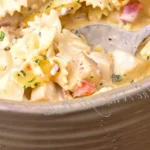
Italian Chicken Casserole
- Total Time: 60 minutes
- Yield: 4–6 servings 1x
- Diet: General
Description
Easy-to-make Italian-flavored chicken casserole will become a delicious hit with the family!
Ingredients
- 2 lbs boneless skinless chicken breasts, cut into 1/2-inch cubes
- 2 tbsp butter
- 1 small onion, chopped
- 2 cloves garlic, minced
- 1/4 cup red bell peppers, diced
- 10.75 oz can cream of chicken soup
- 1 cup milk or half and half
- 1/2 cup chicken stock
- 4 oz cream cheese, cubed
- 1 envelope dry Italian dressing mix
- 3 tbsp grated Parmesan cheese, divided
- 8 oz uncooked bowtie, farfalle pasta
Instructions
- Step: Cook pasta per package directions (2-3 minutes less for casserole version), drain and set aside.
- Step: Melt butter in a large skillet over medium heat and brown chicken cubes.
- Step: Add onion, garlic, and bell pepper; saute until onion is translucent (about 3 minutes).
- Step: Add soup, milk, and stock to the pan and whisk until smooth.
- Step: Add cubed cream cheese and stir until melted and well blended into sauce.
- Step: Stir in 2 tablespoons of Parmesan cheese and the dressing mix until well blended.
- Step: Add the cooked pasta and toss to coat well with the sauce.
- Step: Preheat oven to 350 degrees F and lightly spray a 2-quart casserole dish.
- Step: Transfer chicken/pasta mixture into prepared pan and sprinkle with the remaining 1 tablespoon of Parmesan cheese.
- Step: Bake for 30-40 minutes or until sauce is bubbling and pasta is golden brown on top.
Notes
Leftover cooked chicken may be substituted. The browning step is eliminated if using cooked chicken.
- Prep Time: 20 minutes
- Cook Time: 40 minutes
- Category: Chicken, Comfort Foods, Pasta
- Method: Baking
- Cuisine: Italian
Nutrition
- Serving Size: 1 serving
- Calories: 767 kcal
- Sugar: 8 g
- Sodium: 1124 mg
- Fat: 30 g
- Saturated Fat: 14 g
- Unsaturated Fat: 16 g
- Trans Fat: 0 g
- Carbohydrates: 57 g
- Fiber: 2 g
- Protein: 64 g
- Cholesterol: 208 mg
Keywords: chicken casserole recipes, italian chicken