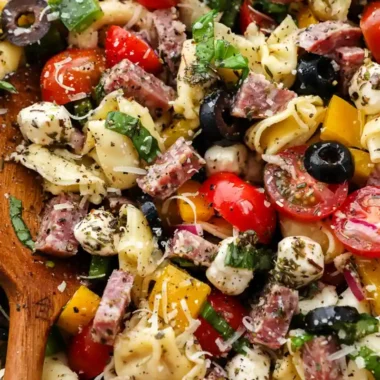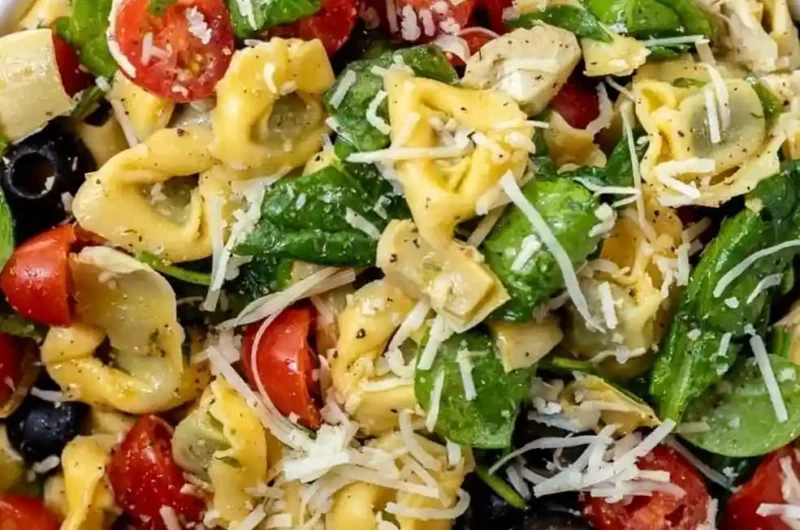
This zesty Italian tortellini pasta salad is a nutrient-dense side dish that replaces traditional pasta with filling, cheese-stuffed tortellini. It is a quick-prep recipe that works well for outdoor gatherings, picnics, or meal-prep lunches.
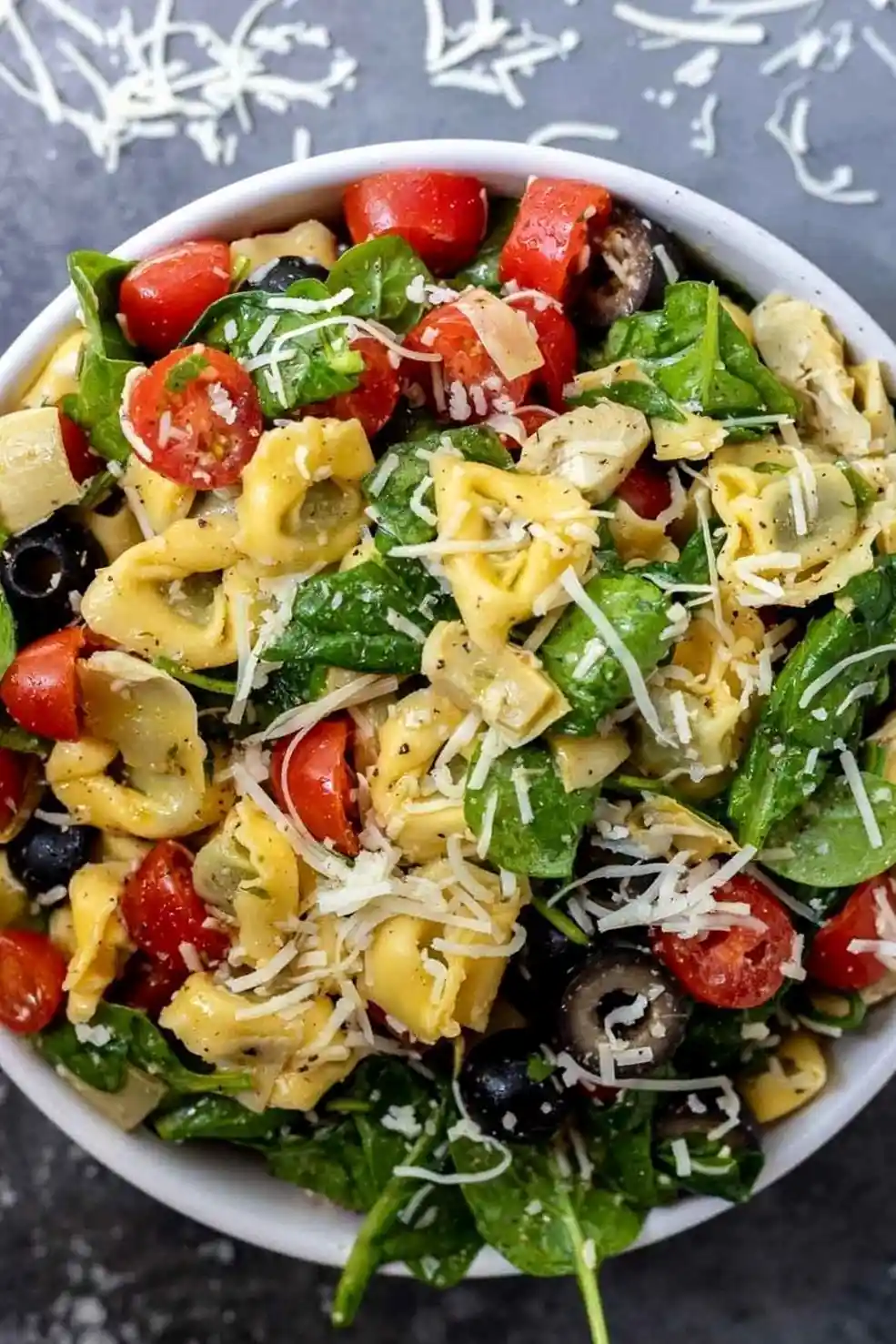
List of ingredients
- 10-12 ounces Spinach Tortellini – use a high-quality brand for better texture.
- 2 Cups Baby Spinach – fresh, washed leaves.
- 16 ounces Grape or Cherry Tomatoes – sliced in half.
- 6 ounces Pitted Black Olives – drained and sliced in half.
- 1 Cup Marinated Artichoke Hearts – chopped into bite-sized pieces.
- 1/2 Cup Shredded Parmesan Cheese – ensure it is made with microbial rennet.
- 2 Tablespoons Olive Oil – extra virgin for the best flavor.
- 1 Tablespoon Apple Cider Vinegar – a suitable substitute for wine vinegar.
- 1/2 teaspoon Garlic Powder – for a consistent savory taste.
- 1 teaspoon Dried Italian Seasoning – a blend of oregano, basil, and thyme.
- Salt and Pepper – adjusted to your personal taste.
step-by-step instructions
- Prepare the greens: Place the baby spinach in a large mixing bowl to prepare for the hot pasta.
- Cook the tortellini: Boil the spinach tortellini according to the package directions. Drain them well and immediately transfer them into the bowl with the baby spinach.
- Wilt the spinach: Pour the hot tortellini directly over the spinach leaves and let them sit for 5 minutes. This residual heat slightly wilts the greens without overcooking them.
- Combine vegetables: Stir in the halved grape or cherry tomatoes, drained black olives, and chopped marinated artichoke hearts.
- Add the cheese: Wait until the tortellini have fully cooled down before stirring in the shredded parmesan cheese to prevent it from melting.
- Mix the dressing: In a small bowl, whisk together the olive oil, apple cider vinegar, garlic powder, Italian seasoning, salt, and pepper.
- Final toss: Pour the prepared dressing over the pasta salad and toss everything together until the ingredients are evenly coated.
- Serve: You can serve this dish immediately at room temperature or refrigerate it to serve cold.
Optimizing Pasta Texture and Temperature
Preventing Overcooked Tortellini
Cook the tortellini until they are just al dente, meaning they still have a slight firmness in the center. Overcooked pasta tends to break apart when you toss it with heavy ingredients like artichokes and olives. This ensures each piece remains intact during the mixing process.
Managing the Cooling Process
Allowing the pasta to cool before adding the parmesan cheese is essential for the visual appeal of the dish. If the pasta is too hot, the shredded cheese will melt into a clump rather than remaining as distinct shreds. This preserves the texture and distribution of the cheese throughout the salad.
Perfecting the Spinach Wilt
The 5-minute resting period allows the baby spinach to soften just enough to blend with the pasta. If you leave it too long, the spinach will become mushy and lose its bright green color. This brief heat exposure makes the greens more palatable while retaining their nutritional value.
Ingredient Substitutions and Dietary Adjustments
Alternative Tortellini Fillings
While spinach tortellini is recommended, you can use cheese or mushroom-filled varieties. Ensure the filling is consistent with your dietary preferences. The structure of the salad remains the same regardless of the filling used.
Acidic Element Swaps
If you do not have apple cider vinegar, lemon juice or white distilled vinegar can be used. Lemon juice adds a brighter, citrusy note that pairs well with the artichokes. Distilled white vinegar provides a sharper, more neutral acidity.
Cheese Alternatives
For a different flavor profile, you can replace parmesan with crumbled feta or goat cheese. If you prefer a vegan option, use nutritional yeast or a plant-based parmesan alternative. These options maintain the salty, tangy element required for the dressing.
Gluten-Free Pasta Options
Substitute the standard tortellini with gluten-free cheese tortellini. Be mindful that gluten-free pasta often has a shorter boiling window and can become mushy very quickly. Monitor the pot closely to ensure an al dente finish.
Flavor Variations for Different Palates
Adding Fresh Herbaceous Notes
Incorporate chopped fresh basil or flat-leaf parsley during the final toss. Fresh herbs provide a bright contrast to the dried Italian seasoning. This addition enhances the aromatic quality of the salad.
Introducing Extra Vegetable Crunch
Add thinly sliced red onion or diced red bell pepper for added texture. These ingredients provide a crisp contrast to the soft tortellini. They also add vibrant colors that make the salad more visually appealing for parties.
Adding Plant-Based Proteins
Mix in a can of drained chickpeas or cannellini beans for extra protein. These legumes soak up the vinaigrette and add heartiness to the dish. They make the salad more filling, transforming it from a side dish into a main course.
Adjusting the Dressing Intensity
For a sweeter dressing, whisk in a teaspoon of maple syrup or honey. This balances the acidity of the vinegar and the saltiness of the olives. It creates a more complex flavor profile that appeals to a wider range of tastes.
Serving and Presentation Ideas
Pairing with Grilled Proteins
This salad pairs excellently with grilled chicken breasts or baked fish fillets. The acidity of the vinaigrette cuts through the richness of the proteins. It provides a refreshing balance to a heavy main course.
Potluck Presentation Tips
Serve the salad in a wide, shallow bowl rather than a deep one to prevent the ingredients at the bottom from being crushed. Garnish the top with a few whole cherry tomatoes and a sprinkle of fresh herbs. This makes the dish look professional and appetizing.
Balancing the Plate
Serve this alongside a light green salad or toasted garlic bread. The hearty nature of the tortellini means you do not need many other starches on the plate. A simple side of steamed broccoli also complements the Italian flavors.
Storage and Preservation Guidelines
Choosing the Right Container
Store the salad in an airtight glass container to keep the ingredients fresh. Glass does not absorb odors and helps maintain the temperature of the salad. Ensure there is enough room in the container to avoid compressing the tortellini.
Maximum Refrigeration Time
This pasta salad stays fresh in the refrigerator for 3 to 5 days. After this period, the pasta may begin to absorb too much dressing and lose its structure. The spinach may also begin to break down and become too soft.
Preventing Soggy Vegetables
If you plan to store the salad for several days, consider keeping the dressing in a separate jar. Toss the dressing with the salad just before serving. This prevents the tomatoes and spinach from releasing too much water into the mix.
Reheating and Reviving Your Salad
Bringing to Room Temperature
For the best flavor, take the salad out of the refrigerator 30 minutes before serving. This allows the fats in the olive oil and cheese to soften. Cold temperatures can mask some of the nuanced flavors of the Italian seasoning.
Refreshing the Dressing
Pasta tends to absorb the vinaigrette as it sits in the fridge. If the salad looks dry, drizzle a small amount of extra olive oil and a squeeze of lemon juice over the top. Toss gently to redistribute the moisture.
Updating Wilted Greens
If the baby spinach has become too wilted after several days, stir in a handful of fresh spinach leaves. This adds a new layer of crunch and restores the vibrant green color to the dish.
Make-Ahead Preparation Strategies
Advance Vegetable Prep
You can chop the tomatoes, olives, and artichokes up to 24 hours in advance. Store them in separate containers or one large bowl, but keep them chilled. This significantly reduces the assembly time on the day of the event.
Pre-mixing the Vinaigrette
The dressing can be made several days in advance and stored in a mason jar. Shake the jar vigorously before pouring it over the salad to re-emulsify the oil and vinegar. This ensures the flavor is consistent across every bite.
Pasta Pre-boiling
You can boil and cool the tortellini the night before. Toss them with a teaspoon of olive oil to prevent them from sticking together in the fridge. When ready to assemble, simply heat them slightly or mix them directly with the spinach.
Troubleshooting Common Issues
Fixing a Bland Dressing
If the dressing tastes flat, add a pinch more salt or a teaspoon of extra vinegar. Salt enhances the other flavors, while acid provides the necessary brightness. Taste the dressing with a piece of pasta before pouring it over the whole batch.
Managing Excess Moisture
If you notice water pooling at the bottom of the bowl, your olives or artichokes may not have been drained sufficiently. Use a slotted spoon to remove the excess liquid. You can also add a tablespoon of grated parmesan to help absorb the moisture.
Preventing Pasta Clumping
If the tortellini stick together after draining, toss them with a small amount of olive oil immediately. This creates a barrier between the pasta pieces. It ensures that each tortellini is individually coated in the final dressing.
Frequently Asked Questions
Can I use frozen tortellini?
Yes, you can use frozen tortellini. Follow the package instructions for boiling, but be extra careful not to overcook them, as frozen varieties can sometimes soften faster than fresh refrigerated ones.
Should I salt the pasta water?
Yes, salt the water generously. This is the only opportunity to season the pasta itself. It enhances the flavor of the cheese filling and ensures the dish is not bland.
Can I use store-bought Italian dressing?
You can, but store-bought dressings often contain preservatives or sugars that change the taste. Making your own with olive oil and apple cider vinegar allows you to control the salt and acidity levels.
What is the best way to cut cherry tomatoes?
Slice them lengthwise into halves. This provides a flat surface that helps the dressing cling to the tomato and ensures a consistent size that matches the tortellini.
How do I keep the spinach from getting too mushy?
Ensure you only let the hot pasta sit on the spinach for exactly 5 minutes. Immediately follow this by adding the cold vegetables and then cooling the mixture completely before adding cheese and dressing.
Print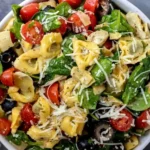
Italian Tortellini Pasta Salad
- Total Time: 20 minutes
- Yield: 6 servings 1x
- Diet: Vegetarian
Description
This Italian Tortellini Pasta Salad Recipe is great for summer barbecues, potlucks, picnics and parties. This no-mayo pasta salad is quick, easy, nutritious and vegetarian.
Ingredients
- 10–12 ounces Spinach Tortellini
- 2 Cups Baby Spinach
- 16 ounces Grape or Cherry Tomatoes, halved
- 6 ounces Pitted Black Olives, drained and halved
- 1 Cup Chopped Marinated Artichoke Hearts
- 1/2 Cup Shredded Parmesan Cheese
- 2 Tablespoons Olive Oil
- 1 Tablespoon Red or White Wine Vinegar
- 1/2 teaspoon Garlic Powder
- 1 teaspoon Dried Italian Seasoning
- Salt and Pepper, to taste
Instructions
- Step: Place spinach in large bowl.
- Step: Boil the tortellini per package instructions. Drain then transfer tortellini to bowl with spinach. Pour the hot tortellini over the spinach and leave for 5 minutes to slightly wilt spinach.
- Step: Add in tomatoes, olives and artichoke hearts. Once tortellini is fully cooled, add in parmesan.
- Step: Mix dressing ingredients: oil, vinegar, garlic powder, Italian seasoning, salt and pepper. Pour over tortellini salad and toss until evenly coated.
- Step: Serve room temp or cold.
Notes
Optional add-ins: thinly sliced red onion, red bell pepper, etc.
- Prep Time: 10 minutes
- Cook Time: 10 minutes
- Category: Side Dishes
- Method: Boiling
- Cuisine: American
Nutrition
- Serving Size: 1 serving
- Calories: 241 kcal
- Sugar: 2 g
- Sodium: 357 mg
- Fat: 6.5 g
- Saturated Fat: 2.8 g
- Unsaturated Fat: 3.7 g
- Trans Fat: 0 g
- Carbohydrates: 36 g
- Fiber: 2 g
- Protein: 10 g
- Cholesterol: 30 mg
Keywords: pasta salad, side dish recipe, tortellini salad