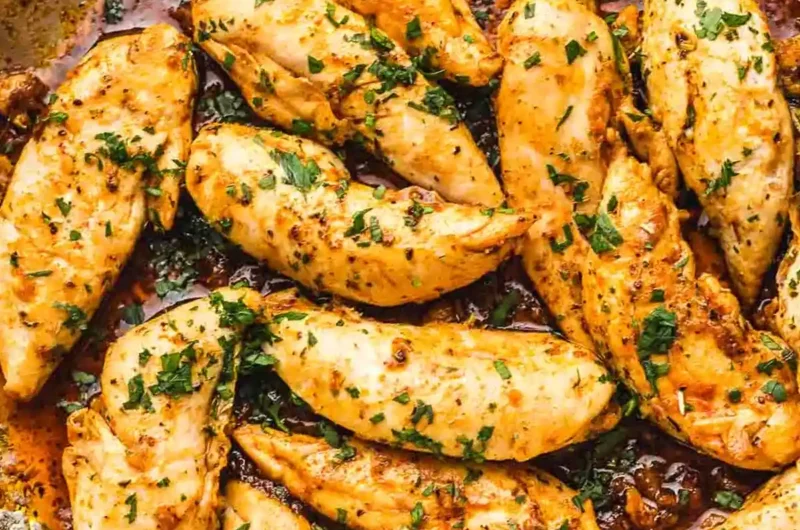
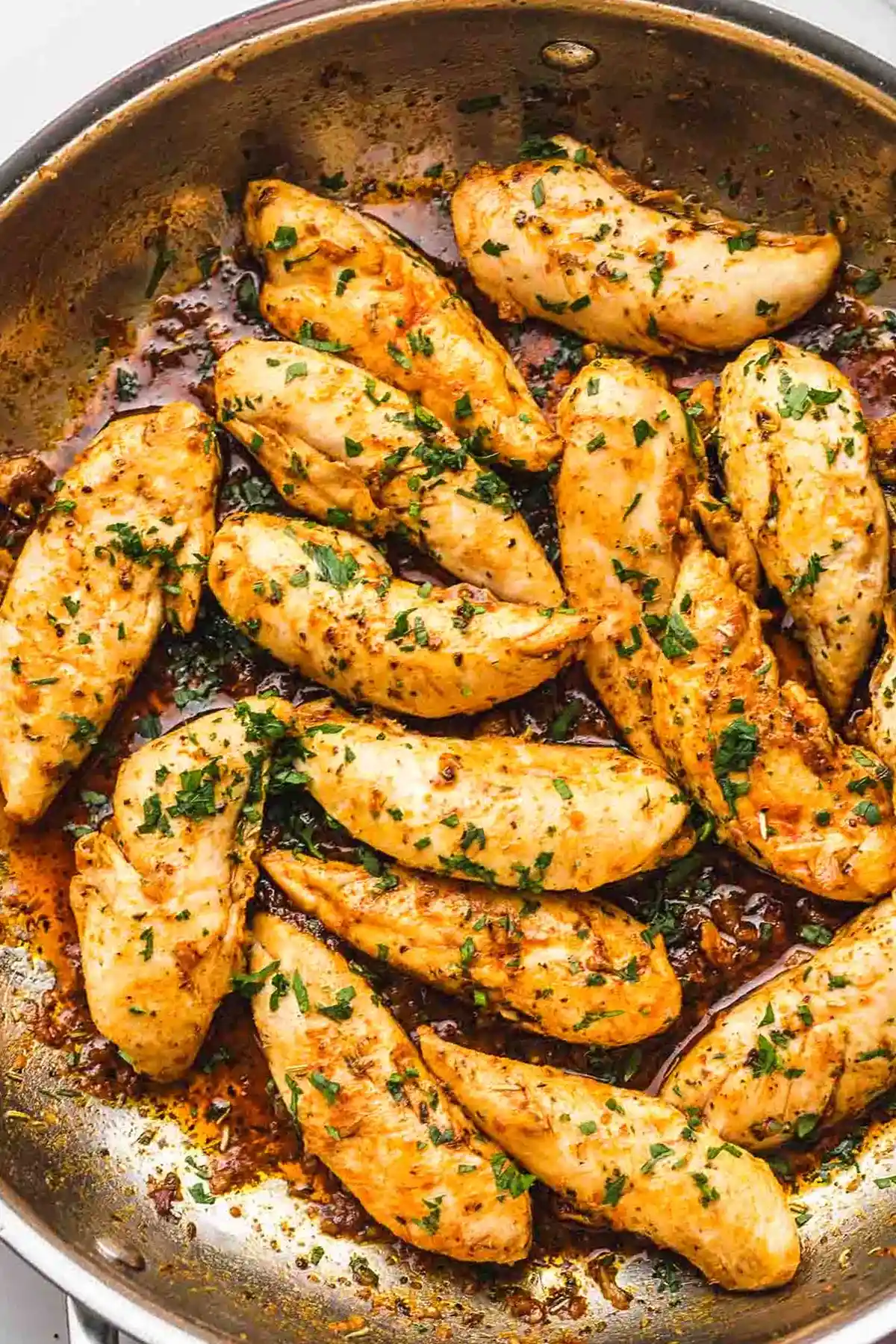
These garlic butter chicken tenders are a lean and flavorful protein option that cooks in under 15 minutes. This recipe uses a simple searing method to ensure the meat remains succulent while developing a savory garlic crust.
List of ingredients
- 1 tablespoon olive oil – used to raise the smoke point of the butter.
- 2 tablespoons butter, divided – provides the base for the garlic sauce.
- 1 pound (450g) chicken tenderloins – also known as chicken mini fillets.
- 2 teaspoons paprika – adds color and a mild earthy flavor.
- ½ teaspoon salt – enhances the natural flavors of the meat.
- ¼ teaspoon ground black pepper – provides a subtle spicy kick.
- 4 cloves garlic, minced or crushed – the primary aromatic for the sauce.
- 1 teaspoon Italian seasoning – a blend of dried herbs for depth.
- 1 tablespoon chopped fresh parsley – used as a fresh garnish.
step-by-step instructions
- Heat the Pan: Pour olive oil into a skillet and melt 1 tablespoon of butter over medium heat.
- Sear the Chicken: Place the chicken tenders in the pan and season them immediately with paprika, salt, and pepper.
- Cook Both Sides: Sear for 3 minutes on each side, ensuring you season the second side once you flip the meat.
- Add Aromatics: Move the chicken to the sides of the pan to create space in the center, melt the remaining tablespoon of butter, and add the minced garlic. Cook for 30 seconds until the garlic is fragrant.
- Final Seasoning: Sprinkle the Italian seasoning over the chicken and garlic, cooking for one additional minute.
- Deglaze the Pan: Pour 2 tablespoons of water into the skillet and scrape the bottom with a spatula to release the browned bits of meat and spices.
- Garnish and Serve: Sprinkle with chopped fresh parsley or basil leaves and serve immediately while warm.
Professional Cooking Techniques
Preventing Garlic Bitterness
Garlic has a low burn point and can turn bitter if exposed to high heat for too long. Always add the garlic toward the end of the cooking process and monitor it closely for 30 to 60 seconds. If the garlic turns dark brown or black, it will ruin the flavor of the sauce.
Managing Internal Temperatures
Chicken tenderloins are small and lean, meaning they can overcook in a matter of seconds. Use a meat thermometer to ensure the internal temperature reaches exactly 165°F (74°C). Overcooking these cuts results in a stringy, dry texture that loses its succulence.
The Importance of Deglazing
Deglazing is the process of adding liquid to a hot pan to loosen the browned food particles known as the fond. These particles contain concentrated flavors from the seared chicken and spices. Using a small amount of water helps incorporate these flavors back into the garlic butter sauce.
Ingredient Substitutions
Alternative Cooking Oils
While olive oil is recommended for its flavor, any neutral oil with a high smoke point will work. Avocado oil or grapeseed oil are excellent alternatives if you are cooking at a higher temperature. Avoid using extra virgin olive oil on very high heat as it can smoke and change flavor.
Replacing Fresh Garlic
If fresh garlic is unavailable, you can use jarred minced garlic. Use approximately 1.5 teaspoons of jarred garlic for every one fresh clove required. Be aware that jarred garlic is often milder and may require a slight increase in quantity for the same impact.
Using Chicken Breast Strips
If you cannot find tenderloins, you can use boneless, skinless chicken breasts. Slice the breast into thin, even strips approximately 1 inch wide. Because these are hand-cut, you may need to adjust the cooking time slightly to ensure they are cooked through without drying out.
Plant-Based Butter Alternatives
For those avoiding dairy, a high-quality plant-based butter or margarine can be substituted. Ensure the substitute is a stick form or a firm spread that can withstand medium heat. This will maintain the richness of the sauce while keeping the dish dairy-free.
Customizing the Herb Blend
If you do not have a pre-made Italian seasoning, you can create your own blend. Combine equal parts dried oregano, dried basil, and dried thyme. You can also add a pinch of dried rosemary for a more woody, aromatic profile.
Serving and Pairing Ideas
Pairing with Garlic Butter Pasta
Toss cooked linguine or fettuccine into the pan immediately after removing the chicken. The residual garlic butter sauce will coat the pasta perfectly. Add a splash of pasta water to create a silkier emulsion that clings to the noodles.
Fresh Vegetable Side Dishes
Steam some broccoli florets or sauté asparagus in a separate pan with a touch of lemon juice. The acidity of the lemon cuts through the richness of the butter sauce. Roasted carrots or sautéed spinach also provide a healthy color contrast to the golden chicken.
Potato-Based Accompaniments
Serve these tenders alongside oven-baked French fries or creamy mashed potatoes. The garlic butter sauce from the pan can be drizzled over the potatoes for extra flavor. Roasted red potato salad is another excellent option for a heartier meal.
Light Salad Pairings
A crisp Caesar salad or a simple garden salad with a vinaigrette balances the meal. The fresh greens and acidic dressing prevent the dish from feeling too heavy. Mix in some cherry tomatoes and cucumbers for added texture and nutrients.
Storage and Reheating Guidelines
Refrigeration Process
Store leftover chicken tenders in an airtight glass or plastic container. Ensure the chicken has cooled slightly before sealing the lid to prevent excessive moisture buildup. These will stay fresh and safe to eat for 3 to 4 days when kept at 40°F (4°C) or below.
Freezing for Future Use
Place cooked tenders in a freezer-safe bag, squeezing out as much air as possible to prevent freezer burn. They can be stored for up to 3 months. Thaw them in the refrigerator overnight before reheating to maintain the best possible texture.
Optimal Reheating Methods
Avoid using a microwave if possible, as it can make lean chicken rubbery. Instead, reheat the tenders in a skillet over medium-low heat with a teaspoon of water or butter. Cover the pan with a lid for 2-3 minutes to steam them back to juiciness.
Preparation and Safety Advice
Removing the White Tendon
Chicken tenderloins often have a tough, white tendon attached to the meat. While edible, this tendon can be chewy and distracting. Use a paper towel to grip the end of the tendon and push the meat down, then pull the tendon out with a fork or tweezers.
Thawing Frozen Meat Safely
Always thaw frozen chicken tenderloins in the refrigerator over 24 hours. Never thaw meat on the counter at room temperature, as this allows bacteria to grow on the outer layers. If you are in a rush, use the defrost setting on a microwave or a cold water bath.
Preventing Cross-Contamination
Avoid rinsing raw chicken in the sink, as this splashes bacteria across your kitchen surfaces. Use separate cutting boards for raw meat and fresh vegetables. Thoroughly wash your hands and all utensils with soap and hot water after they touch raw poultry.
Troubleshooting Common Issues
Solving the Problem of Burnt Garlic
If your garlic burns, do not scrape it into the sauce as it will taste acrid. Wipe the pan clean with a paper towel and start the garlic step over with a fresh tablespoon of butter. Keep the heat at a steady medium to prevent this from recurring.
Fixing Overcooked Dry Chicken
If the chicken becomes too dry, you can try to revive it by simmering it in a small amount of chicken broth or extra butter. However, once the protein fibers have tightened from overcooking, the texture cannot be fully restored. To avoid this, use a timer for exactly 3 minutes per side.
Managing Pan Temperature
If the butter browns too quickly or smokes, your pan is too hot. Remove the pan from the heat for a minute or lower the burner setting. A gentle sizzle is desired; a violent pop or smoke indicates the temperature is too high for butter.
Frequently Asked Questions
Can I use a different pan for this recipe?
A stainless steel or cast iron skillet is best for creating a good sear and fond for deglazing. Non-stick pans work well for easy cleanup, but they do not develop the same amount of flavorful browned bits on the bottom.
Are chicken tenders healthy?
Yes, chicken tenderloins are very lean and low in calories compared to breaded or fried versions. This recipe avoids heavy batters and focuses on simple fats and herbs, making it a nutrient-dense protein choice.
Can I make this in an air fryer?
While this is a skillet recipe, you can air fry the tenders at 400°F for 8-10 minutes. However, you would need to toss them in the garlic butter sauce separately after cooking to achieve the same flavor profile.
How do I know when they are done?
The chicken should feel firm to the touch and no longer be pink in the center. The most reliable method is using a digital meat thermometer to confirm an internal temperature of 165°F.
Print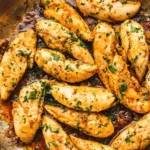
Juicy Garlic Butter Chicken Tenders
- Total Time: 20 minutes
- Yield: 3 servings 1x
- Diet: General
Description
Healthier chicken tenders cooked in a simple delicious garlic butter sauce. The chicken tenderloins turn out so tender, juicy, succulent, and flavorful.
Ingredients
- 1 tablespoon olive oil
- 2 tablespoon butter (divided)
- 1 pound (450g) chicken tenderloins
- 2 teaspoons paprika
- ½ teaspoon salt
- ¼ teaspoon ground black pepper
- 4 cloves garlic (minced or crushed)
- 1 teaspoon Italian seasoning
- 1 tablespoon chopped fresh parsley
Instructions
- Step 1: Add olive oil and melt 1 tablespoon of butter in a pan/skillet over medium heat.
- Step 2: Add the chicken tenders, season with paprika, salt, and pepper.
- Step 3: Cook for 3 minutes on each side (season each side as you cook).
- Step 4: Make room for the garlic, melt the remaining butter, and add the garlic. Cook for 30 seconds or until the garlic becomes fragrant.
- Step 5: Season with Italian seasoning, and cook for one more minute.
- Step 6: Add 2 tablespoons of water to the pan to deglaze it, and scrape off any bits stuck to the bottom of the pan.
- Step 7: Garnish with chopped fresh parsley or basil leaves, and serve warm.
Notes
Do not overcook the garlic as it can become bitter. Ensure chicken reaches an internal temperature of 165°F (74°C). Deglaze the pan with water to capture all the flavor.
- Prep Time: 5 minutes
- Cook Time: 15 minutes
- Category: Main Course
- Method: Skillet
- Cuisine: American
Nutrition
- Serving Size: 5 ounces
- Calories: 293 kcal
- Sugar: 0.2 g
- Sodium: 567 mg
- Fat: 16 g
- Saturated Fat: 6 g
- Unsaturated Fat: 9 g
- Trans Fat: 0.3 g
- Carbohydrates: 3 g
- Fiber: 1 g
- Protein: 33 g
- Cholesterol: 117 mg
Keywords: garlic butter chicken, chicken tenders, skillet chicken, healthy chicken dinner