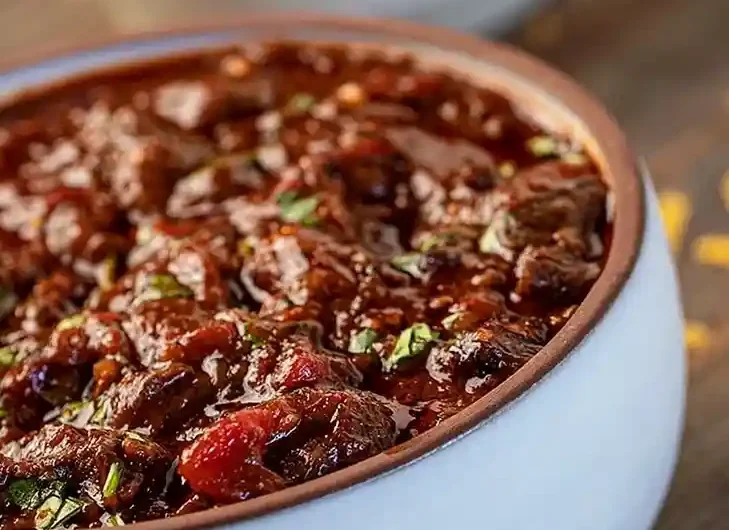
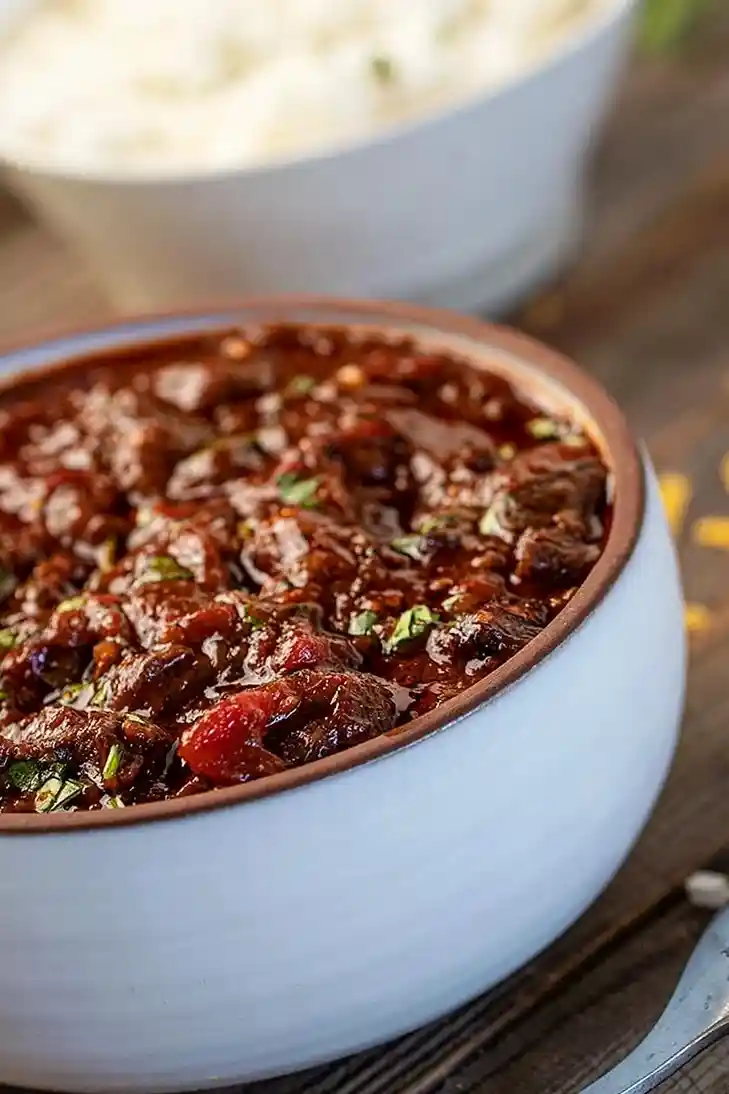
Combine the hearty foundations of a Texas-style chili with the bold, fermented flavors of Korean cuisine. This slow-simmered beef dish uses a combination of four different heat sources to create a complex and deeply savory profile.
List of ingredients
- 2 tablespoons beef tallow or neutral oil – used for high-heat searing of the beef cubes.
- 3 pounds beef chuck roast – cut into 1-inch cubes for optimal tenderness during braising.
- Kosher salt – for initial seasoning and flavor enhancement.
- Fresh ground black pepper – provides a basic sharp heat.
- 1 red onion – finely diced to blend into the sauce.
- 2 jalapeños – finely diced to provide fresh, crisp heat.
- 3 garlic cloves – finely diced for aromatic depth.
- 2 chipotle peppers in adobo sauce – finely diced for smokiness and spice.
- 2 teaspoons adobo sauce from chipotle peppers – adds a tangy, smoky liquid base.
- 1 tablespoon dark brown sugar – balances the heat and adds a hint of molasses.
- 1 tablespoon ground cumin – provides an earthy, warm undertone.
- 1 teaspoon ground coriander – adds a light, citrusy floral note.
- 1 teaspoon smoked salt – enhances the fire-roasted characteristics of the dish.
- 1 15 oz can fire-roasted tomatoes – adds acidity and charred tomato flavor.
- 1 cup strong brewed coffee – a non-alcoholic substitute for dark beer that adds richness.
- 5 tablespoons gochujang – fermented Korean chile paste for umami and spice.
- 2 cups beef broth – provides the primary braising liquid.
- 2 tablespoons gochugaru – Korean chile flakes added for extra heat.
- Fresh cilantro – chopped for a bright finish.
step-by-step instructions
- Brown the beef: Use a Dutch oven or deep pot over high heat with beef tallow or oil. Season the beef cubes with salt and pepper, then sear them in batches until browned on all sides. Remove the meat and set it aside on a paper towel-lined plate.
- Sauté the aromatics: Reduce the heat to medium. Add the diced jalapeños and red onion to the remaining oil. Stir frequently for about 2 minutes until they begin to char.
- Incorporate spices: Stir in the minced garlic, chopped chipotle peppers, adobo sauce, cumin, coriander, smoked salt, and brown sugar. Mix continuously to ensure the spices are fragrant and toasted but not burned.
- Prepare the liquid base: In a separate bowl, whisk together the gochujang paste and beef broth until the paste is fully dissolved.
- Deglaze and simmer: Pour the gochujang-broth mixture into the pot along with the brewed coffee and the fire-roasted tomatoes. Use a wooden spoon to scrape up all the browned bits from the bottom of the pot.
- Slow cook the meat: Return the seared beef to the pot and bring the liquid to a simmer. Cook for 2 to 3 hours until the beef is tender. Keep the lid on for a thinner consistency, or leave it off to allow the sauce to reduce and thicken.
- Final additions: Stir in the gochugaru flakes during the cooking process if you prefer a spicier result. Once the beef is tender, stir in the chopped cilantro just before serving.
Pro Techniques for Better Results
Sear Beef in Small Batches to Prevent Steaming
When browning the beef, avoid crowding the pot. Adding too much meat at once drops the temperature of the oil, causing the beef to release moisture and steam rather than sear. This prevents the development of a dark brown crust, which is essential for the overall depth of flavor in the chili.
Use a Heavy-Bottomed Dutch Oven
A cast iron or heavy stainless steel Dutch oven is ideal for this recipe. These materials distribute heat evenly, preventing the thick gochujang-based sauce from scorching at the bottom during the long simmering process. The heavy lid also helps maintain a consistent internal temperature.
Achieve a Deep Char on Aromatics
When sautéing the onions and jalapeños, allow them to sit undisturbed for short periods. This creates a slight char that mimics the flavor of grilled vegetables. This caramelized layer adds another dimension of sweetness and smokiness to the final sauce.
Deglaze the Pot to Capture Fond
The brown bits stuck to the bottom of the pot, known as fond, contain concentrated flavor from the seared beef. When you add the coffee and broth, scrape the bottom thoroughly. This process incorporates those caramelized proteins back into the liquid, thickening the sauce and intensifying the taste.
Understanding Korean Flavor Components
Balancing Gochujang Paste
Gochujang is a fermented paste that provides both heat and a savory, sweet umami quality. Because it is salty, be cautious when adding additional salt at the beginning. Whisking it into the beef broth before adding it to the pot ensures there are no clumps of paste in the final dish.
Using Gochugaru for Layered Heat
While gochujang provides a deep, fermented heat, gochugaru adds a brighter, more direct spice. Adding these flakes toward the end of the cooking process preserves their vibrant red color and sharp flavor. This creates a multi-layered heat profile rather than a single, flat spicy note.
Incorporating Smoked Salt for Depth
Smoked salt complements the fire-roasted tomatoes and chipotle peppers. It provides a subtle wood-smoke aroma that bridges the gap between the Tex-Mex and Korean elements of the recipe. If you do not have smoked salt, you can use regular kosher salt and a small drop of liquid smoke.
The Role of Brown Sugar in Spicy Dishes
Brown sugar is used here to balance the high acidity of the tomatoes and the intensity of the fermented chiles. It doesn’t make the chili sweet, but rather rounds out the sharp edges of the spice. The molasses in dark brown sugar also contributes to a richer, darker color.
Liquid and Base Substitutions
Replacing Beer with Strong Coffee
A dark beer typically provides earthy, bitter notes that cut through the richness of the beef. Strong brewed coffee mimics this effect by adding a deep, roasted bitterness and acidity. This is a practical alternative for those avoiding alcohol while maintaining the complexity of the sauce.
Selecting the Right Beef Broth
Use a low-sodium beef broth to maintain control over the salt levels, as the gochujang and smoked salt already contribute significantly. A high-quality bone broth can be used for added body and a more gelatinous, rich mouthfeel in the finished chili.
Using Fire-Roasted Tomatoes for Smokiness
Standard diced tomatoes can be used, but fire-roasted tomatoes provide a charred flavor that is essential for this specific profile. If using plain tomatoes, you can slightly increase the amount of smoked salt or add a pinch of smoked paprika to compensate for the missing roast flavor.
Serving and Pairing Ideas
Pairing with Steamed White Rice
Unlike traditional American chili served with crackers or cornbread, this Korean-inspired version pairs exceptionally well with steamed white rice. The neutral flavor of the rice helps soak up the thick sauce and tempers the heat of the gochujang and jalapeños.
Adding Creamy Toppings for Balance
To balance the intense spice, top the chili with shredded cheddar cheese or a dollop of sour cream. The fat in these toppings binds with the capsaicin in the chiles, providing a cooling effect on the palate. Diced green onions or scallions add a fresh, sharp contrast.
Using Fresh Herbs for Brightness
Adding fresh cilantro at the very end prevents the herb from wilting and losing its flavor. The citrusy notes of the cilantro cut through the richness of the beef tallow and the fermented paste, making the overall dish feel more balanced and fresh.
Storage and Reheating Guidelines
Cooling the Chili Safely
Allow the chili to cool slightly before transferring it to the refrigerator. To prevent bacterial growth, divide large batches into smaller, shallow containers so they cool quickly. This ensures the center of the batch reaches a safe temperature within a few hours.
Freezer-Friendly Storage Methods
This chili freezes exceptionally well due to the hearty nature of the beef chuck. Store it in airtight containers or heavy-duty freezer bags, leaving a small amount of space for expansion. It can be stored for up to three months without a significant loss in quality.
Reheating Without Drying the Meat
When reheating on a stovetop, add a small splash of beef broth or water to the pot. This loosens the sauce, which tends to thicken further in the refrigerator. Heat slowly over medium-low to ensure the beef is warmed through without overcooking the meat fibers.
Troubleshooting and FAQs
Why is my chili too thin?
If the chili is too watery after simmering, remove the lid and increase the heat to a medium simmer. This allows the liquid to evaporate and the collagen from the beef to thicken the sauce. You can also stir in a small amount of extra gochujang to add body.
How do I reduce the overall spice level?
To lower the heat, reduce the amount of gochugaru and chipotle peppers. Increasing the amount of brown sugar or adding a bit more beef broth can also dilute the spice. Serving the dish with rice or dairy toppings is the most effective way to manage heat at the table.
Can I use a different cut of meat?
While beef chuck is recommended for its fat content and tenderness, you can use beef stew meat or brisket. Note that leaner cuts may become tough if simmered for too long. Ensure any meat you use is cut into uniform cubes to ensure even cooking.
What happens if I omit the brown sugar?
Omitting the brown sugar will result in a more savory and acidic chili. The heat from the gochujang and jalapeños will feel more aggressive on the tongue. If you prefer a very sharp, spicy profile, the sugar can be omitted, but the balance may be lost.
Print
Korean Beef Chile Con Carne
- Total Time: 2 hours 20 minutes
- Yield: 10–12 servings 1x
- Diet: General
Description
Blow your tastebuds away with this spicy Korean Chile Con Carne, fortified with FOUR layers of heat, savory tomatoes, and tender beef. This simple recipe has complex flavors, based on the traditional Texas-style meat chili.
Ingredients
- 2 tablespoons beef tallow, or neutral oil
- 3 pounds beef chuck roast, cut into 1” cubes
- kosher salt
- fresh ground black pepper
- 1 red onion, finely diced
- 2 jalapeños, finely diced
- 3 garlic cloves, finely diced
- 2 chipotle pepper in adobo sauce, finely diced
- 2 teaspoons adobo sauce from chipotle peppers
- 1 tablespoon dark brown sugar
- 1 tablespoon ground cumin
- 1 teaspoon ground coriander
- 1 teaspoon smoked salt
- 1 15 oz can fire-roasted tomatoes
- 1 cup light roast coffee
- 5 tablespoons gochujang
- 2 cups beef broth
- 2 tablespoons gochugaru (Korean chile flakes)
- chopped cilantro
Instructions
- Step: Use a Dutch oven, or a deep pot. Heat the fat over high heat. Lightly season the meat with salt & pepper. Sear the meat all over, you will probably need to do this in batches. Transfer the meat to a plate lined with a paper towel once browned.
- Step: Reduce heat to medium. When the oil is hot, add in the diced jalapeños and red onion. Stir frequently to char on all sides for 2 minutes. Add in the minced garlic, chopped chipotle and adobo sauce, cumin, coriander, smoked salt, and brown sugar. Continue to stir frequently to incorporate the spices.
- Step: Whisk together the gochujang and beef broth to fully incorporate. Add this into the pot along with the light roast coffee, and fire-roasted tomatoes with juices, using a wooden spoon to scrape up the bits on the bottom of the pot. Add the meat to the pot and bring it all to a simmer for about 2-3 hours until the meat is tender. Put the lid on while cooking if you like the chili to have a thinner consistency, and simmer without the lid if you like it a little thicker.
- Step: (Optional) Add in the gochugaru (chile flakes) for extra heat while it’s cooking.
- Step: Stir in the chopped cilantro at the end. I recommend servicing with white rice and toppings such as cheddar cheese and diced white or green onions.
Notes
Gochujang cannot be replaced in this recipe, it’s a complex ingredient and your results will not be the same. Make sure you have fun toppings such as cheddar, sesame seeds, scallions, white onions, or even an egg.
- Prep Time: 20 minutes
- Cook Time: 2 hours
- Category: Beef
- Method: Stovetop
- Cuisine: Korean-American Fusion
Nutrition
- Serving Size: 1 1/2 cups
- Calories: 280 kcal
- Sugar: 4.6 g
- Sodium: 890.2 mg
- Fat: 10.8 g
- Saturated Fat: 4.1 g
- Unsaturated Fat: 6.7 g
- Trans Fat: 0 g
- Carbohydrates: 14 g
- Fiber: 3 g
- Protein: 29.1 g
- Cholesterol: 83 mg
Keywords: Korean Chile Con Carne, spicy beef chili, gochujang recipe, Korean fusion, beef chuck roast