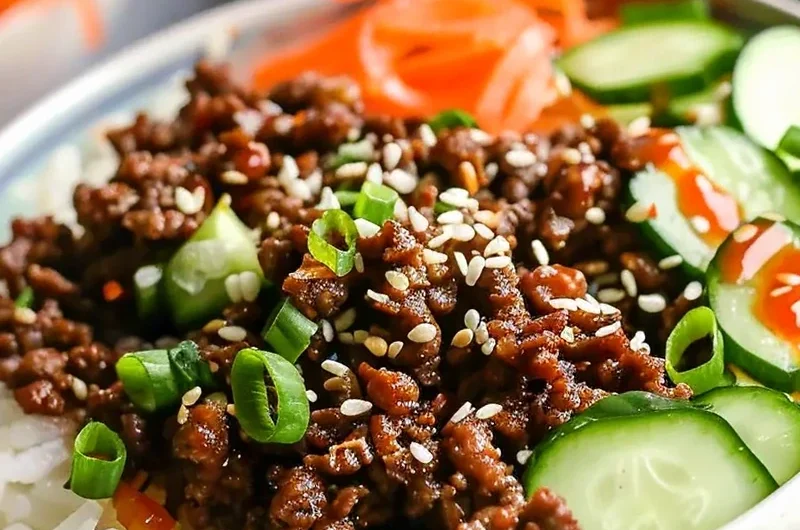
Korean ground beef bowls are the ultimate solution for a fast, savory dinner that never compromises on taste. This dish captures the vibrant, umami-rich essence of Korean-inspired cuisine while remaining incredibly accessible for any home cook, regardless of their experience level in the kitchen. By balancing salty, sweet, and aromatic components, these bowls turn simple ingredients into a sophisticated meal that is perfect for busy weeknights.
List of ingredients
- 1 pound ground beef
- 1/4 cup soy sauce
- 2 tablespoons brown sugar
- 1 tablespoon sesame oil
- 3 cloves garlic, minced
- 1 teaspoon ginger, minced
- 2 cups cooked rice
- 1 cup chopped green onions
- 1 tablespoon sesame seeds
- 1 cup shredded carrots
step-by-step instructions
- Step: In a large skillet over medium heat, brown the ground beef until fully cooked.
- Step: Drain excess fat and return the skillet to heat.
- Step: Add soy sauce, brown sugar, sesame oil, garlic, and ginger to the beef and stir to combine.
- Step: Cook for another 5 minutes until sauce is thickened.
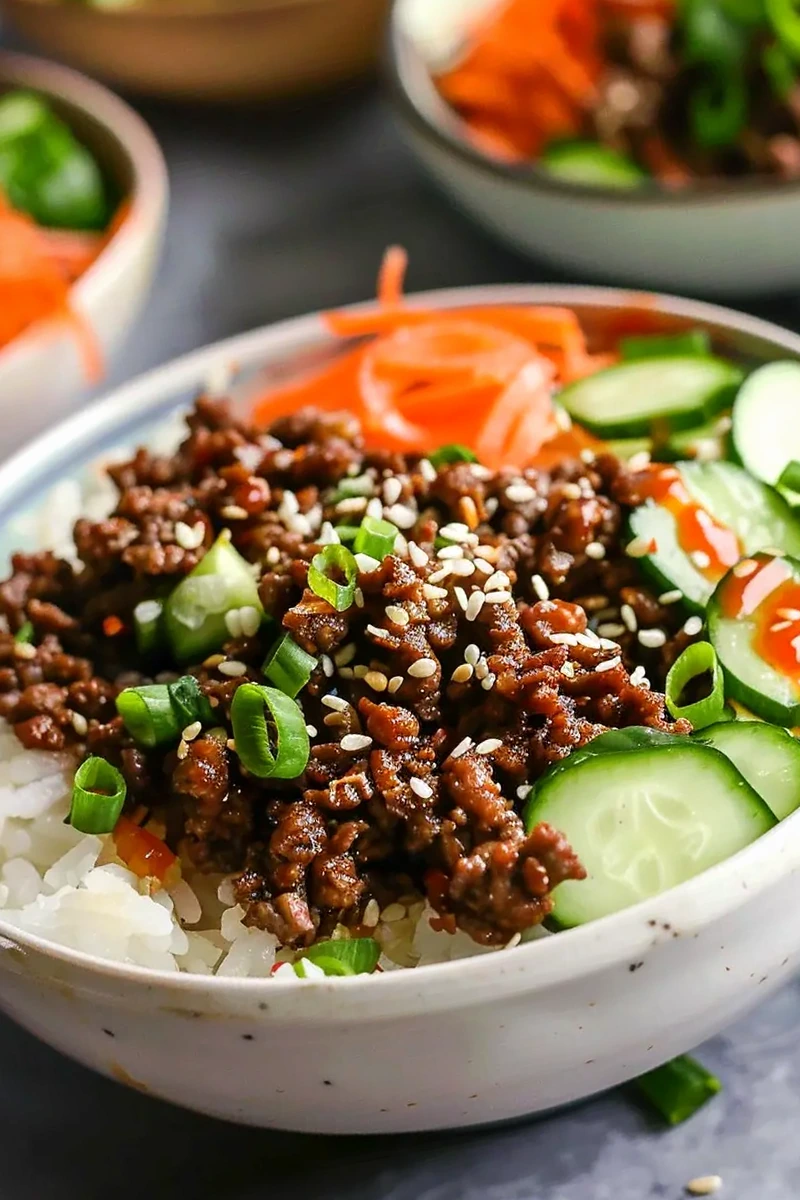
- Step: Serve over cooked rice, topping with green onions, sesame seeds, and shredded carrots.
Refining Your Technique for Superior Flavor
Achieving the Perfect Caramelization
To ensure the most flavorful result, allow the ground beef to sit undisturbed for a minute or two after breaking it up in the pan during the browning stage. This minor pause encourages a deeper sear on the meat, which translates to a richer, more complex flavor profile once the liquid ingredients are introduced. Avoid overcrowding the pan to ensure the meat browns rather than steams, which keeps the texture satisfying and robust.
Balancing the Glaze Consistency
The key to a restaurant-quality finish lies in the reduction of the sauce. If your sauce remains too thin after five minutes of simmering, increase the heat slightly and continue stirring constantly to evaporate the excess moisture. This creates a syrupy consistency that effectively coats the meat rather than settling at the bottom of the bowl, ensuring every bite is uniformly seasoned.
Selecting the Best Rice Base
The type of rice you choose impacts the final bowl significantly. Short-grain or medium-grain rice is preferred because of its natural starch content, which allows it to cling together and hold the sauce effectively. Always ensure your rice is cooked until tender but not mushy, as the textural contrast between the fluffy grains and the savory beef is central to the overall enjoyment of the dish.
Customization and Creative Variations
Incorporating Seasonal Vegetables
While shredded carrots are excellent for a quick crunch, this dish is a fantastic vessel for other seasonal produce. Try incorporating thin slices of bell peppers, snap peas, or blanched bok choy stems during the final minute of cooking. These additions provide color, nutritional density, and a refreshing change of pace for repeat dinner occasions.
Adjusting the Flavor Profile
You can easily shift the flavor profile by adjusting the ratio of ginger and garlic. If you prefer a sharper taste, add an extra clove of garlic or increase the amount of ginger. For those who enjoy a bit of warmth, adding a pinch of ground red pepper flakes or even a small amount of chili oil can provide a slow, pleasant heat that complements the sweetness of the brown sugar.
Protein Substitutions
For a non-meat version, firm or extra-firm tofu makes an excellent substitute for ground beef. Press the tofu thoroughly to remove moisture, crumble it by hand, and sauté it in the sesame oil until it develops a golden-brown crust. Proceed with adding the sauce as directed; the tofu will absorb the savory glaze effectively, providing a satisfying, protein-forward experience.
Serving and Presentation Strategies
Creative Topping Ideas
Elevate your bowls by playing with textures and colors in the garnishing stage. Beyond the classic green onions and sesame seeds, consider adding pickled cucumbers for a tangy, acidic pop that cuts through the savory meat. Thinly sliced radishes or even a small spoonful of kimchi can offer a fermented complexity that makes the meal feel much more gourmet.
Managing Meal-Sized Portions
Since this recipe yields four servings, presentation matters when serving guests or family. Consider using wide, shallow bowls which allow for a beautiful arrangement of the beef, vegetables, and rice. Place the beef in the center of the rice and arrange your toppings in distinct piles around the edges, which creates an appealing visual contrast and allows each diner to customize their own bite.
Effective Storage and Reheating Protocols
Optimizing Fridge Storage
To keep your ingredients tasting their best, store the beef mixture in an airtight glass or plastic container separate from the rice. If you mix them together, the rice will absorb too much of the sauce and become soggy over time. When stored separately, the beef will remain flavorful and the rice will retain its original texture for up to three days in the refrigerator.
Best Methods for Reheating
When you are ready to eat, the best way to reheat the beef is on the stovetop over medium-low heat with a tiny splash of water or vegetable broth. This revives the glaze and prevents the meat from drying out. If you prefer using a microwave, cover the container loosely to create steam, which helps keep the meat moist and ensures even heating throughout.
Addressing Common Cooking Questions
Can I prepare this dish completely in advance?
Yes, the flavor often improves when the ingredients have more time to marinate together. You can prepare the beef mixture completely, let it cool to room temperature, and store it in the refrigerator. When you are ready to serve, simply heat it up and prepare fresh rice, as freshly steamed rice provides the best texture for this meal.
How can I reduce the sodium content effectively?
If you need to lower the sodium, you can substitute the standard soy sauce with a low-sodium version or use coconut aminos. Coconut aminos offer a slightly sweeter profile, so you may need to reduce the amount of brown sugar slightly to maintain the intended balance. Additionally, incorporating more fresh vegetables like sliced cucumbers will add volume and satiety without increasing sodium levels.
What should I do if the sauce tastes too sweet?
The sweetness can be easily countered by adding a splash of fresh lime juice or a little bit of rice vinegar. These acidic components brighten the heavy, savory flavors of the beef and soy sauce, creating a cleaner finish. A small dash of acid often acts as the final missing piece of flavor, ensuring the dish is balanced and satisfying rather than cloying.
Is it possible to freeze the cooked beef?
Yes, this dish freezes exceptionally well. Allow the beef to cool completely before transferring it into a freezer-safe bag or container. It can be kept in the freezer for up to one month. When you are ready to enjoy it, thaw the container in the refrigerator overnight and reheat it gently on the stove, adding a tiny splash of liquid if the sauce has become too thick during the freezing process.
Print
Korean Ground Beef Bowls: Easy, Flavor-Packed Family Dinners
- Total Time: PT25M
- Yield: 4 servings 1x
- Diet: Gluten-free
Description
A delicious and simple recipe for Korean Ground Beef Bowls, perfect for a busy weeknight dinner.
Ingredients
- 1 pound ground beef
- 1/4 cup soy sauce
- 2 tablespoons brown sugar
- 1 tablespoon sesame oil
- 3 cloves garlic, minced
- 1 teaspoon ginger, minced
- 2 cups cooked rice
- 1 cup chopped green onions
- 1 tablespoon sesame seeds
- 1 cup shredded carrots
Instructions
- Step: In a large skillet over medium heat, brown the ground beef until fully cooked.
- Step: Drain excess fat and return the skillet to heat.
- Step: Add soy sauce, brown sugar, sesame oil, garlic, and ginger to the beef and stir to combine.
- Step: Cook for another 5 minutes until sauce is thickened.
- Step: Serve over cooked rice, topping with green onions, sesame seeds, and shredded carrots.
Notes
Feel free to add your choice of vegetables. For a spicier dish, add red pepper flakes.
- Prep Time: PT10M
- Cook Time: PT15M
- Category: Dinner
- Method: Stovetop
- Cuisine: Korean
Nutrition
- Serving Size: 1 bowl
- Calories: 450 kcal
- Sugar: 5g
- Sodium: 800mg
- Fat: 20g
- Saturated Fat: 8g
- Unsaturated Fat: 10g
- Trans Fat: 0g
- Carbohydrates: 40g
- Fiber: 2g
- Protein: 30g
- Cholesterol: 70mg
Keywords: Korean, Ground Beef, Bowls, Weeknight Dinner, Easy