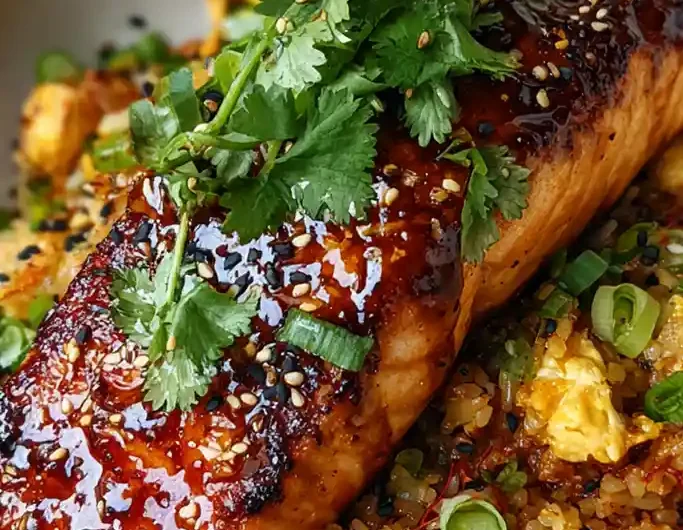
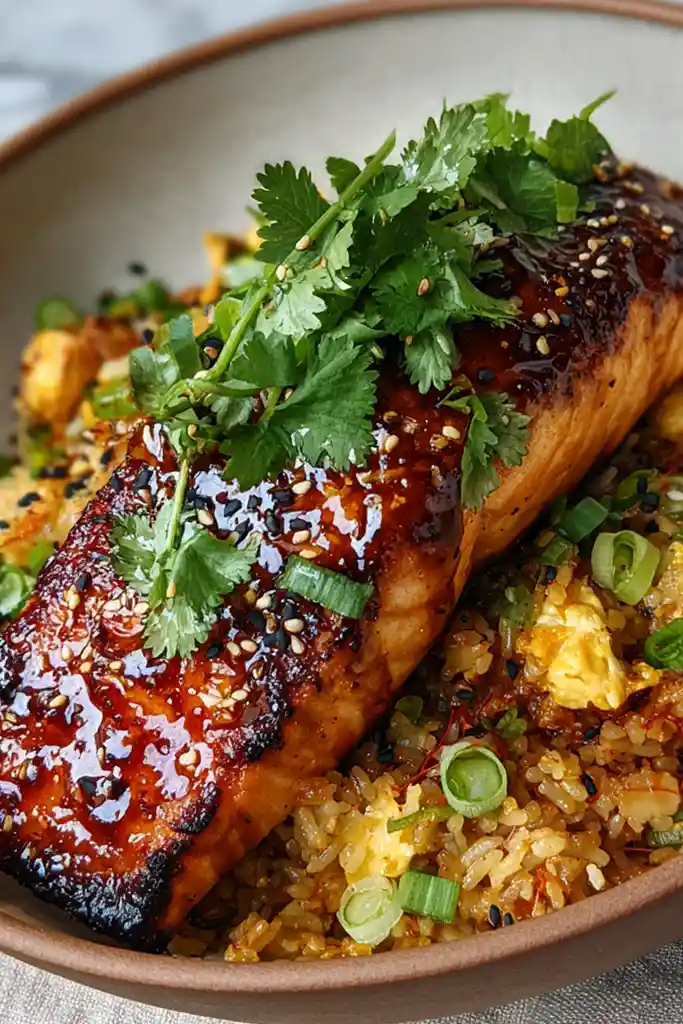
This flavorful meal combines umami-rich miso salmon with a spicy, savory side of kimchi fried rice. It is a complete dinner that balances heat and sweetness, taking less than 45 minutes to prepare.
List of ingredients
- 4 salmon fillets (about 6 oz each, skin-on or skinless) – use fresh or fully thawed frozen fillets.
- 2 tablespoons white miso paste – provides the base salty, fermented flavor.
- 1 tablespoon gochujang – Korean fermented red chili paste for heat.
- 1 tablespoon soy sauce (or tamari) – adds depth and saltiness.
- 1 tablespoon rice vinegar with a pinch of sugar – a suitable substitute for mirin.
- 1 tablespoon sesame oil – gives a toasted, nutty aroma.
- 1 teaspoon honey or brown sugar – balances the spice with sweetness.
- 2 garlic cloves – finely grated for pungent flavor.
- 1 teaspoon fresh ginger – grated for a zesty kick.
- 2 cups cooked jasmine rice – preferably day-old and chilled.
- 1 cup chopped kimchi – include a bit of the juice for extra tang.
- 1 tablespoon gochujang – used specifically for the rice seasoning.
- 2 teaspoons soy sauce – for added savory flavor in the rice.
- 2 teaspoons sesame oil – for richness in the stir-fry.
- 2 green onions – chopped for freshness and garnish.
- 1 egg – optional, for a fried egg topping.
- 1 tablespoon neutral oil – vegetable or avocado oil for frying.
- Sesame seeds – for a decorative and nutty garnish.
- Seaweed flakes – optional garnish for authentic flavor.
- Sliced cucumber – for a fresh side accompaniment.
- Pickled radish – adds a bright, acidic contrast.
- Julienned carrots – provides crunch and color.
- Extra kimchi – served on the side for additional spice.
step-by-step instructions
- Prepare the Miso Glaze: In a small mixing bowl, whisk together the white miso paste, gochujang, soy sauce, rice vinegar (with sugar), sesame oil, honey, grated garlic, and grated ginger until the mixture is thick and spreadable.
- Prep the Salmon: Pat the salmon fillets dry with paper towels to ensure the glaze adheres and the fish sears properly. Line a baking sheet with parchment paper or foil, brush each fillet generously with the glaze, and let them marinate at room temperature for 10 to 15 minutes.
- Make the Kimchi Fried Rice: Heat neutral oil in a large skillet or wok over medium heat, then sauté chopped kimchi for 2 to 3 minutes until caramelized. Stir in the gochujang, add the cooked jasmine rice while breaking up clumps, and stir-fry for 4 to 5 minutes until heated through. Stir in soy sauce, sesame oil, chopped green onions, and sesame seeds, then keep warm on low.
- Cook the Salmon: Preheat your oven to 400°F for roasting or set it to broil. Place fillets on the baking sheet and either broil for 6 to 8 minutes until caramelized or roast for 10 to 12 minutes depending on the thickness. Ensure the salmon is tender and flaky but not overcooked.
- Assemble and Serve: Portion the kimchi fried rice onto plates and place a glazed salmon fillet on top. Garnish with sesame seeds, seaweed flakes, sliced cucumbers, pickled radish, and carrots, and add a fried egg if desired.
Mastering the Salmon Texture
Patting the Fish Dry
Removing surface moisture from the salmon is critical for a successful glaze. If the fish is damp, the glaze will slide off and the salmon will steam rather than sear or caramelize. Always use a clean paper towel to pat both sides of the fillet thoroughly.
Avoiding Overcooking
Salmon can quickly become dry and chalky if left in the oven too long. Use a meat thermometer to check for an internal temperature of 145°F, or press the thickest part of the fillet with a fork to see if it flakes easily. Remove the fish from the heat slightly before it reaches perfection as carry-over cooking will finish the process.
Ensuring Proper Thawing
When using frozen salmon, thaw it slowly in the refrigerator overnight rather than using warm water. This prevents the flesh from breaking down and keeps the texture firm. Ensure the fish is completely thawed to the center to avoid raw spots after roasting.
Achieving a Caramelized Crust
The sugars in the honey and miso can burn if the heat is too high for too long. Using the broiler is the fastest way to get those charred, bubbly edges, but keep a close eye on the fillets. If the glaze browns too quickly, move the tray to a lower oven rack.
Improving the Fried Rice Quality
Using Day-Old Rice
Freshly cooked rice contains too much moisture and can become mushy when stir-fried. Using chilled, day-old rice allows the grains to dry out, ensuring they stay separate and fry properly. If you must use fresh rice, spread it on a baking sheet and freeze it for 15 minutes to dry the surface.
High-Heat Stir-Frying
To get the signature “wok hei” or charred flavor, keep the skillet heat medium-high. Sautéing the kimchi first allows the liquids to evaporate and the sugars to caramelize. This concentrated flavor then coats every grain of rice during the final stir-fry process.
Incorporating the Kimchi Juice
The liquid in the kimchi jar is packed with concentrated lactic acid and spice. Adding a tablespoon of this juice along with the chopped cabbage intensifies the tanginess of the rice. This reduces the need for extra salt or vinegar in the rice mixture.
Managing the Egg Topping
If adding a fried egg, cook it in the same pan after the rice is removed to save on cleanup. Fry the egg in neutral oil until the whites are set but the yolk remains runny. The rich yolk acts as a creamy sauce that balances the spice of the kimchi.
Ingredient Swaps and Alternatives
Using Different Fish Species
While salmon is traditional, this miso glaze works excellently with other firm white fish. Cod, halibut, or even thick fillets of mackerel can be used. Simply adjust the cooking time, as thinner white fish typically cook faster than salmon.
Substituting Miso Paste
If white miso is unavailable, yellow or red miso can be used, though they are saltier and more intense. If using red miso, reduce the amount of soy sauce in the glaze to prevent the dish from becoming overly salty. You can also use a mild soybean paste as a substitute.
Alternative Sweeteners
Honey is ideal for its thickness and flavor, but maple syrup or agave nectar work well as alternatives. Brown sugar is also a great option, providing a deeper, molasses-like sweetness that complements the fermented notes of the gochujang.
Grain Alternatives
For a different texture, you can swap jasmine rice for short-grain sushi rice or brown rice. Brown rice requires more stir-frying time to ensure the grains are tender. For a lower-carb option, cauliflower rice can be used, though it should be sautéed quickly to avoid becoming watery.
Ideal Side Dishes and Pairings
Refreshing Cucumber Salad
A simple Korean-style cucumber salad (Oi Muchim) balances the richness of the salmon. Toss sliced cucumbers with rice vinegar, a pinch of sugar, sesame oil, and red pepper flakes. The acidity cleanses the palate between bites of the savory fish.
Warm Miso Soup
Starting the meal with a bowl of miso soup provides a comforting, earthy introduction. Use a dashi base with small cubes of tofu and sliced green onions. This echoes the miso in the salmon glaze and creates a cohesive dining experience.
Non-Alcoholic Beverage Pairings
Cold barley tea (bori-cha) or corn tea are traditional choices that pair perfectly with spicy Korean food. These roasted grain teas have a nutty flavor that complements the sesame oil and miso. A chilled sparkling water with a squeeze of lime also works well to cut through the richness.
Adding Pickled Elements
Adding pickled radish (danmuji) or quick-pickled carrots provides a necessary crunch. The bright yellow color of the radish adds visual appeal to the plate. The vinegar in the pickles helps balance the fermented depth of the gochujang.
Preservation and Reheating Guide
Storing the Salmon
Store leftover salmon in an airtight container in the refrigerator for up to three days. To prevent the fish from drying out, place a damp paper towel over the fillets before sealing the lid. Ensure the salmon is completely cooled before storing to avoid condensation.
Storing the Kimchi Rice
Kimchi fried rice keeps well in the fridge for 3 to 4 days. Since it is already cooked and seasoned, it maintains its flavor profile quite well. Keep it in a separate container from the salmon to prevent flavor transfer.
The Best Way to Reheat Salmon
Avoid using a microwave for salmon, as it often overcooks the fish and makes it rubbery. Instead, use an air fryer or oven at 300°F for about 5 to 8 minutes. This gently warms the fish through while maintaining the integrity of the glaze.
Refreshing the Fried Rice
The best way to reheat fried rice is in a skillet over medium heat with a teaspoon of oil. Adding a splash of water or a teaspoon of sesame oil helps restore the moisture. Stir-fry for 3 to 5 minutes until the rice is steaming and fragrant.
Solving Common Cooking Issues
Dealing with a Burnt Glaze
Because of the honey and miso, the glaze can burn if the oven is too hot. If you notice the top browning too quickly, cover the fillets loosely with a piece of foil. This traps heat to cook the center while protecting the surface from burning.
Fixing Gummy Rice
If your fried rice turns out gummy or clumped, it is likely due to using rice that was too moist. To fix this in the future, ensure the rice is completely cold and separate the grains with your hands before adding them to the pan. High heat is essential to evaporate excess moisture.
Addressing Raw Centers in Fish
If the glaze is caramelized but the center of the salmon is still raw, lower the oven temperature and continue baking. Broiling is great for the crust, but roasting is better for thick fillets. If this happens, switch from broiling to roasting at 375°F for a few more minutes.
Reducing Excessive Saltiness
If the final dish tastes too salty, it may be due to the combination of miso, soy sauce, and kimchi. Balance this by adding a squeeze of fresh lime juice or serving with extra unseasoned cucumber slices. You can also add a small amount of extra honey to the glaze next time.
Recipe Questions and Answers
Can I use frozen salmon for this recipe?
Yes, frozen salmon works perfectly as long as it is fully thawed before cooking. Thaw it in the refrigerator for 24 hours or use a cold-water bath. Make sure to pat it very dry, as frozen fish often releases more moisture than fresh.
How spicy is this dish?
The heat is moderate, coming from the gochujang and kimchi. Most people find it pleasantly spicy, but you can adjust the level by reducing the gochujang to a teaspoon. For those who prefer no heat, substitute gochujang with a mixture of miso and a tiny pinch of paprika.
Can I make this without jasmine rice?
You can use any long-grain or short-grain white rice. Sushi rice provides a stickier texture, while brown rice offers more fiber and a nuttier taste. Just remember that brown rice takes longer to heat through during the stir-fry process.
What if I don’t have a broiler?
If you don’t have a broiler, simply roast the salmon at 400°F. It will take slightly longer (10-12 minutes) and won’t have the same charred bubbles on top, but it will be just as tender. You can also sear the fish in a pan before finishing it in the oven.
Can I substitute the white miso with another type?
You can use yellow or red miso, but be aware that red miso is much saltier and has a stronger fermented taste. If using a darker miso, reduce the soy sauce by half to keep the flavors balanced. White miso is preferred here for its mild, sweet profile.
Is it possible to make this as a meal prep?
Yes, this dish is excellent for meal prep. Store the salmon and rice in separate compartments to maintain their textures. When reheating, use the oven for the fish and a pan for the rice to ensure the best quality.
Print
Korean Miso-Glazed Salmon with Kimchi Fried Rice
- Total Time: 40 minutes
- Yield: 4 servings 1x
- Diet: General
Description
A bold and comforting Korean-inspired dish featuring savory miso-glazed salmon served alongside spicy and flavorful kimchi fried rice.
Ingredients
- 4 salmon fillets (6 oz each)
- 2 tablespoons white miso paste
- 2 tablespoons gochujang
- 1 tablespoon soy sauce
- 2 teaspoons soy sauce
- 1 tablespoon rice vinegar with a pinch of sugar
- 1 tablespoon sesame oil
- 2 teaspoons sesame oil
- 1 teaspoon honey or brown sugar
- 2 garlic cloves, finely grated
- 1 teaspoon fresh ginger, grated
- 2 cups cooked jasmine rice
- 1 cup chopped kimchi with a bit of juice
- 2 green onions, chopped
- 1 egg
- 1 tablespoon neutral oil
- Sesame seeds
- Seaweed flakes
- Sliced cucumber
- Pickled radish
- Julienned carrots
Instructions
- Prepare the Miso Glaze: Whisk together white miso paste, 1 tablespoon gochujang, 1 tablespoon soy sauce, rice vinegar with a pinch of sugar, 1 tablespoon sesame oil, honey, garlic, and ginger.
- Prep the Salmon: Pat salmon fillets dry and brush generously with the miso-gochujang glaze; marinate at room temperature for 10–15 minutes.
- Make the Kimchi Fried Rice: Sauté chopped kimchi in neutral oil for 2-3 minutes, stir in 1 tablespoon gochujang, add rice and stir-fry for 4-5 minutes, then season with 2 teaspoons soy sauce, 2 teaspoons sesame oil, green onions, and sesame seeds.
- Cook the Salmon: Broil for 6–8 minutes or bake at 400°F for 10–12 minutes until caramelized and cooked through.
- Assemble and Serve: Scoop fried rice onto plates, top with a salmon fillet, and garnish with sesame seeds, pickled radish, julienned carrots, or a fried egg.
Notes
For the best fried rice, use day-old chilled jasmine rice to prevent it from becoming mushy.
- Prep Time: 20 minutes
- Cook Time: 20 minutes
- Category: Main Course
- Method: Baking/Stir-frying
- Cuisine: Korean
Nutrition
- Serving Size: 1 fillet with 1/2 cup rice
- Calories: 620 kcal
- Sugar: 9 g
- Sodium: 1250 mg
- Fat: 24 g
- Saturated Fat: 6 g
- Unsaturated Fat: 18 g
- Trans Fat: 0 g
- Carbohydrates: 48 g
- Fiber: 4 g
- Protein: 38 g
- Cholesterol: 120 mg
Keywords: Korean salmon, miso glaze, kimchi fried rice, easy dinner, Asian seafood