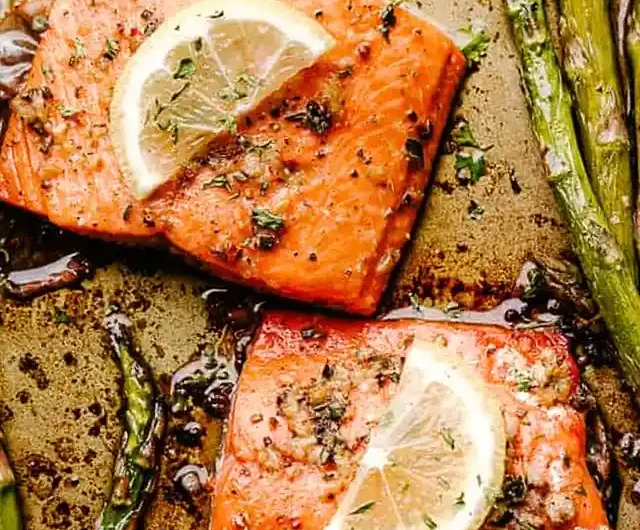
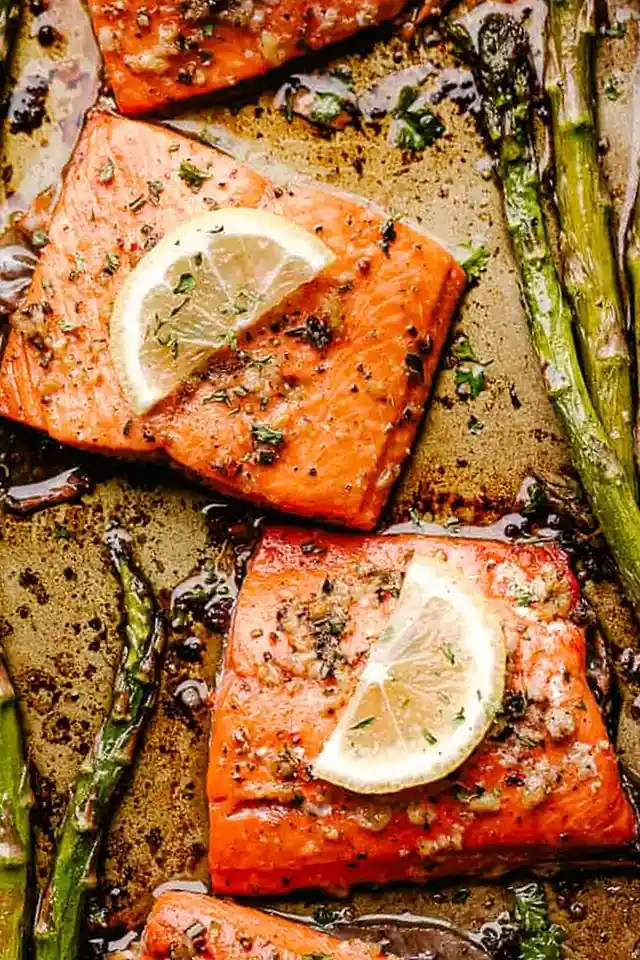
This one-pan meal delivers rich sockeye salmon and tender roasted asparagus in under 30 minutes. It is a practical choice for a healthy dinner with minimal cleanup required.
List of ingredients
- 4 sockeye salmon fillets (5 to 6 ounces each) – skin-on and patted dry with paper towels.
- 2 tablespoons olive oil – divided for the pan and the fish.
- 2 tablespoons minced garlic – provides a pungent aromatic base.
- 2 tablespoons fresh chopped parsley – adds a bright, herbaceous note.
- 1 teaspoon fresh chopped thyme leaves – adds earthy depth.
- ⅓ cup lemon juice – provides necessary acidity to balance the oily fish.
- 1 pound asparagus – with the woody ends trimmed off.
- 1 teaspoon salt – enhances all natural flavors.
- ½ teaspoon freshly ground black pepper – adds a subtle spicy kick.
- lemon slices – used for final garnish.
step-by-step instructions
- Prepare Oven: Preheat your oven to 400°F. Brush a rimmed baking sheet with 1 tablespoon of olive oil to prevent sticking.
- Season Salmon: Place the salmon fillets skin-side-down on the sheet. Brush each fillet with the remaining olive oil, then rub with minced garlic, parsley, and thyme.
- Add Acidity: Pour the lemon juice evenly over the salmon fillets.
- Add Vegetables: Arrange the asparagus in a single layer around the fillets. Toss the asparagus to coat them with the oil on the pan.
- Final Seasoning: Sprinkle both the salmon and the asparagus with salt and freshly ground black pepper.
- Roast: Bake for 10 to 12 minutes. Use an instant-read thermometer to ensure the internal temperature reaches 140°F to 145°F.
- Rest and Serve: Remove from the oven and let the fish stand for a few minutes. Garnish with lemon slices and serve alongside the roasted asparagus.
Selecting the Best Sockeye Salmon
Understanding Sockeye Characteristics
Sockeye salmon is known for its deep red color and rich, oily texture. It has a more intense flavor than Atlantic or King salmon, making it ideal for high-heat roasting.
Identifying Freshness
Look for fillets with a vibrant red hue and firm flesh that springs back when pressed. The fish should have a mild, clean scent rather than a strong fishy odor.
Working with Skin-On Fillets
Keeping the skin on during baking protects the delicate flesh from direct heat. This ensures the salmon remains juicy while the skin provides a structural base on the pan.
Comparing Sockeye to Other Varieties
Sockeye is leaner than King salmon but richer than Coho. Its higher oil content allows it to withstand oven temperatures without drying out as quickly as thinner fillets.
Mastering the Baking Process
The Importance of Preheating
Preheating to 400°F ensures the salmon begins searing immediately upon contact with the pan. This helps achieve a better texture and prevents the fish from steaming in its own juices.
Using an Instant-Read Thermometer
Salmon can overcook in a matter of minutes. Using a thermometer to hit 140°F to 145°F ensures the fish is safe to eat while remaining moist and flaky.
The Benefit of Resting the Fish
Allowing the salmon to rest for 3 to 5 minutes after removing it from the oven redistributes the internal juices. This prevents the moisture from running out immediately when sliced.
Achieving a Browned Top
If you prefer a golden-brown crust, turn your broiler to high for the last 2 minutes of cooking. Watch the fillets closely to avoid burning the garlic and herbs.
Asparagus Preparation and Tips
Trimming the Woody Ends
Hold an asparagus spear and bend it until it snaps naturally. This removes the tough, fibrous bottom portion that remains hard even after roasting.
Ensuring Even Cooking
Arrange the spears in a single layer without overlapping. Overcrowding the pan creates steam, which results in soggy vegetables instead of roasted ones.
Adjusting for Spear Thickness
Thin asparagus spears cook faster and may only need 8 to 10 minutes. Thicker spears may require the full 12 minutes or a slight increase in roasting time.
Alternative Vegetable Options
If asparagus is unavailable, substitute with broccoli florets, sliced bell peppers, or cherry tomatoes. Adjust the roasting time based on the density of the vegetable chosen.
Flavor Enhancement and Substitutions
Fresh versus Dried Herbs
Fresh parsley and thyme provide a bright, punchy flavor. If using dried herbs, reduce the quantity by half as dried herbs are more concentrated.
Substituting Olive Oil
Avocado oil is a great alternative due to its high smoke point. Melted butter can also be used for a richer, more indulgent flavor profile.
Alternative Acidic Components
While lemon juice is traditional, lime juice offers a zesty twist. White wine vinegar can be used for a sharper, more tangy acidity.
Garlic Preparation Methods
Freshly minced garlic provides the strongest aroma. Garlic paste is a convenient time-saver, while garlic powder should be used sparingly to avoid a bitter taste.
Sheet Pan Management
Preventing Fish from Sticking
Brushing the pan with oil is essential, but parchment paper is a superior option for easy cleanup. It creates a non-stick barrier that prevents the skin from tearing.
Managing Pan Space
Leave a small gap between each salmon fillet. This allows hot air to circulate around the fish, ensuring the edges cook at the same rate as the center.
Cleaning the Baking Sheet
If garlic or herbs burn onto the pan, soak it in warm soapy water for 30 minutes. Use a non-abrasive scrub pad to preserve the pan’s surface.
Choosing the Right Pan
Use a rimmed baking sheet to contain the lemon juice and oil. This prevents liquids from dripping into the bottom of your oven and causing smoke.
Storage and Preservation
Refrigerating Leftovers
Place cooked salmon and asparagus in an airtight container. Store them in the coldest part of the refrigerator for up to two days.
Freezing Cooked Salmon
Wrap fillets tightly in foil and place them in a freezer-safe bag. Cooked sockeye salmon can be frozen for up to two months without significant quality loss.
Safe Thawing Procedures
Thaw frozen salmon in the refrigerator overnight. Avoid thawing at room temperature to prevent bacterial growth on the surface of the fish.
Container Selection for Storage
Glass containers are preferred over plastic for seafood. They do not retain odors and provide a better seal to keep the fish from drying out.
Reheating Guidelines
The Low-Heat Skillet Method
Gently warm the salmon in a skillet over low heat with a teaspoon of olive oil. This method prevents the fish from becoming rubbery.
Gentle Oven Warming
Place the salmon in a 275°F oven for 5 to 8 minutes. This slow heating process preserves the flakiness of the sockeye.
Avoiding the Microwave
Avoid reheating salmon in the microwave on high power. The rapid heating often overcooks the proteins, making the fish dry and tough.
Using Cold Salmon in Salads
Flaked cold salmon is an excellent addition to a fresh green salad. Combine it with a lemon-vinaigrette to complement the original seasoning.
Troubleshooting Common Issues
Dealing with Dry Salmon
If the salmon is too dry, you likely exceeded the 145°F internal temperature. Reduce the cooking time by 1 to 2 minutes in your next attempt.
Fixing Undercooked Asparagus
If the fish is done but the asparagus is still too firm, remove the fish and return the vegetables to the oven for another 3 minutes.
Managing Burnt Garlic
Garlic can burn quickly at 400°F. To prevent this, ensure the garlic is well-mixed with the oil before rubbing it onto the fish.
Reducing a Strong Fishy Taste
Rinsing the salmon under cold water and patting it very dry before seasoning can help. The lemon juice in the recipe also naturally neutralizes strong odors.
Frequently Asked Questions
Can I use frozen salmon fillets?
Yes, but ensure they are completely thawed and patted dry before seasoning. Cooking from frozen will lead to uneven results and soggy vegetables.
Is skin-on salmon better for baking?
Skin-on is highly recommended for oven baking. It acts as an insulator, keeping the flesh moist and preventing it from sticking to the baking sheet.
Can I use a different oil?
Any neutral oil with a high smoke point works. Avocado oil or grapeseed oil are excellent choices if you want to avoid the flavor of olive oil.
How do I know when the salmon is perfectly done?
The salmon should be opaque and flake easily with a fork. The most accurate method is using a thermometer to reach 140°F to 145°F.
Can I add other seasonings?
Yes, paprika or a pinch of cayenne pepper can add a nice color and warmth. Just be careful not to overshadow the delicate flavor of the sockeye.
Print
Lemon Garlic Baked Sockeye Salmon with Asparagus
- Total Time: 25 minutes
- Yield: 4 servings 1x
- Diet: General
Description
With our easy Sockeye Salmon recipe, you’ll enjoy perfect flakiness and juicy salmon alongside tender roasted asparagus cooked in the same pan!
Ingredients
- 4 (5 to 6 ounces, each) sockeye salmon fillets
- 2 tablespoons olive oil
- 2 tablespoons minced garlic
- 2 tablespoons fresh chopped parsley
- 1 teaspoon fresh chopped thyme leaves
- ⅓ cup lemon juice
- 1 pound asparagus
- 1 teaspoon salt
- ½ teaspoon freshly ground black pepper
- lemon slices
Instructions
- Preheat: Preheat the oven to 400˚F.
- Prepare Pan: Brush a rimmed baking sheet with 1 tablespoon olive oil.
- Season Salmon: Place the salmon fillets skin-side-down on the baking sheet and brush each fillet with the remaining olive oil. Rub the salmon fillets with garlic, parsley, and thyme. Pour the lemon juice over the fillets.
- Add Vegetables: Arrange the asparagus around the fillets in a single layer. Toss around so to coat with the olive oil. Season the salmon and the asparagus with salt and fresh ground black pepper.
- Roast: Roast for 10 to 12 minutes or until an instant-read thermometer inserted into the salmon registers at 140˚F to 145˚F. Remove from oven and let stand for a few minutes.
- Garnish: Garnish with lemon slices and serve with the asparagus.
Notes
Pat the sockeye salmon fillets dry with a paper towel before adding the herbs and garlic. Cook the fillets skin side down. To get a slight browning on top, set your broiler to HIGH in the last couple minutes of cooking. Store leftover fish in an airtight container in your fridge for up to 2 days.
- Prep Time: 10 minutes
- Cook Time: 12 minutes
- Category: Dinner
- Method: Baking
- Cuisine: American
Nutrition
- Serving Size: 1 fillet with asparagus
- Calories: 296 kcal
- Sugar: 3 g
- Sodium: 648 mg
- Fat: 16 g
- Saturated Fat: 2 g
- Unsaturated Fat: 12 g
- Trans Fat: 0 g
- Carbohydrates: 7 g
- Fiber: 3 g
- Protein: 31 g
- Cholesterol: 78 mg
Keywords: baked sockeye salmon, lemon garlic salmon, sheet pan salmon, roasted asparagus