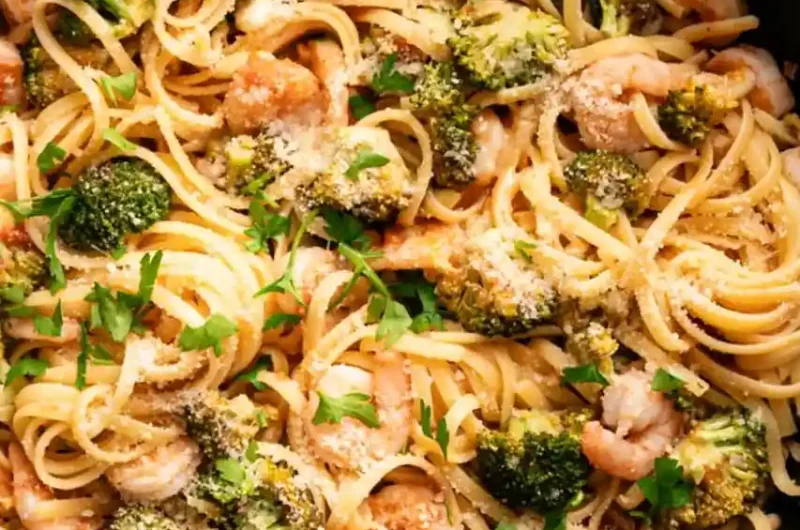
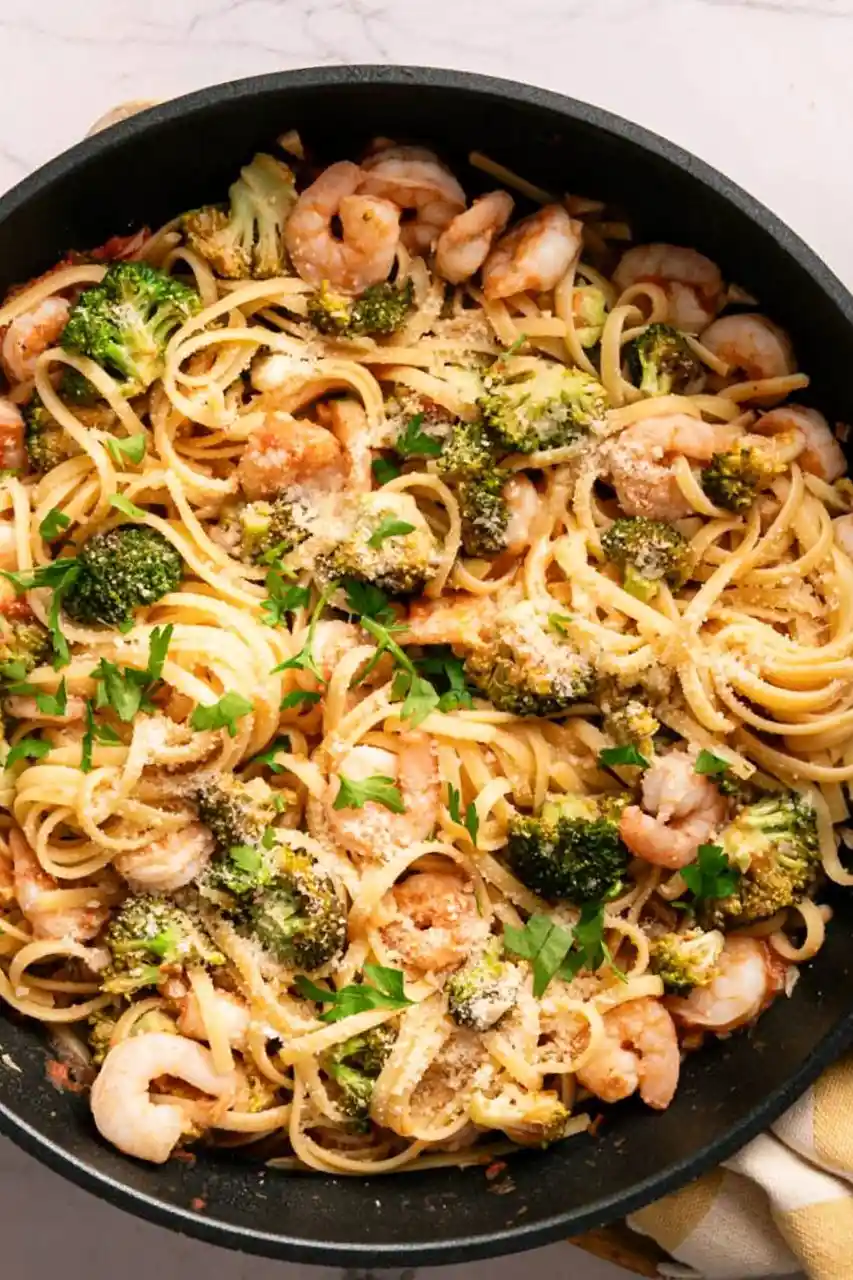
This quick seafood dinner combines bright lemon and garlic flavors with tender broccoli and hearty pasta. It is a nutrient-dense meal that can be prepared in under 30 minutes for a restaurant-quality experience at home.
List of ingredients
- 2 tsp. extra virgin olive oil – used for searing the shrimp.
- 1 lb. shrimp, peeled and deveined – the primary protein source.
- 8 oz. high fiber pasta – provides the base and added nutrients.
- 1.5 cups chicken broth – creates the flavorful sauce base.
- 1 lemon (juice) – adds essential acidity and brightness.
- 4 garlic cloves, minced – provides a pungent, savory depth.
- 3 cups broccoli florets – adds color and a crisp-tender texture.
- 14 oz. diced fire roasted tomatoes, drained – introduces a smoky, rich flavor.
- 1/4 cup Parmesan cheese – adds a salty, nutty finish.
- Salt and pepper – essential for basic seasoning.
step-by-step instructions
- Cook the pasta: Bring a large pot of salted water to a boil. Cook the high fiber pasta according to the package directions until al dente, then drain and set aside.
- Sear the shrimp: Heat olive oil in a non-stick skillet over medium-high heat. Season the shrimp with salt and pepper, then cook them in batches for about 2 minutes per side until pink and opaque. Remove the shrimp from the pan and set them aside to prevent overcooking.
- Simmer the vegetables and sauce: In the same pan, add the broccoli florets, chicken broth, lemon juice, and minced garlic. Cook the mixture for approximately 7 minutes, allowing the liquid to reduce by half while the broccoli becomes tender.
- Combine and finish: Lower the heat to medium. Return the cooked shrimp to the pan and stir in the drained fire-roasted tomatoes and the cooked pasta. Toss everything together for 1 to 2 minutes until warmed through, then top with Parmesan cheese before serving.
Professional Shrimp Preparation Techniques
Selecting the Best Shrimp Size for Pasta
Large or extra-large shrimp are highly recommended for this specific dish to ensure they maintain their shape and texture. Smaller shrimp tend to overcook more quickly and can easily become lost among the broccoli and pasta pieces. Using a consistent size helps ensure that every serving contains a balanced proportion of seafood and vegetables.
The Process of Manual Shrimp Deveining
If you purchase shrimp that are not pre-cleaned, use a small paring knife to make a shallow slit along the back of the shrimp. Gently remove the dark vein, which is the digestive tract, to ensure a clean flavor and better texture. Rinsing the shrimp under cold water after deveining removes any remaining debris before they are patted dry for searing.
Safe Methods for Thawing Frozen Shrimp
To maintain the best texture, thaw frozen shrimp slowly in the refrigerator overnight. For a faster method, place the shrimp in a sealed plastic bag and submerge them in a bowl of cold water, changing the water every 30 minutes. Avoid using warm water or microwave thawing, as this can partially cook the exterior and lead to a rubbery consistency.
Pasta Selection and Cooking Tips
Timing Your Pasta for Al Dente Texture
Cooking pasta al dente means it still has a slight firmness when bitten, which prevents it from becoming mushy when tossed in the sauce. Check the pasta two minutes before the package instructions suggest and taste-test a piece. Because the pasta will cook for another 1-2 minutes in the skillet with the shrimp and sauce, undercooking it slightly is key.
Comparing High-Fiber Pasta Varieties
High fiber pasta can range from whole wheat to legume-based options like chickpea or lentil pasta. Whole wheat pasta offers a nuttier flavor and a traditional texture, while chickpea pasta significantly increases the protein content of the meal. Be aware that legume pastas often release more starch, which may slightly thicken the sauce during the final toss.
Utilizing Pasta Water for Sauce Emulsion
While this recipe uses chicken broth for the sauce, saving a small cup of the salty pasta cooking water can be useful. If the final sauce feels too tight or dry, a splash of pasta water can help emulsify the fats and liquids. The starch in the water helps the sauce cling more effectively to the noodles.
Optimizing Vegetable Texture and Flavor
Cutting Broccoli for Even Cooking
Cut the broccoli into small, uniform florets to ensure they all cook at the same rate during the 7-minute simmer. If some pieces are significantly larger than others, the smaller ones may overcook while the larger ones remain raw. Uniformity in size ensures a consistent crunch and a professional appearance in the finished dish.
Using Frozen Broccoli Florets
Frozen broccoli is a convenient substitute, but it contains more moisture than fresh florets. When using frozen broccoli, reduce the simmering time slightly to avoid overcooking the vegetables. You may need to simmer the sauce for an additional minute or two after the broccoli is added to account for the extra water released during thawing.
Draining Fire-Roasted Tomatoes Properly
Fire-roasted tomatoes provide a concentrated, smoky flavor that differs from standard canned tomatoes. It is crucial to drain them well using a colander to prevent the sauce from becoming too watery. This ensures the lemon and garlic flavors remain prominent rather than being diluted by excess tomato juice.
Flavor Enhancements and Customizations
Incorporating Red Pepper Flakes for Heat
To add a spicy kick to the dish, stir in a half-teaspoon of crushed red pepper flakes when adding the garlic to the pan. The heat from the flakes complements the acidity of the lemon and the richness of the Parmesan cheese. For an even deeper heat, a small spoonful of Calabrian chili paste can be stirred into the broth.
Creating a Creamier Texture with Dairy
If you prefer a richer sauce, you can stir in a tablespoon of reduced-fat cream cheese or a splash of half-and-half at the very end. This transforms the light broth into a creamy lemon sauce without requiring a heavy roux. Ensure the heat is low when adding dairy to prevent the sauce from separating or curdling.
Adding Saltiness with Capers or Olives
For a briny, Mediterranean flavor profile, add a tablespoon of drained capers or sliced green olives during the final toss. These ingredients provide sharp bursts of salt that contrast well with the sweetness of the shrimp and the earthiness of the broccoli. If using these additions, reduce the amount of added salt to maintain balance.
Enhancing Freshness with Parsley or Basil
Finishing the dish with a handful of freshly chopped flat-leaf parsley or torn basil leaves adds a bright, herbal note. These herbs should be added after the pan is removed from the heat to preserve their vibrant color and volatile oils. This addition makes the dish feel fresher and more visually appealing.
Serving Suggestions and Pairings
Pairing with Leafy Green Salads
A simple arugula salad with a light lemon vinaigrette balances the richness of the pasta and Parmesan. The peppery notes of arugula complement the garlic and shrimp perfectly. Alternatively, a classic Caesar salad provides a creamy contrast to the bright, acidic notes of the lemon sauce.
Serving with Garlic Bread or Knots
Warm garlic knots or a toasted baguette slice are excellent for soaking up the remaining lemon-garlic broth at the bottom of the bowl. Brush the bread with melted butter and minced garlic, then toast until golden brown. This adds a satisfying textural contrast to the soft pasta and tender shrimp.
Adding Extra Roasted Vegetables
To increase the nutritional value, serve the pasta alongside a portion of roasted asparagus or garlic green beans. These vegetables share a similar flavor profile with the broccoli and lemon, making them a natural fit. Roasting them at 400 degrees Fahrenheit for 10-12 minutes ensures they are tender and caramelized.
Storage and Reheating Guidelines
Proper Refrigeration Techniques
Allow the pasta to cool completely before transferring it to an airtight container to prevent condensation from making the noodles soggy. Store the dish in the refrigerator for up to three days. Keep the Parmesan cheese separate and sprinkle it on just before reheating for the best texture.
How to Reheat without Overcooking Shrimp
The biggest challenge with seafood leftovers is avoiding rubbery shrimp. Instead of using a microwave on high, reheat the pasta in a skillet over medium-low heat with a tablespoon of chicken broth or water. Stir gently and remove from heat as soon as the dish is warmed through, avoiding a full boil.
Transforming Leftovers into Cold Pasta Salad
This recipe works surprisingly well as a cold pasta salad the next day. Toss the chilled leftovers with an extra drizzle of extra virgin olive oil and a squeeze of fresh lemon juice. Adding fresh baby spinach or arugula to the cold mix refreshes the dish for a healthy lunch option.
Common Troubleshooting Solutions
Thickening a Sauce That Is Too Watery
If the sauce remains too thin after simmering, continue to cook it over medium-high heat for another 2-3 minutes without the pasta. You can also stir in a small amount of extra Parmesan cheese, as the cheese acts as a natural thickener. Ensuring the tomatoes are fully drained from the start is the best way to prevent this issue.
Avoiding Overcooked Rubbery Shrimp
Shrimp cook very quickly and can become tough if left in the pan too long. Always remove them once they turn pink and opaque, and only return them to the pan at the very end of the process. Cooking them in batches instead of crowding the pan ensures they sear properly rather than steaming in their own juices.
Correcting Over-Salted Pasta Dishes
If the dish tastes too salty, you can balance the flavor by adding more lemon juice or a pinch of sugar. The acidity of the lemon cuts through the saltiness, making it less prominent on the palate. Adding extra broccoli or unsalted cooked pasta can also help dilute the salt concentration.
Frequently Asked Questions
Can I use a different type of pasta?
Yes, any pasta shape works well with this recipe. Penne, fusilli, or farfalle are excellent choices for catching the sauce and broccoli florets. Just ensure you follow the cooking times for the specific shape you choose to maintain an al dente texture.
Can this recipe be made vegetarian?
To make this dish vegetarian, replace the shrimp with cannellini beans or extra broccoli and tofu cubes. Use vegetable broth instead of chicken broth to ensure the base is completely plant-based. The lemon and garlic flavors will still provide a satisfying depth of taste.
What can I use if I don’t have fire-roasted tomatoes?
Standard diced tomatoes can be used as a substitute, though they will lack the smoky depth. To mimic the fire-roasted flavor, you can lightly sauté the diced tomatoes in the pan with a pinch of smoked paprika before adding the other ingredients. Ensure they are well-drained regardless of the type used.
How do I prevent the garlic from burning?
Garlic burns quickly over high heat, which can make the sauce taste bitter. Add the garlic during the simmer phase with the broth and broccoli, or ensure the heat is lowered slightly before adding it to the oil. The moisture from the chicken broth helps protect the garlic from scorching.
Print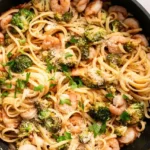
Lemon Garlic Shrimp and Broccoli Pasta
- Total Time: 25 minutes
- Yield: 4 servings 1x
- Diet: High Protein
Description
Lemon Garlic Shrimp and Broccoli Pasta is a bright 25-minute dinner with garlicky shrimp, broccoli, & fire-roasted tomatoes tossed with pasta & Parmesan!
Ingredients
- 2 tsp. extra virgin olive oil
- 1 lb. shrimp, peeled and deveined
- 8 oz. high fiber pasta
- 1.5 cups chicken broth
- 1 lemon (juice)
- 4 garlic cloves, minced
- 3 cups broccoli florets
- 14 oz. diced fire roasted tomatoes, drained
- 1/4 cup Parmesan cheese
- Salt and pepper
Instructions
- Step 1: Bring a large pot of salted water to a boil. Cook pasta according to directions. Drain and set aside.
- Step 2: In a non-stick skillet, heat olive oil over medium high heat. Season shrimp with salt and pepper. Begin cooking the shrimp in batches, about 2 minutes on each side until you have cooked them all. Set aside.
- Step 3: Add the broccoli, chicken broth, lemon juice, and garlic to the pan. Cook for about 7 minutes until it reduces by half and broccoli is tender.
- Step 4: Lower the heat to medium and add the shrimp, tomatoes, and drained pasta. Cook for 1-2 minutes until warmed. Top with Parmesan.
Notes
Buy shrimp that’s already peeled and deveined and use pre-cut broccoli florets to save time. Draining the fire-roasted tomatoes prevents the sauce from becoming too thin.
- Prep Time: 5 minutes
- Cook Time: 20 minutes
- Category: Dinner
- Method: Sautéing
- Cuisine: Italian
Nutrition
- Serving Size: 2 cups
- Calories: 385 kcal
- Sugar: 5 g
- Sodium: 523 mg
- Fat: 11 g
- Saturated Fat: 2 g
- Unsaturated Fat: 9 g
- Trans Fat: 0 g
- Carbohydrates: 54 g
- Fiber: 10 g
- Protein: 36 g
- Cholesterol: 187 mg
Keywords: shrimp, broccoli, pasta, lemon garlic, high protein, quick dinner