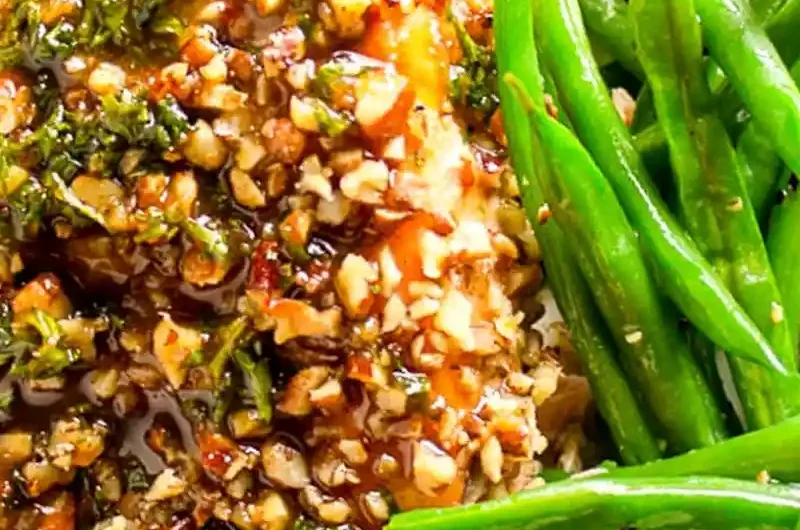
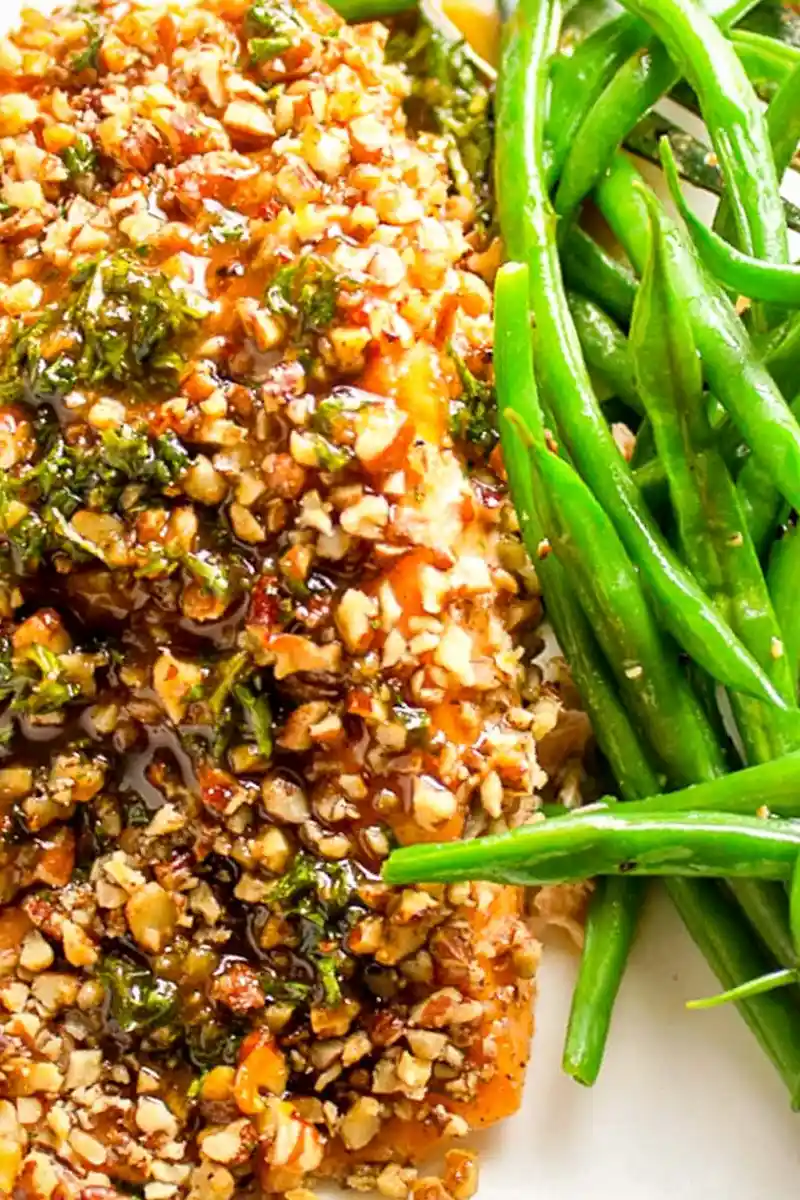
This fast-acting recipe delivers a nutty, crunchy exterior paired with a sweet and tangy glaze. It is an ideal option for a sophisticated meal that requires only 20 minutes of total time.
List of ingredients
- 3/4 pound salmon fillets, with or without skin (approximately two 6-8 ounce fillets)
- 1/2 teaspoon salt and black pepper – for basic seasoning
- 1/2 cup pecans, finely chopped – creates the crunchy crust
- 1 1/2 tablespoon butter – adds richness to the glaze
- 2 tablespoon Maple Syrup – provides natural sweetness
- 1 tablespoon Balsamic vinegar (high quality) – adds acidity and depth
- 1 tablespoon Dijon mustard – adds tang and acts as a binder
- 1 garlic clove minced (or 1/8 tsp garlic powder) – for aromatic flavor
- 1/4 cup chopped fresh parsley – adds a fresh herbaceous finish
step-by-step instructions
- Prepare Oven and Pan: Preheat your oven to 425F (218C). Line a small rimmed sheet pan with parchment paper or aluminum foil sprayed with cooking spray to prevent sticking.
- Season and Mix Glaze: Season the salmon fillets with salt and black pepper. Combine butter, maple syrup, balsamic vinegar, Dijon mustard, garlic, and parsley in a small microwave-safe bowl or measuring cup.
- Melt and Coat: Microwave the sauce ingredients for 15 seconds until the butter is fully melted. Use half of the prepared sauce to coat the top and sides of the salmon fillets, reserving the remaining half for drizzling after cooking.
- Optional Marinating: If time permits, place the salmon and half of the cooled marinade in a zip-lock bag for 15 minutes to deepen the flavor, then discard the used marinade.
- Apply Nut Crust: Place the finely chopped pecans on a shallow dish. Dip the top and sides of the coated salmon into the pecans to adhere, or sprinkle the pecans on and press lightly with your fingers.
- Bake: Place the salmon pieces skin-side down on the prepared baking sheet. Bake for 10-12 minutes, or approximately 10 minutes per inch of thickness, until the fish flakes easily but remains warm pink in the center.
- Finish and Serve: If the salmon has skin, use a spatula to slip between the skin and flesh to remove it. Transfer the fillets to plates, drizzle with the reserved sauce, and serve with lemon wedges.
Selecting the Best Salmon
Identify Freshness by Sight and Smell
When purchasing fresh salmon, look for fillets that appear moist and vibrant in color without any dry or brown spots. The flesh should be firm to the touch and spring back when pressed lightly. Avoid any fish that has a strong, overly fishy odor, as fresh salmon should have a mild, clean scent.
Compare Wild-Caught and Farmed Options
Wild Pacific salmon typically has a deeper red color and a more robust flavor due to its natural diet. Farmed Atlantic salmon is generally lighter in color and has a higher fat content, which can make it more forgiving during the cooking process. Both options work well for this crusty recipe depending on your taste preference.
Using Frozen Salmon Fillets
Frozen salmon is a reliable alternative if fresh fillets are unavailable, as they are often flash-frozen immediately after harvest. Ensure you thaw them completely in the refrigerator overnight before cooking. Pat the fillets very dry with paper towels after thawing to ensure the glaze and pecans adhere properly.
Optimizing the Nut Crust
Choosing Alternative Nuts
While pecans provide a traditional buttery flavor, you can substitute them with other nuts like almonds, walnuts, pistachios, or cashews. Ensure the alternative nuts are finely chopped to a consistent size for an even crust. Toasting the nuts lightly in a pan before applying them can further enhance the roasted flavor.
Adding Breadcrumbs for Extra Crunch
For a more substantial crunch, replace two tablespoons of the chopped pecans with panko breadcrumbs. The panko adds a light, airy texture that contrasts well with the density of the nuts. Mix the panko and nuts together in the shallow dish before dipping the fish.
Ensuring the Crust Stays Attached
The Dijon mustard and maple syrup act as the glue for the pecan crust. Ensure you coat the salmon thoroughly with the sauce before pressing it into the nuts. Avoid over-handling the fish once the crust is applied to prevent the pecans from falling off during transfer to the pan.
Customizing the Maple Balsamic Glaze
Increasing the Sweetness or Tang
To make the glaze sweeter, add an extra tablespoon of maple syrup. If you prefer a sharper, more acidic profile, increase the amount of balsamic vinegar or Dijon mustard. Small adjustments in these ratios allow you to tailor the sauce to your specific palate.
Adding Spicy Elements
For a hint of heat, incorporate a pinch of cayenne pepper or a small amount of red pepper flakes into the sauce mixture. This spicy kick balances the sweetness of the maple syrup. You can also add a teaspoon of sriracha for a more modern, zesty flavor profile.
Integrating Fresh Herbs and Zest
Beyond parsley, you can add finely chopped fresh thyme or oregano to the glaze for an earthy aroma. Adding a teaspoon of fresh lemon zest to the marinade provides a bright, citrusy note. These additions cut through the richness of the salmon and butter.
Cooking and Temperature Precision
The 10-Minute Per Inch Rule
Salmon thickness varies significantly between center-cut fillets and tail pieces. Use the rule of thumb to bake for 10 minutes for every inch of thickness to avoid overcooking. Tail pieces cook much faster and should be monitored closely to prevent them from drying out.
Identifying the Perfect Doneness
The salmon is perfectly cooked when it is just turning opaque and separates easily when pierced with a fork. The center should remain a warm, pale pink rather than turning a chalky white. Overcooked salmon becomes dry and loses its natural oils, affecting the overall taste.
Using a Meat Thermometer
For maximum precision, use an instant-read digital thermometer to check the internal temperature. Aim for a reading between 130F and 135F (54.4C to 57.2C) for medium doneness. Remove the fish from the oven slightly before it reaches this temperature, as carry-over cooking will continue while the fish rests.
Serving and Pairing Suggestions
Complementary Vegetable Sides
Pair this salmon with green beans topped with panko crumbs or a side of creamy sautéed spinach. Roasted carrots or asparagus also work well, as their natural sweetness complements the maple glaze. Steamed broccoli provides a healthy, bitter contrast to the rich nut crust.
Grain and Starch Pairings
Savory rice with roasted vegetables or a fluffy quinoa pilaf provides a neutral base that absorbs the extra balsamic drizzle. For a more decadent meal, serve the salmon over a bed of garlic mashed potatoes. A wild rice blend adds an earthy texture that mirrors the pecans.
Fresh Salads for Balance
A light peach panzanella salad or a cucumber salad with Japanese dressing adds refreshing acidity to the plate. A simple arugula salad with a lemon vinaigrette helps cleanse the palate between bites of the rich salmon. Avoid heavy dressings that might compete with the maple balsamic glaze.
Storage and Reheating Guidance
Storing Leftovers Safely
Place leftover salmon in an airtight container and refrigerate it immediately after it has cooled to room temperature. It will stay fresh and safe to eat for up to three days in the refrigerator. To prevent the crust from becoming soggy, place a piece of parchment paper between layers if stacking fillets.
Best Reheating Methods
Avoid the microwave for reheating, as it can make the salmon rubbery and the crust soft. Instead, heat the oven to 275F (135C) and warm the fillets for 10-15 minutes until heated through. This method preserves the texture of the pecans and keeps the fish moist.
Serving Salmon Cold
This recipe is versatile enough to be served cold or at room temperature. To serve cold, cook the dish a day in advance, cool it completely, and store it covered in the fridge. Bring it to room temperature for about 30 minutes before serving to allow the flavors of the glaze to wake up.
Troubleshooting Common Issues
Preventing the Nut Crust from Burning
If you notice the pecans browning too quickly before the fish is cooked, loosely cover the pan with aluminum foil. This protects the nuts from direct heat while allowing the salmon to finish cooking. Ensuring your oven is properly preheated also prevents the fish from sitting too long under high heat.
Fixing a Glaze That Is Too Thin
If the sauce seems too runny to hold the pecans, simmer it in a small pan on the stove for two minutes instead of microwaving. This reduces the liquid and concentrates the sugars, making the glaze thicker and stickier. Be careful not to burn the butter during this process.
Handling Stuck Skin
If the skin does not slip away easily with a spatula, ensure the fish has rested for a few minutes after baking. The resting period allows the proteins to relax, making the skin easier to separate from the flesh. If it still clings, you can simply leave it on or trim it with a sharp knife.
Frequently Asked Questions
How do I choose the best salmon for this recipe?
Look for fillets that are moist, bright in color, and free of dry spots. They should have a very mild scent rather than a strong fishy smell. If using frozen fish, ensure it is fully thawed and patted dry before you begin the glazing process.
Can I use this recipe with other types of fish?
Yes, this method works well with other firm white fish such as cod, halibut, trout, or sea bass. These fish may have different cooking times, so follow the 10-minutes-per-inch rule. The maple balsamic glaze complements most mild-flavored fish.
What can I use if I have a nut allergy?
You can replace the pecans with toasted sunflower seeds or a mixture of panko breadcrumbs and parmesan cheese. These alternatives provide a similar crunch without using tree nuts. Ensure the substitute is finely chopped or crushed for the best adherence.
How do I know if the salmon is overcooked?
Overcooked salmon will appear pale white and opaque throughout, with no pink remaining in the thickest part. It will flake apart very easily and feel dry or chalky in the mouth. To prevent this, use a thermometer to ensure the internal temperature stays around 135F.
Can I make the glaze in advance?
Yes, the maple balsamic sauce can be prepared a day or two ahead of time and stored in the refrigerator. When you are ready to use it, simply microwave it for 15-30 seconds to melt the butter and blend the ingredients. The chopped pecans can also be prepared in advance and stored in a dry container.
Print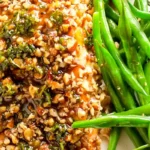
Maple Balsamic Pecan Crusted Salmon
- Total Time: 20 minutes
- Yield: 2 servings 1x
- Diet: General
Description
Get mouth watering pecan crusted salmon on the table in 20 minutes and enjoy the nutty texture on a rich coating of maple syrup, balsamic vinegar, Dijon mustard and parsley.
Ingredients
- 3/4 pound salmon fillets, with or without skin
- 1/2 teaspoon salt and black pepper
- 1/2 cup pecans, finely chopped
- 1 1/2 tablespoon butter
- 2 tablespoon Maple Syrup
- 1 tablespoon Balsamic vinegar
- 1 tablespoon Dijon mustard
- 1 garlic clove minced
- 1/4 cup chopped fresh parsley
Instructions
- Preheat: PREHEAT OVEN to 425F/218C. Line a small rimmed sheet pan with parchment paper or foil sprayed with cooking spray.
- Make Sauce and Prepare Salmon: Season salmon with salt and pepper. Place all marinade/sauce ingredients in a small bowl or measuring cup. Microwave for 15 seconds until butter is melted. Use half of sauce to coat top and sides of salmon. Reserve remaining sauce for drizzling.
- Top with Pecans: Place chopped pecans on shallow dish and dip sides and top of the salmon in pecan mixture to adhere. Or sprinkle top and sides of salmon with pecans, pressing lightly to adhere.
- Bake and Serve: Place salmon pieces, skin side down, on prepared baking sheet. Bake, with pecan topping side up, for 10-12 minutes depending on thickness of salmon (bake 10 minutes per inch of thickness) until fish flakes but is still warm pink in the thickest part of salmon. Drizzle with remaining sauce and serve with lemon wedges if desired.
Notes
Variations: Try this recipe with cod, halibut, trout or sea bass. Swap pecans for almonds, walnuts, pistachios or cashews. Shortcut: Swap in a store-bought balsamic vinaigrette/dressing.
- Prep Time: 10 minutes
- Cook Time: 10 minutes
- Category: Main Course
- Method: Baking
- Cuisine: American
Nutrition
- Serving Size: 1 fillet
- Calories: 558 kcal
- Sugar: 14 g
- Sodium: 814 mg
- Fat: 37 g
- Saturated Fat: 9 g
- Unsaturated Fat: 26 g
- Trans Fat: 0.3 g
- Carbohydrates: 20 g
- Fiber: 3 g
- Protein: 37 g
- Cholesterol: 116 mg
Keywords: pecan crusted salmon, baked salmon, maple balsamic salmon, quick dinner