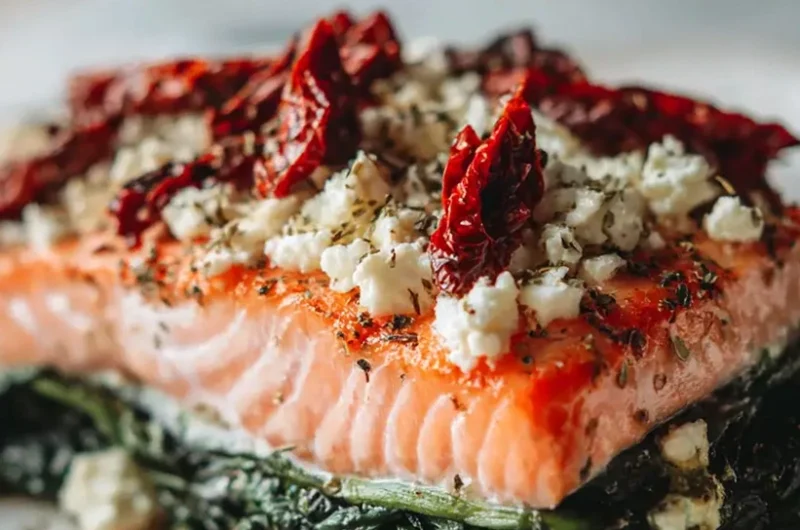
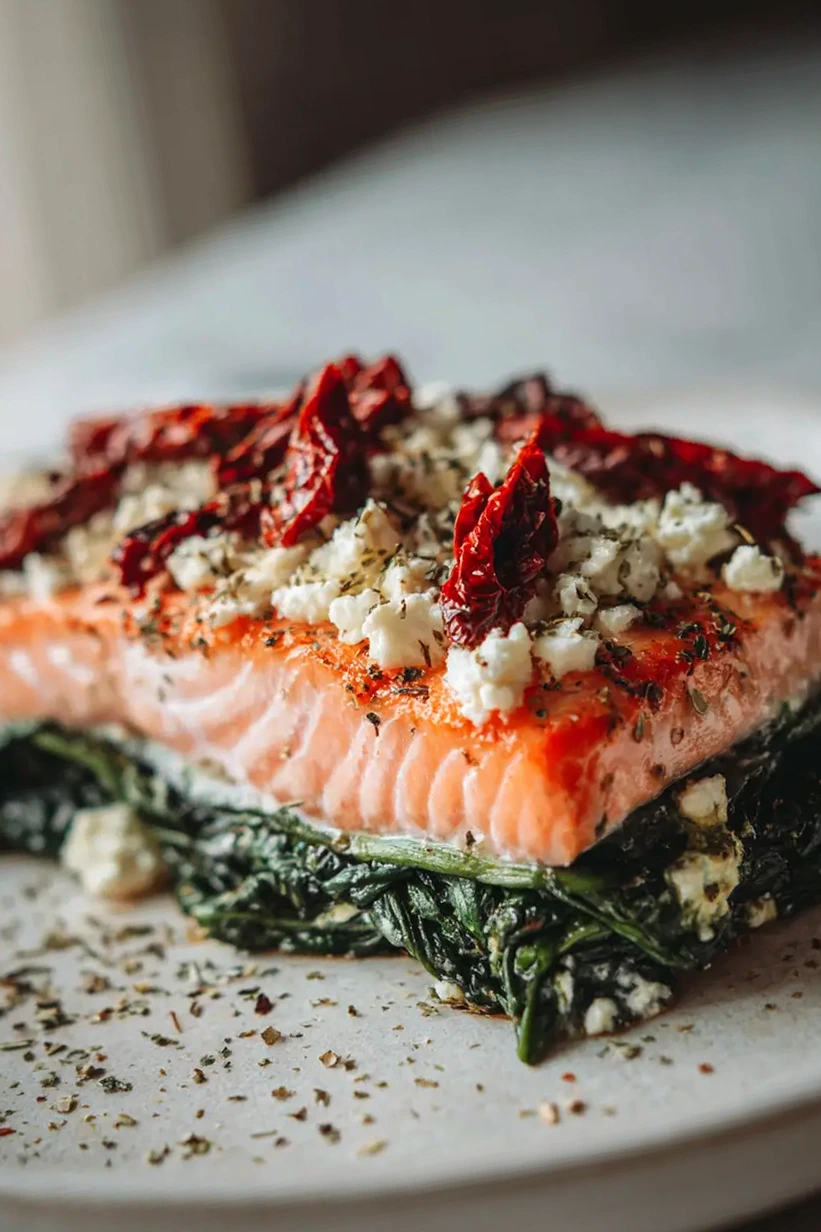
Transform your evening meal with this elegant Mediterranean-inspired salmon dish, where flaky fish meets vibrant, nutrient-rich toppings. The combination of savory sun-dried tomatoes, tender spinach, and tangy feta creates a restaurant-quality experience in under thirty minutes. This recipe is an ideal solution for those who want a protein-packed dinner that looks as sophisticated as it tastes.
List of ingredients
- 4 6 oz (170g) Salmon Fillets (Rectangular center-cut)
- 4 cups (120g) Fresh Baby Spinach
- 1/4 cup (40g) Sun-Dried Tomatoes (Julienned, oil-packed preferred)
- 1/2 cup (75g) Feta Cheese (Crumbled into large chunks)
- 2 tbsp (30ml) Extra Virgin Olive Oil
- 1 tsp (2g) Dried Oregano
- 1/2 tsp (1g) Cracked Black Pepper
- 1/2 tsp (3g) Sea Salt
step-by-step instructions
- Step: Preheat your oven to 400°F (200°C).
- Step: Sauté spinach in 1 tbsp olive oil for 1-2 minutes until vibrant green and just wilted. Drain thoroughly to remove excess liquid.
- Step: Create four beds of spinach on a baking sheet. Place patted-dry salmon fillets on top of the spinach.
- Step: Drizzle with the remaining olive oil, season with salt and pepper, then layer the sun-dried tomatoes, feta chunks, and oregano.
- Step: Bake for 12-15 minutes until the salmon is opaque pink and flakes easily. Let rest for 3 minutes before serving.
Refining the Culinary Process
Importance of Removing Surface Moisture
Patting your salmon dry with paper towels is the most important step for achieving a proper texture. Moisture trapped on the surface creates steam rather than the gentle searing heat needed for a superior result. Dry fish allows the olive oil to adhere better, resulting in a cleaner flavor profile.
Selecting the Best Feta for Baking
Avoid pre-crumbled feta packages, which are often coated in anti-caking agents that hinder proper melting. Instead, purchase a block of sheep’s milk feta kept in brine. Brined feta maintains a superior, creamy consistency when exposed to oven heat, preventing the cheese from becoming dry or granular.
Managing Spinach Moisture Content
Spinach is naturally high in water, which can create unwanted pools of liquid in your baking dish. By wilting the greens in a pan first, you can effectively drain them, ensuring the final dish stays focused on flavor rather than texture issues. This technique also gives you the opportunity to season the spinach separately if you desire extra aromatics like minced garlic.
Serving and Presentation Strategies
Choosing the Right Accompaniments
Because the salmon is rich with feta and oil, serve it with sides that offer contrast. A crisp, lemony side salad or a simple herb-focussed pasta dish provides enough acidity to balance the meal. These sides ensure your palate remains refreshed throughout the main course without feeling overly heavy.
Optimal Plate Arrangement
When transferring the fillets to a plate, use a flat silicone spatula to lift the entire spinach base with the fish. This keeps the presentation intact, maintaining the visual appeal of the vibrant green layer topped with the red tomatoes and white feta. Serving immediately after the three-minute rest period guarantees the most desirable consistency.
Managing Leftovers and Preparation
Proper Storage Techniques
Should you have leftovers, place them in an airtight container within two hours of cooking. To prevent the spinach from making the fish soggy, place a folded paper towel at the bottom of the container to absorb any latent moisture. Proper storage allows the flavors of the sun-dried tomatoes to meld further, making it a delicious option for the following day.
Low-Temperature Reheating
Avoid using a microwave, as it frequently causes the salmon protein to tighten and become tough. Reheat the fillet in a 275°F (135°C) oven covered with foil for 10 to 15 minutes. Adding a teaspoon of water or vegetable broth to the container creates a gentle steam environment that revives the tender, flaky texture of the fish.
Planning for Ahead-of-Time Preparation
You can prepare the spinach and julienne the tomatoes several hours before serving to streamline your dinner routine. Simply store these in the refrigerator and keep the salmon cold until you are ready to assemble the pan. This efficiency is perfect for hosting dinner parties, as you can assemble and slide the pan into the oven right as your guests arrive.
Common Queries Addressed
Can frozen fillets be used?
Frozen salmon works fine if it is completely thawed before you begin the cooking process. You must be extra diligent about patting it dry, as frozen fish often releases more water during the thawing process. Use a paper towel to press out any remaining moisture until the fillets are completely matte before seasoning.
How do I identify when the fish is done?
Relying on an internal temperature of 135°F (57°C) is the most accurate way to verify the salmon is ready. If you do not have a thermometer, look for the fish to turn from a raw, translucent hue to a solid, opaque pink color. It should flake easily when pressed gently with a fork, indicating that the proteins have reached their ideal state.
Is the skin left on or removed?
Removing the skin is recommended for this specific recipe to ensure the spinach base creates a cohesive presentation. However, keeping the skin on is acceptable if you prefer a more rustic serving style. Note that skin-on fillets may take a minute or two longer to cook due to the insulating properties of the skin layer.
Can the recipe scale for more people?
This dish is easily scalable for larger gatherings. Ensure you use a large enough baking sheet to prevent crowding the fillets; if the fish is too close together, it may steam rather than roast. If using two baking sheets, rotate them between the top and bottom oven racks halfway through the cooking time to ensure even browning across all portions.
How does the broiler affect the spinach?
The broiler is a powerful tool for finishing, but it can char the leaves quickly. Always keep a close eye on the oven if you choose to activate the broiler for the final minute of cooking. The goal is to lightly toast the feta without scorching the delicate spinach leaves underneath.
Print
Mediterranean Baked Salmon with Wilted Spinach and Feta
- Total Time: 25 minutes
- Yield: 4 servings 1x
- Diet: Pescatarian, Mediterranean Diet
Description
This Mediterranean Baked Salmon features a thick, flaky fillet topped with vibrant wilted spinach, sun-dried tomatoes, and crumbly feta cheese. A healthy, oven-roasted dinner that is visually stunning and packed with bold Aegean flavors.
Ingredients
- 4 6 oz (170g) Salmon Fillets (Rectangular center-cut)
- 4 cups (120g) Fresh Baby Spinach
- 1/4 cup (40g) Sun-Dried Tomatoes (Julienned, oil-packed preferred)
- 1/2 cup (75g) Feta Cheese (Crumbled into large chunks)
- 2 tbsp (30ml) Extra Virgin Olive Oil
- 1 tsp (2g) Dried Oregano
- 1/2 tsp (1g) Cracked Black Pepper
- 1/2 tsp (3g) Sea Salt
Instructions
- Step: Preheat your oven to 400°F (200°C).
- Step: Sauté spinach in 1 tbsp olive oil for 1-2 minutes until vibrant green and just wilted. Drain thoroughly to remove excess liquid.
- Step: Create four beds of spinach on a baking sheet. Place patted-dry salmon fillets on top of the spinach.
- Step: Drizzle with the remaining olive oil, season with salt and pepper, then layer the sun-dried tomatoes, feta chunks, and oregano.
- Step: Bake for 12-15 minutes until the salmon is opaque pink and flakes easily. Let rest for 3 minutes before serving.
Notes
Use an instant-read thermometer to check for an internal temperature of 135°F (57°C) to ensure the perfect flaky texture. Ensure the spinach is well-drained to prevent a watery dish.
- Prep Time: 10 minutes
- Cook Time: 15 minutes
- Category: Dinner, Main Course
- Method: Baking
- Cuisine: Mediterranean
Nutrition
- Serving Size: 1 fillet
- Calories: 385 kcal
- Sugar: 3 g
- Sodium: 650 mg
- Fat: 22 g
- Saturated Fat: 6 g
- Unsaturated Fat: 14 g
- Trans Fat: 0 g
- Carbohydrates: 6 g
- Fiber: 2 g
- Protein: 38 g
- Cholesterol: 110 mg
Keywords: salmon, mediterranean, baked salmon, spinach, feta, healthy dinner, oven-roasted