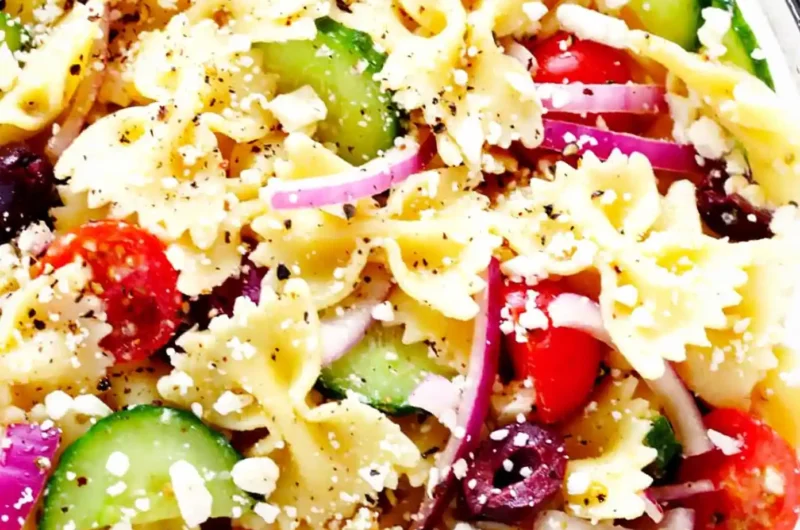
This fresh and vibrant pasta salad combines crisp vegetables and tangy feta cheese with a zesty lemon-herb dressing. It is an efficient meal-prep option or a crowd-pleasing side dish for large gatherings. The combination of brine and acidity makes it a refreshing choice for any occasion.
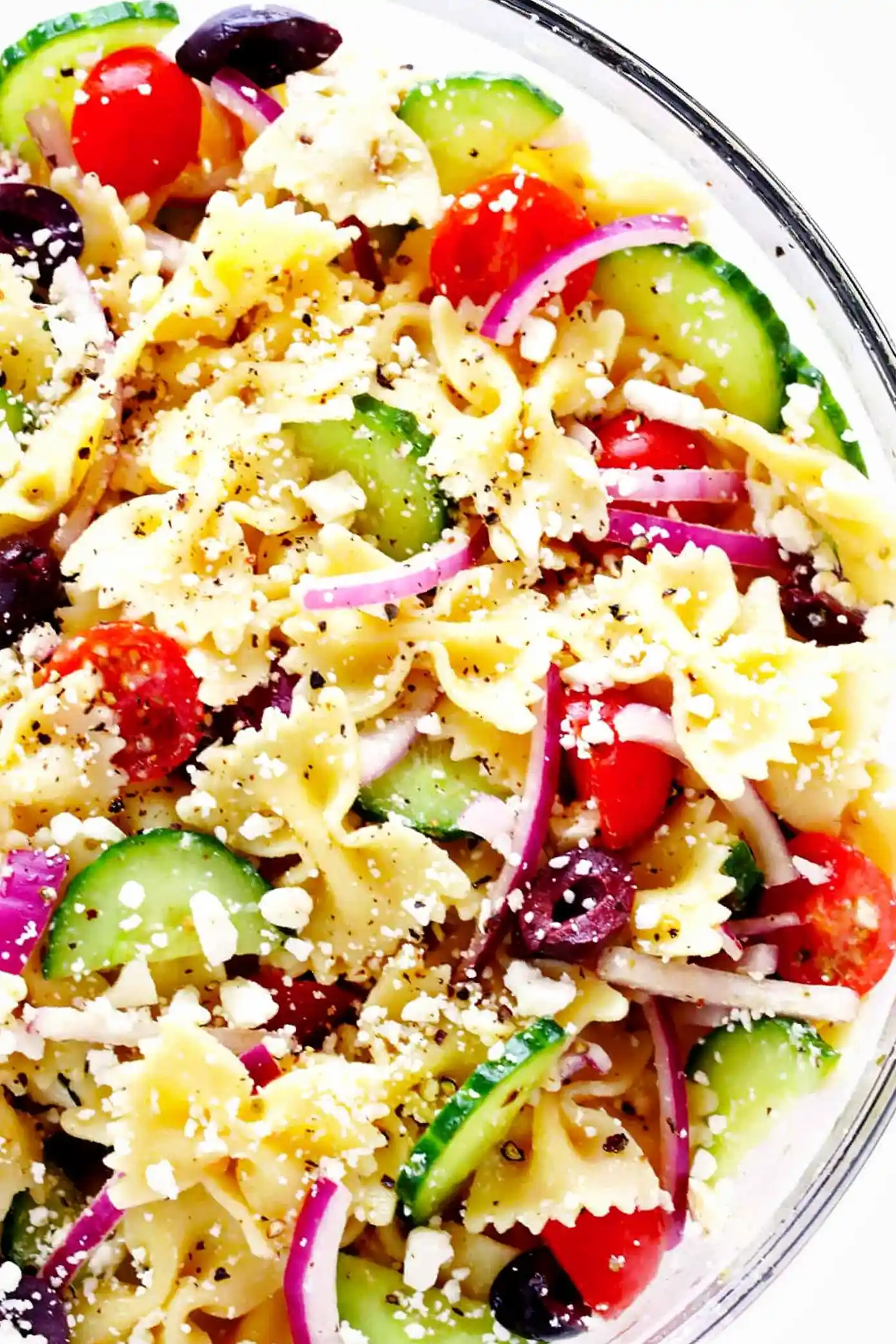
List of ingredients
- 12 ounces dry pasta (farfalle is recommended) – provides the hearty base.
- 1 English cucumber, diced – adds a cool, refreshing crunch.
- 1 pint cherry or grape tomatoes, halved – adds sweetness and juicy texture.
- 2/3 cup sliced kalamata olives – provides a salty, briny contrast.
- 4 ounces crumbled feta cheese – adds a tangy, creamy element.
- 1/2 medium red onion, peeled and thinly sliced – contributes a sharp, savory bite.
- 1/4 cup extra virgin olive oil – the primary fat for the vinaigrette.
- 3 tablespoons red wine vinegar – adds a strong acidic punch.
- 1 tablespoon freshly-squeezed lemon juice – brightens the overall flavor profile.
- 2 teaspoons dried oregano, minced – adds earthy, herbal notes.
- 1 teaspoon honey – balances the acidity of the vinegar and lemon.
- 2 small garlic cloves, minced – adds aromatic depth to the dressing.
- 1/4 teaspoon freshly-cracked black pepper – provides a subtle heat.
- 1/4 teaspoon salt – enhances all the individual flavors.
- Pinch of crushed red pepper flakes – adds a very slight spicy kick.
step-by-step instructions
- Cook the pasta: Boil a large pot of generously salted water and cook the pasta until it is al dente. Drain the pasta and immediately rinse it under cold water for 20 to 30 seconds to stop the cooking process and remove excess starch.
- Prepare the base: Transfer the cooled pasta into a large mixing bowl. Add the diced cucumber, halved tomatoes, sliced kalamata olives, crumbled feta, and thinly sliced red onion to the bowl.
- Prepare the vinaigrette: In a separate small bowl or jar, whisk together the olive oil, red wine vinegar, lemon juice, minced oregano, honey, minced garlic, black pepper, salt, and red pepper flakes until the mixture is fully emulsified.
- Combine and toss: Drizzle the completed vinaigrette evenly over the pasta and vegetable mixture. Toss gently with large spoons or tongs until every piece is evenly coated in the dressing.
- Finish and serve: Serve the salad immediately. You may garnish the final dish with additional crumbled feta and a sprinkle of black pepper if desired.
Professional Preparation Tips
Properly Salting the Pasta Water
Adding a generous amount of salt to the boiling water is the only chance to season the pasta itself. This ensures the base of the salad isn’t bland, regardless of how much dressing is used. Aim for a concentration that tastes similar to seawater for the best results.
Achieving the Perfect Al Dente Texture
Cook your pasta for one to two minutes less than the package instructions suggest. Because the pasta will absorb the vinaigrette as it sits, overcooked pasta can become mushy and lose its structure. Al dente pasta maintains its bite and holds up better during refrigeration.
The Importance of Cold Rinsing
Unlike hot pasta dishes where starch helps the sauce cling, cold salads require the removal of surface starch. Rinsing the pasta under cold water prevents the noodles from sticking together in a clump. It also immediately halts the cooking process, ensuring the texture remains firm.
Allowing the Flavors to Marinate
For maximum flavor impact, let the assembled salad rest in the refrigerator for at least 30 minutes before serving. This resting period allows the pasta to absorb the garlic, lemon, and oregano. The vegetables also soften slightly, creating a more cohesive taste profile.
Adjusting Seasoning Before Serving
The flavors of a cold salad can mellow out as it sits in the fridge. Always taste the salad right before serving to see if it needs a final touch. You may find that an extra squeeze of lemon juice or a pinch of salt wakes up the flavors.
Ingredient Substitutions and Alternatives
Alternative Pasta Shapes
While farfalle is traditional, rotini or fusilli are excellent alternatives because their spirals trap more dressing. Penne is also a strong choice if you prefer a larger, more substantial bite. Avoid very thin pastas like angel hair, as they collapse under the weight of the vegetables.
Cheese Swaps for Feta
If you prefer a different flavor profile, replace feta with crumbled goat cheese for a creamier, milder tang. Shaved Parmesan or Pecorino Romano (made with microbial rennet) can be used for a saltier, nuttier taste. For a vegan version, use a firm tofu-based feta alternative.
Vinegar Alternatives
Red wine vinegar provides a sharp, Mediterranean flavor, but apple cider vinegar is a suitable replacement for a slightly fruitier taste. White wine vinegar is another option that offers a cleaner, more neutral acidity. Avoid balsamic vinegar, as it will discolor the vegetables and change the flavor profile.
Sweetener Options for the Vinaigrette
Honey is used to balance the acidity, but maple syrup or agave nectar work just as well. If you prefer no sweetener, you can omit it entirely, though the dressing will be significantly sharper. A small amount of granulated sugar dissolved in the lemon juice is also an option.
Cucumber Variety Selection
English cucumbers are preferred because they have thinner skins and fewer seeds, meaning less water release. If using standard garden cucumbers, peel them and scoop out the seeds with a spoon before dicing. This prevents the salad from becoming watery over time.
Creative Recipe Variations
Adding Lean Proteins
Transform this side dish into a full meal by adding grilled chicken breast, sautéed shrimp, or chickpeas. Chickpeas are particularly fitting for a Mediterranean theme and add a great texture. Ensure the proteins are cooled to room temperature before mixing them in.
Incorporating Fresh Leafy Greens
Add a handful of baby spinach, arugula, or finely chopped kale to increase the nutrient density. To prevent the greens from wilting, stir them in immediately before serving. This adds a peppery contrast to the salty olives and tangy cheese.
Including Jarred Mediterranean Vegetables
For a deeper flavor, add marinated artichoke hearts, roasted red peppers, or sun-dried tomatoes. These ingredients provide a concentrated burst of flavor that complements the fresh vegetables. Drain any excess oil from the jars to avoid making the salad too greasy.
Enhancing with Fresh Herbs
While dried oregano is a staple, adding fresh parsley, basil, or dill can elevate the freshness. Finely chop the herbs and fold them in at the very end. Fresh mint is also a surprising but delicious addition that pairs well with feta and cucumber.
Adding Crunchy Elements
Toss in toasted pine nuts or slivered almonds for added texture and healthy fats. These provide a satisfying crunch that contrasts with the soft pasta and juicy tomatoes. Toast the nuts in a dry pan for 2-3 minutes until golden brown before adding.
Serving and Presentation Ideas
Platter Arrangement for Parties
Instead of serving from a bowl, spread the pasta salad across a wide platter. Garnish the top with whole cherry tomatoes, extra olives, and sprigs of fresh parsley. This makes the colorful ingredients more visible and visually appealing for guests.
Individual Portioning for Meal Prep
Divide the salad into airtight glass containers for easy weekday lunches. Keep the dressing in a separate small container and toss it in just before eating to maintain maximum crunch. If mixing ahead, add a tiny bit of extra olive oil to prevent the pasta from drying.
Pairing with Complementary Dishes
This salad pairs exceptionally well with grilled proteins like lemon-garlic chicken or baked fish. It also works as a refreshing accompaniment to a platter of hummus and warm pita bread. The acidity of the salad helps cut through the richness of these side dishes.
Storage and Preservation Guidelines
Optimal Refrigeration Methods
Store the salad in a sealed airtight container to prevent it from absorbing other odors in the fridge. Glass containers are generally better than plastic as they keep the vegetables crisper. Ensure there is a little headspace in the container to allow for easy stirring.
Determining Shelf Life
The pasta salad typically remains fresh and safe to eat for 3 to 5 days when refrigerated. However, the cucumbers and tomatoes will release more water over time, which may dilute the dressing. For the best quality, consume the salad within the first 72 hours.
Preventing Pasta from Drying Out
Pasta naturally absorbs moisture from the dressing over time. If you find the salad looks dry on the second or third day, stir in a tablespoon of extra olive oil and a splash of lemon juice. This refreshes the emulsion and restores the glossy coating.
Reheating and Serving Temperature
Cold Versus Room Temperature
This dish is designed to be served chilled or at room temperature. Serving it very cold highlights the crispness of the cucumber, while room temperature allows the garlic and oregano flavors to be more prominent. Avoid serving it warm, as the feta may soften too much.
Avoiding Microwave Reheating
Never reheat this pasta salad in a microwave. Heating the fresh cucumbers and tomatoes will make them mushy and destroy the fresh profile of the vinaigrette. If the salad is too cold for your preference, let it sit on the counter for 20 minutes before serving.
Make-Ahead Strategies
Preparing the Vinaigrette in Advance
The lemon-herb vinaigrette can be made up to a week in advance and stored in a sealed jar. Because it contains oil and vinegar, it is naturally preserved. Shake the jar vigorously before each use to recombine the ingredients that have separated.
Efficient Vegetable Pre-Chopping
You can dice the cucumber, halve the tomatoes, and slice the onion a few hours before you plan to assemble the salad. Store the chopped vegetables in separate containers or bags to keep them from bleeding into one another. Combine them only when you are ready to toss with the pasta.
Timing the Final Assembly
If you are preparing this for a potluck, assemble the salad 2 to 4 hours before the event. This provides enough time for the flavors to meld without letting the pasta become over-saturated. If assembling the night before, hold back a portion of the dressing to add fresh at the end.
Troubleshooting Common Issues
Solving Watery Pasta Salad
If you notice a pool of liquid at the bottom of the bowl, it is likely from the cucumbers. To prevent this, you can slice the cucumber and let it sit in a colander for 15 minutes, then pat it dry with a paper towel before adding it to the salad.
Fixing Bland or Flat Flavors
If the salad tastes bland, it usually lacks acidity or salt. Add an extra teaspoon of red wine vinegar or a squeeze of fresh lemon juice to brighten the flavors. A small pinch of salt can also help the other ingredients stand out more clearly.
Preventing Onion Overpowering
Red onions can sometimes be too sharp and dominate the other flavors. To mellow them out, soak the sliced onions in cold water for 10 minutes, then drain and pat dry before adding them. This removes the harsh sulfur compounds while keeping the crunch.
Frequently Asked Questions
Can I make this pasta salad vegan?
Yes, you can make this vegan by omitting the feta cheese or replacing it with a vegan feta alternative made from coconut oil or tofu. You can also add diced avocado to provide the creaminess that the cheese normally offers.
Which pasta shape is best for this salad?
Farfalle (bowtie) is excellent for its look and structure, but rotini (spirals) is technically superior for flavor. The twists in rotini act as channels that hold onto the vinaigrette and small bits of herbs more effectively than smooth pasta.
Can I use sun-dried tomatoes instead of fresh?
Yes, sun-dried tomatoes are a great substitute and offer a more intense, sweet-tart flavor. If using oil-packed sun-dried tomatoes, drain them well and chop them into small pieces to ensure they are evenly distributed throughout the salad.
Print
Mediterranean Pasta Salad with Lemon-Herb Vinaigrette
- Total Time: 27 minutes
- Yield: 6–8 servings 1x
- Diet: Vegetarian
Description
This Mediterranean Pasta Salad recipe is quick and easy to make, it’s tossed with a zesty lemon-herb vinaigrette, and it’s always a crowd-pleaser!
Ingredients
- 12 ounces dry pasta (farfalle)
- 1 English cucumber, diced
- 1 pint cherry or grape tomatoes, halved
- 2/3 cup sliced kalamata olives
- 4 ounces crumbled feta cheese (microbial rennet)
- half of a medium red onion, peeled and thinly sliced
- 1/4 cup extra virgin olive oil
- 3 tablespoons red wine vinegar
- 1 tablespoon freshly-squeezed lemon juice
- 2 teaspoons dried oregano, minced
- 1 teaspoon honey
- 2 small garlic cloves, minced
- 1/4 teaspoon freshly-cracked black pepper
- 1/4 teaspoon salt
- pinch of crushed red pepper flakes
Instructions
- Vinaigrette: Whisk all vinaigrette ingredients together until combined.
- Pasta: Cook the pasta al dente in a large stockpot of generously-salted water according to package instructions, then drain and rinse under cold water for 20-30 seconds.
- Combine: Transfer the pasta to a large mixing bowl and add cucumber, tomatoes, kalamata olives, feta cheese, and red onion.
- Toss: Drizzle all of the vinaigrette evenly on top and toss until all ingredients are evenly coated.
- Serve: Serve immediately, garnished with extra feta and black pepper if desired.
Notes
Cook the pasta al dente to prevent it from getting mushy. For better flavor, let the salad rest in the fridge for 30 minutes before serving.
- Prep Time: 15 minutes
- Cook Time: 12 minutes
- Category: Main Course
- Method: Mixing
- Cuisine: Mediterranean
Nutrition
- Serving Size: 1 serving
- Calories: 350 kcal
- Sugar: 8 g
- Sodium: 620 mg
- Fat: 20 g
- Saturated Fat: 6 g
- Unsaturated Fat: 14 g
- Trans Fat: 0 g
- Carbohydrates: 42 g
- Fiber: 4 g
- Protein: 12 g
- Cholesterol: 35 mg
Keywords: mediterranean pasta salad, pasta salad, lemon-herb vinaigrette, summer salad, easy pasta recipe