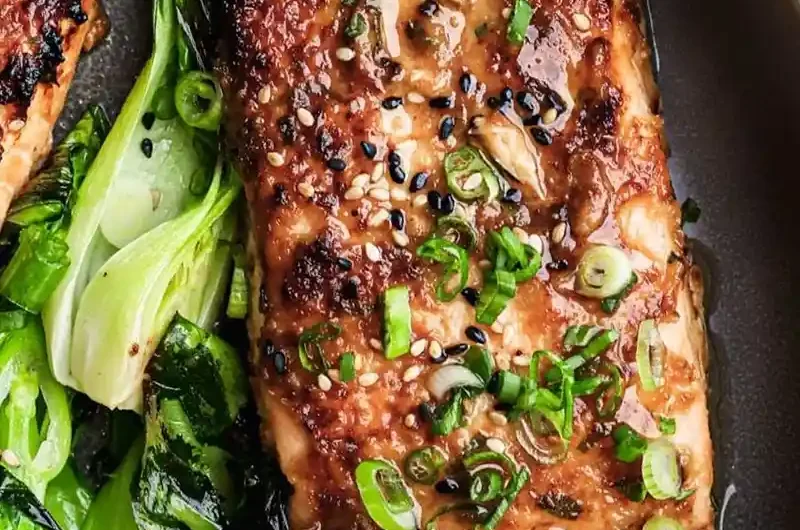
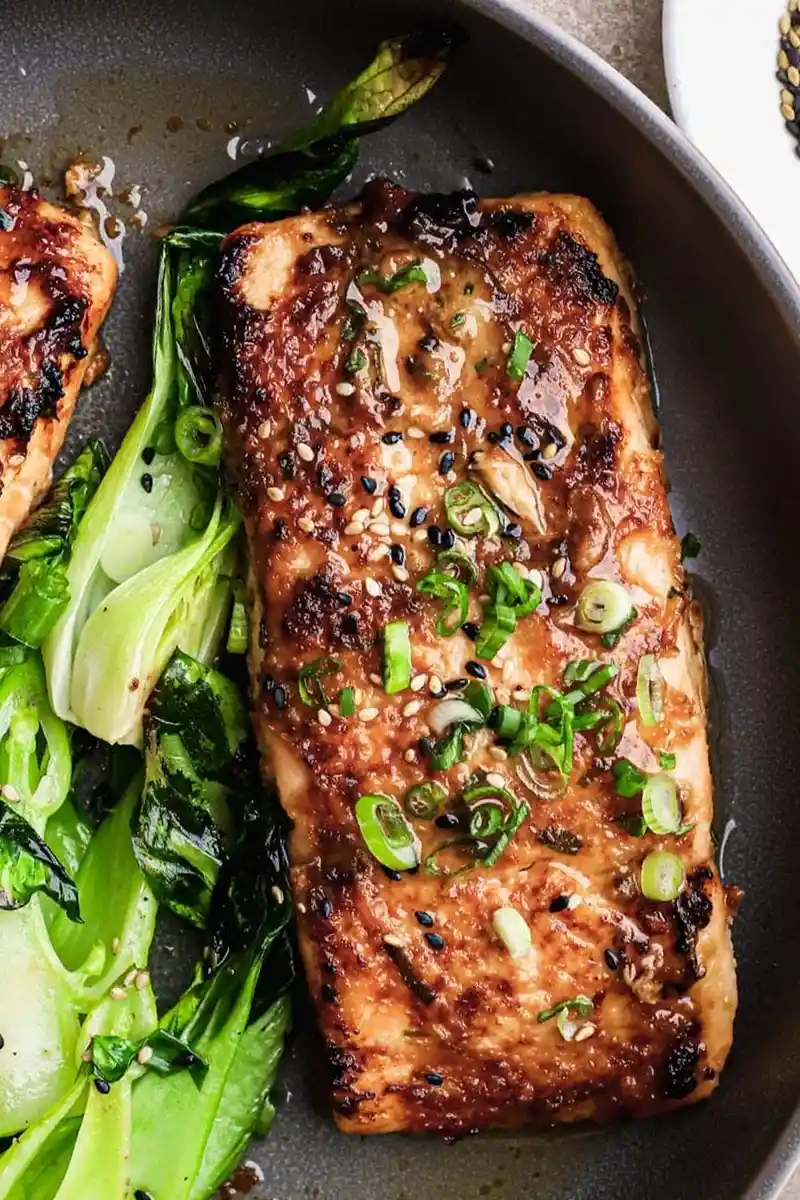
This miso butter salmon combines sweet and savory flavors for a restaurant-quality meal at home. It is designed to be quick to prepare while delivering a perfectly charred exterior and a tender, flaky center.
List of ingredients
- 4 Salmon fillets (6 oz each) – use skin-on or skinless based on preference.
- 6 tbsp Unsalted butter (softened) – leave at room temperature for 1-2 hours.
- 3 tbsp White miso paste – also known as Shiro Miso for a milder taste.
- 1 tbsp Brown sugar – either light or dark brown sugar works.
- 2 tsp Fresh ginger (grated) – peel the root before grating with a microplane.
- 1-2 cloves Garlic (minced) – fresh cloves provide the most punch.
- 2 tbsp Green onions (sliced thin) – include both the white and green parts.
step-by-step instructions
- Make the compound butter: In a medium-size bowl, combine the softened butter, miso paste, brown sugar, ginger, garlic, and green onions. Use a spatula to mash all ingredients together until the mixture is smooth and uniform.
- Top the salmon fillets: Divide the miso butter equally among the four salmon fillets. Use a butter knife or offset spatula to spread the mixture evenly over the entire top surface of each piece of salmon.
- Cook in the oven: Preheat your oven to 375°F. Place the fillets in a large skillet or baking dish and bake for 12-15 minutes until the salmon is opaque and nearly done. Switch to the broiler on high for 1-2 minutes until the topping begins to caramelize.
- Cook in the air fryer: Preheat the air fryer to 400°F. Line the basket with parchment paper or foil to prevent sticking and place the fillets inside. Cook for 9-10 minutes without turning the fillets.
- Serve the dish: Place the cooked salmon on a platter and drizzle any remaining butter from the pan over the top. Garnish with extra sliced green onions and sesame seeds, then serve alongside steamed rice and vegetables.
Pro Cooking Tips for Perfect Salmon
Selecting High Quality Fish
Choose wild-caught salmon when possible for a more intense flavor and better nutrient profile. Ensure the fillets are firm to the touch and have a vibrant color without any dull or brown patches. Avoid any fish that has a strong, unpleasant odor.
Bringing Salmon to Room Temperature
Let the salmon fillets sit on the counter for about 15 minutes before cooking. This ensures the fish cooks evenly from the edge to the center. Cold fish placed in a hot oven often results in overcooked edges and a raw middle.
Managing the Broiler
The broiler can burn the sugar in the miso butter very quickly. Stay by the oven and watch the fillets closely during the final two minutes. Remove them as soon as you see bubbling and golden-brown caramelization.
Using a Microplane for Ginger
A microplane or fine grater is the best tool for processing fresh ginger. This creates a fine paste that blends seamlessly into the butter. Large chunks of ginger can create uneven flavor pockets in the topping.
Benefits of Keeping the Skin
Keeping the skin on the salmon helps act as a barrier between the heat and the flesh. This often results in a moister interior during the baking process. You can easily remove the skin after cooking if you prefer not to eat it.
Choosing the Right Baking Vessel
A cast-iron skillet or a ceramic baking dish is ideal for oven-roasting. These materials distribute heat evenly and can withstand the high temperature of the broiler. Ensure the fillets are not crowded to allow for proper air circulation.
Determining Proper Rack Position
Place your oven rack in the center for the initial baking phase to ensure steady heat. Move the rack to the top position only when you are ready to broil. This prevents the bottom of the fish from overcooking while the top browns.
Ingredient Substitutions
Using Red Miso Paste
If you only have red miso, use slightly less than the called-for amount. Red miso is fermented longer and has a much saltier, more intense flavor than white miso. You may also want to increase the brown sugar by a teaspoon to balance the salt.
Alternative Sweeteners
Maple syrup or honey can be used as a replacement for brown sugar. These liquid sweeteners integrate well into the butter but may make the compound butter slightly softer. Use a 1:1 ratio by volume for these substitutions.
Butter Alternatives
Ghee is an excellent substitute for unsalted butter as it has a higher smoke point. For a dairy-free option, use a high-quality vegan butter stick that is firm enough to be spread. Avoid using liquid oils as the topping will not stay on the fish.
Replacing Fresh Ginger
If fresh ginger is unavailable, you can use ground ginger powder. Use 1/4 teaspoon of powder for every teaspoon of fresh ginger called for in the recipe. Note that the flavor will be less bright and more concentrated.
Substituting Garlic
Garlic powder can replace fresh minced garlic in a pinch. Use 1/4 teaspoon of powder per clove of fresh garlic. Fresh garlic is preferred for its aromatic quality, but powder provides a consistent, mild taste.
Flavor Variations
Adding Citrus Notes
Grate some fresh lemon or lime zest into the miso butter mixture. The acidity of the citrus cuts through the richness of the butter and miso. This adds a bright, refreshing top note to the savory dish.
Increasing the Heat
Stir in a teaspoon of Sriracha or a pinch of red pepper flakes for a spicy kick. This pairs exceptionally well with the sweetness of the brown sugar. Adjust the amount based on your heat tolerance.
Deepening the Umami
Add a splash of soy sauce or tamari to the compound butter for extra depth. This enhances the fermented notes of the miso. Be cautious with additional salt if you choose this option.
Adding Fresh Herbs
Chopped cilantro or parsley can be mixed into the butter or used as a garnish. These herbs add a fresh, earthy contrast to the rich butter. Parsley is a more neutral option, while cilantro adds a distinct Asian-inspired flair.
Incorporating Toasted Sesame Oil
A few drops of toasted sesame oil in the butter mixture add a nutty aroma. This is a classic pairing for miso and ginger. Use it sparingly, as the flavor is very potent.
Using Orange Zest
Replace lemon zest with orange zest for a sweeter, fruitier profile. Orange and miso create a sophisticated flavor combination. This version pairs particularly well with steamed bok choy.
Serving Ideas and Pairings
Selecting the Right Grains
Steamed jasmine rice is the traditional choice as it absorbs the miso butter sauce. For a nuttier flavor, try brown rice or quinoa. Basmati rice is also a great alternative for a lighter texture.
Best Vegetable Side Dishes
Steamed bok choy or sautéed spinach provide a healthy, bitter contrast to the rich salmon. Roasted asparagus or steamed broccoli also work well. Ensure the vegetables are seasoned simply with salt and pepper to let the salmon shine.
Creating a Complete Platter
Arrange the salmon fillets on a large platter surrounded by a variety of steamed vegetables. Drizzle the remaining pan juices over everything. This presentation is ideal for family-style dinners.
Using Salmon as a Salad Protein
Flake the cooked miso salmon over a bed of mixed greens, shredded carrots, and cucumber. Use a ginger-soy vinaigrette to complement the flavors of the fish. This transforms the recipe into a light, healthy lunch.
Adding a Side of Pickled Ginger
Serve the dish with a small side of pickled ginger (gari). The acidity cleanses the palate between bites of the rich, buttery fish. This is a common practice in Japanese cuisine.
Storage and Reheating
Refrigerating Leftover Salmon
Place leftover salmon in an airtight glass container to preserve moisture. Store it in the coldest part of the refrigerator. It will remain fresh and safe to eat for up to three days.
Optimal Oven Reheating
Preheat your oven to 300°F to gently warm the fish without overcooking it. Place the salmon on a baking sheet and heat for about 15 minutes. This method is the best way to maintain the flaky texture.
Using the Air Fryer for Reheating
Set the air fryer to 320°F and heat the salmon for 3-5 minutes. This can help restore some of the caramelization on the top. Be careful not to overheat, as salmon dries out quickly.
Microwave Reheating Caution
Avoid the microwave if possible, as it often makes salmon rubbery. If you must use it, use a medium power setting and heat in short 30-second bursts. Cover the fish with a damp paper towel to trap steam.
Freezing the Compound Butter
You can make extra miso butter and freeze it in small portions. Wrap the butter in parchment paper and place it in a freezer bag. Thaw it in the refrigerator overnight before using it on fresh fillets.
Make-Ahead Strategies
Preparing Butter in Batches
The miso butter can be made up to five days in advance. Store it in a sealed container in the refrigerator. Let it soften at room temperature for an hour before spreading it on the fish.
Pre-Portioning Salmon
Cut your salmon fillets into 6 oz portions and store them in individual parchment wraps. This makes the cooking process faster on busy weeknights. Ensure they are kept tightly sealed to prevent oxidation.
Preparing Vegetables in Advance
Wash and chop your green onions and ginger a day ahead of time. Store them in small airtight containers. This reduces the active prep time to just a few minutes.
Troubleshooting Common Issues
Preventing Dry Salmon
Dry salmon is usually the result of overcooking. Use a meat thermometer to check the internal temperature, aiming for 135-145°F. Remember that the fish will continue to cook slightly after being removed from the heat.
Avoiding Burnt Miso Toppings
If the butter is browning too quickly under the broiler, move the fillets to a lower rack. You can also cover the fish loosely with foil to protect the top. Keep a very close eye on the sugar content.
Dealing with Sticking
Line your baking sheet or air fryer basket with parchment paper or aluminum foil. Greasing the pan with a small amount of oil also prevents the salmon from sticking. This makes cleanup much easier.
Correcting Uneven Crusts
Ensure the miso butter is spread in a thick, even layer across the entire fillet. If you notice gaps, the fish will not caramelize uniformly. Use an offset spatula for the most precise application.
Managing Different Fillet Thicknesses
If your fillets vary in size, the thinner ones will cook faster. Remove the smaller pieces from the oven or air fryer a few minutes early. This prevents the small pieces from drying out while the larger ones finish.
Frequently Asked Questions
Where can I buy miso paste?
Miso paste is typically found in the refrigerated section of most grocery stores, often near the tofu. It is also widely available at Asian and Japanese specialty markets.
What is miso butter made of?
Miso butter is a compound butter created by blending softened unsalted butter with miso paste. It is often enhanced with aromatics like garlic, ginger, and green onions to create a savory spread.
What goes well with miso salmon?
This dish pairs perfectly with steamed jasmine rice, quinoa, or sautéed leafy greens. It also works well with a side of steamed broccoli or a crisp cucumber salad.
Can I use frozen salmon?
Yes, but you must thaw the salmon completely in the refrigerator before cooking. Cooking frozen fillets directly will lead to uneven cooking and a loss of texture.
How do I know when salmon is done?
The salmon is done when the flesh is opaque and flakes easily with a fork. For precision, use a thermometer to ensure the internal temperature has reached at least 135°F.
Print
Miso Butter Salmon
- Total Time: 39 minutes
- Yield: 4 servings 1x
- Diet: General
Description
This miso butter salmon is sweet, savory, and full of flavor. Slightly charred with a flaky, tender interior, this salmon dish couldn’t be more easier to make.
Ingredients
- 4 Salmon fillets (6 oz each)
- 6 tbsp Unsalted butter, softened
- 3 tbsp White miso paste
- 1 tbsp Brown sugar
- 2 tsp Fresh ginger, grated
- 1–2 cloves Garlic, minced
- 2 tbsp Green onions, sliced thin
Instructions
- Step 1: In a medium-size bowl, combine softened butter, miso paste, brown sugar, ginger, garlic, and green onions. Use a spatula to mash together.
- Step 2: Equally divide the miso butter on top of each salmon fillet. Use a butter knife or offset spatula to spread the butter over the entire piece of salmon.
- Step 3: For oven: Preheat oven to 375°. In a large skillet or baking dish, add salmon fillets. Bake for 12-15 minutes until the salmon is opaque and just about done. Then, broil on high for 1-2 minutes until the top of the salmon begins to caramelize.
- Step 4: For air fryer: Preheat air fryer to 400°. Line air fryer basket with parchment paper or foil. Place salmon fillets inside basket and cook for 9-10 minutes. Do not turn.
- Step 5: Place cooked salmon onto a platter. Drizzle remaining butter on top of salmon fillets. Garnish with green onions, sesame seeds and serve with steamed rice and vegetables.
Notes
Make the miso butter in advance and store inside the refrigerator for up to 5 days. Let salmon come to room temperature for 15 minutes before cooking to ensure the fish cooks evenly.
- Prep Time: 15 minutes
- Cook Time: 15 minutes
- Category: Main Course
- Method: Baking
- Cuisine: Asian
Nutrition
- Serving Size: 1 fillet
- Calories: 431 kcal
- Sugar: 4 g
- Sodium: 554 mg
- Fat: 29 g
- Saturated Fat: 13 g
- Unsaturated Fat: 13 g
- Trans Fat: 1 g
- Carbohydrates: 7 g
- Fiber: 1 g
- Protein: 36 g
- Cholesterol: 139 mg
Keywords: miso butter salmon, Asian flavors, air fryer salmon, baked salmon, easy salmon recipe