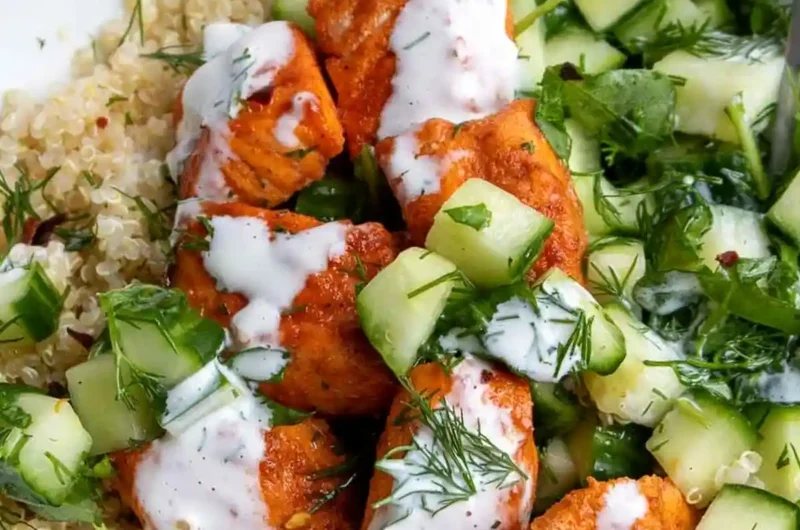
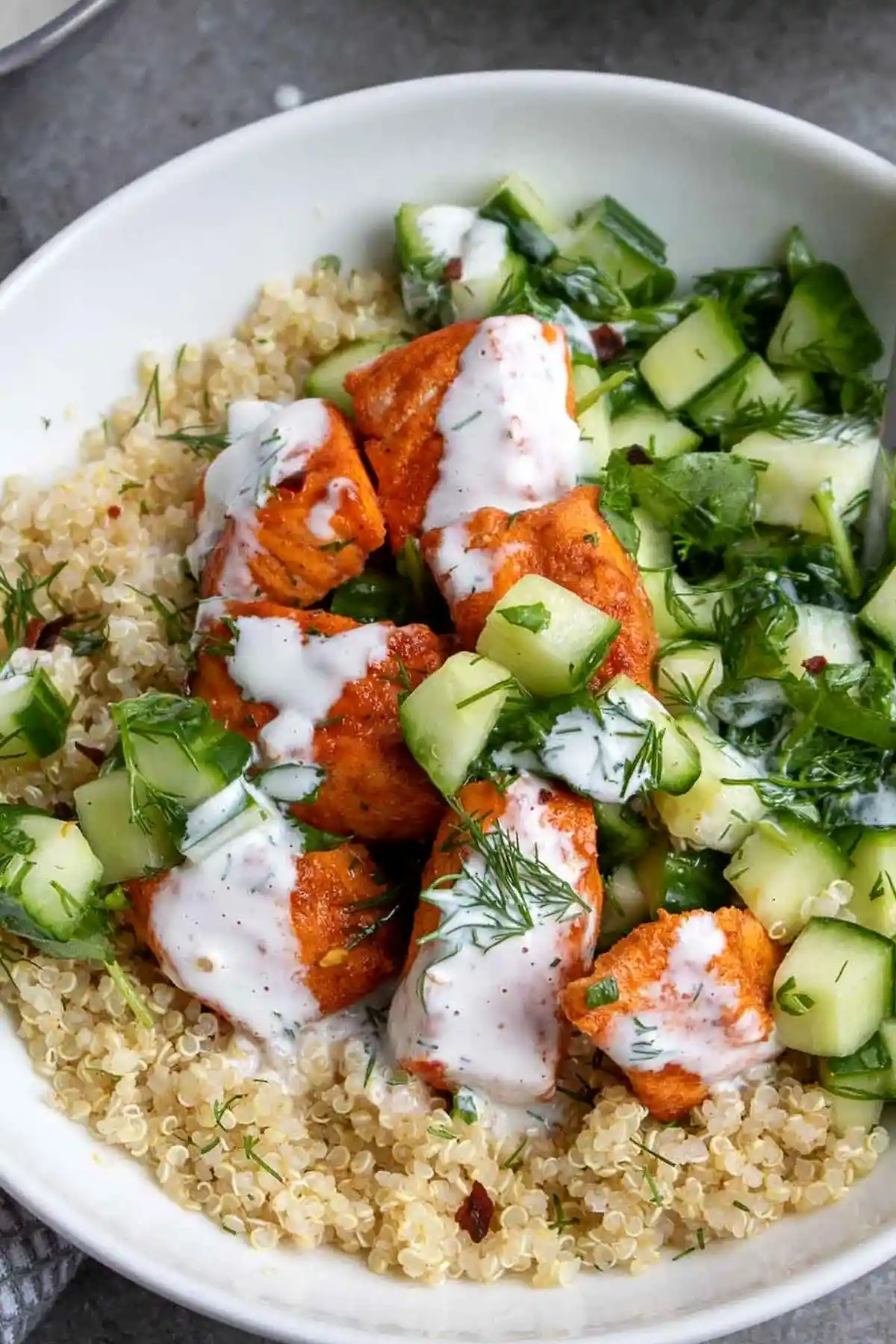
These protein-rich salmon quinoa bowls are a versatile meal option that can be served hot or cold. They are ideal for quick weeknight dinners or as a healthy meal prep solution for the week.
List of ingredients
- 1 cup raw quinoa – provide a whole grain base.
- 1 pound salmon fillets, cut into bite-size chunks – the main protein source.
- 2 tablespoons olive oil – for roasting the salmon.
- 1 tablespoon honey – adds a hint of sweetness and glaze.
- 1/2 lemon, juiced – for the salmon marinade.
- 1 tablespoon paprika – adds color and smoky flavor.
- 1/2 teaspoon garlic powder – provides a savory depth.
- 1/2 teaspoon onion powder – adds a mild aromatic quality.
- 1/2 teaspoon salt – enhances all flavors.
- 1 cucumber, diced – adds freshness and crunch to the salad.
- 1 cup arugula, finely chopped – adds a peppery note.
- 1/4 cup dill, finely chopped – provides a fresh herbal taste.
- 2 tablespoons olive oil – for the salad dressing.
- 1/2 lemon, juiced – for the salad dressing.
- Salt – to taste for the salad.
- Pepper – to taste for the salad.
- 1/4 cup mayonnaise – the base for the creamy sauce.
- 1 teaspoon Dijon mustard – adds tanginess to the sauce.
- 1/2 lemon, juiced – for the sauce acidity.
- 1/4 teaspoon dill, finely chopped – for herbal flavor in the sauce.
- Salt – to taste for the sauce.
- Pepper – to taste for the sauce.
step-by-step instructions
- Prepare the oven: Preheat your oven to 450°F to ensure it is hot enough for roasting.
- Cook the quinoa: Bring a saucepan of water to a boil, add a pinch of salt and the quinoa, and cook for 15 minutes or as per package directions until tender. Strain through a fine mesh colander and shake well to remove excess water before setting aside.
- Mix the marinade: In a medium bowl, whisk together olive oil, honey, lemon juice, paprika, garlic powder, onion powder, and salt until the mixture is smooth.
- Coat the salmon: Add the cubed salmon to the marinade bowl and toss gently with a spoon or hands until every piece is well coated.
- Bake the salmon: Spread the salmon pieces on a baking sheet, ensuring there is space between them. Bake for 10-12 minutes or until the salmon is cooked to your preference.
- Prepare the salad: In a medium bowl, combine diced cucumber, chopped arugula, and fresh dill. Drizzle with olive oil and lemon juice, season with salt, and toss well.
- Create the sauce: In a small bowl, whisk together mayonnaise, Dijon mustard, lemon juice, chopped dill, salt, and black pepper until creamy.
- Assemble the bowls: Place a layer of cooked quinoa in the bottom of the bowls, top with the roasted salmon and cucumber salad, and finish with a drizzle of the creamy sauce.
Protein and Grain Substitutions
Swap Salmon for Chicken Breast
If you prefer poultry, use boneless skinless chicken breast cut into 1-inch cubes. Follow the same marinade process, but increase the baking time to 15-20 minutes to ensure the chicken is cooked through to 165°F.
Use Shrimp for a Lighter Option
Peeled and deveined shrimp work excellently with this marinade. Because shrimp cook very quickly, reduce the baking time to 5-8 minutes to avoid a rubbery texture.
Substitute Brown Rice for Quinoa
For those who prefer a different grain, brown rice is a hearty alternative. Use a 1:2 ratio of rice to water and simmer for about 40-45 minutes until tender.
Try Cauliflower Rice for Low Carb
To reduce carbohydrates, use riced cauliflower instead of quinoa. Sauté the cauliflower rice in a pan with a small amount of olive oil for 5 minutes until tender-crisp.
Customizing the Cucumber Salad
Add Red Bell Peppers for Crunch
Dicing a red bell pepper and adding it to the salad mix introduces a sweet flavor and vibrant color. This also increases the vitamin C content of the meal.
Use Baby Spinach instead of Arugula
If the peppery taste of arugula is too strong, baby spinach is a great substitute. It provides a milder flavor and similar nutritional benefits.
Incorporate Microbial-Rennet Feta Cheese
Crumbling a small amount of microbial-rennet feta over the salad adds a salty, creamy element. This pairs particularly well with the lemon and dill dressing.
Add Fresh Parsley for Extra Freshness
Mixing chopped fresh parsley with the dill adds an earthy dimension to the salad. This combination is common in Mediterranean-style bowls.
Creamy Sauce Variations
Greek Yogurt for a Healthier Base
Replace the mayonnaise with plain Greek yogurt to lower the calorie count and increase the protein. The resulting sauce is lighter but remains creamy and tangy.
Sriracha for a Spicy Kick
Whisk one teaspoon of sriracha or your favorite hot sauce into the dressing. This adds a spicy contrast to the sweetness of the honey-glazed salmon.
Avocado Oil Mayonnaise
Using a mayonnaise made with avocado oil provides more heart-healthy monounsaturated fats. It maintains the same texture and flavor as traditional mayonnaise.
Lemon Zest for Intense Citrus
Grate the zest of the lemon before juicing it and add it to the sauce. This intensifies the citrus aroma and provides a brighter flavor profile.
Cooking Tips for Perfect Salmon
Avoid Overcooking the Fillets
Salmon can dry out quickly at high temperatures. Use a meat thermometer to check that the thickest piece reaches an internal temperature of 145°F.
Ensure Even Cubing
Cut the salmon fillets into uniform 1-inch cubes. This ensures that all pieces cook at the same rate and prevents smaller pieces from overcooking.
Pat Salmon Dry Before Marinating
Use paper towels to remove excess moisture from the surface of the salmon. This allows the marinade to adhere better and helps the salmon brown in the oven.
Use a Parchment-Lined Baking Sheet
Line your baking pan with parchment paper or a silicone mat. This prevents the honey-based marinade from sticking to the pan and simplifies the cleanup process.
Quinoa Preparation Guide
Rinse Quinoa to Remove Saponins
Place raw quinoa in a fine-mesh strainer and rinse under cold water for 30 seconds. This removes the natural saponin coating, which can otherwise taste bitter.
Use Vegetable Broth for Flavor
Substitute the cooking water with low-sodium vegetable broth. This infuses the quinoa with a savory depth of flavor from the start.
Fluffing the Quinoa Properly
After straining the quinoa, use a fork to gently fluff the grains. This separates them and prevents the quinoa from becoming clumpy or mushy.
Managing Different Quinoa Varieties
White quinoa is the mildest and cooks the fastest. Red and black quinoa varieties have a nuttier flavor and may require an additional 2-5 minutes of cooking time.
Meal Prep and Storage Advice
Separate Container Storage
Store the cooked quinoa, roasted salmon, fresh salad, and creamy sauce in separate airtight containers. This prevents the salad from wilting and the sauce from making the grains soggy.
Reheating Salmon and Quinoa
Transfer the salmon and quinoa to a microwave-safe dish and heat for 1-2 minutes. Always add the cold cucumber salad and sauce after reheating to preserve their fresh texture.
Keeping the Salad Fresh
Place a clean paper towel at the bottom of the cucumber salad container. This absorbs excess moisture and keeps the vegetables crisp for longer.
Freezing Instructions
Cooked salmon and quinoa can be frozen in airtight bags for up to 3 months. However, the cucumber salad and mayonnaise-based sauce cannot be frozen as they will separate and lose quality.
Troubleshooting Common Issues
Fixing Mushy Quinoa
Mushy quinoa usually results from too much water or overcooking. Stick to a strict 1:2 ratio of quinoa to liquid and avoid stirring the pot during the simmering process.
Preventing Salmon from Sticking
If salmon sticks to the pan, ensure you are using enough olive oil in the marinade. Additionally, make sure the oven has reached the full 450°F before sliding the pan in.
Reducing Watery Cucumber Salad
To prevent the salad from becoming watery, salt the diced cucumbers and let them sit for 10 minutes. Drain the released liquid before adding the arugula and dressing.
Correcting Sauce Separation
If the creamy sauce separates, whisk it vigorously by hand. If it remains broken, stir in a teaspoon of warm water or a small amount of extra mayonnaise to emulsify it.
Frequently Asked Questions
How many calories are in a salmon and quinoa bowl?
One serving of this salmon quinoa bowl contains approximately 566 calories, providing a balance of protein, healthy fats, and complex carbohydrates.
What can I season quinoa with?
Beyond salt, you can season quinoa during cooking with dried herbs, turmeric, or cumin. For post-cooking flavor, toss in fresh parsley or a splash of lemon juice.
What can be added to cooked quinoa?
Cooked quinoa is very versatile and can be mixed with pesto, toasted nuts, or dried cranberries. Adding a bit of olive oil and salt is the simplest way to enhance it.
Can I use frozen salmon?
Yes, frozen salmon fillets work perfectly. Ensure they are completely thawed in the refrigerator overnight before cutting them into cubes and marinating.
Print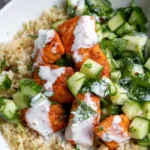
Nutritious Roasted Salmon and Quinoa Bowls
- Total Time: 25 minutes
- Yield: 4 bowls 1x
- Diet: Gluten-Free, Dairy-Free
Description
Filled with protein, healthy fats, and whole grains, these healthy salmon quinoa bowls can be enjoyed hot or cold and work well for lunch and dinner.
Ingredients
- 1 cup raw quinoa
- 1 pound salmon fillets, cut into bite-size chunks
- 4 tablespoons olive oil, divided
- 1 tablespoon honey
- 1 1/2 lemons, juiced, divided
- 1 tablespoon paprika
- 1/2 teaspoon garlic powder
- 1/2 teaspoon onion powder
- 1/2 teaspoon salt, plus additional for quinoa and salad
- 1 cucumber, diced
- 1 cup arugula, finely chopped
- 1/4 cup + 1/4 teaspoon dill, finely chopped
- Pepper, to taste
- 1/4 cup mayonnaise
- 1 teaspoon Dijon mustard
Instructions
- Preheat: Preheat the oven to 450°F.
- Cook Quinoa: Fill a saucepan with water and bring it to a boil. Once boiling, add a generous pinch of salt and quinoa and cook for 15 minutes, or as per package directions, until tender. Once cooked, strain quinoa in a fine mesh colander and shake the colander to remove as much excess water as possible. Set aside.
- Marinate Salmon: In a medium bowl, combine the salmon marinade ingredients: olive oil, honey, lemon juice, paprika, garlic powder, onion powder, and salt, and whisk until well combined.
- Bake Salmon: Add cubed salmon to the bowl of marinade and toss gently, with a spoon or your hands, until all of the salmon pieces are well coated. Transfer the salmon to a baking sheet, separating the salmon so there is room in between the pieces, then place in the oven to bake for 10-12 minutes or until the salmon is cooked to your liking.
- Prepare Salad: In a medium bowl, make the salad by combining the cucumber, arugula, and dill, then drizzle with olive oil and lemon juice, and season with a pinch of salt. Toss until well combined, then taste and adjust seasoning as needed, and set aside.
- Make Sauce: In a small bowl, make the sauce by combining mayonnaise, mustard, lemon juice, dill, salt, and black pepper, and whisk until well combined. Taste and adjust seasoning as needed, then set aside.
- Assemble: Once the quinoa and salmon are cooked, assemble the bowls with a layer of quinoa, salmon, cucumber salad, and a drizzle of sauce, and serve.
Notes
Leftovers of the quinoa, salmon, salad, and sauce can be stored in separate airtight containers in the fridge for 3 to 4 days.
- Prep Time: 10 minutes
- Cook Time: 15 minutes
- Category: Dinner
- Method: Stovetop and Baked
- Cuisine: American
Nutrition
- Serving Size: 1 bowl
- Calories: 566 kcal
- Sugar: 6 g
- Sodium: 680 mg
- Fat: 33 g
- Saturated Fat: 5 g
- Unsaturated Fat: 28 g
- Trans Fat: 0 g
- Carbohydrates: 39 g
- Fiber: 5 g
- Protein: 33 g
- Cholesterol: 85 mg
Keywords: salmon quinoa bowls, healthy dinner, protein bowls, meal prep, omega-3