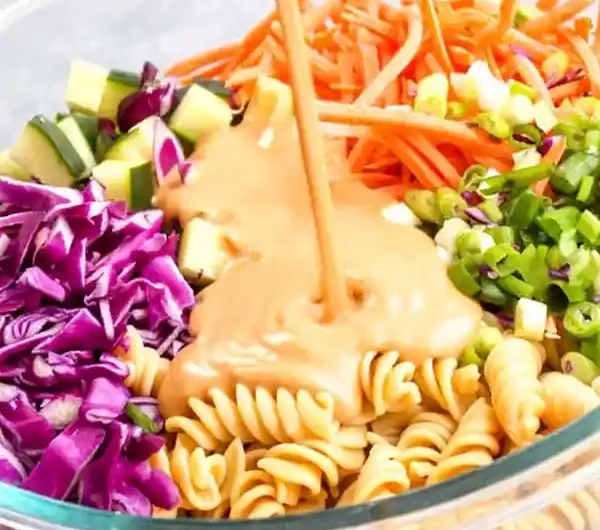
This vibrant pasta salad utilizes garbanzo bean noodles to create a high-protein, grain-free meal. It combines crunchy, raw vegetables with a creamy peanut-based dressing for a fast and filling lunch or dinner option.
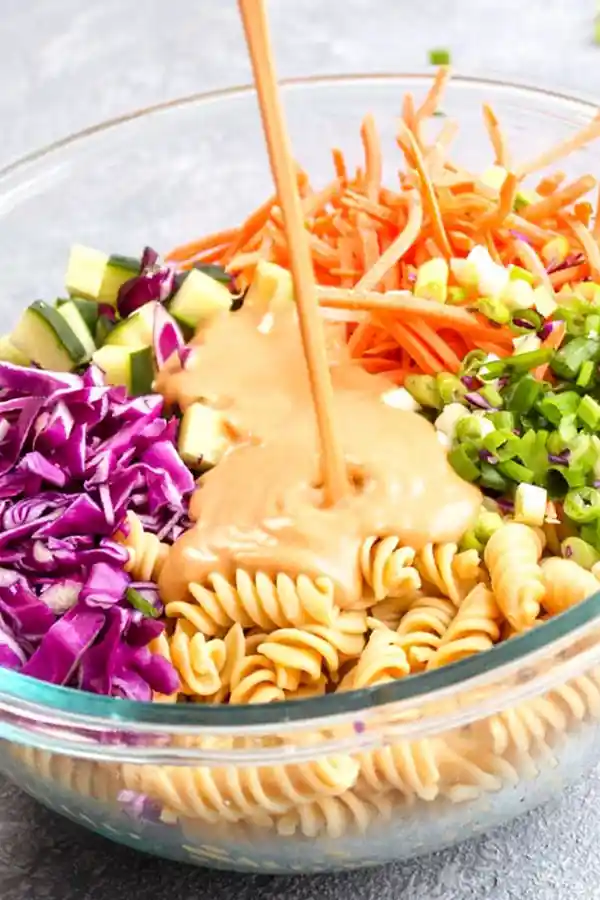
List of ingredients
- 1 tbsp maple syrup – adds a touch of natural sweetness.
- 2 tbsp unseasoned rice vinegar – provides a mild, tangy acidity.
- 1/4 cup peanut butter – creates a rich, creamy, and nutty base.
- 1/4 cup orange juice – contributes brightness and citrus notes.
- 1 clove garlic, minced – adds aromatic depth and pungency.
- 1 tbsp liquid aminos – delivers a salty, umami flavor.
- 1-4 tsp sriracha (optional) – allows for adjustable heat levels.
- 8 oz garbanzo bean rotini pasta – the primary protein source and base.
- 4 scallions, sliced – adds a mild onion flavor and color.
- 1 cup chopped cabbage – provides a satisfying, fresh crunch.
- 1 cup shredded carrots – adds color and a hint of sweetness.
- 1 cup chopped cucumber – adds refreshing hydration and texture.
step-by-step instructions
- Cook the pasta: Boil the garbanzo bean rotini according to the package instructions, then drain and rinse the pasta thoroughly with cold water to stop the cooking and remove excess starch.
- Prepare the dressing: In a large mixing bowl, whisk together the maple syrup, rice vinegar, peanut butter, orange juice, minced garlic, liquid aminos, and sriracha until the sauce is smooth and emulsified.
- Combine ingredients: Add the chilled pasta and the sliced scallions, chopped cabbage, shredded carrots, and chopped cucumber into the bowl with the dressing.
- Toss and serve: Gently toss all the ingredients until the pasta and vegetables are evenly coated with the peanut sauce, then serve immediately.
Optimizing the Pasta Texture
Rinse Pasta Thoroughly to Remove Excess Starch
Legume-based pastas, like garbanzo bean rotini, often release more starch than wheat pasta. Rinsing them under cold water after draining removes this sticky residue, ensuring the noodles stay separate and the dressing adheres better.
Avoid Overcooking Legume Pasta
Garbanzo bean pasta can turn mushy very quickly if boiled for too long. Check the pasta two minutes before the package instructions suggest to ensure it remains al dente for the best salad texture.
Cooling Pasta Quickly for Better Dressing Adhesion
Using very cold water during the rinsing process shocks the pasta and locks in the shape. This temperature difference prevents the pasta from continuing to cook and helps the creamy dressing cling to the surface of the noodles.
Peanut Dressing Customization
Adjusting the Sweetness Levels
If you prefer a less sweet salad, reduce the maple syrup to a half tablespoon. For a deeper flavor, you can substitute maple syrup with agave nectar or a small amount of brown rice syrup.
Controlling the Heat with Sriracha
Sriracha varies in intensity depending on the brand used. Start with one teaspoon and taste the dressing before adding more to ensure the heat does not overpower the citrus and nut flavors.
Enhancing the Umami Profile
To add more depth to the sauce, you can stir in a half teaspoon of freshly grated ginger. This adds a zesty, warm note that complements the garlic and liquid aminos perfectly.
Vegetable Variations and Add-ins
Adding Red Bell Peppers for Color
Dicing a red bell pepper into small pieces adds a vibrant pop of color and an extra dose of vitamin C. The sweetness of the pepper balances the acidity of the rice vinegar.
Incorporating Edamame for Extra Protein
Adding half a cup of shelled, steamed edamame increases the total protein content. This adds a buttery texture that pairs well with the firmness of the garbanzo pasta.
Using Red Cabbage for Visual Contrast
Substituting green cabbage with red cabbage provides a striking purple hue to the salad. Red cabbage also tends to have a slightly more peppery taste and higher antioxidant levels.
Adding Fresh Cilantro or Mint
Chopped fresh cilantro or mint leaves added at the end provide a burst of herbal freshness. This elevates the Thai-inspired flavor profile and makes the dish taste more authentic.
Nut-Free Alternatives
Using Sunflower Seed Butter
Sunflower seed butter is a direct one-to-one replacement for peanut butter. It maintains the creamy consistency and nutty flavor while making the dish safe for those with peanut allergies.
Using Tahini for a Different Nutty Flavor
Tahini, made from sesame seeds, offers a more savory and slightly bitter taste. If using tahini, you may want to add an extra teaspoon of maple syrup to balance the flavor.
Using Almond Butter for a Milder Taste
Almond butter provides a smoother, milder taste compared to peanut butter. It works well in this recipe and maintains the creamy texture required for the dressing to bind the vegetables.
Serving and Presentation Ideas
Garnish with Toasted Sesame Seeds
Sprinkling toasted white or black sesame seeds over the top adds a professional finish. The seeds provide a subtle toasted aroma and a slight crunch in every bite.
Adding Crushed Peanuts for Texture
For an extra layer of crunch, garnish the final dish with a handful of roasted, crushed peanuts. This reinforces the nutty theme of the dressing and adds traditional Thai textures.
Serving in Lettuce Wraps
Scoop the pasta salad into large butter lettuce or romaine leaves. This turns the salad into a handheld appetizer or a lower-carb meal option.
Storage and Preservation
Refrigeration Timelines
This salad can be stored in the refrigerator for up to four days. Because it uses raw vegetables and a peanut-based sauce, it remains fresh and flavorful throughout this period.
Preventing Cabbage from Wilting
To keep the cabbage and cucumbers exceptionally crisp, store the dressing in a separate jar. Toss the dressing with the pasta and vegetables just before serving.
Using Airtight Glass Containers
Storing the salad in glass containers prevents the pasta from absorbing odors from other foods in the fridge. It also keeps the ingredients more airtight, which slows down the oxidation of the chopped vegetables.
Reheating and Serving Temperature
Serving Chilled for Maximum Freshness
This dish is designed to be eaten cold. The chilled temperature enhances the refreshing quality of the cucumbers and the tanginess of the rice vinegar.
Bringing to Room Temperature
If the salad has been refrigerated, let it sit at room temperature for 10 to 15 minutes before eating. This allows the flavors of the peanut butter and garlic to become more pronounced.
Why You Should Not Microwave This Salad
Avoid heating this pasta salad in the microwave. Heating will cause the raw vegetables to wilt and the peanut dressing to separate or become oily, ruining the intended texture.
Meal Prep Strategies
Preparing the Dressing in Advance
The dressing can be made up to a week in advance and stored in a sealed jar. Simply shake the jar well before use to re-emulsify the peanut butter and orange juice.
Pre-chopping Vegetables
You can chop the cabbage, carrots, and cucumbers a day early. Store them in a container with a damp paper towel to keep them from drying out before assembly.
Batch Cooking the Pasta
Cook a larger amount of garbanzo pasta and store it in the fridge with a drizzle of oil. This prevents the noodles from clumping and reduces the prep time for future meals.
Troubleshooting Common Issues
Resolving a Thick Dressing
If the peanut butter is natural and creates a dressing that is too thick to pour, whisk in extra orange juice one teaspoon at a time. Continue until the sauce reaches a smooth, pourable consistency.
Managing Excess Moisture
Cucumbers can release water after being salted or dressed. To prevent a watery salad, scoop out the seeds with a spoon before chopping the cucumber into pieces.
Correcting an Overly Salty Sauce
If the liquid aminos make the sauce too salty, add an extra tablespoon of maple syrup or a squeeze of fresh lime juice. The sweetness and acidity will help neutralize the saltiness.
Kitchen Tool Recommendations
Using a Whisk for the Dressing
A wire whisk is the best tool for combining the peanut butter and liquid ingredients. It breaks down the clumps of nut butter more efficiently than a fork or spoon.
Utilizing a Box Grater for Carrots
A box grater ensures the carrots are shredded into uniform thin strips. This allows the carrots to blend seamlessly with the pasta and be evenly coated by the dressing.
Choosing the Right Mixing Bowl
Use a large stainless steel or glass bowl for the final assembly. This provides enough space to toss the ingredients vigorously without spilling the salad over the edges.
Frequently Asked Questions
Can I use wheat pasta instead of garbanzo bean pasta?
Yes, you can use traditional wheat rotini, although the protein content will be significantly lower. The flavor of the dressing works well with any type of pasta.
How do I keep the salad fresh for several days?
The best method is to store the chopped vegetables, the cooked pasta, and the dressing in three separate containers. Combine them only when you are ready to eat.
Can I use a different citrus juice in the dressing?
Lime juice is an excellent substitute for orange juice and provides a more traditional Thai flavor. Lemon juice also works but results in a sharper, more acidic taste.
Is this recipe suitable for a gluten-free diet?
Yes, as long as you use garbanzo bean pasta or another certified gluten-free noodle. Check the labels on the liquid aminos and sriracha to ensure they are certified gluten-free.
Print
Nutritious Thai-Style Chickpea Pasta Salad
- Total Time: 20 minutes
- Yield: 4 servings 1x
- Diet: Vegan
Description
This Protein Packed Thai Pasta Salad is created with garbanzo bean pasta, making it a grain-free gem that provides 14g of protein per bowl, complemented by fresh, crunchy vegetables.
Ingredients
- 1 tbsp maple syrup
- 2 tbsp unseasoned rice vinegar
- ¼ cup peanut butter
- ¼ cup orange juice
- 1 clove garlic minced
- 1 tbsp liquid aminos
- 1–4 tsp sriracha
- 8 oz garbanzo bean rotini pasta
- 4 scallions sliced
- 1 cup chopped cabbage
- 1 cup shredded carrots
- 1 cup chopped cucumber
Instructions
- Step: Cook the pasta according to the package instructions and then drain and rinse the pasta with cold water.
- Step: In a large bowl, whisk together all the dressing ingredients. Then add the pasta together with the veggies and toss to blend.
- Step: Serve and enjoy!
Notes
This salad is a quick, nutrient-dense meal that can be prepared in 20 minutes or less.
- Prep Time: 10 minutes
- Cook Time: 10 minutes
- Category: Salad
- Method: Boiling, Mixing
- Cuisine: Vegan
Nutrition
- Serving Size: 1 bowl
- Calories: 380 kcal
- Sugar: 8 g
- Sodium: 320 mg
- Fat: 12 g
- Saturated Fat: 2 g
- Unsaturated Fat: 10 g
- Trans Fat: 0 g
- Carbohydrates: 34 g
- Fiber: 7 g
- Protein: 14 g
- Cholesterol: 0 mg
Keywords: Thai pasta salad, garbanzo bean pasta, vegan, protein-packed, grain-free, healthy lunch