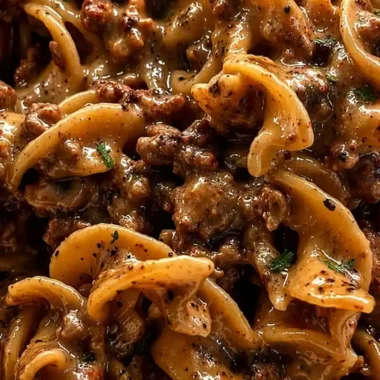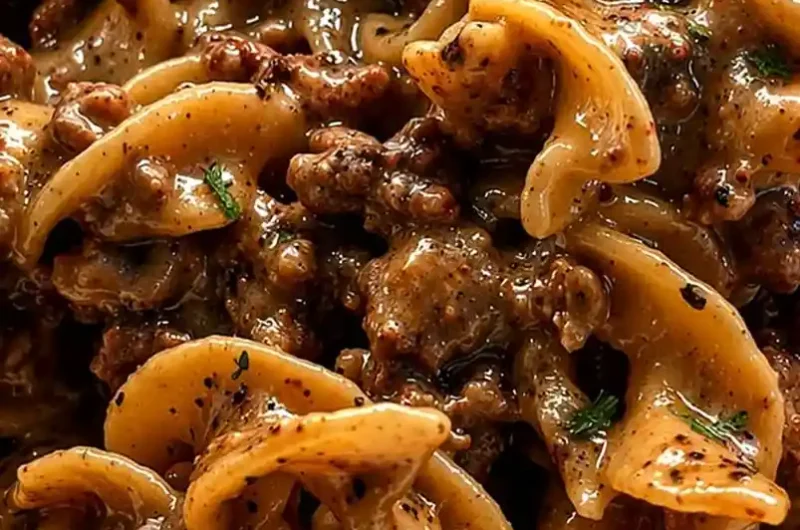
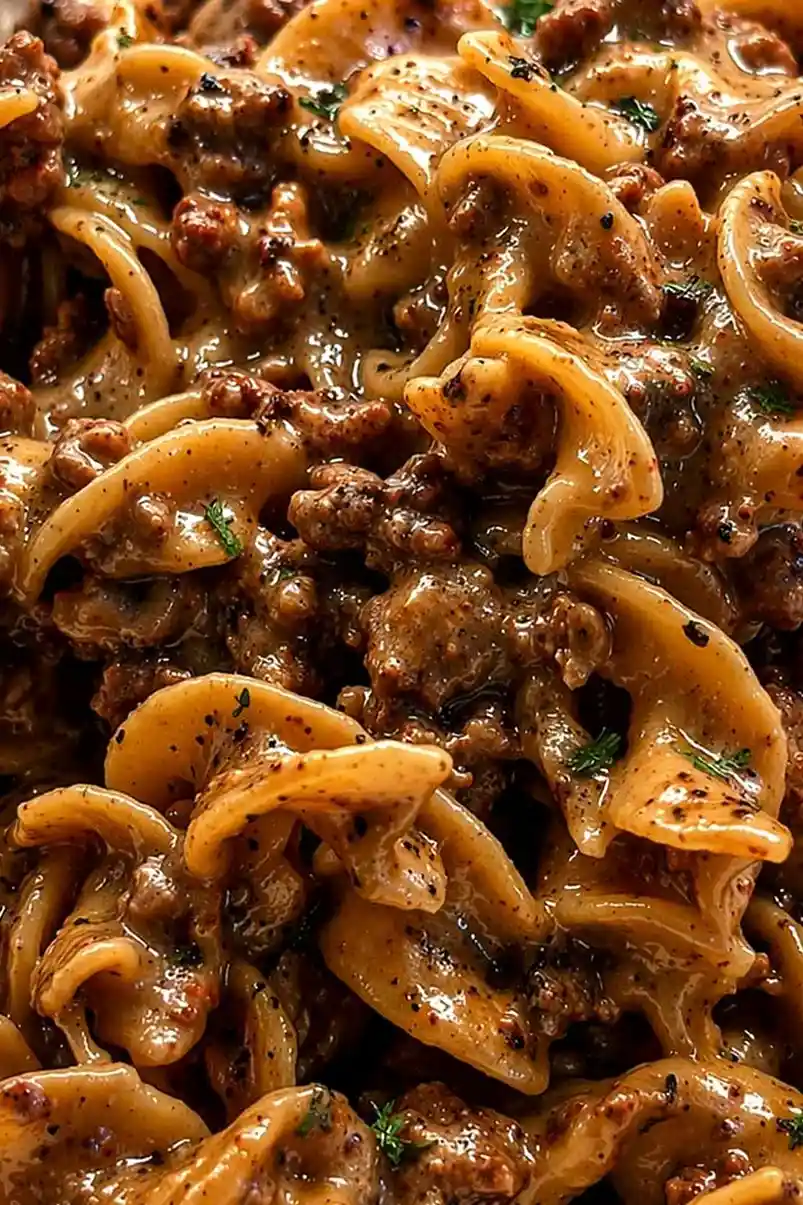
This simple one-pot meal combines seasoned ground beef and tender egg noodles in a silky, savory sauce for a fuss-free dinner. By cooking the pasta directly in the pan with the broth and seasonings, you minimize cleanup while creating a cohesive, hearty dish perfect for busy weeknights. It is an ideal comfort food solution when you need something reliable, filling, and quick to prepare.
List of ingredients
- 1 pound ground beef
- 8 ounces egg noodles
- 1 small onion, diced
- 2-3 garlic cloves, minced
- 2 1/2 cups beef broth
- 1 cup milk
- 1-2 tbsp flour
- ½ cup sour cream
- 1 teaspoon paprika
- 2 teaspoons Worcestershire sauce
- ½ teaspoon dried thyme
- 1 tbsp butter
- salt and black pepper to taste
step-by-step instructions
- Brown the beef: In a large skillet over medium-high heat, cook the ground beef for about 7 minutes until very well browned. Drain excess grease if needed.
- Add aromatics: Add the diced onion and cook until softened, about 3–5 minutes. Stir in the garlic and cook for about 30 seconds.
- Build the base: Sprinkle the flour over the beef mixture and stir well to coat. Cook for about 1 minute.
- Add liquid and noodles: Pour in the beef broth and milk, stirring to combine. Add the dry egg noodles directly into the skillet.
- Simmer: Bring to a gentle simmer and cook for 8 minutes, stirring occasionally, until the noodles are just barely tender and the sauce has thickened.
- Finish the sauce: Reduce heat to low. Stir in sour cream, Worcestershire sauce, paprika, and thyme. Taste and adjust salt and pepper as needed.
- Rest briefly before serving: Stir in the butter and let the noodles sit for 2–3 minutes off the heat.
Refining the Cooking Technique
Achieving Optimal Browning on the Meat
The secret to a deep flavor profile starts with the beef. By allowing the ground meat to remain undisturbed for several minutes in the hot pan, you encourage the Maillard reaction. This hard-won browning on the bottom of the skillet creates the foundation for your sauce, so resist the urge to move it around too early.
Managing the Liquid Levels During Simmering
Because the noodles cook in the liquid, they act as a thickening agent by releasing starch into the sauce. It is vital to watch the pan closely toward the end of the cooking process. If the noodles look like they are soaking up too much moisture, a little extra broth or warm milk can keep the dish from becoming overly thick or gummy.
The Role of the Resting Phase
Once you stir in the butter and finish the heat, resist the temptation to serve immediately. Resting the meal for a few minutes off the heat allows the sauce to cling to the noodles rather than pooling in the bottom of the pan. This interval also helps the flavors of the sour cream and herbs to integrate fully for a more balanced bite.
Flavor Adjustments and Customization
Using Different Liquid Bases
Beef broth and beef stock offer distinct outcomes for your sauce. Broth typically provides a cleaner, saltier profile that works well immediately, while stock is richer and more gelatinous. If you choose a high-quality beef stock, you may find that you need slightly more salt or a dash of acid, such as a drop of vinegar or lemon juice, to help the flavors pop.
Adding Fresh Vegetables
If you want to increase the nutritional profile of this one-pot meal, consider adding vegetables. Sliced mushrooms added alongside the onions sauté beautifully and enhance the savory depth. Alternatively, folding in a handful of fresh baby spinach at the very end of the cooking time provides a vibrant contrast and extra texture without changing the overall cooking time.
Adjusting the Creaminess
If you find yourself without sour cream, full-fat Greek yogurt is a decent substitute, though it lacks some of the characteristic tang. For those seeking an even more luxurious, decadent sauce, swapping out half of the sour cream for a dollop of cream cheese can create a thicker, more stable sauce that holds up exceptionally well on the plate.
FAQ
How can I tell if the sauce is the right thickness?
The sauce is perfect when it is slightly thinner than you would like it to be once fully plated. Remember that the residual heat will continue to thicken the sauce even after it is served, so aiming for a slightly loose consistency in the pan prevents the final result from feeling heavy or pasty.
Can this meal be prepared ahead of time?
While this dish is best served fresh, you can prepare the base by browning the meat and aromatics ahead of time and storing them in the refrigerator. When you are ready to eat, simply heat the base, add the liquids and noodles, and follow the remaining steps as written. This makes it a great candidate for a quick assembly dinner.
What is the best way to handle leftovers?
Leftovers should be stored in an airtight container in the refrigerator for up to 4 days. When reheating, the noodles will likely have absorbed much of the liquid. Adding 1 to 2 tablespoons of milk or broth while warming the leftovers on the stove will help restore the sauce to its original, creamy texture.
Practical Serving Suggestions
Balancing the Richness
Because this dish is hearty and creamy, it pairs exceptionally well with bright, acidic side dishes. A crisp green salad dressed with a sharp vinaigrette helps cleanse the palate between bites. Steamed green beans or roasted asparagus also provide a fresh, snappy texture that contrasts nicely with the soft noodles.
Choosing the Right Accompaniments
A crusty piece of sourdough bread is the perfect tool for clearing any remaining sauce from the bowl. If you prefer to keep the meal contained within the main dish, consider serving it in shallow bowls to maximize the surface area for the sauce. A sprinkle of fresh parsley or a dusting of black pepper over the top before serving adds a professional, finished touch to the presentation.
Troubleshooting Common Issues
Addressing a Bland Sauce
If your sauce tastes flat, the most common culprit is a lack of acidity or umami. Before adding more salt, try a small dash of Worcestershire sauce, as this provides a complex savory layer. If that doesn’t fix it, a tiny squeeze of lemon juice can highlight the existing flavors and cut through the richness of the cream.
Preventing Overcooked Noodles
The texture of the noodles depends on how long they remain in the boiling liquid. If you prefer your noodles with a firm bite, consider cutting the simmer time by one minute. Since they will continue to soften as they rest in the hot sauce, it is almost always better to pull them from the heat when they are slightly firm rather than completely soft.
Print
One-Pan Beef & Noodles Recipe
- Total Time: PT25M
- Yield: 4 1x
- Diet: Meat-based
Description
A one-pan ground beef meal made with egg noodles cooked directly in a creamy, savory sauce. This version uses simple ingredients and is designed to be dependable, filling, and easy to make at the end of a long day.
Ingredients
- 1 pound ground beef
- 8 ounces egg noodles
- 1 small onion, diced
- 2–3 garlic cloves, minced
- 2 1/2 cups beef broth
- 1 cup milk
- 1–2 tbsp flour
- ½ cup sour cream
- 1 teaspoon paprika
- 2 teaspoons Worcestershire sauce
- ½ teaspoon dried thyme
- 1 tbsp butter
- salt and black pepper to taste
Instructions
- Brown the beef: In a large skillet over medium-high heat, cook the ground beef for about 7 minutes until very well browned. Drain excess grease if needed.
- Add aromatics: Add the diced onion and cook until softened, about 3–5 minutes. Stir in the garlic and cook for about 30 seconds.
- Build the base: Sprinkle the flour over the beef mixture and stir well to coat. Cook for about 1 minute.
- Add liquid and noodles: Pour in the beef broth and milk, stirring to combine. Add the dry egg noodles directly into the skillet.
- Simmer: Bring to a gentle simmer and cook for 8 minutes, stirring occasionally, until the noodles are just barely tender and the sauce has thickened.
- Finish the sauce: Reduce heat to low. Stir in sour cream, Worcestershire sauce, paprika, and thyme. Taste and adjust salt and pepper as needed.
- Rest briefly before serving: Stir in the butter and let the noodles sit for 2–3 minutes off the heat.
Notes
Be sure to brown the ground beef thoroughly to develop flavor. If the sauce becomes too thick, add a splash of milk or broth. This dish is best served immediately, but leftovers can be stored in the refrigerator for up to 3–4 days.
- Prep Time: PT5M
- Cook Time: PT20M
- Category: Main Course
- Method: Stovetop
- Cuisine: American
Nutrition
- Serving Size: 1 serving
- Calories: 631 kcal
- Sugar: 6 g
- Sodium: 588 mg
- Fat: 33 g
- Saturated Fat: 14 g
- Unsaturated Fat: 15 g
- Trans Fat: 1 g
- Carbohydrates: 50 g
- Fiber: 3 g
- Protein: 32 g
- Cholesterol: 152 mg
Keywords: one-pan, beef and noodles, weeknight dinner, comfort food, ground beef