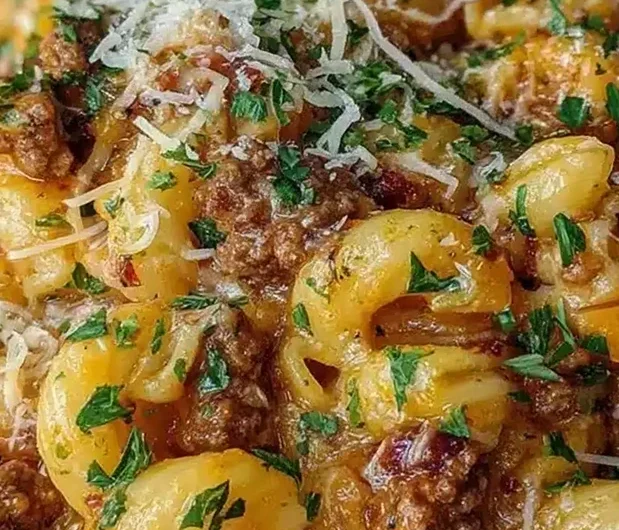
This one-pan cheeseburger macaroni delivers all the savory, nostalgic satisfaction of a classic diner meal without the need for multiple pots or complex cleanup. By simmering the pasta directly in a blend of beef broth and milk, you create a velvety, cohesive sauce that clings to every noodle. It is an ideal solution for busy weeknights when you want a hearty, homemade dinner in under thirty minutes.
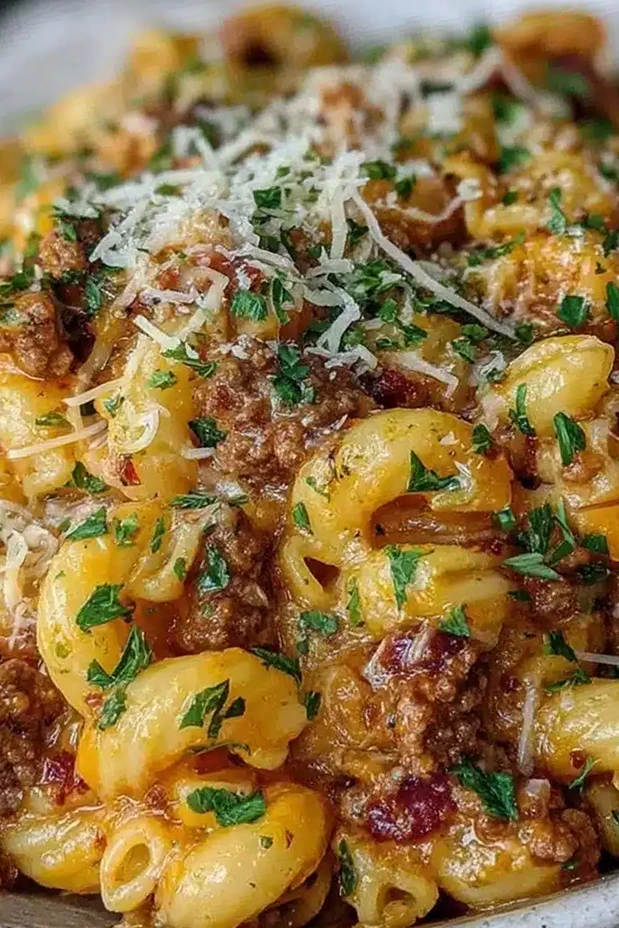
List of ingredients
- 1 pound ground beef (80/20)
- 2 cups elbow macaroni (about 7 ounces)
- 2 ½ cups beef broth
- 1 cup milk (whole or 2%)
- 2 cups shredded cheddar cheese (freshly shredded)
- 1 small onion, finely chopped
- 2 cloves garlic, minced
- 2 tablespoons tomato paste
- 1 tablespoon Worcestershire sauce
- Salt and pepper to taste
- 2 tablespoons butter
step-by-step instructions
- Step: Heat a large deep skillet over medium-high heat. Add ground beef, season lightly with salt and pepper, and cook until mostly browned but still slightly pink, about 5 minutes. Drain excess fat if needed.
- Step: Add chopped onion and minced garlic to the skillet and cook for another 3 minutes until onions are soft and fragrant.
- Step: Stir in tomato paste and Worcestershire sauce. Cook for 1–2 minutes, stirring constantly, until the paste caramelizes slightly and the mixture darkens.
- Step: Pour in beef broth and milk, stir to combine, and bring to a gentle boil.
- Step: Add elbow macaroni all at once and stir to submerge it in the liquid.
- Step: Reduce heat to medium-low and simmer gently, stirring every few minutes to prevent sticking, for 10–12 minutes until pasta is tender and sauce thickens.
- Step: Remove skillet from heat. Stir in butter until melted, then gradually add shredded cheddar cheese, stirring constantly until smooth and creamy. If sauce is too thick, add a splash of milk to loosen.
- Step: Serve immediately.
Refining the cooking process
Achieving a smooth cheese sauce
The secret to a luscious sauce is temperature control. Always remove your skillet from the heat before adding the cheddar cheese to ensure it melts gradually rather than seizing or becoming oily. If you find the sauce breaking, remove the pan from the heat entirely and stir vigorously with a whisk to emulsify the fats back into the liquid.
Selecting the right ground beef
Choosing an 80/20 blend provides the optimal fat-to-meat ratio for this recipe. Leaner beef lacks the necessary fat to build a rich flavor base, often resulting in a sauce that feels thin or watery. The rendered fat from the beef helps to emulsify the dairy and broth, creating that iconic creamy texture that coats the noodles perfectly.
Managing pasta doneness
Because the macaroni cooks within the sauce, it will continue to absorb liquid even after you turn off the burner. Aim to pull the pan off the heat when the pasta is just slightly firm to the bite. If the pasta cooks until soft while still in the simmering liquid, it may turn mushy by the time you reach the final step of adding the cheese.
Effective flavor modifications
Incorporating savory add-ins
If you prefer a more complex flavor profile, you can add half a teaspoon of smoked paprika alongside the tomato paste. This adds a subtle, wood-fired depth that pairs exceptionally well with the sharpness of cheddar cheese. Similarly, a touch of dry mustard powder can brighten the cheese sauce and make the flavor of the cheddar pop.
Enhancing the texture with crunch
While the dish is soft and comforting, adding a textural contrast can elevate the experience. Consider topping each bowl with toasted panko breadcrumbs mixed with a little melted butter and dried parsley. This provides a professional, restaurant-style finish and adds a delightful crunch to every bite.
Exploring vegetable additions
You can easily incorporate vegetables to balance the richness of the cheese. Finely diced bell peppers added during the onion sautéing stage bring color and a fresh note to the dish. Alternatively, stirring in a handful of fresh baby spinach just before adding the cheese allows the greens to wilt into the pasta without needing extra cooking time.
Serving and storage protocols
Professional plating techniques
Serving this dish directly from a heavy cast-iron or stainless steel skillet adds a rustic, home-cooked appeal to the table. Ensure the skillet is placed on a heat-proof trivet. A quick garnish of thinly sliced green onions or fresh chives adds a burst of bright color and a fresh, sharp flavor that cuts through the creaminess of the cheese.
Managing temperature for leftovers
When reheating leftovers, the sauce will naturally thicken as the pasta continues to soak up the liquid. To restore the original creamy consistency, add one or two tablespoons of milk or water to the skillet before reheating over low heat. Stir continuously to prevent the bottom from scorching and to ensure the heat distributes evenly through the dish.
Long-term refrigerator maintenance
This meal keeps well in an airtight container for up to four days. Ensure the macaroni has cooled to room temperature before sealing the container to avoid excess condensation. When reheating in a microwave, use a medium power setting and stir every 30 seconds, which helps prevent the cheese from separating or forming a greasy film on the surface of the sauce.
Common culinary challenges
Preventing scorched bottoms
Since the pasta contains starch and the sauce relies on dairy, it can be prone to sticking if the heat is too high. Using a heavy-bottomed pan significantly reduces the risk of hotspots. If you notice any sticking, lower the heat immediately and use a flat-edged wooden spoon to scrape the bottom of the pan thoroughly, as those browned bits are packed with savory flavor.
Correcting sauce consistency
If you accidentally reduce the sauce too much during the simmering phase, it will become thick and clumpy. You can rectify this easily by adding a splash of beef broth or water, one tablespoon at a time, while stirring. Conversely, if the sauce remains too runny after the cheese is added, let the dish rest for two minutes; the starches in the pasta will continue to stabilize the sauce as it cools slightly.
Selecting the correct liquid ratio
The ratio of broth to milk is designed to cook the pasta while building a flavorful sauce base. Do not swap the beef broth for water, as it provides a critical layer of salt and savory depth that plain water cannot replicate. If you need to reduce the salt content, always use a low-sodium broth rather than thinning out the liquid with water, which would result in a bland finished product.
Understanding cheese melting properties
Always avoid pre-shredded cheese for this specific recipe. The cellulose or cornstarch used to coat pre-shredded cheese prevents it from clumping in the bag, but these same ingredients prevent it from creating a smooth, emulsified sauce. Taking two minutes to grate a block of sharp cheddar by hand ensures the cleanest flavor and the most desirable, stringy, creamy texture possible.
Print
One-Pan Cheeseburger Macaroni
- Total Time: PT30M
- Yield: 6 servings 1x
- Diet: High Protein
Description
A no-fuss, all-in-one comfort food dinner that combines browned beef, tender elbow macaroni, and a creamy cheese sauce cooked in a single skillet for easy cleanup and classic cheeseburger flavor.
Ingredients
- 1 pound ground beef (80/20)
- 2 cups elbow macaroni (about 7 ounces)
- 2 ½ cups beef broth
- 1 cup milk (whole or 2%)
- 2 cups shredded cheddar cheese (freshly shredded)
- 1 small onion, finely chopped
- 2 cloves garlic, minced
- 2 tablespoons tomato paste
- 1 tablespoon Worcestershire sauce
- Salt and pepper to taste
- 2 tablespoons butter
Instructions
- Step: Heat a large deep skillet over medium-high heat. Add ground beef, season lightly with salt and pepper, and cook until mostly browned but still slightly pink, about 5 minutes. Drain excess fat if needed.
- Step: Add chopped onion and minced garlic to the skillet and cook for another 3 minutes until onions are soft and fragrant.
- Step: Stir in tomato paste and Worcestershire sauce. Cook for 1–2 minutes, stirring constantly, until the paste caramelizes slightly and the mixture darkens.
- Step: Pour in beef broth and milk, stir to combine, and bring to a gentle boil.
- Step: Add elbow macaroni all at once and stir to submerge it in the liquid.
- Step: Reduce heat to medium-low and simmer gently, stirring every few minutes to prevent sticking, for 10–12 minutes until pasta is tender and sauce thickens.
- Step: Remove skillet from heat. Stir in butter until melted, then gradually add shredded cheddar cheese, stirring constantly until smooth and creamy. If sauce is too thick, add a splash of milk to loosen.
- Step: Serve immediately.
Notes
Use freshly shredded cheddar cheese for best melting results. Do not add cheese while pan is still on heat to avoid grainy sauce. If sauce is too thick, add a splash of hot broth or milk to thin. Avoid overcooking pasta; it should be just tender. Use low-sodium broth to control salt levels.
- Prep Time: PT10M
- Cook Time: PT20M
- Category: Main Course
- Method: Stovetop
- Cuisine: American
Nutrition
- Serving Size: 1 serving
- Calories: 450 kcal
- Sugar: 4 g
- Sodium: 650 mg
- Fat: 20 g
- Saturated Fat: 10 g
- Unsaturated Fat: 9 g
- Trans Fat: 0 g
- Carbohydrates: 38 g
- Fiber: 2 g
- Protein: 28 g
- Cholesterol: 85 mg
Keywords: one-pan, cheeseburger macaroni, comfort food, easy dinner, weeknight meal, pasta, ground beef, cheesy