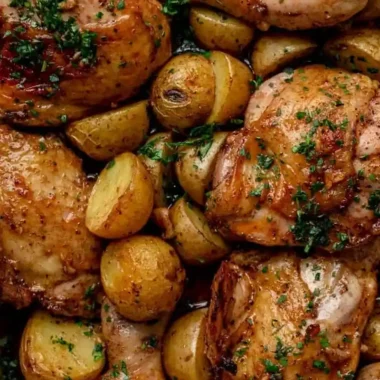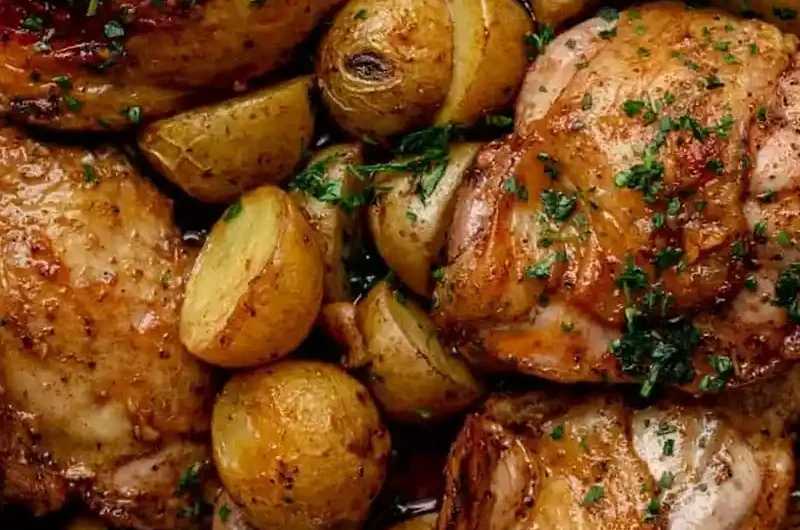
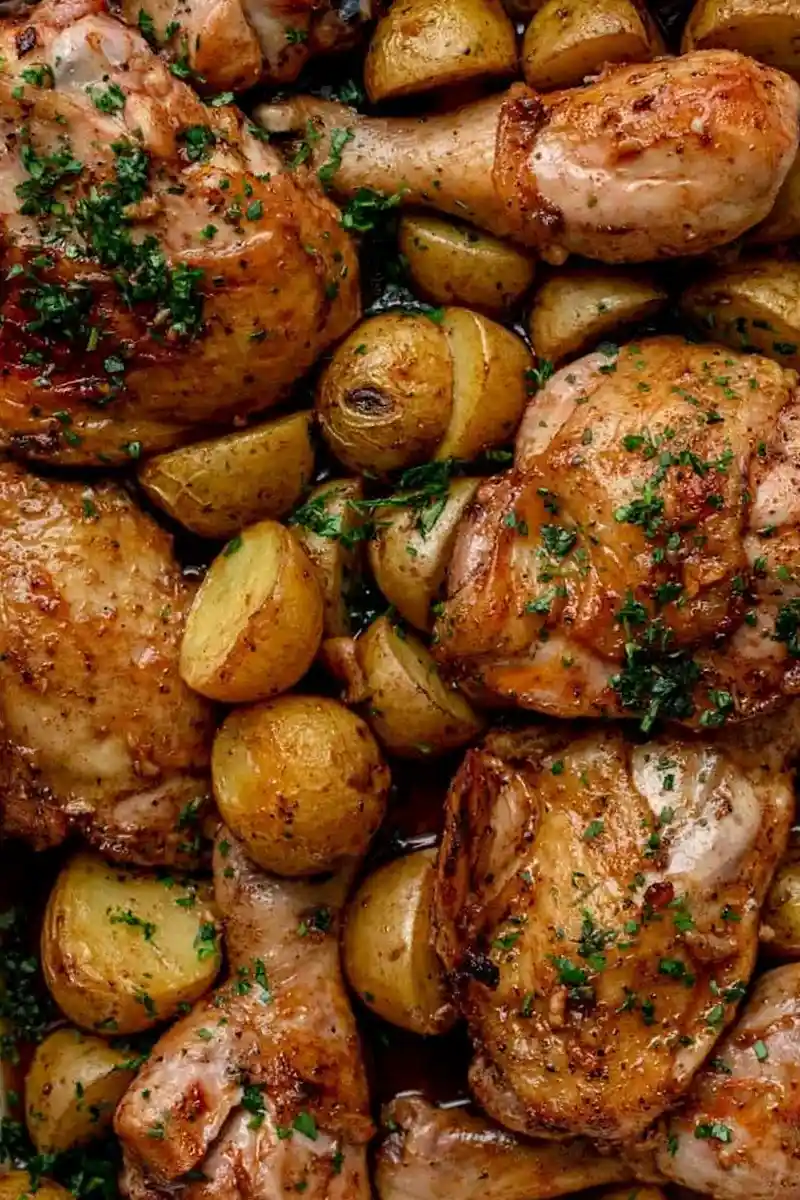
This one-pan meal combines juicy chicken and tender roasted potatoes for an efficient weeknight dinner. It is designed to minimize cleanup while providing a hearty, flavor-packed main course for the whole family.
List of ingredients
- 8 chicken thighs and drumsticks (about 2 ½ pounds) – use skin-on for best flavor.
- 1 ½ pounds baby potatoes – halved for even cooking.
- ¼ cup olive oil – used as the fat base for roasting.
- ¼ cup lemon juice – provides acidity to balance the savory spices.
- 6 garlic cloves (pressed) – adds a pungent, aromatic depth.
- 1 teaspoon 7 spice – a warm, complex Middle Eastern blend.
- 1 teaspoon paprika – enhances the color and adds a mild sweetness.
- 2 teaspoons salt – essential for seasoning the meat and vegetables.
- 1 teaspoon black pepper – provides a sharp, spicy finish.
step-by-step instructions
- Prepare the oven and ingredients: Preheat your oven to 400°F. Use paper towels to dry the chicken and potatoes thoroughly to ensure a better sear, then place them in a 9 x 13 oven-safe rimmed baking dish.
- Mix the marinade: In a small mixing bowl, whisk together the olive oil, lemon juice, pressed garlic, 7 spice, paprika, salt, and black pepper. Drizzle this sauce over the chicken pieces already in the pan.
- Coat the dish: Add the halved potatoes to the pan. Use your hands to toss and rub the sauce evenly over both the chicken and the potatoes so every surface is well-coated.
- Roast: Bake uncovered for 55-65 minutes. Ensure the potatoes are fork-tender and the chicken has reached a safe internal temperature.
- Brown the skin: If the chicken is cooked but lacks color, place the pan under the broiler for 3-5 minutes until the skin is golden brown.
- Rest and serve: Remove the pan from the oven and let the chicken rest for 5 minutes. Garnish the dish with fresh parsley before serving.
Expert Roasting Tips
Dry the Meat and Vegetables Thoroughly
Moisture on the surface of the chicken and potatoes creates steam in the oven. By patting them dry with paper towels, you allow the oil to sear the skin and roast the potatoes. This ensures a crisp exterior rather than a soggy texture.
Use Skin-On Chicken Thighs
Keeping the skin on the chicken serves two purposes: flavor and protection. The skin crisps up in the high heat, adding a rich texture to the dish. Furthermore, the skin acts as a barrier that prevents the meat underneath from drying out during the hour-long bake.
Coat Ingredients by Hand
While tongs can work, using your hands ensures that the marinade reaches every crevice of the chicken and every side of the potatoes. This comprehensive coating ensures there are no bland spots in the final dish. It also helps the spices adhere better to the skin.
Allow the Chicken to Rest
Resting the chicken for 5 to 10 minutes after roasting is critical for juiciness. During this time, the muscle fibers relax and the juices redistribute throughout the meat. Cutting into the chicken too early causes the juices to run out, leaving the meat drier.
Ingredient Substitutions and Customizations
Substituting Chicken Breast
If you prefer chicken breast, be aware that it cooks faster than thighs or drumsticks. Reduce the total oven time and cut your potatoes into smaller pieces to ensure they finish at the same time as the leaner meat. Consider adding a bit more olive oil to the breast to prevent it from drying out.
Using Different Potato Varieties
While baby potatoes are recommended for their size, Yukon Gold potatoes are a great alternative for a creamier texture. Red potatoes work well if you prefer a firmer bite that holds its shape during roasting. If using larger potatoes, ensure they are cut into uniform 1-inch chunks.
Alternative Spice Blends
You can easily swap the 7 spice and paprika for other flavor profiles. Lemon pepper or Italian seasoning provides a classic Mediterranean taste, while Cajun seasoning adds a spicy kick. A BBQ spice blend can transform the dish into a smoky, American-style roast.
Swapping Lemon Juice for Vinegar
If lemon juice is unavailable, apple cider vinegar is a suitable replacement. It provides the necessary acidity to cut through the fat of the chicken skin. Use an equal measurement of vinegar to maintain the balance of the marinade.
Serving and Pairing Ideas
Adding a Roasted Vegetable Side
To make the meal more complete, add other hardy vegetables to the pan or a separate tray. Carrots, cauliflower, or Brussels sprouts roast well at 400°F. Toss them in the same olive oil and garlic mixture for a cohesive flavor profile.
Pairing with a Fresh Green Salad
A crisp salad provides a refreshing contrast to the richness of the roasted chicken and potatoes. A Caesar salad with a creamy dressing or a light garden salad with a vinaigrette works best. The acidity in the salad dressing complements the lemon in the chicken sauce.
Serving with Steamed Grains
For those who want extra heartiness, serve the dish alongside a portion of quinoa or brown rice. The grains can soak up the remaining pan juices, adding more flavor to the plate. This is especially helpful when serving the meal to teenagers or athletes.
Storage and Reheating Guidelines
Refrigeration and Shelf Life
Store any leftover chicken and potatoes in an airtight container in the refrigerator. The dish will remain safe and tasty for up to 4 days. Ensure the container is completely sealed to prevent the chicken from absorbing other fridge odors.
Best Reheating Methods
Avoid the microwave if possible, as it can make the chicken rubbery and the potatoes mushy. Instead, reheat the leftovers in the oven at 350°F for approximately 20 minutes. This restores the crispness of the chicken skin and the texture of the potatoes.
Freezing the Chicken
The roasted chicken pieces freeze well for up to 3 months if stored in vacuum-sealed bags. However, avoid freezing the potatoes, as they develop a mealy, grainy texture upon thawing. Freeze only the meat and reheat it directly from the fridge.
Thawing Process
When you are ready to eat frozen chicken, thaw it slowly in the refrigerator overnight. This prevents the meat from developing bacteria that can grow during rapid thawing. Once thawed, reheat in the oven to restore the texture.
Troubleshooting Common Issues
Chicken is Undone but Potatoes are Soft
This usually happens if the chicken pieces are very large or if the potatoes are cut too small. To fix this, ensure your potato chunks are roughly the same size as the chicken’s thickness. If this happens mid-bake, remove the potatoes and continue roasting the chicken.
Potatoes Remain Too Hard
If the potatoes are not tender after 60 minutes, they may have been too large or the oven temperature was too low. Try cutting them in half or quarters next time. You can also cover the pan with foil for the last 15 minutes to trap steam and soften them.
Chicken Skin is Not Golden Brown
Lack of browning usually indicates too much moisture in the pan or a low oven temperature. Use the broiler setting for 3-5 minutes at the very end of the cooking process. Keep a close eye on the pan, as the sugars in the marinade can burn quickly under the broiler.
Frequently Asked Questions
Do I need to marinate the chicken?
Marinating is not required because the sauce is applied generously and cooked at a high temperature. However, if you have extra time, you can marinate the chicken for 2 hours in the fridge. Do not exceed 4 hours, as the lemon juice can break down the meat fibers and make them mushy.
Can I use a sheet pan instead of a baking dish?
Yes, a rimmed sheet pan works well and may even provide more surface area for browning. Be mindful that the sauce may spread thinner, so you might need to toss the ingredients more frequently. Ensure the pan has high enough edges to prevent the oil from leaking.
Is this recipe suitable for meal prep?
This recipe is excellent for meal prep due to its stability and reheating quality. Divide the portions into containers with a side of steamed greens. It remains flavorful throughout the work week when stored correctly.
Equipment Recommendations
Choosing the Right Baking Dish
A porcelain or ceramic 9 x 13 baking dish is ideal because it distributes heat evenly. Glass dishes also work, but they can sometimes create hot spots. Metal pans are the fastest for browning but may require a slightly lower temperature to avoid burning the bottom.
Utilizing a Meat Thermometer
The only way to guarantee the chicken is safe and juicy is to use a digital meat thermometer. Insert the probe into the thickest part of the thigh, avoiding the bone. The chicken is done when it reaches an internal temperature of 165°F.
Selecting a Quality Whisk
A small balloon whisk is the best tool for emulsifying the olive oil and lemon juice. Proper whisking ensures the spices are evenly suspended in the oil. This prevents the salt and paprika from clumping and creating uneven seasoning.
Understanding the Seasonings
The Role of 7 Spice Blend
7 spice, or Baharat, is a complex mixture containing allspice, black pepper, cinnamon, cloves, coriander, cumin, and paprika. It provides a warm, aromatic profile that is more complex than standard poultry seasoning. You can find this blend at specialty stores or mix your own from pantry staples.
Impact of Paprika on Flavor
Paprika provides the deep reddish-orange hue that makes the roast look appetizing. Depending on the type used, it can add a sweet or smoky flavor to the chicken. For a more intense taste, use smoked paprika instead of sweet paprika.
Managing Garlic in the Oven
Pressed garlic is used here to ensure the flavor is distributed evenly throughout the sauce. Because garlic can burn at 400°F, whisking it into the oil helps protect the cloves. This prevents the bitter taste associated with charred garlic.
Nutritional Adjustments
Choosing Heart-Healthy Fats
While olive oil is the standard choice, you can substitute it with avocado oil for a higher smoke point. Avocado oil is stable at high temperatures and maintains a neutral flavor. This is a good option for those who prefer a less distinct oil taste.
Reducing Sodium Levels
To lower the salt content, you can reduce the salt to 1 teaspoon and increase the lemon juice. The acidity of the lemon mimics the brightness of salt, enhancing the other spices. You can also use a potassium-based salt substitute if needed.
Increasing Vegetable Content
To boost the nutritional value, add sliced bell peppers, onions, or zucchini to the pan. Add these vegetables during the last 30 minutes of roasting so they do not overcook. This adds fiber and vitamins to the meal without changing the flavor profile.
Mastering the Roasting Process
Managing Oven Hot Spots
Most ovens have areas that are hotter than others, which can lead to unevenly cooked potatoes. To prevent this, rotate your baking dish 180 degrees halfway through the cooking time. This simple step ensures that all pieces of chicken and potato receive equal heat.
Adjusting the Oven Rack Position
Place the rack in the center of the oven for the most balanced heat distribution. If you want more browning on the bottom of the potatoes, move the rack to the lower third. For a faster crisp on the skin, move it to the upper third during the final 10 minutes.
Safe Use of the Broiler
The broiler uses direct overhead heat and can burn the dish in seconds. Always stay in the kitchen and watch the chicken through the oven window when broiling. If the skin begins to blacken too quickly, remove the pan immediately.
Potato Selection Guide
Benefits of Baby Potatoes
Baby potatoes are ideal for this recipe because their small size ensures they cook at a rate similar to the chicken. They have a higher skin-to-flesh ratio, which allows for more browning. They also require minimal chopping, reducing prep time.
Using Yukon Gold Potatoes
Yukon Golds are known for their buttery flavor and creamy interior. They are a medium-starch potato, meaning they hold their shape but still feel soft. These are the best choice if you prefer a more luxurious mouthfeel.
Using Red Potatoes
Red potatoes are waxy and hold their structure very well during long roasting periods. They are less likely to break apart than Russets or Yukon Golds. Use these if you prefer your potatoes to have a distinct, firm bite.
Print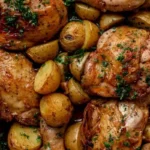
One Pan Roasted Chicken and Potatoes
- Total Time: 65 minutes
- Yield: 4 servings 1x
- Diet: General
Description
This baked chicken and potatoes recipe is made in one pan and is easy to throw together with thighs or drumsticks, potatoes, and a simple sauce.
Ingredients
- 8 chicken thighs and drumsticks (about 2 ½ pounds)
- 1 ½ pounds baby potatoes (halved)
- ¼ cup olive oil
- ¼ cup lemon juice
- 6 garlic cloves (pressed)
- 1 teaspoon 7 spice
- 1 teaspoon paprika
- 2 teaspoons salt
- 1 teaspoon black pepper
Instructions
- Step 1: Preheat oven to 400°F. Dry the chicken and potatoes well with a paper towel and place on a 9 x 13 oven-safe rimmed baking dish.
- Step 2: In a small bowl, whisk together the olive oil, lemon juice, garlic, 7 Spice, paprika, salt and pepper. Drizzle over the chicken in the pan. Add the potatoes and use your hands to evenly coat the chicken and potatoes with the sauce.
- Step 3: Bake uncovered for 55-65 minutes until the potatoes are fork tender and the chicken is cooked through. Broil for 3-5 more minutes if needed for a golden brown color.
- Step 4: Allow the chicken to rest for 5 minutes before serving. Garnish with fresh parsley.
Notes
Store any leftovers in an airtight container. They will last up to 4 days.
- Prep Time: 10 minutes
- Cook Time: 55 minutes
- Category: Main Course
- Method: Baking
- Cuisine: American
Nutrition
- Serving Size: 1 serving
- Calories: 762 kcal
- Sugar: 2 g
- Sodium: 1345 mg
- Fat: 49 g
- Saturated Fat: 12 g
- Unsaturated Fat: 37 g
- Trans Fat: 0 g
- Carbohydrates: 33 g
- Fiber: 4 g
- Protein: 47 g
- Cholesterol: 173 mg
Keywords: one pan chicken and potatoes, baked chicken thighs, easy dinner, baby potatoes