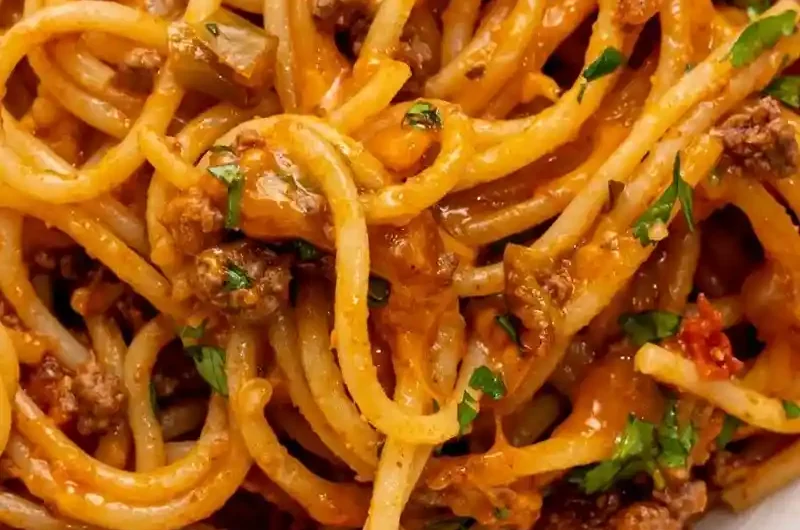
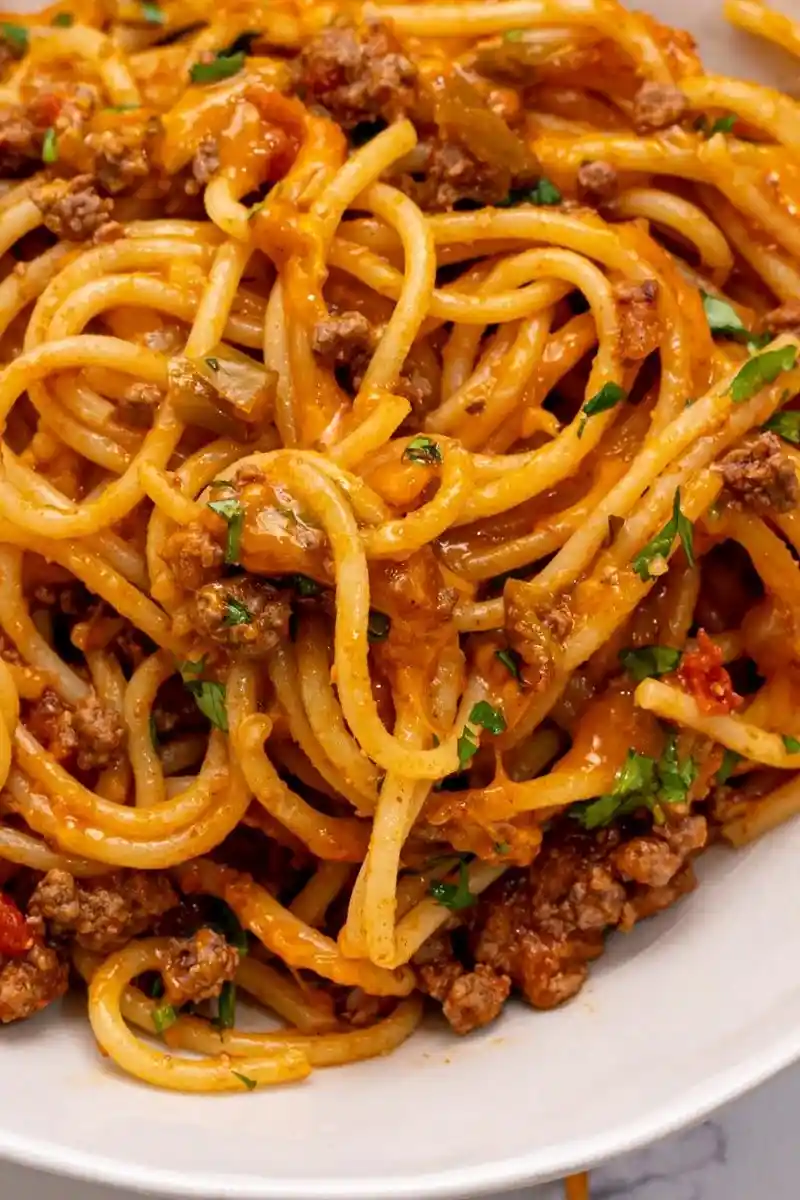
This one-pan taco spaghetti combines seasoned ground beef and melted cheddar with noodles cooked directly in the sauce. It is a quick weeknight meal that finishes in about 30 minutes and requires minimal cleanup.
List of ingredients
- 2 tablespoons olive oil – used for sautéing the beef and onions.
- 1 pound ground beef – provides the hearty base of the dish.
- 1/4 cup yellow onions – finely diced for aromatic flavor.
- 1/4 cup taco seasoning (1 packet) – provides the primary spice profile.
- 1/2 teaspoon salt – enhances all the overall flavors.
- 1/2 teaspoon pepper – adds a subtle bite.
- 10 ounces Rotel tomatoes – include the liquid for pasta hydration.
- 8 ounces spaghetti noodles (uncooked) – broken in half for easier cooking.
- 3 cups water – the primary liquid for boiling the pasta.
- 4 ounces cheddar cheese (shredded) – for a creamy, cheesy finish.
- 1/2 cup cilantro (chopped) – used for a fresh garnish.
step-by-step instructions
- Sauté Base: Heat olive oil in a 12-inch skillet over medium heat. Brown the ground beef and onion in the skillet until the meat is no longer pink and onions are soft and translucent.
- Prepare Pasta: Break the spaghetti noodles in half to ensure they fit evenly in the pan.
- Combine Ingredients: Add the taco seasoning, salt, pepper, Rotel tomatoes (including the liquid), spaghetti noodles, and water to the skillet.
- Initial Boil: Bring the mixture to a boil over high heat.
- Simmer: Once the water boils, reduce the heat to low, cover the skillet with a lid, and simmer for 15 minutes.
- Initial Cheese Addition: Remove the pan from the heat. Sprinkle half of the shredded cheddar cheese into the pan.
- Mix: Stir the mixture to distribute the cooked spaghetti and melted cheese throughout the pan.
- Final Garnish: Top the dish with the remaining cheese and chopped cilantro before serving.
Optimizing Your Meat Preparation
Managing Meat Fat Content
The fat percentage of your ground beef does not significantly alter the recipe’s success, whether you use 80/20 or 90/10. However, if you use a higher-fat blend, it is essential to drain the excess grease after browning the meat. Leaving too much oil in the pan can make the final sauce feel heavy and may mask the nuances of the taco seasoning.
Browning for Better Flavor
Ensure the beef is fully browned and the onions are translucent before adding the liquids. This process develops a deeper savory flavor through the Maillard reaction, which prevents the meat from tasting steamed. If the pan is too crowded, brown the meat in batches to maintain a high enough temperature for searing.
Mastering the Pasta Texture
The Liquid Absorption Phase
At approximately five minutes into the simmering process, the pan may appear excessively soupy. Do not be tempted to add more ingredients or drain the liquid at this stage. The pasta is actively absorbing the seasoned water and tomato juice, and the sauce will naturally thicken as the starch is released from the noodles.
Timing the Al Dente Point
Check the pasta around the 12 to 13-minute mark. The noodles should be just past al dente, meaning they have a slight give but are not fully soft. Removing the pan from the heat at this point allows the residual heat to finish the cooking process without making the pasta mushy.
Preventing Mushy Noodles
Mushy spaghetti is usually the result of using heat that is too high or simmering for too long. Keep the heat on a low simmer once the lid is on to ensure the liquid reduces at a steady pace. If you wait until the pasta is completely soft in the pan, it will likely overcook by the time it reaches the table.
Customizing Flavor and Heat
Adjusting Taco Seasoning Salt
Store-bought taco seasoning packets vary wildly in sodium content. If you are using a homemade blend, start with a quarter cup and taste the sauce before the final cheese addition. If the dish tastes flat, a final pinch of salt is often the key to balancing the acidity of the tomatoes and the richness of the beef.
Selecting the Right Rotel Variety
Original Rotel provides a mild, warm flavor that is suitable for most palates. For those who prefer more heat, swapping to Hot Rotel will distribute spice more effectively throughout the tomato pieces. For a version with no heat at all, replace the Rotel with diced tomatoes and mild green chiles.
Incorporating Extra Spices
While the taco packet is sufficient, you can add a teaspoon of smoked paprika or ground cumin for added depth. These spices complement the beef and cheese without overpowering the taco profile. Always add these during the browning phase so the spices can toast in the oil.
Cheese and Texture Enhancements
Using Block Cheddar for Better Melt
It is highly recommended to grate cheddar cheese from a block rather than using pre-shredded bags. Pre-shredded cheeses are coated in cellulose or potato starch to prevent clumping in the package. These additives can prevent the cheese from melting smoothly, often resulting in a clumpy or grainy sauce texture.
Effective Cheese Distribution
Stirring half of the cheese into the pasta helps emulsify the sauce, creating a cohesive, creamy coating on every noodle. The second half of the cheese should be sprinkled on top and allowed to melt from residual heat. This provides two different textures: a creamy sauce and a gooey, melted topping.
Essential Kitchen Tools
Choosing the Right Skillet Size
A 12-inch skillet is the ideal size for this recipe because it provides enough surface area for the spaghetti to lie relatively flat. In a smaller pan, the noodles crowd together, which can lead to uneven hydration. This often results in some noodles remaining firm while others become overcooked.
The Importance of a Tight-Fitting Lid
The simmering process relies on trapping steam to cook the pasta through. A lid that fits snugly ensures that the liquid does not evaporate too quickly, which prevents the bottom of the pan from burning. If your lid is loose, you may need to add a small amount of water to maintain the simmer.
Ingredient Substitutions and Variations
Replacing Ground Beef
Ground turkey or ground chicken are excellent leaner alternatives to beef. When using poultry, you may need to add an extra tablespoon of olive oil, as these meats have less natural fat for sautéing. Plant-based crumbles also work well as a vegan-friendly meat substitute.
Alternative Pasta Shapes
While spaghetti is traditional for this dish, shorter pastas like penne or rotini can be used. Note that different shapes have different absorption rates, so you may need to adjust the water amount by a quarter cup. Avoid very thick pastas like bucatini, as they may not absorb the liquid as consistently as standard spaghetti.
Adding Vegetable Bulk
To increase the nutritional value, you can stir in a cup of frozen corn or black beans along with the Rotel tomatoes. Diced bell peppers can also be sautéed with the onions for added crunch and sweetness. These additions do not require extra liquid but may increase the total cook time by a few minutes.
Serving and Presentation Ideas
Fresh Topping Combinations
Garnishing with diced avocado or fresh sliced jalapeños adds a creamy or spicy contrast to the rich pasta. Diced red onions provide a sharp, fresh bite that cuts through the heaviness of the cheddar cheese. These toppings should be added just before serving to maintain their texture.
Adding Creamy Elements
A dollop of sour cream or plain Greek yogurt on top of each serving adds a cooling element that balances the taco seasoning. For a more integrated creamy texture, you can stir in a tablespoon of sour cream right before adding the cheese.
Balancing with Acidity
Squeezing a fresh lime wedge over the finished dish brightens the flavors. The citric acid helps break through the richness of the beef and cheese, making the overall flavor profile more vibrant. This is particularly helpful if you used a higher-fat ground beef.
Storage and Reheating Guidelines
Refrigeration and Shelf Life
Store leftovers in an airtight container in the refrigerator for up to four days. Because the pasta is cooked in the sauce, it tends to absorb more liquid as it sits, which may make the dish look drier the next day. This is normal and can be easily corrected during the reheating process.
Best Reheating Methods
The best way to reheat taco spaghetti is on the stovetop over low heat. Add a splash of water or beef broth to the pan to loosen the sauce and restore the creamy consistency. If using a microwave, cover the dish with a damp paper towel to trap moisture and prevent the noodles from drying out.
Freezing Considerations
While this dish can be frozen, the pasta texture may change slightly upon thawing. To freeze, allow the pasta to cool completely before placing it in a freezer-safe container. Thaw in the refrigerator overnight before reheating on the stove with additional liquid.
Make-Ahead Strategies
Pre-Browning the Meat
To save time on busy weeknights, brown the ground beef and onions in advance. Store the cooked mixture in the refrigerator for up to three days or in the freezer for a month. When ready to cook, simply add the pre-browned meat to the skillet and proceed with the seasoning and liquid steps.
Preparing the Garnish
Chopping the cilantro and grating the cheese ahead of time streamlines the final assembly. Store the grated cheese in a sealed container and the chopped cilantro in a small container with a damp paper towel to keep it from wilting. This allows you to move from simmering to serving in seconds.
Frequently Asked Questions
Can I use broth instead of water?
Yes, replacing the water with chicken or beef broth adds a deeper layer of savory flavor to the pasta. However, since broth contains salt, you should reduce the added salt in the recipe and taste the dish before the final seasoning to avoid over-salting.
Is this dish spicy?
Using standard taco seasoning and original Rotel results in a mild to moderate heat level. The spice is primarily contained within the tomato pieces rather than being infused into the entire sauce, making it family-friendly. To increase the heat, use Hot Rotel or add a pinch of cayenne pepper.
Why is my sauce too thin?
If the sauce is too thin after 15 minutes, it is likely because the lid was lifted too often or the heat was too low. Simmer the pasta uncovered for an additional 2 to 3 minutes to allow the remaining liquid to reduce and thicken.
Can I use a different cheese?
While cheddar is the classic choice, Pepper Jack can be used for an extra kick of heat. Monterey Jack is another great alternative that melts very smoothly and provides a mild, buttery flavor. Mix and match these for a custom cheese blend.
Print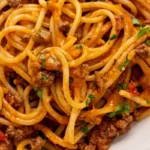
One-Pan Taco Spaghetti
- Total Time: 30 minutes
- Yield: 6 servings 1x
- Diet: General
Description
A one-pan taco-inspired pasta with seasoned beef, tomatoes, and cheddar, ready in about 30 minutes.
Ingredients
- 2 tablespoons olive oil
- 1 pound ground beef
- ¼ cup yellow onions
- ¼ cup taco seasoning
- ½ teaspoon salt
- ½ teaspoon pepper
- 10 ounces Rotel tomatoes
- 8 ounces spaghetti noodles, uncooked
- 3 cups water
- 4 ounces cheddar cheese, shredded
- ½ cup cilantro, chopped
Instructions
- Step: Heat olive oil in a 12-inch skillet over medium heat.
- Step: Brown ground beef and onion in the skillet until the meat is no longer pink and onions are soft and translucent.
- Step: Break the spaghetti in half.
- Step: Add the taco seasoning, salt, pepper, Rotel tomatoes (including liquid), spaghetti noodles, and water to the pan.
- Step: Bring to a boil over high heat.
- Step: Once the water comes to a boil, reduce heat to low, cover, and simmer for 15 minutes.
- Step: Remove from heat.
- Step: Sprinkle half of the cheese into the pan.
- Step: Stir to distribute the cooked spaghetti and cheese throughout the pan.
- Step: Top with remaining cheese and cilantro. Serve.
Notes
Use a 12-inch skillet to ensure the noodles have enough surface area to cook evenly. If the pan looks soupy halfway through, leave it alone as the pasta absorbs the liquid during the simmer.
- Prep Time: 5 minutes
- Cook Time: 25 minutes
- Category: Main Course
- Method: Skillet
- Cuisine: American-Mexican
Nutrition
- Serving Size: 1 serving
- Calories: 481 kcal
- Sugar: 4 g
- Sodium: 1177 mg
- Fat: 27 g
- Saturated Fat: 10 g
- Unsaturated Fat: 16 g
- Trans Fat: 1 g
- Carbohydrates: 37 g
- Fiber: 4 g
- Protein: 23 g
- Cholesterol: 73 mg
Keywords: taco spaghetti, one pan pasta, ground beef, easy dinner, Mexican-inspired pasta