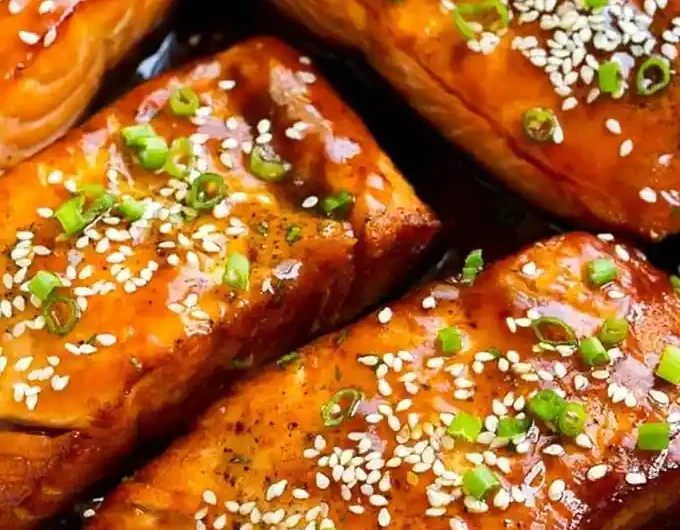
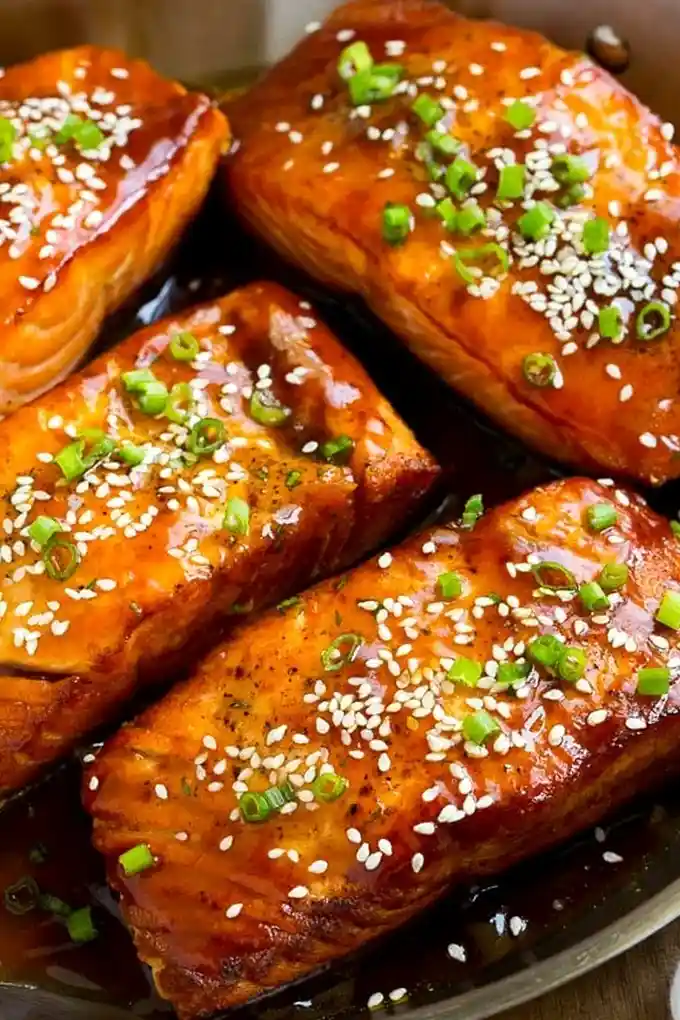
This recipe features fresh salmon fillets seared for a crisp exterior and glazed with a sweet and savory homemade teriyaki sauce. It is a high-protein meal that is ready in just 20 minutes, making it ideal for a fast weeknight dinner. The combination of ginger, garlic, and honey provides a restaurant-quality flavor profile.
List of ingredients
- 4 salmon fillets (approximately 4 ounces each) – use fresh or thawed fillets for best results.
- salt and pepper to taste – used for basic seasoning of the fish.
- cooking spray – helps prevent sticking in the pan.
- 1 tablespoon vegetable oil – provides a high smoke point for searing.
- 2 tablespoons sesame seeds – used for garnish and added texture.
- 2 tablespoons sliced green onions – adds a fresh, mild onion flavor as a topping.
- 2 tablespoons soy sauce – provides the salty base for the glaze.
- 1/4 cup water – thins the sauce to the correct consistency before thickening.
- 1 1/2 tablespoons brown sugar – adds sweetness and helps the sauce caramelize.
- 1 teaspoon minced garlic – provides a pungent, aromatic base.
- 1 teaspoon minced ginger – adds a spicy, zesty note to the sauce.
- 2 teaspoons of honey – adds thickness and a floral sweetness.
- 1/2 teaspoon toasted sesame oil – gives the sauce a deep, nutty aroma.
- 2 teaspoons cornstarch – acts as the thickening agent for the glaze.
step-by-step instructions
- Prepare the teriyaki base: Place the soy sauce, water, brown sugar, garlic, ginger, honey, and sesame oil in a small pot over medium-high heat. Stir the mixture constantly until the sugar is fully dissolved, which should take about 3 minutes. Turn the heat up to high and bring the liquid to a boil.
- Thicken the sauce: In a separate small bowl, mix the cornstarch with 1 tablespoon of cold water until completely dissolved to create a slurry. Add this cornstarch mixture to the boiling sauce. Continue to boil for 1 to 2 minutes or until the sauce has thickened to a glaze-like consistency, then set it aside.
- Sear the salmon: Heat the vegetable oil in a large pan over high heat. Season each salmon fillet with salt and pepper to taste. Place the salmon in the pan skin side up and sear without moving them until a golden brown crust forms, about 5 minutes.
- Finish cooking the fish: Turn the salmon fillets over and cook for approximately 5 more minutes, or until the fish is cooked through to your preferred doneness.
- Glaze and serve: Pour the thickened teriyaki sauce directly over the seared salmon fillets. Garnish the dish with sesame seeds and sliced green onions before serving immediately.
Pro Techniques for Searing Salmon
Pat the Salmon Dry for a Better Crust
Use paper towels to thoroughly pat the salmon fillets dry on all sides before seasoning. Removing surface moisture prevents the fish from steaming in the pan. This ensures a crisp, golden-brown sear rather than a pale, soft exterior.
Manage Pan Temperature Correctly
Wait for the oil to shimmer or slightly smoke before adding the fish to the pan. If the oil is not hot enough, the salmon will stick to the surface and tear when flipped. High heat is essential for creating the Maillard reaction that produces the savory crust.
Avoid Overcrowding the Pan
Leave enough space between each fillet so that steam can escape freely. If the pan is too full, the temperature drops rapidly and the fish will boil in its own juices. Cook in two batches if your pan is not large enough to accommodate all four fillets.
Use a Wide Fish Spatula
A thin, wide metal spatula is the best tool for flipping salmon. It allows you to get completely underneath the fillet to lift it cleanly from the pan. This reduces the risk of breaking the delicate flakes of the cooked fish.
Ingredient Alternatives and Swaps
Substitute Tamari for Soy Sauce
For a gluten-free version of this recipe, replace the soy sauce with an equal amount of tamari. Tamari provides a similar salty, fermented flavor profile without the wheat. The rest of the sauce preparation remains exactly the same.
Use Maple Syrup Instead of Honey
If honey is unavailable, maple syrup is an excellent substitute. It provides a similar viscosity and sweetness to the glaze. Note that maple syrup has a distinct flavor that may slightly alter the traditional teriyaki taste.
Switch Cornstarch for Arrowroot Powder
Arrowroot powder can be used as a thickening agent for those avoiding cornstarch. Use the same measurement and mix it with cold water as a slurry. Arrowroot often results in a clearer, glossier glaze than cornstarch.
Utilize Fresh Ginger for Maximum Flavor
While powdered ginger is an option, fresh grated ginger provides a sharper, more aromatic taste. If using fresh ginger, mince it finely or use a microplane grater. This ensures the ginger integrates smoothly into the sauce without leaving large chunks.
Recommended Side Dishes and Pairings
Serve with Steamed Jasmine Rice
Fluffy jasmine rice is the classic accompaniment for teriyaki salmon. The neutral flavor of the rice balances the sweetness of the glaze. It also helps soak up any extra sauce left on the plate.
Pair with Blanched Broccoli or Bok Choy
Steam or blanch broccoli florets or baby bok choy for a healthy green side. These vegetables provide a crisp texture and a slightly bitter contrast to the rich salmon. Toss them in a small amount of sesame oil for extra flavor.
Try Cauliflower Rice for a Low-Carb Option
Sauté riced cauliflower with a pinch of salt and garlic powder. This provides the texture of rice while significantly reducing the carbohydrate count. It pairs well with the savory teriyaki glaze.
Add a Side of Smashed Cucumber Salad
A chilled cucumber salad with rice vinegar and sesame oil adds a refreshing element to the meal. The acidity of the vinegar cuts through the richness of the salmon. This creates a balanced palate between the hot fish and cold vegetables.
Storing and Preserving Your Meal
Refrigerate Salmon in Airtight Containers
Place leftover salmon and sauce in a sealed glass container. Store it in the refrigerator for up to three days. Keeping the sauce on the fish helps prevent the salmon from drying out during storage.
Freeze the Teriyaki Sauce Separately
You can double the sauce recipe and freeze the extra in a freezer-safe bag or jar. The sauce will keep for up to three months in the freezer. Thaw it in the refrigerator overnight before reheating it in a small pot.
Avoid Microwaving Salmon on High Heat
To reheat leftovers, use a microwave on medium power or a low-heat skillet. High microwave settings can make the salmon rubbery and overcooked. Heating slowly preserves the tender texture of the fish.
Use a Damp Paper Towel When Reheating
If using a microwave, cover the salmon with a damp paper towel. This creates a small amount of steam that re-hydrates the fish. This method prevents the teriyaki glaze from becoming too sticky or burnt.
Preparation and Planning Tips
Prepare the Sauce in Advance
The teriyaki glaze can be made up to three days before you plan to cook the fish. Store the sauce in a jar in the refrigerator. Gently warm it in a pan just before pouring it over the seared salmon.
Pre-Season the Fillets
Season the salmon with salt and pepper immediately before placing them in the pan. If you salt the fish too early, it can draw moisture out of the flesh. This extra moisture can interfere with the searing process.
Select High-Quality Fresh Salmon
Choose fillets with a vibrant color and no off-smelling odors. Fresh salmon has a firmer texture that holds up better during the searing process. Avoid fillets with gaps or bruising in the meat.
Organize Your Mise en Place
Have all your sauce ingredients measured and your garnishes chopped before starting the stove. The searing process happens quickly, and the sauce thickens fast. Having everything ready prevents the fish from overcooking while you prep the glaze.
Common Cooking Challenges and Solutions
Fixing a Sauce That Is Too Thick
If the teriyaki glaze becomes too thick or sticky, whisk in one tablespoon of water at a time. Heat the sauce gently over low heat while stirring. This will thin the consistency without compromising the flavor.
Preventing Salmon from Sticking to the Pan
If the salmon sticks, do not force it to flip. Wait another 30 to 60 seconds for the crust to fully form and naturally release from the pan. Using a high-quality non-stick or cast-iron skillet also helps reduce sticking.
Adjusting for Overcooked Salmon
If the salmon is slightly overdone, add an extra spoonful of the teriyaki sauce. The moisture and fats in the sauce can help mask some of the dryness. Serve immediately to prevent further moisture loss.
Managing Excessive Smoke in the Kitchen
Searing on high heat can produce significant smoke. Turn on your exhaust fan or open a window before you start the process. Using an oil with a high smoke point, like vegetable or canola oil, minimizes this issue.
Frequently Asked Questions
Can I use frozen salmon fillets?
Yes, but you must thaw them completely in the refrigerator before cooking. Pat them very dry with paper towels to ensure they sear properly. Cooking salmon from frozen will result in a steamed texture and will not produce a golden crust.
How do I know when the salmon is done?
The salmon is cooked when the flesh turns opaque and flakes easily with a fork. For precision, use a meat thermometer to check for an internal temperature of 145 degrees Fahrenheit. Avoid overcooking to keep the fish tender.
Can I bake the salmon instead of searing it?
You can bake the salmon at 400 degrees Fahrenheit for about 12 to 15 minutes. Brush the teriyaki sauce on during the last 5 minutes of baking. However, you will lose the crispy crust that comes from pan-searing.
Can I make this recipe spicy?
To add heat, whisk a teaspoon of sriracha or red chili flakes into the teriyaki sauce. You can also serve the finished dish with sliced fresh jalapeños on top. This complements the sweetness of the honey and brown sugar.
Print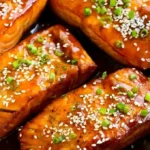
Pan-Seared Salmon with Homemade Teriyaki Glaze
- Total Time: 20 minutes
- Yield: 4 servings 1x
- Diet: General
Description
This recipe for salmon teriyaki is seared salmon fillets coated in a homemade teriyaki sauce.
Ingredients
- 4 salmon fillets (approximately 4 ounces each)
- salt and pepper to taste
- cooking spray
- 1 tablespoon vegetable oil
- 2 tablespoons sesame seeds
- 2 tablespoons sliced green onions
- 2 tablespoons soy sauce
- 1/4 cup water
- 1 1/2 tablespoons brown sugar
- 1 teaspoon minced garlic
- 1 teaspoon minced ginger
- 2 teaspoons of honey
- 1/2 teaspoon toasted sesame oil
- 2 teaspoons cornstarch
Instructions
- Step: For the teriyaki sauce: Place the soy sauce, water, brown sugar, garlic, ginger, honey and sesame oil in a small pot over medium high heat. Stir until sugar is dissolved, about 3 minutes. Turn up heat to high and bring to a boil.
- Step: Mix the cornstarch with 1 tablespoon of cold water until dissolved. Add the cornstarch mixture to the sauce and boil for 1-2 minutes or until sauce has thickened. Set sauce aside.
- Step: Heat the oil in a large pan over high heat. Season the salmon fillets with salt and pepper to taste. Place the salmon, skin side up in the pan and sear until a golden brown crust forms, about 5 minutes. Turn the salmon and cook for approximately 5 minutes on the other side, or until cooked through.
- Step: Pour the teriyaki sauce over the salmon. Add the sesame seeds and green onions and serve.
Notes
The teriyaki sauce can be made up to 3 days before you plan to use it or double batched and frozen. This dish is perfect served over steamed rice with a side of broccoli.
- Prep Time: 10 minutes
- Cook Time: 10 minutes
- Category: Main
- Method: Searing
- Cuisine: Asian
Nutrition
- Serving Size: 1 fillet
- Calories: 225 kcal
- Sugar: 11 g
- Sodium: 556 mg
- Fat: 7 g
- Saturated Fat: 1 g
- Unsaturated Fat: 6 g
- Trans Fat: 0 g
- Carbohydrates: 14 g
- Fiber: 1 g
- Protein: 23 g
- Cholesterol: 62 mg
Keywords: salmon teriyaki, seared salmon, homemade teriyaki sauce, asian main course, quick dinner