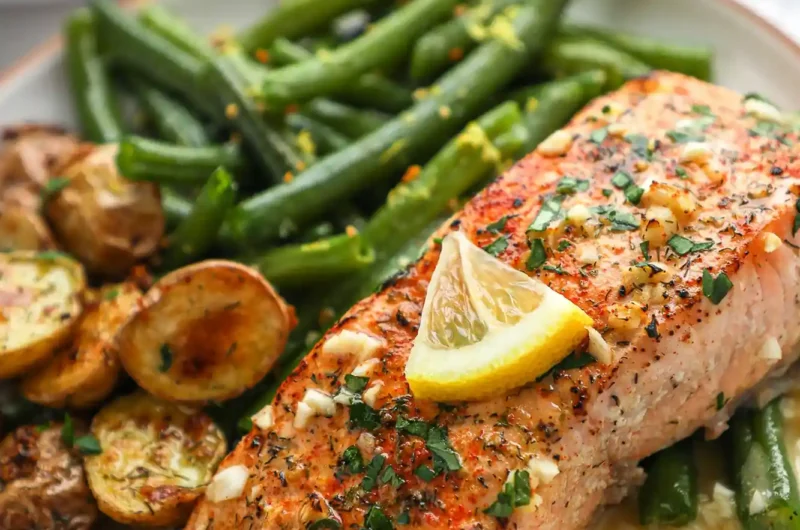
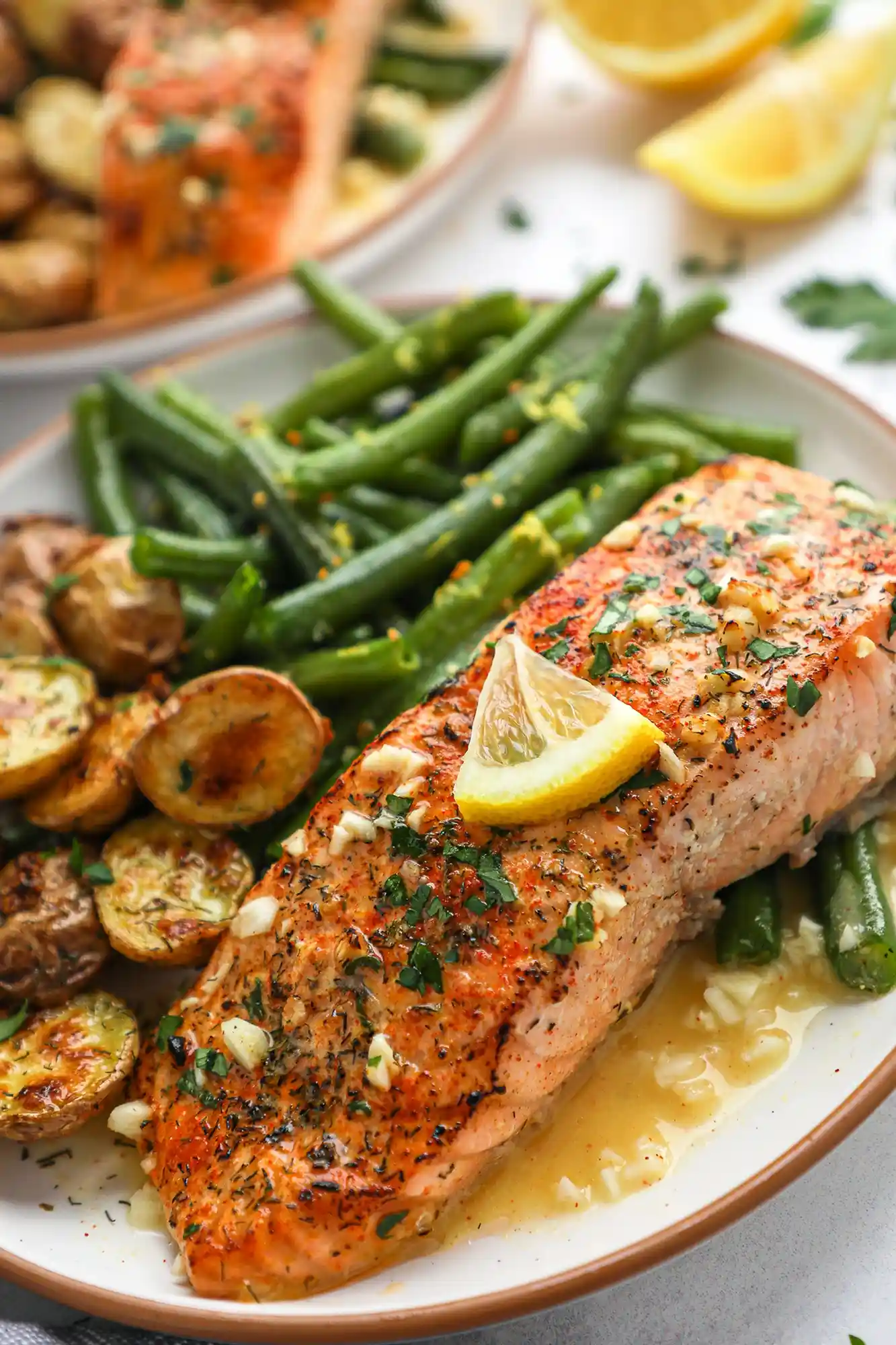
This quick and flavorful salmon dish is ideal for busy weeknights. The combination of tangy dijon mustard and bright lemon creates a professional-tasting meal in under 20 minutes. It is a streamlined recipe that focuses on bold flavors and efficient cooking techniques.
List of ingredients
- 4 salmon fillets – fresh or frozen, patted dry.
- 1/2 cup lemon juice – freshly squeezed for maximum brightness.
- 4 tsp dijon mustard – provides a sharp and tangy base.
- 4 garlic cloves, minced – adds pungent aromatic depth.
- 1/2 tsp dried dill – complementary herb for seafood.
- Salt, to taste – enhances all other flavors.
- Pepper, to taste – adds a subtle spicy note.
- Paprika, to taste – adds earthiness and a golden color.
step-by-step instructions
- Prepare the glaze: Whisk together the lemon juice, dijon mustard, minced garlic, and dried dill in a mixing bowl. Divide this mixture evenly into two smaller bowls; one is for marinating the raw fish, and the other is reserved for serving.
- Season the fish: Arrange salmon fillets on a tray and pat them thoroughly dry with paper towels. Brush one portion of the prepared sauce over the fillets and season them with salt, pepper, and paprika according to your preference.
- Heat the pan: Set a large skillet over medium-high heat and coat the surface with non-stick cooking spray to prevent the fish from sticking.
- Sear the salmon: Once the pan is hot, place the fillets skin side up. Cook for 3-4 minutes on this side, then flip and cook for an additional 2-3 minutes or until the fish reaches your desired level of doneness.
- Plating: Remove the fillets from the pan immediately. Serve the salmon with fresh lemon wedges and the second bowl of reserved sauce.
Selecting Your Salmon
Fresh Salmon Fillets
Fresh salmon is typically available at the seafood counter and offers a mild, clean flavor. When selecting fresh fillets, ensure the flesh is firm to the touch and has a vibrant color without any dull patches. Fresh fish generally has a less pronounced scent than older or improperly stored fish.
Frozen Salmon Options
Frozen salmon is a convenient and often more affordable alternative to fresh. Many frozen fillets are flash-frozen at sea, which preserves the quality and nutrient profile of the fish. To use frozen fillets, thaw them slowly in the refrigerator overnight to maintain the texture of the proteins.
Skin-on vs Skin-off
Skin-on fillets are preferred for pan-searing because the skin acts as a barrier, protecting the delicate flesh from direct heat. This allows for a crispier exterior and a moister interior. Skin-off fillets are easier to prepare but require more careful temperature management to avoid overcooking the flesh.
Advanced Searing Techniques
Achieving a Crispy Exterior
To get the crispiest skin, place the salmon skin side down in the hot pan first and sear for approximately 4 minutes without moving it. Press down lightly with a spatula for the first 30 seconds to ensure full contact with the heat. Flip and cook for only 1-2 minutes on the other side to finish.
Managing Pan Temperature
Use medium-high heat to ensure the pan is hot enough to create a sear without burning the garlic in the glaze. If the pan begins to smoke excessively, reduce the heat slightly. A properly heated pan prevents the salmon from sticking and creates a golden-brown crust.
Determining Internal Doneness
The ideal internal temperature for salmon is 145 degrees Fahrenheit, but many prefer it at 135 degrees for a more tender, medium-rare center. You can check doneness by pressing the top of the fillet; it should feel firm but slightly springy. Alternatively, use a fork to see if the flesh flakes easily along the natural lines.
Ingredient Substitutions
Alternative Mustard Varieties
If you do not have dijon mustard, whole grain mustard is an excellent substitute that adds a rustic texture. Honey mustard can be used for a sweeter profile, though you should reduce any additional sweeteners in the recipe. Yellow mustard is generally too mild and lacks the complexity of dijon.
Herbal Variations for Dill
While dried dill is traditional, fresh parsley or chopped cilantro can offer a different but complementary flavor profile. Dried oregano or thyme can be used for a more earthy, Mediterranean taste. Always use slightly less fresh herbs than dried, as the potency differs.
Citrus Alternatives to Lemon
Lime juice can be substituted for lemon juice to give the dish a more tropical, zesty flavor. For a softer acidity, a small amount of white wine vinegar or apple cider vinegar can work, though you will lose the fresh citrus aroma. Always adjust the quantity based on the acidity level of the substitute.
Serving and Pairing Suggestions
Vegetable Side Pairings
Steamed asparagus or sautéed spinach pairs exceptionally well with the tanginess of the lemon dijon sauce. Roasted Brussels sprouts or glazed carrots provide a sweet contrast to the acidity of the glaze. For a lighter option, a simple cucumber salad with a vinaigrette complements the fish.
Grain and Starch Options
Wild rice or quinoa provides a nutty base that absorbs the extra sauce from the salmon. Garlic mashed potatoes or roasted fingerling potatoes add a hearty element to the meal. For a lower-carb option, cauliflower rice seasoned with lemon and parsley is a great fit.
Fresh Garnish Ideas
Top the finished dish with freshly chopped parsley or chives to add a pop of color and a fresh taste. A sprinkle of toasted sesame seeds can add a slight crunch and nuttiness. Adding a few capers on top provides a salty burst that enhances the lemon flavor.
Storage and Food Safety
Refrigerating Cooked Salmon
Store leftover salmon in an airtight container in the refrigerator for up to three to four days. Ensure the fish is cooled slightly before sealing to prevent excess moisture from building up inside the container. Keep the reserved sauce in a separate airtight jar to maintain its consistency.
Freezing Cooked Salmon
Cooked salmon can be frozen for up to two months, although the texture may change slightly upon thawing. Wrap the fillets tightly in foil or plastic wrap before placing them in a freezer-safe bag to prevent freezer burn. Label the package with the date of preparation for safety.
Safe Thawing Methods
The safest way to thaw frozen salmon is to move it from the freezer to the refrigerator 24 hours before cooking. For a faster method, place the vacuum-sealed fish in a bowl of cold water, changing the water every 30 minutes. Avoid thawing fish at room temperature on the counter to prevent bacterial growth.
Reheating Instructions
Oven Reheating Method
Preheat your oven to 275 degrees Fahrenheit and place the salmon on a baking sheet. Cover the fish loosely with aluminum foil to trap moisture and prevent drying. Heat for 10-15 minutes or until the fish is warmed through.
Microwave Reheating Tips
Place the salmon on a microwave-safe plate and cover it with a damp paper towel. Use a medium power setting and heat in 30-second intervals, checking frequently. This method is faster but can easily overcook the fish, making it rubbery if not monitored.
Air Fryer Refresh
Place the chilled salmon in the air fryer basket at 350 degrees Fahrenheit. Heat for 3-5 minutes, which helps restore some of the exterior crispness. This is often the best method for maintaining the texture of the seared skin.
Troubleshooting Common Issues
Preventing Salmon from Sticking
Sticking usually occurs if the pan is not hot enough or if the fish was placed in the pan too early. Ensure the non-stick spray is evenly distributed and let the pan heat for at least two minutes. Avoid moving the fish during the first few minutes of searing, as it will naturally release from the pan once a crust forms.
Avoiding Overcooked Fish
Overcooked salmon becomes dry and develops white patches of protein called albumin on the surface. To prevent this, use a meat thermometer or follow the timing strictly based on the thickness of your fillets. Thinner fillets cook significantly faster and may only need 2 minutes per side.
Managing Sauce Consistency
If the sauce separates or becomes too thin, whisk it vigorously before brushing it on the fish. If you prefer a thicker glaze, you can simmer the sauce in a small pan for a few minutes to reduce the liquid. Ensure the garlic is minced very finely so it integrates smoothly into the emulsion.
Frequently Asked Questions
Can I use a different type of fish?
Yes, this glaze works well with other firm fish such as trout, Arctic char, or halibut. However, you may need to adjust the cooking times depending on the thickness and fat content of the alternative fish.
How do I store the extra sauce?
The extra lemon dijon sauce can be kept in a glass jar in the refrigerator for up to one week. Shake well before using, as the mustard and lemon juice may naturally separate over time.
What is the best way to pat salmon dry?
Use heavy-duty paper towels and press firmly on all sides of the fillet, including the skin. Removing surface moisture is the most critical step for achieving a proper sear and preventing the fish from steaming in the pan.
Print
Pan-Seared Salmon with Zesty Lemon Dijon Glaze
- Total Time: 16 minutes
- Yield: 4 servings 1x
- Diet: Dairy free, Gluten free
Description
Quick, easy and so flavorful too! This delicious lemon dijon salmon cooks in minutes and is perfect for a weeknight meal!
Ingredients
- 4 salmon fillets
- ½ cup lemon juice
- 4 tsp dijon mustard
- 4 garlic cloves, minced
- ½ tsp dried dill
- Salt, to taste
- Pepper, to taste
- Paprika, to taste
Instructions
- Step: Whisk your lemon juice, dijon mustard, garlic and dill together in a bowl. Then divide your sauce in half into two smaller bowls and set them aside. (One bowl is for the raw salmon, the other is to serve with your cooked salmon.)
- Step: Place your salmon fillets on a tray and pat them dry with a paper towel. Take one of your sauce bowls and brush your sauce over the fillets. Then season them with salt, pepper and paprika to taste.
- Step: Heat a large skillet over medium high heat and spray it with non-stick cooking spray. Once the pan is hot, place your salmon fillets SKIN SIDE UP in the pan and cook for 3-4 minutes.
- Step: Flip your fillets and cook for 2-3 more minutes or until the salmon is cooked to your preferred doneness.
- Step: Remove the salmon from the pan and serve immediately with lemon wedges and your reserved sauce.
Notes
For crispier skin: Place your salmon in the pan SKIN SIDE DOWN and sear for 4 minutes. Then flip the fillet and cook for 1-2 more minutes. For salmon with no skin: Brush the sauce and season both sides of your salmon fillets. You might need to adjust the cooking time depending on the thickness of your fillets. Cut your sauce in half if you’re only making 2 fillets.
- Prep Time: 10 minutes
- Cook Time: 6 minutes
- Category: Main Course
- Method: Pan Seared
- Cuisine: American
Nutrition
- Serving Size: 1 fillet
- Calories: 390 kcal
- Sugar: 4 g
- Sodium: 450 mg
- Fat: 22 g
- Saturated Fat: 4 g
- Unsaturated Fat: 18 g
- Trans Fat: 0 g
- Carbohydrates: 8 g
- Fiber: 1 g
- Protein: 36 g
- Cholesterol: 90 mg
Keywords: dairy free, dijon, easy, gluten free, lemon, pan seared, salmon, sauce