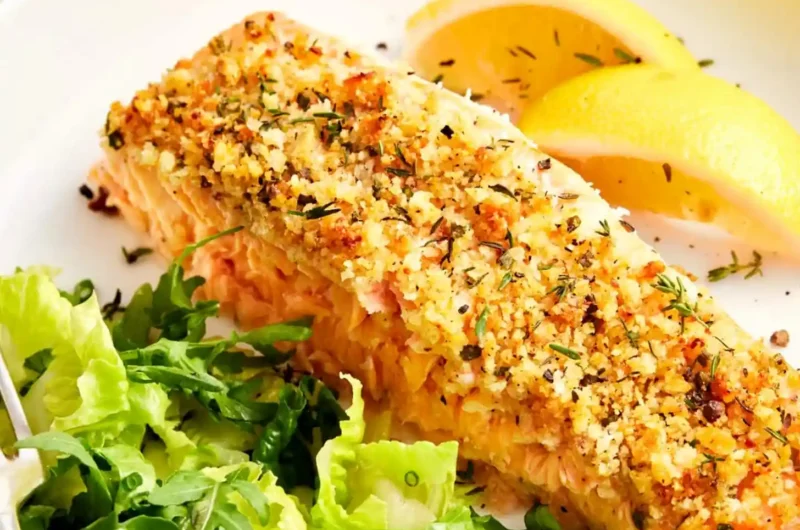
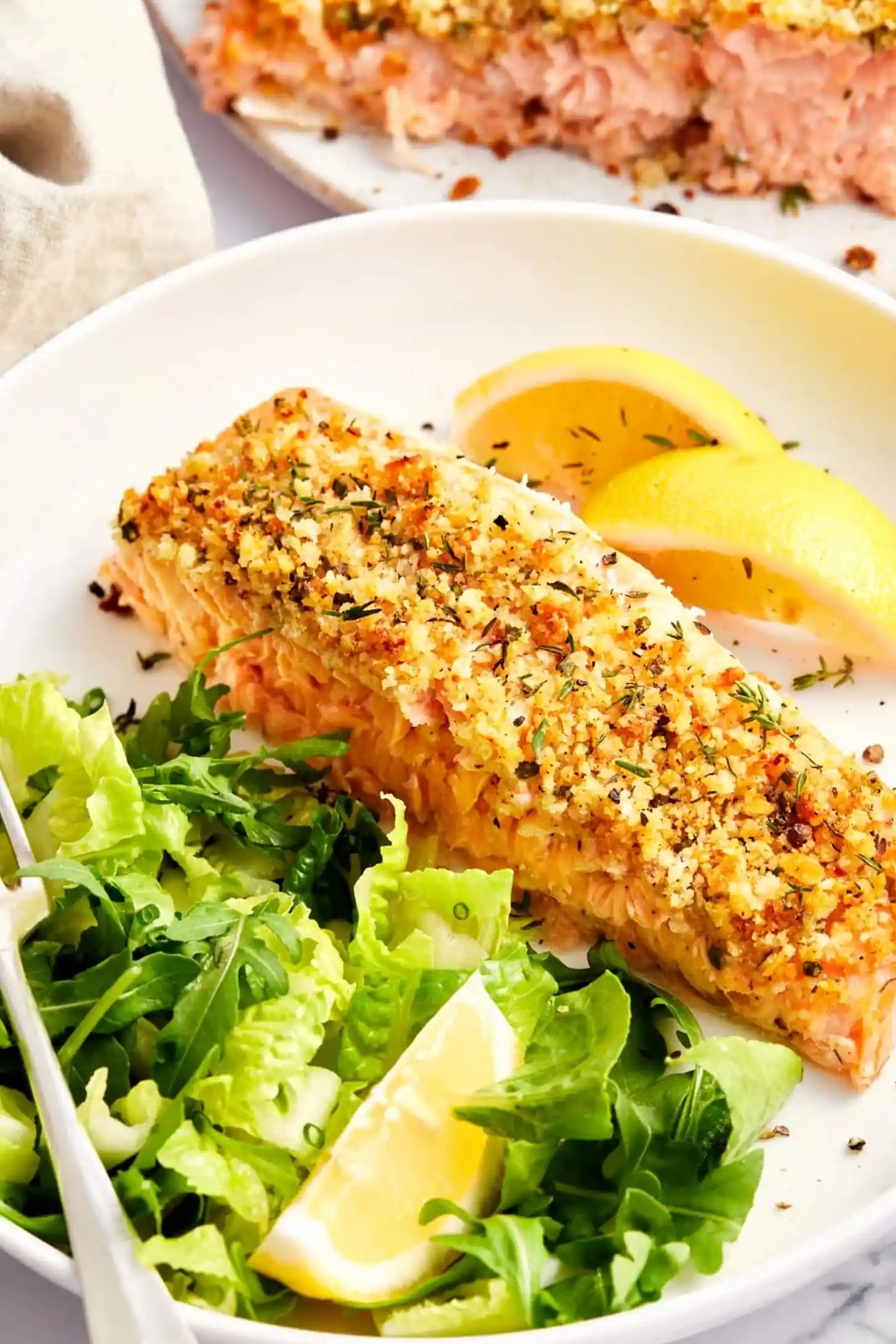
Preparing this parmesan crusted salmon is an excellent way to elevate a standard weeknight dinner into something truly special. The combination of a crispy, savory topping with the delicate, buttery texture of baked salmon creates a satisfying contrast that works perfectly for both casual meals and hosting. This method ensures your fish stays moist and tender while achieving a beautiful golden-brown crust without any complex techniques.
List of ingredients
- 1.5-2 pound whole wild salmon fillet
- 1/4 cup plain breadcrumbs
- 1/4 cup parmesan cheese, grated
- 2 cloves garlic, minced
- 1 tablespoon thyme and chives, finely chopped
- 2 tablespoons butter, melted
- Salt and pepper to taste
step-by-step instructions
- Step: Preheat the oven to 400 degrees F. Line a large rimmed baking sheet with foil or parchment paper. Place the salmon fillet on the baking sheet.
- Step: In a small bowl, mix the bread crumbs, Parmesan cheese, garlic, and herbs together.
- Step: Drizzle the melted butter over the top and season with 1/2 teaspoon salt and 1/4 teaspoon pepper. Mix with your hand to coat the breadcrumbs in butter.
- Step: Sprinkle the mixture over the top of the salmon fillet.
- Step: Bake for 10-12 minutes, until the salmon is cooked through and the crust is golden. If the crust doesn’t brown, turn on the broiler for 1 minute, then remove. Serve warm.
Refining Your Baking Technique
Selecting the Right Salmon Cut
For the most consistent results, try to purchase a center-cut fillet of salmon. This portion is usually uniform in thickness, which prevents the thinner tail end from drying out while the thicker part is still cooking through. If you must use a tapered fillet, consider tucking the thin tail end under itself to create a more consistent shape.
Ensuring Proper Moisture Retention
While this recipe involves high-heat roasting, the parmesan layer acts as a gentle shield for the fish. To further ensure the meat remains succulent, avoid over-prepping the salmon too far in advance, as the salt in the topping can begin to draw moisture out if it sits on the raw fish for more than a few minutes before entering the oven. The goal is to get it into the heat immediately after applying the crust.
Flavor Adjustments and Adaptations
Choosing Complementary Fresh Herbs
While thyme and chives are classic, you can swap them for other soft herbs to change the flavor profile. Fresh parsley offers a very clean taste, while a small amount of finely minced dill adds a wonderful brightness that pairs exceptionally well with the richness of salmon. Avoid woody herbs like rosemary unless they are chopped exceptionally fine, as their texture can be too tough for a quick-baked crust.
Creating a Deeper Cheese Profile
If you prefer a stronger, more intense savory flavor, try substituting half of the parmesan with a sharp pecorino romano. This cheese is naturally saltier and tangier, which helps cut through the richness of the salmon. Ensure that you are using a high-quality block of cheese rather than the powdery version in a green shaker bottle, as fresh cheese contains fewer anti-caking agents that can hinder the melting process.
Effective Storage and Warming Methods
Managing Leftover Portions
If you have any portions remaining, allow the salmon to cool to room temperature before placing it into a shallow, airtight container. It is best to consume the leftovers within 24 to 48 hours to ensure the quality of both the fish and the crust remains acceptable. The longer it sits in the refrigerator, the more the crust will absorb moisture from the fish and lose its signature crunch.
Strategies for Reheating Without Overcooking
Reheating salmon is a delicate balance because the fish is already fully cooked. To maintain the best texture, avoid the microwave, which tends to make the meat rubbery. Instead, place the leftovers on a baking sheet and heat them in an oven or toaster oven at 300 degrees Fahrenheit until just warmed through, followed by a quick blast under the broiler to crisp the top.
Common Queries Regarding This Dish
Can I use dried herbs instead of fresh?
Yes, you can substitute dried herbs, but you must reduce the quantity significantly. Use only one teaspoon of dried thyme or mixed Italian herbs, as the flavor of dried herbs is much more concentrated and potent than fresh versions.
Why is my crust not browning enough?
This is often due to the oven rack being too low or the butter not being distributed evenly. Ensure you are using the middle rack for the best circulation of heat, and if the fish is cooked but the top is pale, the one-minute broiler method is the most reliable way to achieve the desired golden appearance.
Is it necessary to remove the skin?
Removing the skin is a matter of preference and is not strictly required. Keeping the skin on can provide an extra layer of protection against the direct heat of the baking sheet, preventing the bottom of the fillet from cooking too quickly. If you choose to keep it on, it will easily separate from the meat after cooking.
How do I know for sure that the fish is cooked?
The most accurate method is using a probe thermometer inserted into the thickest part of the fillet. You are looking for a reading of 145 degrees Fahrenheit. Alternatively, you can test the fish by gently pressing on the top with a fork; the flesh should flake easily along the natural white lines of the fish.
Can I prepare the crust ahead of time?
You can mix the dry ingredients—breadcrumbs, cheese, garlic, and herbs—hours before you intend to bake. However, do not add the melted butter until you are ready to assemble the topping and put it into the oven. This prevents the breadcrumbs from becoming dense or soggy before the baking process begins.
What is the benefit of a rimmed baking sheet?
A rimmed baking sheet prevents any butter or juices that might render out from the fish from dripping onto the bottom of your oven. This keeps the environment clean and prevents smoke from forming, which could negatively impact the flavor of your dish during the cooking process.
Print
Parmesan Crusted Salmon
- Total Time: PT17M
- Yield: 6 1x
- Diet: Pescatarian
Description
I cannot get enough of this easy parmesan crusted salmon. It’s oven baked to crispy perfection and every bite is filled with that delicious herby crust and perfectly tender meat that just falls apart in your mouth.
Ingredients
- 1.5–2 pound whole wild salmon fillet
- 1/4 cup plain breadcrumbs
- 1/4 cup parmesan cheese, grated
- 2 cloves garlic, minced
- 1 tablespoon thyme and chives, finely chopped
- 2 tablespoons butter, melted
- Salt and pepper to taste
Instructions
- Step: Preheat the oven to 400 degrees F. Line a large rimmed baking sheet with foil or parchment paper. Place the salmon fillet on the baking sheet.
- Step: In a small bowl, mix the bread crumbs, Parmesan cheese, garlic, and herbs together.
- Step: Drizzle the melted butter over the top and season with 1/2 teaspoon salt and 1/4 teaspoon pepper. Mix with your hand to coat the breadcrumbs in butter.
- Step: Sprinkle the mixture over the top of the salmon fillet.
- Step: Bake for 10-12 minutes, until the salmon is cooked through and the crust is golden. If the crust doesn’t brown, turn on the broiler for 1 minute, then remove. Serve warm.
Notes
Baked crusted salmon is best enjoyed crisp from the oven. Leftovers will keep well in an airtight container in the fridge for a day or two. To reheat, broil for 2-3 minutes to crisp the crust and warm the fish.
- Prep Time: PT5M
- Cook Time: PT12M
- Category: Main Course
- Method: Baking
- Cuisine: Italian
Nutrition
- Serving Size: 4 ounces
- Calories: 241 kcal
- Sugar: 0 g
- Sodium: 180 mg
- Fat: 13 g
- Saturated Fat: 4 g
- Unsaturated Fat: 9 g
- Trans Fat: 0 g
- Carbohydrates: 4 g
- Fiber: 0 g
- Protein: 25 g
- Cholesterol: 76 mg
Keywords: salmon, parmesan, dinner, seafood, baked