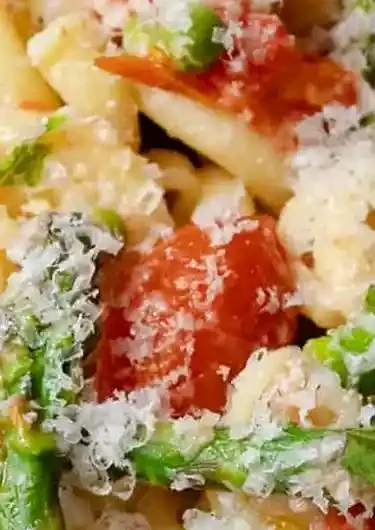
This vibrant pasta dish combines fresh spring vegetables for a light and healthy meal. It is a quick one-pan preparation that highlights the natural sweetness of peas and tomatoes.
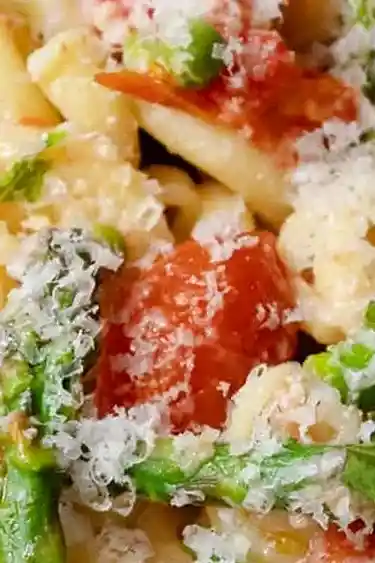
List of ingredients
- 8 ounces short pasta, such as Nodi Marini – uses twisted shapes to hold sauce.
- 3 tablespoons olive oil – for sautéing vegetables.
- 2 garlic cloves, minced – provides a savory aromatic base.
- 1 1/2 pounds thin asparagus, trimmed and cut into 1-inch pieces – provides crunch and color.
- Salt and freshly ground black pepper – for basic seasoning.
- 2 cups (about 9 ounces) cherry tomatoes – add sweetness and acidity.
- 1 cup shelled fresh peas, or frozen – adds pops of green and texture.
- 1/2 cup low-sodium vegetable broth – used to create a light pan sauce.
- 1 cup grated Parmesan, microbial-rennet – for salty, nutty richness.
- 2 tablespoons chopped fresh basil leaves – for a fresh herbal finish.
step-by-step instructions
- Boil the pasta: Bring a large pot of salted water to a boil over high heat. Add the pasta and cook until tender but still firm to the bite, stirring occasionally, about 8 to 10 minutes. Drain the pasta, reserving about 1/2 cup of the pasta water.
- Sauté aromatics and asparagus: In a large saute pan, heat the oil over medium-high heat. Add the garlic and cook until fragrant, about 1 minute. Add the asparagus, season with the salt and pepper, and cook for 3 minutes until slightly soft.
- Cook tomatoes and peas: Add the cherry tomatoes and peas to the pan. Cook for 2 minutes.
- Simmer the sauce: Pour the vegetable broth into the pan and bring the mixture to a simmer. Cook until the tomatoes start to burst and the stock is reduced by half, about 3 minutes.
- Combine and finish: Add the cooked pasta and 1/2 of the Parmesan to the large saute pan with the vegetables. Toss well, adding reserved pasta water, if needed, to loosen the pasta. Garnish with the remaining Parmesan and chopped basil.
Choosing the Best Pasta Shape
Nodi Marini for Maximum Sauce Retention
Nodi Marini, or sailor’s knots, are ideal for this recipe because of their intricate curves. These nooks trap the vegetable broth and melted Parmesan, ensuring every bite is flavorful. They also provide a sturdy texture that complements the snap of the asparagus.
Fusilli and Rotini for Vegetable Grip
Spiral pastas like fusilli or rotini are excellent alternatives. The twists act as screws that catch small pieces of shelled peas and minced garlic. This prevents the vegetables from settling at the bottom of the bowl.
Penne and Rigatoni for Heartier Bites
Tubular pastas like penne or rigatoni work well if you prefer a more substantial chew. The hollow centers can fill with the reduced broth and small bits of tomato. These shapes are particularly good if you decide to add larger vegetable chunks.
Farfalle for Visual Appeal
Bowtie pasta, or farfalle, offers a great aesthetic contrast to the long pieces of asparagus. The center pinch of the bowtie provides a denser texture. This makes the dish feel more like a composed pasta salad.
Preparing the Spring Vegetables
Trimming Asparagus for Uniformity
To remove the woody ends of the asparagus, bend a stalk until it snaps naturally. Alternatively, use a knife to slice off the bottom inch where the stalk is toughest. Cutting them into consistent one-inch pieces ensures they cook evenly in the pan.
Selecting Ripe Cherry Tomatoes
Choose cherry tomatoes that are firm to the touch and have a deep red color. Avoid those with soft spots or cracks in the skin. Ripe tomatoes burst more easily during the simmering process, which helps thicken the sauce.
Processing Fresh Shell Peas
When using fresh peas, slide a knife through the seam of the pod to release the peas. This is faster than pulling them out individually. If using frozen peas, there is no need to thaw them before adding them to the heat.
Maintaining Vibrant Green Colors
Avoid overcooking the asparagus and peas to prevent them from turning olive-brown. High heat and short cooking times keep the chlorophyll intact. This ensures the dish remains visually appealing and retains a fresh taste.
Techniques for Sauce Consistency
Utilizing Reserved Pasta Water
Pasta water contains starch released during the boiling process. Adding a splash of this water to the pan helps emulsify the olive oil and vegetable broth. This creates a silkier coating that clings to the pasta rather than pooling at the bottom.
Reducing the Vegetable Broth
Simmering the broth until it reduces by half concentrates the flavors. This step turns a thin liquid into a light glaze. It ensures the dish is moist without being watery or soupy.
Incorporating Parmesan for Texture
Adding the Parmesan cheese in two stages allows for different effects. The first half melts into the sauce to add body and creaminess. The final garnish provides a sharp, salty contrast and a slightly different texture.
Practical Ingredient Substitutions
Dairy-Free Cheese Alternatives
For a vegan version, replace the Parmesan with nutritional yeast or a plant-based Parmesan alternative. Nutritional yeast provides a similar nutty and salty profile. You may need to add a pinch more salt to compensate for the lack of aged cheese.
Swapping Asparagus for Other Greens
If asparagus is unavailable, zucchini or snap peas are great substitutes. Cut zucchini into half-moons to match the cooking time of the other vegetables. Snap peas should be added at the same time as the peas to maintain their crunch.
Using Different Broth Options
While vegetable broth is standard, a mushroom-based broth can add a deeper, earthier flavor. Ensure the broth is low-sodium to maintain control over the overall salt level. You can also use a splash of water and a pinch of salt in a pinch.
Alternative Fresh Herbs
If basil is not available, fresh Italian parsley or mint can be used. Parsley offers a cleaner, more peppery taste. Mint provides a cooling effect that pairs exceptionally well with the sweetness of the peas.
Serving and Plating Ideas
Complementary Side Dishes
Serve this pasta with a side of crusty sourdough or garlic bread to soak up the remaining sauce. A light arugula salad with a lemon vinaigrette also pairs well. The bitterness of the arugula balances the sweetness of the tomatoes.
Adding Lean Protein
To make the meal more filling, add grilled shrimp or sliced grilled chicken breast. Toss the protein into the pan during the final step of combining the pasta. This ensures the protein stays warm without overcooking.
Plating for Visual Impact
Use shallow bowls or wide plates to showcase the colors of the vegetables. Pile the pasta high in the center and scatter the remaining Parmesan and basil on top. A final drizzle of high-quality extra virgin olive oil adds a professional sheen.
Storage and Reheating Advice
Refrigerator Storage Guidelines
Store leftovers in an airtight container in the refrigerator for up to three days. Keep the pasta and vegetables together to maintain moisture. Ensure the container is completely sealed to prevent the pasta from drying out.
Best Reheating Methods
Reheat the pasta on a stovetop over medium heat with a tablespoon of water or vegetable broth. This restores the sauce’s consistency. Avoid the microwave if possible, as it can make the asparagus rubbery and the tomatoes mushy.
Freezing Limitations
This dish is not recommended for freezing. The fresh asparagus and cherry tomatoes lose their structural integrity and become watery upon thawing. For the best quality, consume the meal within a few days of cooking.
Make-Ahead Strategies
Advance Vegetable Preparation
Trim and cut the asparagus and mince the garlic a few hours before cooking. Store them in separate containers in the fridge. This reduces the active prep time and allows you to move straight to the sautéing phase.
Par-boiling the Pasta
You can cook the pasta a few minutes under the recommended time and drain it. Toss it with a teaspoon of olive oil to prevent sticking. When ready to eat, add it to the sauce pan to finish cooking in the broth.
Preparing the Garnish
Chop the basil and grate the Parmesan in advance. Store the basil in a damp paper towel inside a container to keep it from wilting. This makes the final assembly of the dish much faster.
Troubleshooting Common Issues
Fixing a Watery Sauce
If the sauce is too thin, simmer it for an additional two to three minutes before adding the pasta. You can also stir in an extra tablespoon of Parmesan cheese. The cheese acts as a thickener and helps bind the liquid.
Preventing Mushy Vegetables
Ensure the sauté pan is hot before adding the oil and vegetables. Overcrowding the pan can lead to steaming rather than sautéing, which makes vegetables soft. Cook in batches if your pan is too small.
Balancing Excessive Saltiness
If the dish tastes too salty, add a squeeze of fresh lemon juice. The acidity helps cut through the salt and brightens the overall flavor profile. Adding a handful of fresh baby spinach can also dilute the salt concentration.
Frequently Asked Questions
Can I use whole cherry tomatoes instead of halved ones?
Yes, using whole cherry tomatoes is recommended. They will burst naturally during the simmering process, releasing their juices to create a thick, rustic sauce.
Which olive oil is best for this recipe?
Use a neutral olive oil for the initial sautéing to avoid burning. For the final garnish, use a high-quality extra virgin olive oil for a rich, fruity flavor.
Can I use gluten-free pasta for this dish?
Yes, gluten-free pasta works well. However, be careful not to overcook it, as gluten-free varieties can become mushy faster than wheat-based pasta.
How do I stop the asparagus from becoming tough?
Avoid overcooking the asparagus in the initial sauté step. It only needs about three minutes to become tender-crisp before the other ingredients are added.
Can I add cream to this recipe?
While the original is a light broth-based sauce, you can add two tablespoons of heavy cream at the end. This will create a creamier texture but will mask some of the fresh vegetable flavors.
Print
Pasta with Asparagus and Cherry Tomatoes
- Total Time: 25 minutes
- Yield: 4 servings 1x
- Diet: Vegetarian
Description
This spring pasta dish is loaded with seasonal ingredients, like asparagus, fresh peas and cherry tomatoes.
Ingredients
- 8 ounces short pasta, such as Nodi Marini
- 3 tablespoons olive oil
- 2 garlic cloves, minced
- 1 1/2 pounds thin asparagus, trimmed and cut into 1-inch pieces
- Salt and freshly ground black pepper
- 2 cups cherry tomatoes
- 1 cup shelled fresh peas
- 1/2 cup low-sodium vegetable broth
- 1 cup grated microbial-rennet Parmesan
- 2 tablespoons chopped fresh basil leaves
Instructions
- Boil: Bring a large pot of salted water to a boil over high heat. Add the pasta and cook until tender but still firm to the bite, stirring occasionally, about 8 to 10 minutes. Drain the pasta, reserving about 1/2 cup of the pasta water.
- Sauté: In a large saute pan, heat the oil over medium-high heat. Add the garlic and cook until fragrant, about 1 minute. Add the asparagus, season with the salt and pepper, and cook for 3 minutes until slightly soft. Add the cherry tomatoes and peas. Cook for 2 minutes.
- Simmer: Pour the vegetable broth into the pan and bring the mixture to a simmer. Cook until the tomatoes start to burst and the stock is reduced by half, about 3 minutes.
- Combine: Add the cooked pasta and 1/2 of the Parmesan to the large saute pan with the vegetables. Toss well, adding reserved pasta water, if needed, to loosen the pasta. Garnish with the remaining Parmesan and chopped basil.
Notes
This recipe can be easily adapted by adjusting the amount of vegetables or adding pepper flakes, Calabrian chili paste, or a touch of lemon for additional brightness.
- Prep Time: 10 minutes
- Cook Time: 15 minutes
- Category: Main Course
- Method: Sautéing
- Cuisine: Italian
Nutrition
- Serving Size: 1 serving
- Calories: 445 kcal
- Sugar: 4 g
- Sodium: 500 mg
- Fat: 16 g
- Saturated Fat: 3 g
- Unsaturated Fat: 13 g
- Trans Fat: 0 g
- Carbohydrates: 50 g
- Fiber: 3 g
- Protein: 18 g
- Cholesterol: 25 mg
Keywords: spring pasta, seasonal vegetables, asparagus, cherry tomatoes, Italian dinner