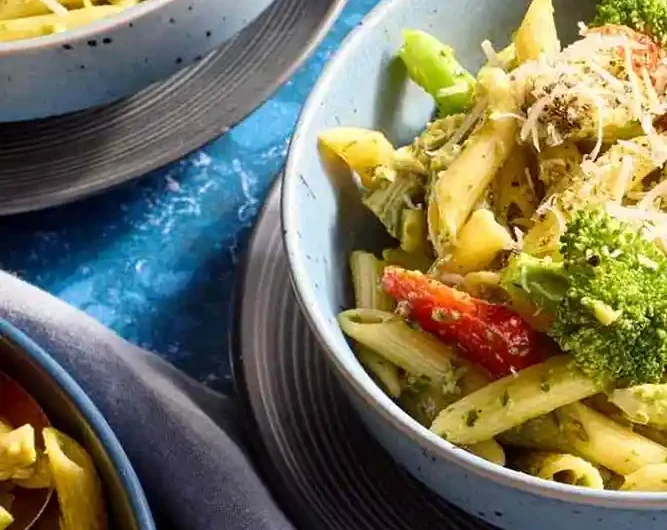
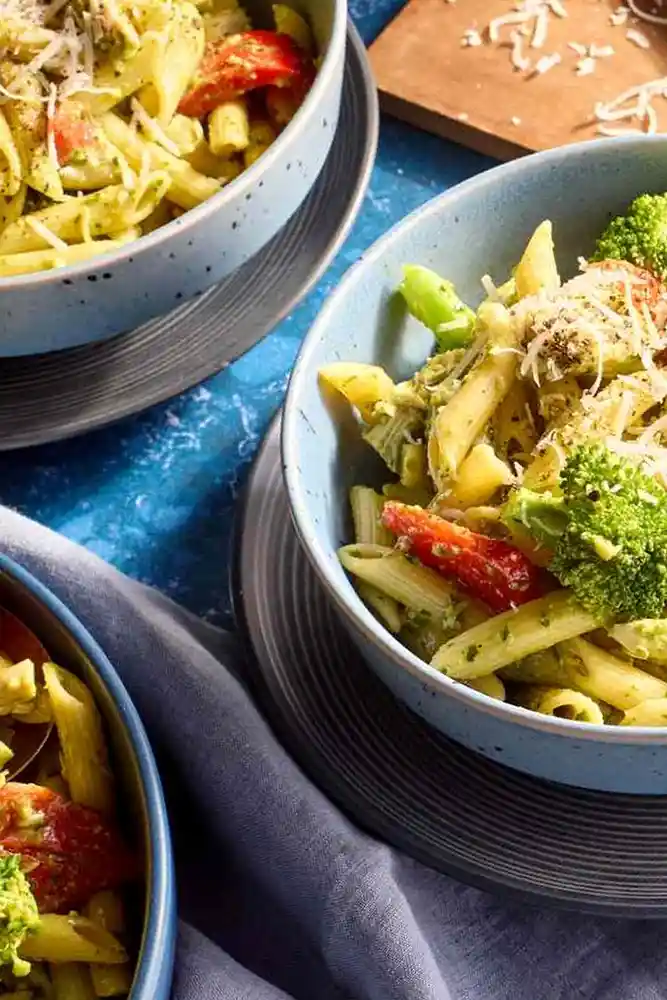
This vibrant pesto penne salad combines the convenience of pre-cooked rotisserie chicken with the bold, herbaceous flavors of classic basil pesto. It is an ideal solution for busy weeknights or large gatherings, as it comes together in under thirty minutes and balances fresh broccoli with hearty pasta. The addition of roasted red peppers provides a gentle sweetness that perfectly offsets the savory parmesan finish.
List of ingredients
- 8 ounce dried penne, mostaccioli, or bow tie pasta
- 2 cup broccoli florets
- 0.75 cup purchased basil pesto
- 2.5 cup coarsely chopped deli-roasted chicken
- 1 7 ounce jar roasted red sweet peppers, drained and cut into strips
- 0.25 cup finely shredded Parmesan cheese
- 0.5 teaspoon coarsely ground black pepper
- Additional shredded Parmesan cheese (optional)
step-by-step instructions
- Step: Cook pasta according to package directions, adding broccoli the last 2 minutes of cooking. Drain, reserving 1/2 cup of the pasta water. Return drained pasta and broccoli to saucepan.
- Step: In a small bowl combine pesto and the reserved 1/2 cup pasta water. Add chicken, roasted peppers, and the pesto mixture to pasta in saucepan. Stir gently to mix. Cook over medium heat until heated through. Stir in the 1/4 cup Parmesan cheese.
- Step: Divide the pasta mixture among warm serving bowls. If desired, top with additional Parmesan cheese. Sprinkle with black pepper and serve immediately.
Practical cooking methods
Managing starch for sauce emulsification
The secret to a restaurant-quality pasta sauce is the reserved cooking water. Because the water contains starch released by the pasta, it acts as a binding agent that turns your jarred pesto into a silky, cohesive sauce rather than just a clump of herbs and oil. Always remember to scoop this liquid out before pouring your colander into the sink.
Selecting the right pasta shape
While the recipe specifies penne or bow ties, you can use any short-cut pasta that features pockets or ridges. Cavatappi or fusilli are excellent alternatives because their shapes are designed to trap the pesto sauce and small pieces of chicken in every bite. Avoid long, thin strands like spaghetti, which tend to slide away from the chunky ingredients.
Refining your ingredients
Selecting high-quality basil pesto
When purchasing pesto, look for labels that list basil as the primary ingredient followed by high-quality olive oil and pine nuts or walnuts. Avoid products with excessive preservatives or artificial colorants, as these can impart an unwanted metallic aftertaste. If you find your pesto is too salty, reduce the amount of added parmesan or dilute it with an extra tablespoon of plain warm water.
Enhancing roasted red peppers
To get the best flavor from your jarred roasted peppers, pat them dry with a paper towel after draining. Excess brine can thin out your sauce and make the pasta taste overly acidic. If the strips are too wide, slice them into thinner ribbons to ensure they distribute evenly throughout the bowl, providing a hit of sweetness in every spoonful.
Storage and preparation
Maintaining freshness in the refrigerator
If you plan to store leftovers, keep the pasta in an airtight container for up to three days. The pasta will continue to absorb the pesto as it sits, so it may appear slightly drier when you pull it out of the fridge the next day. To remedy this, add a tiny splash of water or a teaspoon of olive oil before sealing the container to keep the moisture level consistent.
Effective reheating techniques
To reheat, it is best to use a skillet over medium-low heat with a tablespoon of water rather than relying strictly on the microwave. The direct heat helps revitalize the pesto sauce and prevents the pasta from becoming mushy or overcooked. Stir frequently to ensure the chicken reaches a safe internal temperature without drying out the delicate broccoli florets.
Frequently asked questions
Can I prepare the chicken ahead of time?
Yes, you can chop the rotisserie chicken up to 24 hours in advance and store it in a sealed bag in the refrigerator. This makes the final assembly during dinner prep extremely fast. Simply add the cold chicken to the pasta at the heating step, ensuring it remains in the pan long enough to reach a piping hot temperature.
How can I make this dish more substantial?
If you want to add more bulk to the meal, consider stirring in baby spinach or pre-steamed snap peas during the final minute of heating. The residual heat from the pasta will wilt the spinach just enough, incorporating extra fiber and color without the need for additional cooking steps. You can also toss in toasted pine nuts for added crunch and richness.
Is this recipe suitable for freezing?
Freezing this dish is generally not recommended as the fresh herbs in the pesto can lose their bright, aromatic quality and the pasta may lose its firm texture upon thawing. The sauce also tends to separate when frozen and reheated. It is best enjoyed fresh or kept in the refrigerator for quick midweek lunches.
How do I balance the flavor if it tastes too intense?
If the pesto flavor feels overpowering, add a squeeze of fresh lemon juice or a small amount of extra shredded parmesan to balance the acidity. The brightness of the citrus helps cut through the richness of the cheese and oil in the pesto. You can also add more plain, steamed vegetables like zucchini to mellow out the intensity of the concentrated basil base.
Expanding your serving options
Creating a balanced buffet display
This dish works exceptionally well when presented on a large, shallow platter rather than deep bowls. Garnishing the top with a fresh sprig of basil or a light dusting of cracked black pepper makes it look professionally plated. Since it is served warm, it pairs nicely with a side of crusty bread or a crisp garden salad, providing a complete and satisfying meal for your guests.
Adjusting for a lighter profile
For a lighter version of this recipe, focus on increasing the ratio of vegetables to pasta. You can double the amount of broccoli florets or introduce other green vegetables like asparagus tips or frozen peas to the boiling water alongside the pasta. By reducing the total volume of pasta and replacing it with extra greens, you can significantly increase the nutritional density per serving without sacrificing the core pesto flavor.
Print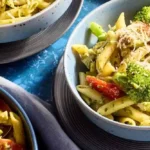
Pesto Penne Salad with Deli-Roasted Chicken
- Total Time: 20 minutes
- Yield: 4 servings 1x
- Diet: High Protein
Description
This healthy pasta salad is ready in a snap with deli-roasted chicken—it’s a quick and easy dish that’s perfect for a party or a potluck.
Ingredients
- 8 ounce dried penne, mostaccioli, or bow tie pasta
- 2 cup broccoli florets
- 0.75 cup purchased basil pesto
- 2.5 cup coarsely chopped deli-roasted chicken
- 1 7 ounce jar roasted red sweet peppers, drained and cut into strips
- 0.25 cup finely shredded Parmesan cheese
- 0.5 teaspoon coarsely ground black pepper
- Additional shredded Parmesan cheese (optional)
Instructions
- Step: Cook pasta according to package directions, adding broccoli the last 2 minutes of cooking. Drain, reserving 1/2 cup of the pasta water. Return drained pasta and broccoli to saucepan.
- Step: In a small bowl combine pesto and the reserved 1/2 cup pasta water. Add chicken, roasted peppers, and the pesto mixture to pasta in saucepan. Stir gently to mix. Cook over medium heat until heated through. Stir in the 1/4 cup Parmesan cheese.
- Step: Divide the pasta mixture among warm serving bowls. If desired, top with additional Parmesan cheese. Sprinkle with black pepper and serve immediately.
Notes
Store leftovers in an airtight container in the refrigerator for up to two days.
- Prep Time: 5 minutes
- Cook Time: 15 minutes
- Category: Dinner, Lunch, Entree, Pasta
- Method: Boiling, Stovetop
- Cuisine: Italian
Nutrition
- Serving Size: 1 serving
- Calories: 672 kcal
- Sugar: 4 g
- Sodium: 857 mg
- Fat: 35 g
- Saturated Fat: 7 g
- Unsaturated Fat: 28 g
- Trans Fat: 0 g
- Carbohydrates: 53 g
- Fiber: 4 g
- Protein: 37 g
- Cholesterol: 93 mg
Keywords: pasta salad, deli chicken, quick dinner, easy pasta, pesto pasta