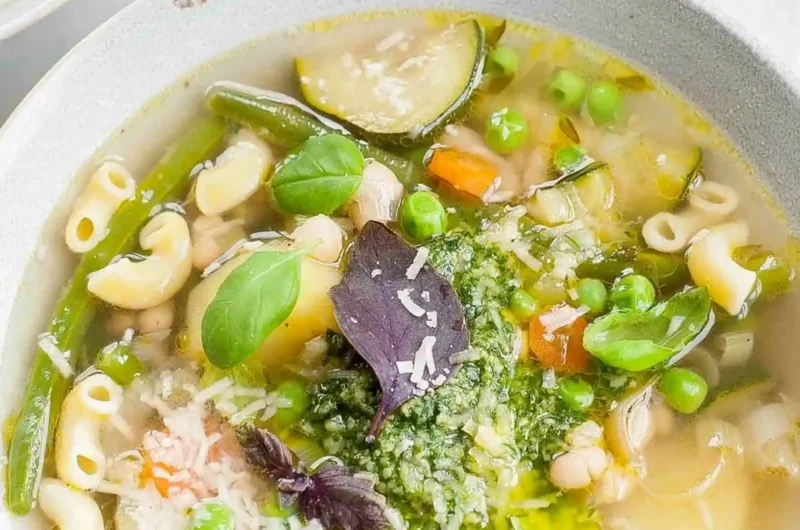
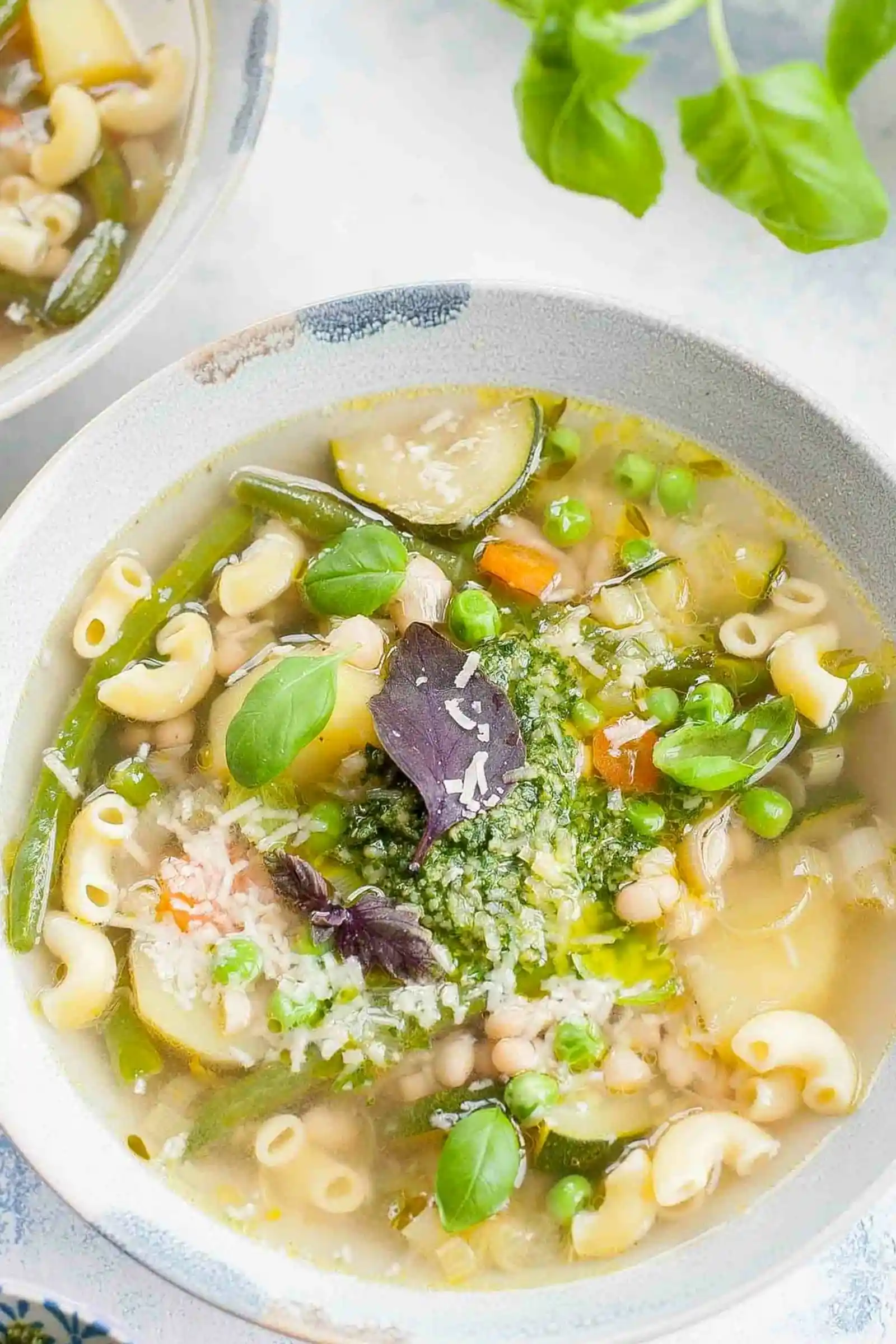
Pistou soup is a classic Provencal vegetable medley that highlights the vibrant flavors of fresh summer produce. This hearty dish is finished with a fragrant basil and garlic sauce known as pistou, which adds a bright, herbal depth to every spoonful. It is a wonderfully flexible recipe that serves as a perfect main course when accompanied by crusty bread or small-cut pasta.
List of ingredients
- 4 tablespoons frying oil
- 1 medium onion
- 1 leek
- 1 celery stalk
- 1 teaspoon dried thyme
- 1 lb (500g) potatoes
- 1 medium zucchini (12 oz/350g)
- 2 large carrots
- 8 cups (2 liters) water
- 7 oz (200g) green beans
- 1 14 fl oz (400g) can cannellini beans
- 1 cup (120g) green peas
- Salt and pepper to taste
- 4 cups (40g) fresh basil leaves
- 2 cloves garlic
- 1/3 cup (50g) grated Parmesan cheese
- 3 tablespoons olive oil
- 2.5 cups (300g) small elbow pasta
step-by-step instructions
- Step: Prepare vegetables by cubing potatoes, slicing zucchini, carrots, leeks, and celery, and chopping the onion.
- Step: In a large pot, warm 2 tablespoons of oil over low heat. Add onions, leeks, and thyme; cook for 8 minutes, then transfer to a plate.
- Step: Increase heat, add remaining 2 tablespoons of oil to the pot, and brown the zucchini, potatoes, carrots, and celery for 3 minutes.
- Step: Return the onion mixture to the pot, add 8 cups of water, and cook over low heat for 15 minutes.
- Step: Add green beans and simmer for 8 minutes.
- Step: Add green peas and cannellini beans; simmer for 2 more minutes. Season with salt and pepper.
- Step: Prepare the pistou by pulsing basil, garlic, salt, and Parmesan in a food processor, then whisking in the olive oil.
- Step: Serve the soup in bowls with separately cooked pasta and a spoonful of pistou swirled in just before eating.
Refining the vegetable base
Selecting produce for seasonal flavor
The beauty of this soup lies in its ability to adapt to whatever is in your garden or pantry. While the recipe calls for traditional summer vegetables, you can easily incorporate parsnips, turnips, or even finely chopped fennel if you want to experiment with different aromatic layers. Ensure all vegetables are cut to a uniform size to guarantee they finish cooking at the same time.
The importance of browning vegetables
Taking the extra few minutes to brown the zucchini, carrots, and potatoes is a critical step for building depth. This Maillard reaction creates complex sugars on the surface of the vegetables, which provides a roasted quality that contrasts beautifully with the clean, fresh water-based broth. Avoid overcrowding the pot during this stage so that each piece has enough space to sear rather than steam.
Understanding the pistou sauce
The art of the emulsification
The pistou is what defines the entire character of this dish, so the technique matters just as much as the ingredients. By adding the olive oil slowly or pulsing the food processor on low speed, you prevent the friction from heating the basil, which keeps the bright green color intact. High-speed blending can sometimes cause the basil to release a bitter compound, so a manual whisk or a gentle pulse is always the preferred method.
Why raw garlic is superior here
The garlic is added raw to the pistou, which provides a sharp, spicy bite that cuts through the mellow sweetness of the cooked vegetables. If you prefer a milder flavor, you can briefly blanch the garlic cloves in boiling water for 30 seconds before processing them. This slight adjustment removes the raw sting while keeping the essential pungent character of the sauce intact.
Managing the soup texture and consistency
Why cooking pasta separately matters
Starchy pasta acts like a sponge, soaking up the broth and releasing starch into the liquid, which can turn your elegant vegetable soup into a thick porridge if left to sit. By boiling your pasta separately in salted water and adding it to the bowl just before service, you maintain the clarity of the broth. This method also allows you to portion the soup more accurately for different appetites.
Starch management for perfect mouthfeel
If you find that your soup has become too thin for your liking, you can take a few pieces of the cooked potato from the pot and mash them against the side of the pot with a wooden spoon. The released starch will act as a natural thickener, giving the soup a velvety body without needing to add any heavy fats or flour-based thickeners.
Planning ahead and pantry maintenance
Freezing techniques for the best results
This soup is a fantastic candidate for the freezer, though the vegetables should be slightly undercooked if you plan on reheating them later. When freezing, portion the soup into glass jars or airtight containers, leaving at least an inch of headspace to allow for expansion. Thaw the soup slowly in the refrigerator overnight before warming it gently on the stove.
Optimizing your pantry for this dish
Cannellini beans are the traditional choice for their soft, creamy interior that disintegrates slightly to provide texture, but you can also use Great Northern beans or even chickpeas as a substitute. Always keep a few tins of white beans in your pantry, as they provide a quick way to add plant-based protein to a vegetable soup when you have less time to cook from scratch.
Frequently asked questions
Can I make this soup without a food processor?
Absolutely, you can use a traditional mortar and pestle to grind the garlic, basil, and salt into a paste before incorporating the oil and cheese. This manual method actually produces a superior texture for the pistou and is the traditional way it was prepared for centuries in French kitchens.
How do I make the soup more filling?
If you prefer a more robust meal, consider adding a scoop of cooked grains like farro or quinoa along with the pasta. These grains add a nutty, chewy texture that complements the tender beans and vegetables perfectly without requiring extra prep time beyond their own cooking duration.
What should I do if my basil tastes too strong?
If you have a very potent bunch of basil, you can temper its intensity by replacing half of the basil volume with flat-leaf parsley or baby spinach. This creates a more subdued, approachable flavor while maintaining that characteristic bright green hue that makes the soup so visually appealing.
Is there a way to serve this cold?
While typically served warm, this soup can be chilled and served as a refreshing cold vegetable bowl on very hot days. In this case, ensure the broth is seasoned slightly more aggressively, as cold temperatures tend to mute the flavors of salt and pepper on the palate.
Why does the recipe use water instead of broth?
Using water allows the natural, clean flavors of the fresh vegetables and the aromatic herbs to shine through without being masked by the heavy, often salty profile of commercial stocks. Since you are creating a potent, flavorful sauce (the pistou) to stir in at the end, the simple water base is exactly what the dish needs to stay balanced.
Print
Pistou Soup – French vegetable soup (Soupe au Pistou)
- Total Time: 60 minutes
- Yield: 6 servings 1x
- Diet: Vegetarian
Description
Aromatic vegetable soup served with fresh French basil sauce (pistou). This traditional Provencal soup is hearty, healthy, and packed with seasonal vegetables.
Ingredients
- 4 tablespoons frying oil
- 1 medium onion
- 1 leek
- 1 celery stalk
- 1 teaspoon dried thyme
- 1 lb (500g) potatoes
- 1 medium zucchini (12 oz/350g)
- 2 large carrots
- 8 cups (2 liters) water
- 7 oz (200g) green beans
- 1 14 fl oz (400g) can cannellini beans
- 1 cup (120g) green peas
- Salt and pepper to taste
- 4 cups (40g) fresh basil leaves
- 2 cloves garlic
- 1/3 cup (50g) grated Parmesan cheese
- 3 tablespoons olive oil
- 2.5 cups (300g) small elbow pasta
Instructions
- Step: Prepare vegetables by cubing potatoes, slicing zucchini, carrots, leeks, and celery, and chopping the onion.
- Step: In a large pot, warm 2 tablespoons of oil over low heat. Add onions, leeks, and thyme; cook for 8 minutes, then transfer to a plate.
- Step: Increase heat, add remaining 2 tablespoons of oil to the pot, and brown the zucchini, potatoes, carrots, and celery for 3 minutes.
- Step: Return the onion mixture to the pot, add 8 cups of water, and cook over low heat for 15 minutes.
- Step: Add green beans and simmer for 8 minutes.
- Step: Add green peas and cannellini beans; simmer for 2 more minutes. Season with salt and pepper.
- Step: Prepare the pistou by pulsing basil, garlic, salt, and Parmesan in a food processor, then whisking in the olive oil.
- Step: Serve the soup in bowls with separately cooked pasta and a spoonful of pistou swirled in just before eating.
Notes
Store the soup, pasta, and pistou separately to prevent the pasta from becoming soggy. The pistou can be kept in the refrigerator for up to a week if covered with a thin layer of olive oil.
- Prep Time: 25 minutes
- Cook Time: 35 minutes
- Category: Soup
- Method: Boiling
- Cuisine: French
Nutrition
- Serving Size: 1 bowl
- Calories: 470 kcal
- Sugar: 6 g
- Sodium: 580 mg
- Fat: 18 g
- Saturated Fat: 4 g
- Unsaturated Fat: 13 g
- Trans Fat: 0 g
- Carbohydrates: 62 g
- Fiber: 9 g
- Protein: 16 g
- Cholesterol: 10 mg
Keywords: pistou, vegetable soup, french soup, provencal, healthy, vegetarian, summer recipe