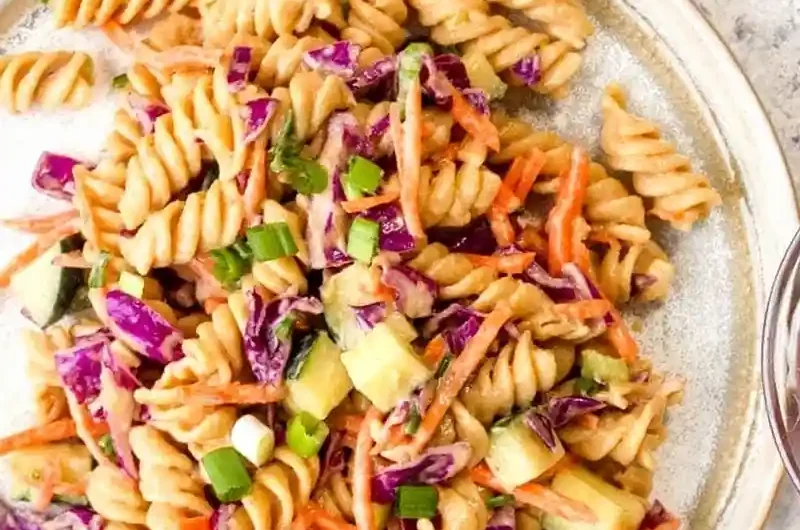
This nutrient-dense pasta salad combines chickpea noodles with a creamy peanut dressing and crisp vegetables. It is a fast meal option that provides a significant amount of plant-based protein in under 30 minutes. This dish is ideal for meal prep or a refreshing dinner during warm weather.
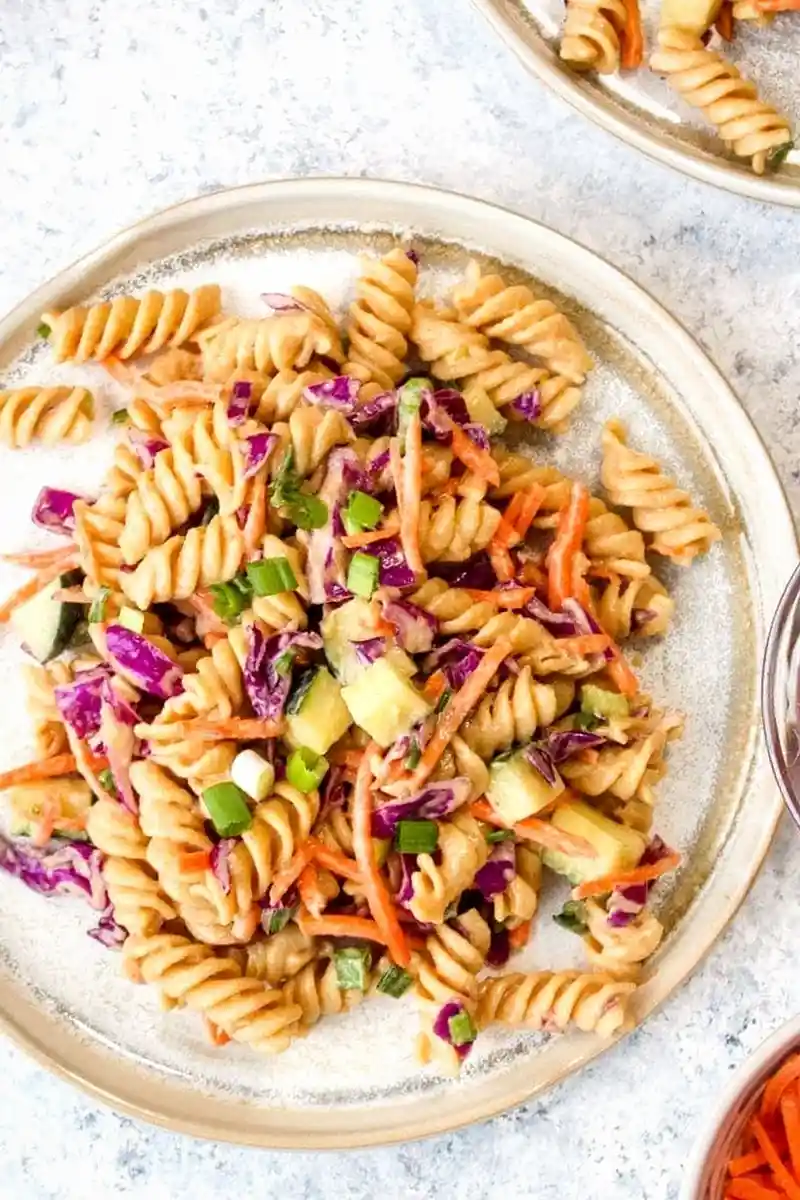
List of ingredients
- 1/4 cup orange juice – provides a citrus base for the dressing.
- 1/4 cup peanut butter – adds creaminess and healthy fats.
- 2 tablespoons unseasoned rice vinegar – adds a balanced acidity.
- 1 tablespoon liquid aminos – provides a savory, salty depth.
- 1 tablespoon maple syrup – adds a touch of natural sweetness.
- 1 clove garlic, minced – contributes a sharp, aromatic flavor.
- 1-4 teaspoons sriracha – optional for adding adjustable heat.
- 8 oz garbanzo bean rotini pasta – serves as the primary protein source.
- 1 cup chopped cabbage – adds a refreshing crunch.
- 1 cup shredded carrots – adds color and subtle sweetness.
- 1 cup chopped cucumber – provides hydration and freshness.
- 4 scallions, sliced – adds a mild, onion-like finish.
step-by-step instructions
- Cook the pasta: Boil the garbanzo bean rotini according to the package directions. Drain the pasta in a colander and rinse it thoroughly with cold water to stop the cooking process and remove excess surface starch.
- Prepare the dressing: In a large mixing bowl, whisk together the orange juice, peanut butter, rice vinegar, liquid aminos, maple syrup, minced garlic, and sriracha. Continue whisking until the mixture is completely smooth and emulsified.
- Combine and serve: Add the chilled pasta, chopped cabbage, shredded carrots, chopped cucumber, and sliced scallions to the bowl. Toss all the ingredients together until the pasta and vegetables are evenly coated in the dressing, then serve immediately.
Optimizing Your Pasta Texture
Preventing Mushy Chickpea Pasta
Chickpea pasta has a different starch structure than wheat pasta and can overcook very quickly. To avoid a mushy texture, start tasting the pasta two minutes before the package’s recommended cook time. Aim for a firm al dente bite, as the pasta will soften slightly as it absorbs the dressing.
The Role of the Cold Water Rinse
Rinsing legume-based pasta with cold water is essential because these noodles release more starch than traditional pasta. The rinse removes the sticky residue and immediately stops the carry-over cooking. This ensures the rotini maintains its shape and does not clump together in the bowl.
Choosing the Best Pasta Shape
Rotini is used in this recipe because the spirals are designed to trap and hold onto thick sauces. The grooves in the corkscrew shape ensure that the creamy peanut dressing clings to the pasta rather than sliding off. If rotini is unavailable, fusilli or gemelli are excellent alternatives for the same effect.
Customizing the Peanut Dressing
Adjusting the Heat Level
The sriracha in this recipe is optional and can be scaled from one to four teaspoons depending on your spice tolerance. For a very mild flavor, use a single teaspoon or omit it entirely. If you prefer a significant kick, increasing the amount to four teaspoons provides a bold, spicy contrast to the sweet maple syrup.
Balancing Sweetness and Acidity
The balance between the rice vinegar and maple syrup is key to a traditional Thai-inspired profile. If the dressing feels too tart, add an extra teaspoon of maple syrup to mellow it out. Conversely, if the dressing is too sweet, a small splash of additional rice vinegar will brighten the flavors.
Improving Dressing Emulsification
Because peanut butter is dense, it can sometimes stay in clumps when mixed with thin liquids like orange juice. Use a balloon whisk or a small handheld milk frother to ensure a perfectly smooth emulsion. If the dressing is too thick to whisk, you can warm the peanut butter slightly in the microwave for ten seconds before mixing.
Vegetable Substitutions and Additions
Using Different Cabbage Varieties
While green cabbage provides a classic crunch, red cabbage adds a vibrant purple hue to the dish. You can use a 50/50 mix of both for a more colorful presentation. Napa cabbage is also an option, though it provides a softer texture and a milder flavor than standard green cabbage.
Adding Bell Peppers for Color
Adding thinly sliced red, yellow, or orange bell peppers increases the vitamin C content and adds a sweet, crisp element. Dice them into small pieces to match the size of the cucumber and carrots. This ensures you get a bit of every vegetable in each forkful of pasta.
Incorporating Edamame for Extra Protein
To further boost the protein content, add half a cup of shelled edamame. Use frozen edamame that has been thawed and rinsed under warm water. The bright green beans complement the peanut sauce and add a buttery texture to the salad.
Replacing Cucumbers with Celery
If you prefer a saltier, more pungent crunch than cucumber, diced celery is a great substitute. Celery maintains its structure well in the refrigerator, making the salad last longer without becoming watery. Ensure the celery is diced finely to blend in with the shredded carrots.
Alternative Protein Pasta Options
Using Lentil Pasta
Red lentil pasta is a viable alternative to garbanzo bean pasta and offers a similar protein profile. Lentil pasta tends to have a slightly nuttier flavor and a softer texture than chickpea pasta. Be extra cautious with cooking times, as lentil pasta can turn mushy even faster than garbanzo pasta.
Using Brown Rice Pasta
Brown rice pasta is a great choice for those who prefer a texture closer to traditional white pasta. While it contains less protein than legume-based pastas, it is very neutral in flavor and absorbs the peanut dressing well. You may want to add more edamame or tofu if using this option to maintain the protein levels.
Using Quinoa-Based Pasta
Quinoa pasta provides a complete amino acid profile and a slightly grainier texture. It pairs exceptionally well with the orange juice and peanut butter in the dressing. Like chickpea pasta, it should be rinsed thoroughly with cold water after boiling.
Storing and Preserving the Salad
Optimal Refrigeration Time
This pasta salad stays fresh in the refrigerator for up to three to four days. The flavors often meld and improve after the first 24 hours. Store the salad in an airtight container to prevent it from absorbing other odors from the fridge.
Preventing Vegetable Sogginess
If you are prepping this for the week, store the dressing in a separate jar. Mix the pasta and vegetables together, but only add the dressing right before eating. This prevents the salt in the dressing from drawing water out of the cucumbers and cabbage, which can make the salad watery.
Choosing the Right Storage Container
Glass containers are preferable to plastic for this recipe because they provide a better seal and do not retain smells. A wide, shallow container allows the salad to cool more evenly and makes it easier to toss the ingredients together before serving.
Reheating and Serving Suggestions
Serving Temperature Preferences
This dish is designed to be served chilled or at room temperature. Serving it cold emphasizes the crispness of the raw vegetables and the refreshing nature of the citrus. If you prefer it at room temperature, take it out of the fridge 30 minutes before serving to allow the peanut butter in the sauce to soften.
Refreshing the Dressing Before Serving
Cold temperatures can cause peanut butter to firm up, making the dressing thicker than it was when first mixed. If the salad seems dry after refrigeration, stir in one tablespoon of water or orange juice. This will loosen the sauce and redistribute it evenly across the pasta.
Garnish Options for Presentation
To elevate the dish, garnish with crushed roasted peanuts for added texture. A sprinkle of fresh cilantro leaves or a dash of toasted sesame seeds also adds a professional touch. For a final pop of color, add a few thin slices of red chili pepper on top.
Make-Ahead Meal Prep Strategies
Prepping Vegetables in Advance
You can chop the cabbage, carrots, and cucumbers up to two days before you plan to assemble the salad. Store the chopped vegetables in a sealed container with a damp paper towel to keep them crisp. Keep the scallions separate as they can overpower other vegetables if stored together for too long.
Batch Cooking the Pasta
Cook a large batch of garbanzo bean pasta and store it in the fridge tossed with a teaspoon of oil. The oil prevents the noodles from sticking together during storage. When you are ready to assemble the salad, you can simply toss the pre-cooked, chilled pasta directly into the dressing.
Organizing Components for Fast Assembly
Use a meal-prep bento box to keep the components organized. Place the cooked pasta in one section, the raw vegetables in another, and the dressing in a small leak-proof container. This method is ideal for office lunches where you can mix the ingredients fresh at your desk.
Troubleshooting Common Issues
Fixing a Dressing That Is Too Thick
If the peanut butter is particularly thick, the dressing may feel more like a paste than a sauce. Slowly whisk in orange juice or water, one teaspoon at a time, until the desired consistency is reached. The sauce should be thick enough to coat the pasta but fluid enough to pour.
Managing Overcooked Pasta
If the pasta has overcooked and become too soft, do not over-mix it with the vegetables. Gently fold the ingredients together using a spatula instead of stirring vigorously. This prevents the fragile noodles from breaking apart into smaller pieces.
Reducing Excess Moisture in the Bowl
Cucumber is high in water, which can dilute the dressing over time. To prevent this, use a spoon to scrape out the watery seeds from the center of the cucumber before dicing. You can also pat the chopped cucumber pieces dry with a paper towel before adding them to the bowl.
Frequently Asked Questions
Can I use a different nut butter?
Yes, almond butter or cashew butter are excellent substitutes for peanut butter. Almond butter provides a slightly more toasted flavor, while cashew butter makes the dressing even creamier and milder. The ratios remain the same regardless of the nut butter used.
Is this recipe freezer friendly?
No, this recipe is not suitable for freezing. The raw vegetables would lose their crunch and become mushy upon thawing, and the emulsion of the peanut dressing would likely separate. It is best enjoyed fresh or stored in the refrigerator.
How do I make it spicier?
Beyond increasing the sriracha, you can add a pinch of crushed red pepper flakes or a teaspoon of chili garlic sauce. For a more complex heat, add a small amount of freshly grated ginger to the dressing. This adds a zingy warmth that complements the peanut flavor.
Can I use regular wheat pasta?
You can use traditional wheat pasta, but the protein content will be significantly lower. If using wheat pasta, ensure it is a whole-grain variety to keep some of the fiber and nutritional value. The flavor of the dressing works equally well with any type of noodle.
Print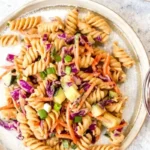
Protein Packed Thai Pasta Salad
- Total Time: 20 minutes
- Yield: 6 servings 1x
- Diet: Vegan
Description
Protein Packed Thai Pasta Salad is a healthy 20 minute dinner recipe. It packs in over 18 grams of protein and is full of veggies!
Ingredients
- 1/4 cup orange juice
- 1/4 cup peanut butter
- 2 tablespoons unseasoned rice vinegar
- 1 tablespoon liquid aminos
- 1 tablespoon maple syrup
- 1 clove garlic, (minced)
- 1–4 teaspoons sriracha, (optional for some added spice)
- 8 oz garbanzo bean rotini pasta
- 1 cup chopped cabbage
- 1 cup shredded carrots
- 1 cup chopped cucumber
- 4 scallions, (sliced)
Instructions
- Step: Cook the pasta according to the package directions. Drain the pasta and rinse it with cold water.
- Step: In a large bowl, whisk together all of the dressing ingredients. Add in the pasta along with the vegetables and toss to combine and serve.
Notes
This recipe uses garbanzo bean pasta to increase the protein content to over 18 grams per serving.
- Prep Time: 10 minutes
- Cook Time: 10 minutes
- Category: Salad
- Method: Stovetop
- Cuisine: Thai
Nutrition
- Serving Size: 1/6th recipe
- Calories: 350 kcal
- Sugar: 12 g
- Sodium: 3250 mg
- Fat: 10 g
- Saturated Fat: 1 g
- Unsaturated Fat: 9 g
- Trans Fat: 0 g
- Carbohydrates: 53 g
- Fiber: 12 g
- Protein: 22 g
- Cholesterol: 0 mg
Keywords: Thai pasta salad, protein packed, vegan, garbanzo bean pasta, healthy dinner, 20 minute meal