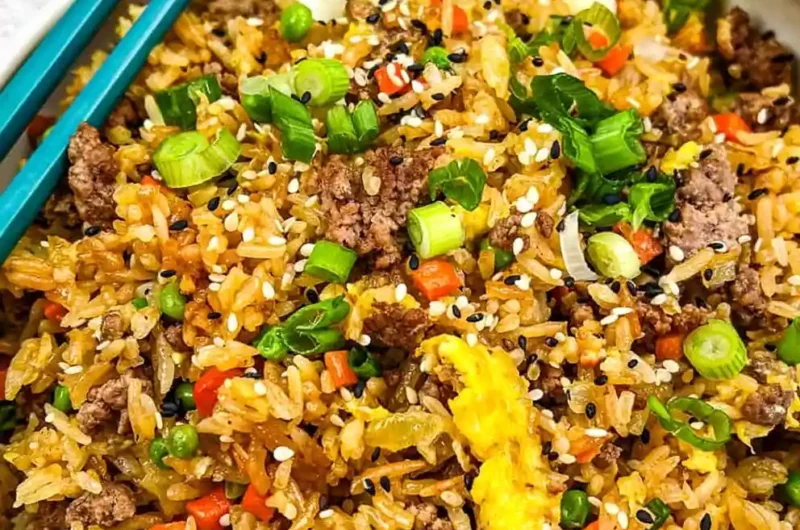
This ground beef fried rice is a fast and budget-friendly dinner option that combines savory protein with crisp vegetables. It is an ideal meal for busy weeknights when you need something filling and flavorful in under 30 minutes.
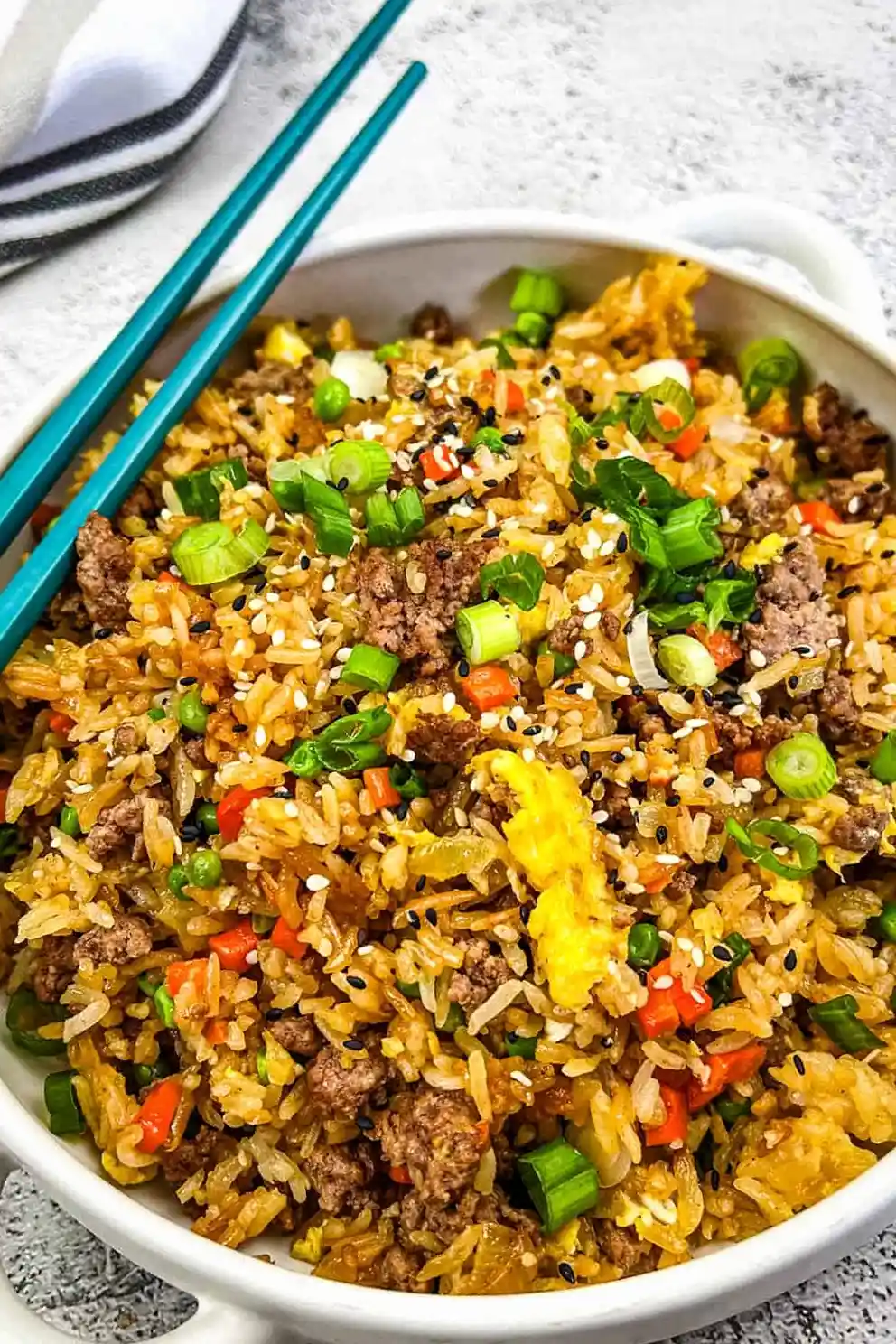
List of ingredients
- 1 pound ground beef – use 80/20 for maximum flavor or a leaner blend for less fat.
- 2 tablespoons butter – salted butter adds a rich, savory depth to the rice.
- 4 cups cold cooked rice – day-old refrigerated rice is essential to prevent mushiness.
- 1 tablespoon sesame oil – provides a distinct, nutty aroma and authentic taste.
- ½ cup carrot (diced) – peel and chop into small, uniform cubes for even cooking.
- ½ cup onion (diced) – finely dice the onion to ensure it blends well into the dish.
- ½ cup frozen peas – no need to thaw these; they cook quickly in the pan.
- 2 tablespoons ginger (diced) – fresh ginger offers a zesty and aromatic punch.
- 2 cloves garlic (minced) – use fresh garlic cloves rather than powdered for better flavor.
- 1 egg (lightly beaten) – adds richness and helps bind the ingredients together.
- ¼ cup soy sauce – low-sodium soy sauce is recommended to control the salt level.
- green onion (sliced) – used as a fresh garnish for color and a mild onion bite.
step-by-step instructions
- Brown the Beef: Heat a large skillet or wok over medium-high heat and brown the ground beef. Once cooked through, remove the meat and set it aside, leaving about 1 tablespoon of the fat in the pan.
- Heat the Base: Melt the butter and sesame oil together in the same skillet over medium-high heat until bubbling.
- Sauté Vegetables: Add the diced carrots and onions to the pan and sauté for 3-4 minutes until they begin to soften. Stir in the frozen peas, diced ginger, and minced garlic, cooking for another 2 minutes until fragrant.
- Cook the Egg: Push the sautéed vegetables to one side of the skillet. Pour the beaten egg into the empty space and scramble until fully cooked, then stir the egg into the vegetable mixture.
- Fry the Rice: Add the cold cooked rice to the pan, breaking up any clumps with a spatula. Sauté for 2-3 minutes until the rice grains are lightly browned and toasted.
- Combine Everything: Thoroughly mix the rice and vegetables together. Return the cooked ground beef to the skillet and stir to distribute evenly.
- Season and Finish: Drizzle the soy sauce over the rice mixture and stir constantly until every grain is well-coated. Continue cooking for another 2-3 minutes to allow the flavors to meld.
- Garnish and Serve: Sprinkle the sliced green onions over the top of the fried rice just before serving.
Pro Tips for Optimal Texture
Prioritize Day-Old Refrigerated Rice
Freshly cooked rice contains too much moisture, which leads to a sticky or mushy texture when fried. Using rice that has been chilled in the refrigerator for 24 hours allows the starches to recrystallize, resulting in firm, individual grains. If you must use fresh rice, spread it on a baking sheet and freeze it for 15 minutes to dry it out.
Maintain High Pan Temperature
Fried rice requires high heat to achieve the characteristic “sear” on the grains and vegetables. If the temperature drops too low, the ingredients will steam in their own juices rather than fry. Keep your heat on medium-high to ensure a toasted flavor and a non-sticky consistency.
Manage the Fat Content Carefully
While some fat is necessary for flavor and non-sticking, too much grease will make the dish oily. If your ground beef releases a significant amount of fat, drain the excess, leaving only about a tablespoon. This ensures the butter and sesame oil can still brown the vegetables without floating in oil.
Ingredient Substitutions and Alternatives
Using Different Proteins
While ground beef is the star, you can replace it with ground turkey or ground chicken for a leaner profile. If using poultry, you may need to add an extra tablespoon of butter or oil since these meats have less natural fat. Ensure the meat is fully browned before removing it from the pan.
Vegetable Variations
You can easily swap the peas and carrots for other frozen or fresh vegetables like corn, diced bell peppers, or snap peas. Water chestnuts or baby corn add a great crunch to the dish. Just be sure to dice all vegetables to a similar size so they cook at the same rate.
Soy Sauce Alternatives
For those avoiding soy, coconut aminos provide a similar salty-sweet flavor profile with less sodium. Tamari is another excellent option, particularly for those seeking a gluten-free alternative. Adjust the quantity slightly as some alternatives may be less salty than traditional soy sauce.
Replacing Butter for Different Fats
If you prefer not to use butter, avocado oil or grapeseed oil are excellent high-smoke-point substitutes. These oils provide a neutral flavor that allows the sesame oil and ginger to shine. Simply use the same measurement as the butter called for in the recipe.
Expanding the Flavor Profile
Adding a Spicy Element
To add heat to the dish, stir in a tablespoon of Sriracha or a pinch of red pepper flakes during the final cooking stage. Freshly sliced jalapeños added with the onions also provide a bright, spicy kick. Adjust the amount based on your preference for spice.
Enhancing the Umami Depth
Adding a teaspoon of oyster sauce or a splash of fish sauce can deepen the savory quality of the rice. These ingredients add a complex, salty layer that mimics restaurant-style fried rice. Mix these in along with the soy sauce for a more professional taste.
Incorporating Sweet Notes
A small drizzle of honey or a pinch of brown sugar can balance the saltiness of the soy sauce. This creates a subtle sweet-and-savory contrast that appeals to many palates. Stir the sweetener in at the very end to prevent it from burning on the pan.
Serving Suggestions and Pairings
Fresh Vegetable Side Dishes
Pair the heavy, savory rice with a light Asian-style slaw featuring shredded cabbage, carrots, and a rice vinegar dressing. A side of steamed broccoli or bok choy provides a nutritional balance and a fresh contrast to the fried elements. These sides help cut through the richness of the beef.
Texture-Based Appetizers
Crispy spring rolls or fried wontons make excellent companions to this meal. The crunch of the appetizers complements the soft but firm texture of the fried rice. Serve these with a sweet chili dipping sauce for a complete dining experience.
Light Soup Accompaniments
A simple egg drop soup or a clear vegetable broth can round out the meal. The warmth of the soup prepares the palate for the dense, flavorful beef rice. Keep the soup light on seasoning to avoid overloading the meal with sodium.
Storage and Reheating Guidelines
Refrigeration and Shelf Life
Store leftover fried rice in an airtight container in the refrigerator for up to four days. Ensure the rice is cooled slightly before sealing the container to prevent excessive condensation. This prevents the rice from becoming soggy during storage.
Freezing for Meal Prep
This dish freezes remarkably well for up to three months. Portion the rice into individual freezer-safe bags or containers to make reheating easier. Squeeze out as much air as possible from bags to prevent freezer burn on the grains.
Stovetop Reheating Method
For the best results, reheat the rice in a skillet over medium heat with a teaspoon of oil or butter. Stir frequently until the rice is heated through and the edges become crisp again. This restores the original texture better than any other method.
Microwave Reheating Tips
When using a microwave, place the rice in a bowl and add a teaspoon of water over the top. Cover the bowl with a damp paper towel to trap the steam, which prevents the rice from drying out. Heat in 1-minute intervals, stirring in between.
Make-Ahead Preparation Strategies
Pre-chopping Aromatics and Veggies
To speed up the cooking process, dice the carrots, onions, and ginger the night before. Store them in a single airtight container so you can toss them into the pan all at once. This reduces the prep time during the actual cooking window.
Cooking Rice in Advance
Since cold rice is required, cook a large batch of rice a day or two before you plan to make the meal. Spread the cooked rice on a tray to cool quickly before moving it to the fridge. This ensures the grains stay separate and dry.
Par-cooking the Protein
You can brown the ground beef in advance and store it in the refrigerator. When you are ready to make the fried rice, simply reheat the beef in the pan or add it back in during the final steps. This saves about 5-10 minutes of active cooking time.
Common Cooking Troubleshooting
Solving the Mushy Rice Problem
If your rice ends up too soft, it is likely because the rice was too fresh or the pan wasn’t hot enough. To fix this in future batches, ensure the rice is fully chilled and avoid stirring too frequently, which can break the grains. Using a wider pan also helps moisture evaporate faster.
Preventing Burnt Garlic and Ginger
Garlic and ginger burn much faster than onions and carrots. Always add them toward the end of the vegetable sauté phase to prevent them from turning bitter. If the pan seems too hot, add a small splash of water or oil to lower the temperature instantly.
Adjusting Overly Salty Rice
If you accidentally add too much soy sauce, add more cooked rice or a handful of frozen peas to dilute the salt. A squeeze of fresh lime juice can also help balance the saltiness with acidity. Avoid adding more salt or seasoned condiments once the soy sauce is in.
Dealing with Rice Clumps
Rice often clumps together after being refrigerated. Gently break the clumps apart with your hands or a fork before adding the rice to the skillet. Using a silicone spatula to press and fold the rice during frying also helps separate the grains.
Frequently Asked Questions
Can I use brown rice instead of white rice?
Yes, you can use brown rice, although the texture will be chewier and it will take slightly longer to fry. Ensure the brown rice is also cold and refrigerated to prevent it from becoming gummy. The nutritional value increases, but the absorption of soy sauce may differ slightly.
Is it necessary to use sesame oil?
While not strictly necessary, sesame oil provides the signature toasted flavor associated with fried rice. If you do not have it, you can use a neutral oil, but you will lose a key aromatic element. Adding a pinch of toasted sesame seeds can partially compensate for the missing oil.
How do I keep the eggs from disappearing into the rice?
The key is to push the vegetables aside and scramble the eggs separately in the pan. By allowing the eggs to set into small curds before mixing them in, you ensure visible pieces of egg. Avoid stirring the egg too vigorously into the rice while it is still liquid.
Can I make this recipe in a slow cooker?
No, this recipe relies on high-heat sautéing to achieve the correct texture and flavor. A slow cooker would steam the ingredients, resulting in a porridge-like consistency rather than fried rice. Use a wok or a large skillet for the best results.
Print
Quick and Hearty Ground Beef Fried Rice
- Total Time: 20 minutes
- Yield: 4 servings 1x
- Diet: General
Description
Super easy and super delicious, turn 1 pound of ground beef into an affordable meal! Use any veggies you’ve got on hand, and dinner will be ready in no time!
Ingredients
- 1 pound ground beef
- 2 tablespoons butter
- 4 cups cold cooked rice
- 1 tablespoon sesame oil
- ½ cup carrot (diced)
- ½ cup onion (diced)
- ½ cup frozen peas
- 2 tablespoons ginger (diced)
- 2 cloves garlic (minced)
- 1 egg (lightly beaten)
- ¼ cup soy sauce
- green onion (sliced, for garnish)
Instructions
- Step 1: Begin by browning the ground beef in a large skillet or wok over medium-high heat. Once cooked, remove the beef and set aside, leaving behind 1 tablespoon of the fat.
- Step 2: In the same skillet, melt the butter with the sesame oil over medium-high heat.
- Step 3: Add the carrots and onions to the skillet, sautéing until they begin to soften, about 3-4 minutes. Add the peas, ginger, and garlic and continue to cook for an additional 2 minutes until they become aromatic.
- Step 4: Push the veggies to one side of the skillet. Pour the beaten egg into the cleared space and scramble until fully cooked, then mix it with the vegetables.
- Step 5: Introduce the cold rice, breaking up any lumps, and sauté for 2-3 minutes until it starts to brown lightly.
- Step 6: Combine the rice and vegetables thoroughly. Reintroduce the browned ground beef.
- Step 7: Drizzle soy sauce over the rice and mix everything together until well-coated. Continue cooking for another 2-3 minutes, stirring occasionally.
- Step 8: Garnish the fried rice with sliced green onions just before serving.
Notes
Utilize cold rice from the previous day because fresh rice may turn mushy. Have all your ingredients ready to go before cooking because this recipe cooks fast! Add all your favorite vegetables such as bell peppers, corn, or snap peas. Use lean ground beef and drain off excess fat.
- Prep Time: 10 minutes
- Cook Time: 10 minutes
- Category: Main Course
- Method: Stir-frying
- Cuisine: Chinese
Nutrition
- Serving Size: 1.5 cups
- Calories: 633 kcal
- Sugar: 3 g
- Sodium: 962 mg
- Fat: 34 g
- Saturated Fat: 13 g
- Unsaturated Fat: 16 g
- Trans Fat: 2 g
- Carbohydrates: 53 g
- Fiber: 3 g
- Protein: 28 g
- Cholesterol: 136 mg
Keywords: ground beef fried rice, easy Chinese meal, quick dinner, beef and rice