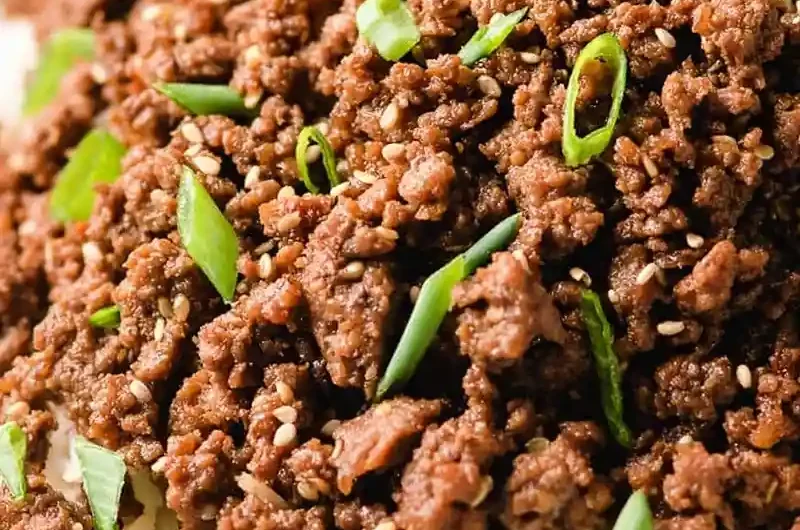
This fast Korean-inspired beef bowl is an ideal solution for busy weeknights. It combines savory and sweet flavors in under 20 minutes using basic pantry ingredients.
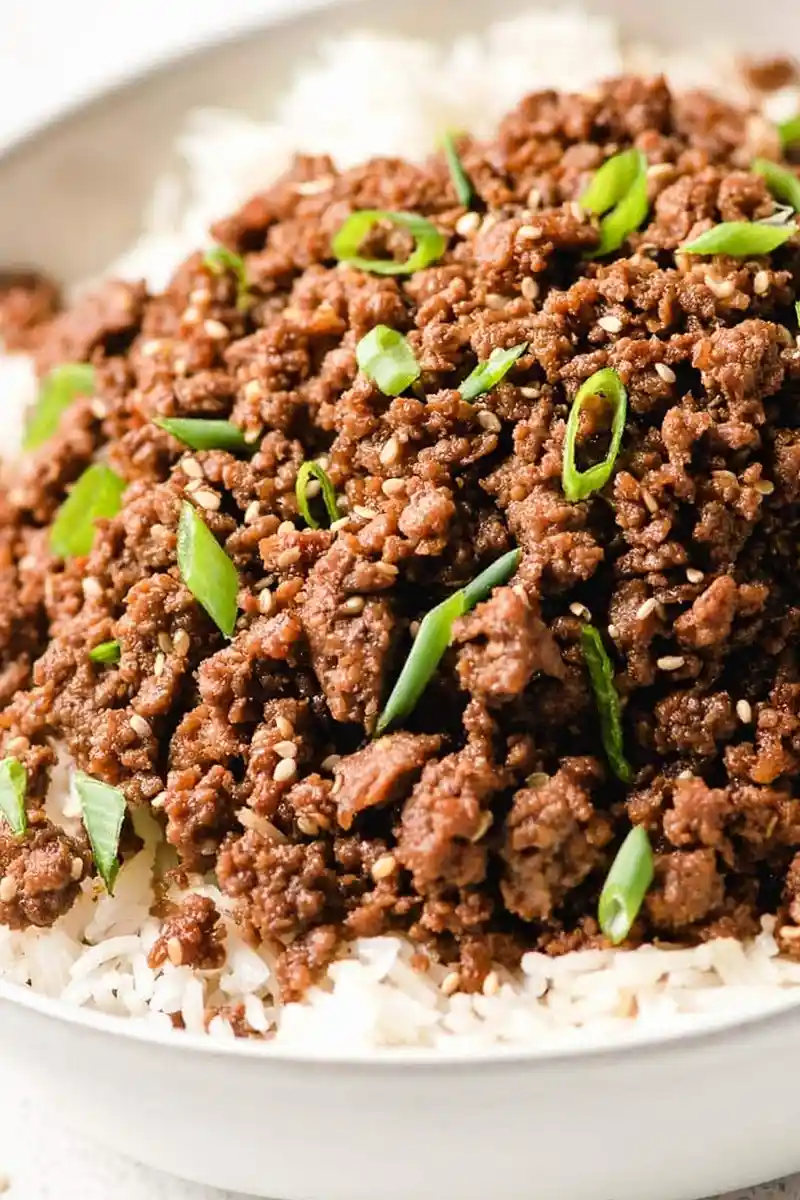
List of ingredients
- 2 teaspoons vegetable oil – used for searing the meat.
- 1 lb. ground beef – use 80/20 or a leaner blend based on your preference.
- 1/4 cup soy sauce – low sodium is recommended to control saltiness.
- 1 Tablespoon sesame oil – provides a distinct nutty aroma.
- 1 Tablespoon sesame seeds – adds a slight crunch and visual appeal.
- 3 cloves garlic, minced – the base for the savory sauce.
- 3 Tablespoons brown sugar – creates sweetness and helps the sauce caramelize.
- 2 green onions (sliced) – used as a fresh garnish for brightness.
step-by-step instructions
- Brown the Beef: Heat the vegetable oil in a large skillet over medium heat. Add the ground beef and cook until no pink remains. (Tip: Let the meat sit undisturbed for a few minutes to develop a golden-brown crust).
- Prepare the Sauce: While the beef is cooking, whisk together the soy sauce, sesame oil, sesame seeds, minced garlic, and brown sugar in a small bowl or measuring cup. (Tip: Ensure the brown sugar is fully dissolved into the liquids).
- Combine and Glaze: Once the beef is cooked through, pour the soy sauce mixture into the skillet. Stir for several minutes until the beef is well coated and most of the liquid has been absorbed. (Tip: Simmer until the sauce becomes thick and sticky).
- Plating: Scoop the finished bulgogi over bowls of fluffy cooked rice. Garnish with sliced green onions and extra sesame seeds. (Tip: Serve immediately for the best texture).
Customizing Your Bulgogi Flavor
Adding a Spicy Element
If you prefer more heat, stir in a tablespoon of gochujang or sriracha during the sauce simmering phase. This adds a fermented depth or a vinegary kick that balances the sweetness of the brown sugar.
Incorporating Fresh Vegetables
Sauté shredded carrots, diced bell peppers, or sliced mushrooms in the pan before adding the beef. This increases the nutritional value and adds a colorful variety to the final bowl.
Topping with an Egg
Place a fried or poached egg on top of the beef and rice. The runny yolk creates a rich, creamy sauce that mixes beautifully with the savory bulgogi glaze.
Transforming into Bibimbap
Use this ground beef as a base for a Korean mixed rice bowl. Add separate piles of sautéed spinach, bean sprouts, and pickled radish around the beef for a traditional presentation.
Ingredient Alternatives and Substitutions
Soy-Free Sauce Options
Substitute the soy sauce with coconut aminos for a soy-free alternative. This option is naturally sweeter and lower in sodium while maintaining a similar flavor profile.
Gluten-Free Adjustments
Replace the soy sauce with tamari or coconut aminos to make the dish gluten-free. Ensure your brown sugar is certified gluten-free if you have a severe sensitivity.
Alternative Sweeteners
You can use honey or maple syrup instead of brown sugar for a different type of sweetness. Note that honey is thicker and may cause the sauce to caramelize more quickly.
Using Different Ground Meats
Ground turkey or ground chicken can be used as a leaner substitute for beef. Since these meats are less fatty, you may need to add an extra teaspoon of oil to the skillet.
Ideal Serving Suggestions
Choosing the Best Rice
Short-grain white rice or jasmine rice works best for soaking up the sauce. For a healthier alternative, try brown rice or quinoa for added fiber and nutrients.
Adding Fermented Side Dishes
Serve the bowls with a side of kimchi or pickled daikon radish. The acidity of fermented vegetables cuts through the richness of the beef and sesame oil.
Fresh Vegetable Pairings
Steamed broccoli, bok choy, or snap peas provide a crisp contrast to the tender beef. Toss them in a light sesame oil dressing to keep the flavor profile consistent.
Low Carb Lettuce Wraps
Skip the rice and serve the ground beef in large butter lettuce or romaine leaves. This transforms the meal into a light, low-carb appetizer or dinner.
Storage and Freshness Guidelines
Refrigeration Basics
Store any leftover bulgogi in an airtight container in the refrigerator. It will remain fresh and flavorful for up to five days.
Freezing for Long Term
Portion the cooked beef into freezer-safe bags or containers. It can be stored in the freezer for up to one month without losing significant flavor.
Safe Thawing Methods
Thaw frozen beef slowly in the refrigerator overnight. Avoid thawing at room temperature to maintain food safety and texture.
Maintaining Garnish Freshness
Store sliced green onions separately in a small container with a damp paper towel. This prevents them from wilting before you serve the reheated meal.
Reheating for Maximum Quality
Using a Skillet
Reheat the beef in a skillet over medium heat with a splash of water or beef broth. This restores the sauce’s consistency and prevents the meat from drying out.
Microwave Tips
Place the beef in a microwave-safe bowl and sprinkle with a teaspoon of water. Cover with a lid and heat in short intervals, stirring in between.
Avoiding Overcooking
Stop reheating as soon as the meat is warmed through. Overheating can cause the sugars in the sauce to burn or the beef to become tough.
Refreshing the Flavor
Add a fresh sprinkle of sesame seeds and new sliced green onions after reheating. This restores the brightness and contrast that may be lost during storage.
Cooking Techniques for Better Results
The Importance of Searing
Allow the ground beef to brown without stirring for 2-3 minutes. This creates a Maillard reaction, which adds a deeper, savory flavor to the dish.
Managing Sauce Reduction
Simmer the sauce until it reduces into a thick glaze that clings to the meat. If the sauce is too thin, increase the heat slightly for one minute.
Garlic Mincing Tips
Mince your garlic finely or use a garlic press to ensure it distributes evenly. This prevents large chunks of raw garlic from remaining in the final dish.
Selecting the Right Pan
A large stainless steel or cast iron skillet is ideal for this recipe. These materials distribute heat evenly and allow for better browning of the meat.
Meal Prep and Time Saving
Advance Sauce Preparation
Whisk the soy sauce, sesame oil, sugar, and garlic in a jar up to two days in advance. Keep the jar refrigerated and shake well before adding to the pan.
Batch Cooking Efficiency
Double or triple the recipe to prepare several meals for the week. Ground beef bulgogi holds its flavor well, making it perfect for lunch prep.
Rice Preparation Tips
Use a rice cooker to prepare a large batch of grains at the start of the week. Store the cooked rice in the fridge and reheat it alongside the beef.
Portion Control for Packing
Divide the beef and rice into separate compartments in your meal prep containers. This prevents the rice from becoming too mushy from the sauce during storage.
Troubleshooting Common Issues
Dealing with Excess Grease
If the beef releases too much fat, carefully drain the excess grease before adding the sauce. This ensures the glaze clings to the meat rather than sliding off.
Adjusting Sauce Sweetness
If the final dish is too sweet, add a small splash of soy sauce or a squeeze of lime juice. The salt or acid will balance the sugar levels.
Preventing Dry Meat
Do not overcook the beef before adding the sauce. Remove it from the heat as soon as the sauce has thickened and the meat is coated.
Avoiding Burnt Garlic
Add the garlic and sugar mixture only after the beef is browned. Adding sugar too early in the process can lead to burning and a bitter taste.
Nutrition and Diet Adjustments
Reducing Sodium Levels
Use a low-sodium soy sauce or replace a portion of it with water or unsalted beef broth. This reduces the overall salt content without sacrificing the savory profile.
Lowering the Sugar Content
Reduce the brown sugar to one tablespoon or use a natural sweetener like stevia. The dish will be less glazed but will still maintain the core flavors.
Increasing Fiber Intake
Mix in finely chopped cauliflower or riced broccoli. These additions blend in with the ground beef and add essential vitamins and fiber.
Adding Extra Protein
Incorporate cooked edamame or tofu crumbles into the skillet. This adds different textures and increases the protein density of the meal.
Frequently Asked Questions
Is ground beef a good substitute for steak?
Yes, ground beef provides a similar flavor profile and is much faster to cook. It also allows the sauce to coat every piece of meat more effectively than sliced steak.
Can I make this without gochujang?
Absolutely. This recipe focuses on a sweet and savory profile using pantry staples. You only need gochujang if you specifically want a spicy kick.
What is the best rice to use for bulgogi?
Short-grain white rice, often labeled as sushi rice, is the most traditional choice. Its sticky texture complements the thick bulgogi glaze perfectly.
How do I make this kid-friendly?
This recipe is already naturally sweet, which kids usually love. If they are sensitive to textures, mince the green onions very finely or omit them entirely.
Print
Quick Korean Ground Beef Bulgogi Bowls
- Total Time: 20 minutes
- Yield: 4 servings 1x
- Diet: General
Description
If you’re looking for a quick Korean dinner that’s big on flavor, this ground beef bulgogi recipe is the answer. Ready in about 20 minutes, it’s a sweet and savory weeknight favorite that tastes just like takeout, without the extra cost or effort!
Ingredients
- 2 teaspoons vegetable oil
- 1 lb. ground beef
- 1/4 cup soy sauce
- 1 Tablespoon sesame oil
- 1 Tablespoon sesame seeds
- 3 cloves garlic, minced
- 3 Tablespoons brown sugar
- 2 green onions, sliced
Instructions
- Step: Heat the oil in a large skillet over medium heat. Add the ground beef and cook until no pink remains.
- Step: Meanwhile, in a bowl or large measuring cup, whisk together the soy sauce, sesame oil, sesame seeds, garlic, and brown sugar.
- Step: When the beef is cooked, add the soy sauce mixture and stir for a few minutes until beef is well coated and most of the liquid is absorbed.
- Step: Serve bulgogi over rice with green onions and sesame seeds for garnish.
Notes
Leftover ground beef bulgogi will keep in the fridge for up to 3 days, and reheats well on the stove top or in the microwave. For extra flavor and a silky sauce, top the bulgogi with a fried or poached egg.
- Prep Time: 5 minutes
- Cook Time: 15 minutes
- Category: Main Course
- Method: Skillet
- Cuisine: Korean
Nutrition
- Serving Size: 1 serving
- Calories: 395 kcal
- Sugar: 9 g
- Sodium: 890 mg
- Fat: 29 g
- Saturated Fat: 10 g
- Unsaturated Fat: 18 g
- Trans Fat: 1 g
- Carbohydrates: 11 g
- Fiber: 1 g
- Protein: 21 g
- Cholesterol: 81 mg
Keywords: easy, ground beef, quick, sesame oil, soy sauce