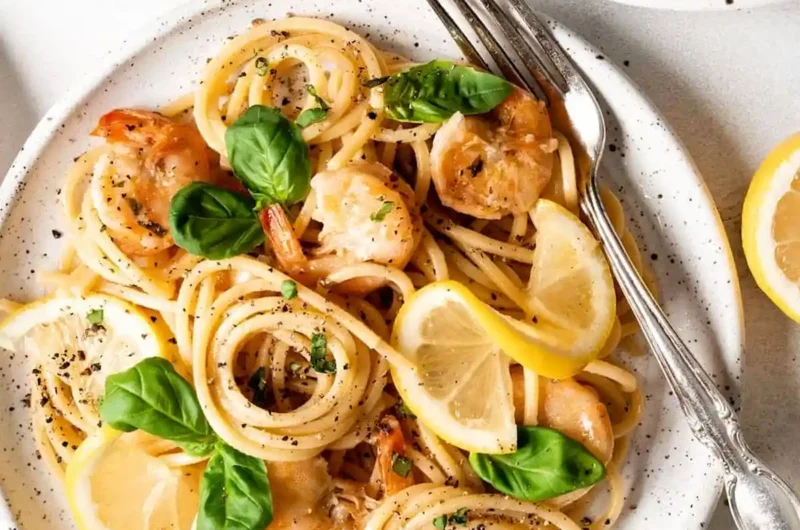
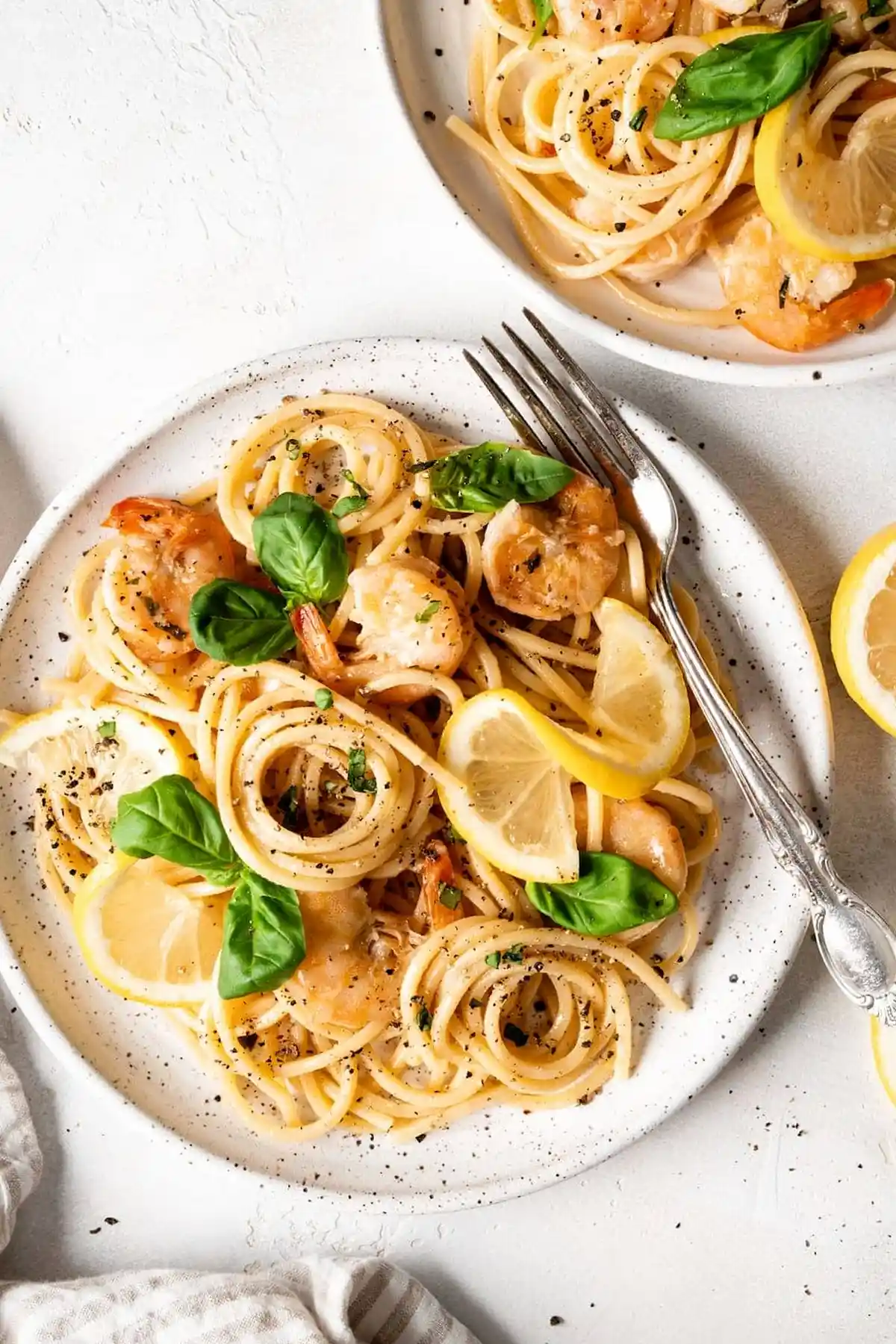
This bright and zesty pasta dish combines succulent shrimp with a rich garlic butter sauce. It is an efficient meal that requires minimal cleanup and comes together in just 20 minutes.
List of ingredients
- 8 ounces thin pasta (spaghetti, capellini, linguine, or angel hair) – use your preferred thin variety for the best sauce adherence.
- 6 tablespoons unsalted butter – provides a creamy, rich base for the lemon sauce.
- 1/3 cup minced shallots – adds a delicate, sweet onion flavor.
- 3 cloves garlic, minced – provides a strong aromatic punch.
- 1 lb large shrimp (shelled, peeled, and deveined) – ensure shrimp are cleaned for easy eating.
- 1/3 cup fresh lemon juice (approximately 4 lemons) – adds essential acidity and brightness.
- Zest from the lemons – enhances the citrus aroma without adding extra liquid.
- Salt and pepper to taste – basic seasonings to balance the flavors.
- Roughly chopped fresh basil and lemon slices – used as a fresh garnish.
step-by-step instructions
- Prepare the pasta: Cook pasta according to the package instructions. Drain the water, return the pasta to the pot, and add a drizzle of olive oil to stop the noodles from sticking together.
- Sauté the aromatics: Melt the butter in a large skillet over medium heat. Add the minced shallots and cook for 1 minute, then stir in the minced garlic and cook for an additional 30 seconds.
- Cook the shrimp: Add the shrimp to the skillet and sauté for 2-3 minutes until they turn pink. Remove the skillet from the heat immediately to prevent the shrimp from becoming rubbery.
- Season the sauce: Stir the lemon juice, lemon zest, salt, and pepper into the skillet with the shrimp. Taste the sauce and adjust the salt and pepper to your preference.
- Combine and garnish: Toss the cooked pasta into the skillet until every strand is well coated in the sauce. Garnish the dish with fresh basil and lemon slices before serving.
Cooking Techniques for Perfect Results
Preventing Rubbery Shrimp
Shrimp cook very quickly and can become tough if overexposed to heat. Remove them from the pan as soon as they turn opaque and form a C-shape. Avoid cooking them into a tight O-shape, as this indicates overcooking.
Managing Pan Temperature
Keep the skillet on medium heat to ensure the butter does not brown or burn. Garlic is particularly sensitive and can turn bitter if scorched. Adding the garlic only 30 seconds before the shrimp ensures it remains fragrant.
Achieving Better Searing
Pat your shrimp dry with paper towels before adding them to the pan. Excess moisture creates steam, which prevents the shrimp from searing properly. Dry shrimp develop a better color and texture.
Selecting the Best Pasta
Thin pastas like angel hair or capellini are ideal because they cook rapidly and coat easily. If using linguine, ensure you cook it al dente so it maintains structure when tossed with the sauce. Always reserve a small amount of pasta water if the sauce seems too thick.
Maximizing Citrus Flavor
Use fresh lemons rather than bottled juice for a cleaner and more vibrant taste. Zesting the lemon before juicing allows you to capture the essential oils in the skin. These oils provide a deeper citrus profile than the juice alone.
Ingredient Alternatives and Substitutions
Alternative Aromatics
If shallots are unavailable, finely diced red or yellow onion can be used as a substitute. For a milder flavor, leeks can replace both shallots and onions. Ensure they are minced finely to integrate into the sauce.
Replacing Unsalted Butter
Extra virgin olive oil can be used for a lighter, heart-healthy version of this dish. Ghee is another option for a richer, nuttier taste. If using oil, keep the heat moderate to avoid smoking.
Using Dried Herbs
If fresh basil is not available, dried oregano or dried parsley can be used. Add dried herbs during the aromatic sauté phase to allow the heat to release their oils. Use about one-third of the amount of dried herbs compared to fresh.
Pasta Alternatives for Dietary Needs
Zucchini noodles or spaghetti squash are excellent low-carb alternatives. For a gluten-free option, use brown rice pasta or chickpea pasta. Note that gluten-free pastas often require different cooking times to avoid becoming mushy.
Lemon Juice Substitutes
White wine vinegar or apple cider vinegar can provide the necessary acidity if lemons are missing. Use these sparingly as they are more concentrated than lemon juice. Start with one tablespoon and adjust to taste.
Flavor Customizations and Variations
Adding Spicy Heat
Stir in half a teaspoon of red pepper flakes when sautéing the garlic. This adds a subtle kick that complements the lemon and butter. For more heat, add a dash of cayenne pepper or sliced fresh jalapeños.
Creating a Creamier Sauce
Whisk in two tablespoons of heavy cream or a dollop of mascarpone cheese at the end of the cooking process. This creates a velvety texture that balances the acidity of the lemon. Keep the heat low to prevent the cream from curdling.
Incorporating Fresh Vegetables
Add baby spinach or frozen peas during the last minute of shrimp cooking. Sautéed asparagus tips or halved cherry tomatoes also pair well with the lemon garlic profile. These additions increase the nutritional value and color of the meal.
Integrating Parmesan Cheese
Stir in freshly grated Parmesan cheese just before tossing in the pasta. The cheese adds a salty, umami depth that enhances the butter sauce. Avoid over-stirring to keep the sauce smooth.
Mediterranean Twist
Add chopped kalamata olives and crumbled feta cheese as a garnish. This shifts the flavor profile toward a Mediterranean style. Fresh oregano can be used instead of basil for this variation.
Serving and Pairing Ideas
Complementary Side Dishes
A simple side salad with a light vinaigrette cuts through the richness of the butter. Roasted broccoli or sautéed kale also pairs well with the citrus notes. Garlic bread can be served to soak up any remaining sauce.
Non-Alcoholic Beverage Pairings
A sparkling water with a twist of lime refreshes the palate between bites. Iced tea with lemon provides a thematic flavor match. For a richer option, a chilled white grape juice works well.
Professional Presentation Tips
Use tongs to twirl the pasta into a high mound in the center of the plate. Place the shrimp on top of the pasta rather than mixing them in completely. Finish with a fresh lemon slice and a sprig of basil for a restaurant-style look.
Pairing with Other Proteins
While shrimp is the star, scallops can be substituted or added for more variety. Sliced chicken breast can also be used, though it requires a longer cooking time than shrimp. Ensure the other proteins are seasoned with salt and pepper.
Proper Storage and Preservation
Refrigeration Guidelines
Store leftovers in an airtight container in the refrigerator for up to two days. Keep the pasta and shrimp together to maintain moisture. Ensure the dish is cooled slightly before sealing the lid to prevent condensation.
Freezing Considerations
This dish is not recommended for freezing because the pasta can become mushy and the shrimp may toughen. If you must freeze it, freeze the cooked shrimp and sauce separately from the pasta. Thaw in the refrigerator overnight before reheating.
Maintaining Texture
Pasta tends to absorb sauce as it sits in the fridge, which can lead to dryness. Store the dish with a small amount of extra butter or olive oil to keep it moist. This helps the sauce re-emulsify during reheating.
Effective Reheating Strategies
Using a Stovetop Pan
Reheat the pasta in a skillet over medium-low heat. Add a splash of water or a small knob of butter to loosen the sauce. Gently toss until heated through to avoid breaking the shrimp.
Microwave Reheating Tips
Place the pasta in a microwave-safe dish and cover it with a damp paper towel. Heat in short 30-second intervals, stirring in between. This prevents the shrimp from overcooking and keeps the pasta tender.
Preventing Dryness
Add a teaspoon of fresh lemon juice or a drizzle of olive oil before reheating. This refreshes the acidity and restores the glossy appearance of the sauce. Avoid overheating, as the lemon flavor can diminish.
Make-Ahead Preparation Tips
Prepping the Aromatics
Mince the garlic and shallots several hours in advance and store them in a small container. This reduces the active cooking time to just the sautéing process. Keep them chilled to maintain their potency.
Handling Frozen Shrimp
If using frozen shrimp, thaw them completely in the refrigerator overnight. Avoid thawing them in warm water, as this can affect the texture. Pat them dry immediately before they hit the pan.
Pre-cooking the Pasta
Cook the pasta slightly under the package directions if you plan to assemble the dish later. This prevents the pasta from becoming overcooked when it is tossed in the hot pan. Store the pre-cooked pasta tossed in olive oil.
Troubleshooting Common Cooking Mistakes
Correcting a Thin Sauce
If the sauce feels too watery, simmer it for an extra minute before adding the pasta. A small amount of grated Parmesan can also help thicken the consistency. Ensure the butter is fully emulsified with the lemon juice.
Fixing Overcooked Shrimp
Once shrimp become rubbery, they cannot be reversed. To avoid this in the future, use a timer and remove them from the heat the moment they turn pink. Using larger shrimp also provides a slightly longer window of perfection.
Balancing Excessive Acidity
If the lemon flavor is too overpowering, add a small pinch of sugar or an extra tablespoon of butter. This neutralizes the sharp acidity without masking the lemon taste. Taste and adjust in small increments.
Preventing Pasta Clumping
Always toss the drained pasta with a bit of oil or butter immediately. This creates a barrier that prevents the starches from bonding. Stir the pasta frequently while it is boiling to prevent sticking.
Frequently Asked Questions
Can I use frozen shrimp?
Yes, frozen shrimp work perfectly as long as they are completely thawed and patted dry before cooking. This ensures they sear properly and cook evenly in the butter.
How do I keep the shrimp tender?
The key is to cook them for only 2-3 minutes and remove the pan from the heat immediately. Carryover cooking will finish the process without making them tough.
Can I use a different type of pasta?
Any thin pasta such as spaghetti, linguine, or angel hair works well. You can also use fettuccine, though it may require a bit more sauce to coat the wider noodles.
Is this recipe gluten-free?
The original recipe is not gluten-free due to the wheat pasta. However, you can easily make it gluten-free by substituting the pasta with a gluten-free alternative or zucchini noodles.
Print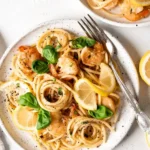
Quick Lemon Garlic Shrimp Pasta
- Total Time: 20 minutes
- Yield: 4 servings 1x
- Diet: General
Description
Light, fresh, and delicious lemon garlic shrimp pasta. This shrimp pasta recipe is made with shrimp, lemon, shallots, garlic, basil, and spaghetti. An easy 20-minute dinner!
Ingredients
- 8 ounces thin pasta (spaghetti, capellini, linguine, angel hair)
- 6 tablespoons unsalted butter
- 1/3 cup minced shallots
- 3 cloves garlic, minced
- 1 lb large shrimp, shelled, peeled, and deveined
- 1/3 cup fresh lemon juice (~4 lemons)
- Zest from the lemons
- Salt and pepper to taste
- Roughly chopped fresh basil and lemon slices as garnish
Instructions
- Cook Pasta: Cook pasta according to package instructions. Drain then return the pasta back to the pot. Add a drizzle of olive oil on top to keep the pasta from sticking together. Set aside.
- Sauté Aromatics: In a large skillet, melt butter over medium heat. Add the onions and cook for 1 minute then add the minced garlic and cook for another 30 seconds.
- Cook Shrimp: Add the shrimp to the skillet and cook for 2-3 minutes until pink. Careful not to overcook the shrimp! Remove the skillet from heat.
- Season: Add the lemon juice, lemon zest, salt, and pepper to the skillet over the cooked shrimp. Taste and adjust salt/pepper to your liking.
- Combine and Serve: Toss in the cooked pasta until well combined. Garnish with basil. Serve and enjoy!
Notes
You can use any thin pasta or skip the pasta and enjoy this lemon garlic shrimp over white rice. If using frozen shrimp, make sure to bring it to room temperature before cooking to avoid a rubbery texture.
- Prep Time: 5 minutes
- Cook Time: 15 minutes
- Category: Dinner, Lunch, Main Course
- Method: Sautéing
- Cuisine: American, Italian
Nutrition
- Serving Size: 1 serving
- Calories: 337 kcal
- Sugar: 2 g
- Sodium: 884 mg
- Fat: 11 g
- Saturated Fat: 6 g
- Unsaturated Fat: 5 g
- Trans Fat: 0 g
- Carbohydrates: 30 g
- Fiber: 2 g
- Protein: 29 g
- Cholesterol: 308 mg
Keywords: lemon garlic pasta, lemon garlic shrimp pasta, pasta recipe, shrimp pasta, shrimp pasta recipe, shrimp pasta recipes