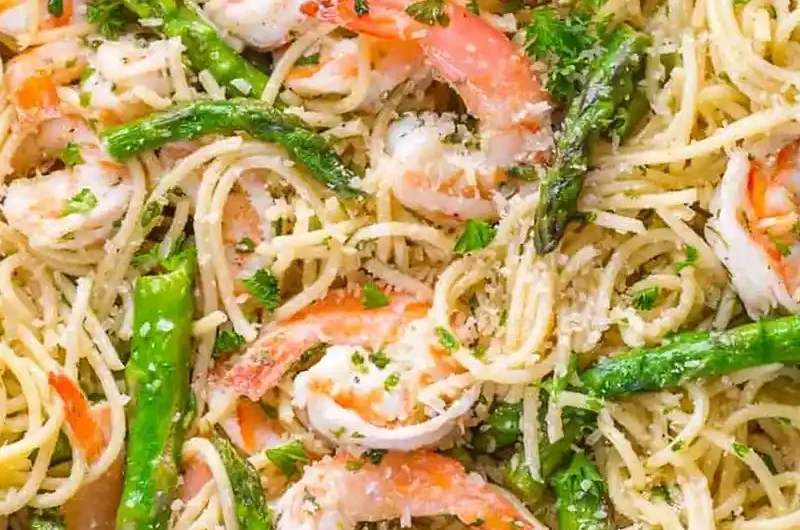
This efficient shrimp scampi pasta combines a bright lemon garlic butter sauce with fresh asparagus for a balanced meal. It is a sophisticated dinner option that can be fully prepared in just 30 minutes.
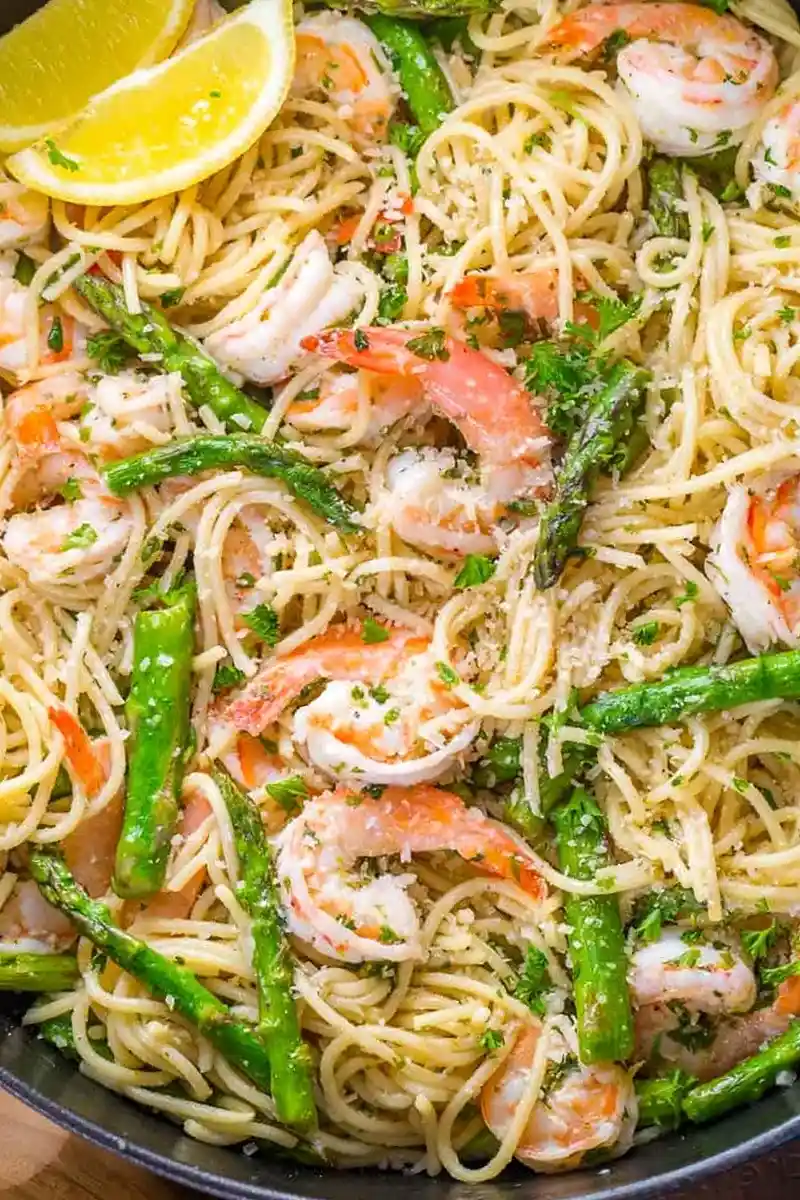
List of ingredients
- 1/2 lb spaghetti (homemade pasta, or your pasta of choice) – provides the base for the sauce.
- 1 lb asparagus (trimmed and cut into 2″ pieces) – adds a fresh, earthy contrast.
- 3 Tbsp unsalted butter (divided) – creates a rich, velvety emulsion.
- 3 Tbsp olive oil (divided) – prevents butter from burning at high heat.
- 4 cloves garlic (minced (about 1 1/2 Tbsp)) – provides a pungent, savory depth.
- 1/4 tsp red pepper flakes (or added to taste) – introduces a subtle heat.
- 1 lb large shrimp (peeled and deveined (16-20 or 21-25 count)) – the main protein source.
- 1 1/4 tsp fine sea salt (divided, plus more for cooking pasta) – enhances all flavors.
- 1/4 tsp black pepper (ground, or to taste) – adds a mild spice.
- 1 Tbsp grated lemon zest – provides concentrated citrus aroma.
- 1/4 cup fresh lemon juice (from 1 large or 2 small lemons) – adds necessary acidity.
- 1/3 cup fresh parsley (finely chopped) – contributes a clean, herbal finish.
- freshly grated parmesan (to serve) – adds a salty, nutty topping.
step-by-step instructions
- Prepare the pasta: Bring a large pot of water to a boil, add 1 Tbsp salt and cook pasta according to package instructions until Al’dente. Reserve 1/2 cup of pasta water, then drain pasta, return to the pot, and cover to keep warm.
- Sauté the asparagus: Place a large, deep pan over medium/high heat and add 1 Tbsp olive oil and 1 Tbsp butter. Add asparagus, season lightly with 1/4 tsp salt and 1/8 tsp pepper, and cook uncovered for 5 minutes or until crisp-tender, stirring occasionally. Remove from pan.
- Cook the shrimp: In the same hot skillet, add 2 Tbsp oil and 2 Tbsp butter. Once the butter is melted, add minced garlic and red pepper flakes if using, and sautee, stirring frequently for 1 minute. Add shrimp in a single layer and season with 1 tsp salt and 1/4 tsp black pepper. Saute until shrimp are pink and not translucent (about 1 minute per side). Be careful not to overcook or the shrimp will be tough.
- Assemble the dish: Turn off the heat and add lemon zest, juice, and parsley, and stir to combine. Add pasta and asparagus, and toss everything to combine. If the sauce seems dry, add some of the hot pasta water. Serve with freshly grated Parmesan cheese.
Optimizing Your Ingredient Selection
Choosing the Right Shrimp Size
Using 16-20 or 21-25 count large shrimp ensures the protein is substantial enough to withstand the heat without overcooking. Consistent sizing allows all pieces to cook evenly in a single layer. Always ensure shrimp are thoroughly peeled and deveined for the best texture.
Selecting Fresh Asparagus Spears
Look for asparagus with tight, closed tips and a vibrant green color. Avoid spears that appear limp or have woody, brown ends. The thinner the spears, the faster they will cook to a crisp-tender consistency.
Matching Pasta Shapes to the Sauce
Spaghetti and linguine are traditional choices because their surface area allows the garlic butter sauce to cling effectively. Angel hair is a faster alternative but requires careful handling to avoid breaking. Homemade pasta offers a superior texture and absorbs the sauce more deeply.
Professional Cooking Techniques
Preventing Rubberiness in Shrimp
Shrimp cook extremely quickly and can become tough if left in the pan too long. Remove them as soon as they turn opaque and pink. Searing them in a single layer ensures high heat contact and a better sear.
Mastering Al Dente Pasta Texture
Cook your pasta for one to two minutes less than the package directions suggest. This ensures the pasta maintains a slight bite after being tossed in the hot pan with the sauce. Salt the boiling water generously to season the pasta from the inside out.
Sautéing Garlic Without Burning
Garlic has a low burn point and can become bitter if scorched. Stir the minced garlic frequently over medium heat for no more than one minute. Adding it to a mixture of butter and oil helps regulate the temperature.
Practical Ingredient Substitutions
Using Alternative Protein Sources
If you prefer not to use shrimp, scallops or sliced chicken breast are excellent alternatives. For a plant-based version, use extra-firm tofu cubes or king oyster mushrooms. Adjust the cooking time based on the density of the protein selected.
Low-Carb Pasta Alternatives
Zucchini noodles (zoodles) or spaghetti squash are great options for reducing carbohydrates. Since these release more water than grain pasta, sauté them briefly and drain excess liquid before adding to the sauce. Chickpea or lentil pasta can be used for additional protein.
Swapping Asparagus for Other Greens
Broccoli florets, snap peas, or baby spinach work well in this recipe. Broccoli and snap peas should be sautéed similarly to asparagus for several minutes. Spinach should be stirred in at the very end until just wilted.
Flavor Enhancements and Variations
Adding Creaminess to the Sauce
For a richer consistency, stir in two tablespoons of heavy cream or a dollop of mascarpone at the final stage. This transforms the scampi into a creamy garlic sauce while maintaining the citrus notes. Keep the heat low to prevent the cream from separating.
Increasing the Heat Level
Increase the amount of red pepper flakes to 1/2 teaspoon for a noticeable kick. Alternatively, add a pinch of cayenne pepper or a finely diced serrano chili during the garlic sauté phase. This balances the richness of the butter with sharp heat.
Integrating Umami with Capers
Adding a tablespoon of drained capers provides a salty, briny pop that complements the lemon juice. Stir them in along with the parsley and lemon zest. This addition gives the dish a profile similar to a piccata sauce.
Serving and Pairing Recommendations
Selecting the Right Side Salads
A crisp Caesar salad with a creamy dressing balances the acidity of the lemon sauce. A simple arugula salad with shaved parmesan and a light vinaigrette also works well. These options provide a fresh, raw contrast to the cooked pasta.
Choosing the Best Bread Accompaniments
Warm garlic bread or a toasted focaccia are ideal for soaking up the remaining garlic butter sauce. A crusty baguette toasted with olive oil and sea salt is a simpler alternative. This ensures no part of the flavorful sauce goes to waste.
Non-Alcoholic Beverage Pairings
A sparkling water with a squeeze of fresh lime complements the citrus elements of the scampi. An iced herbal tea with lemon and mint provides a refreshing contrast to the rich butter. A chilled white grape juice can also offer a sweet balance to the garlic.
Storage and Reheating Guidelines
Proper Refrigeration Methods
Store leftovers in an airtight container in the refrigerator for up to three days. Keep the pasta and shrimp together, but consider storing extra parmesan separately. Ensure the food is cooled slightly before sealing to prevent excess condensation.
Reheating Without Overcooking Shrimp
Avoid the microwave if possible, as it often makes shrimp rubbery. Instead, reheat the pasta in a skillet over medium-low heat with a splash of water or butter. Stir gently and remove from heat as soon as the shrimp are warmed through.
Freezing Considerations
This dish does not freeze well because the emulsion of the butter sauce can break and the pasta can become mushy. If you must freeze it, freeze only the cooked shrimp and asparagus. Reheat them and toss with freshly cooked pasta and a new sauce.
Make-Ahead Strategies
Prepping Vegetables and Aromatics
Trim and cut the asparagus and mince the garlic up to 24 hours in advance. Store them in separate containers in the fridge to save time during the actual cooking process. Zest the lemon and chop the parsley ahead of time as well.
Preparing the Garlic Base
You can sauté the garlic and red pepper flakes in butter and oil and let the mixture cool. Store this concentrated base in a jar in the refrigerator. Simply reheat the base in a pan before adding the shrimp for a faster workflow.
Partial Batch Cooking
Cook the pasta and asparagus separately and store them in the fridge. When ready to serve, sauté the shrimp and garlic as directed, then toss in the pre-cooked components. This reduces the active cooking time to under 10 minutes.
Troubleshooting Common Issues
Fixing a Dry Sauce
If the sauce does not coat the pasta evenly, stir in small increments of the reserved pasta water. The starch in the water helps emulsify the butter and oil into a cohesive glaze. Add water one tablespoon at a time until the desired consistency is reached.
Adjusting Excessive Acidity
If the lemon juice makes the dish too tart, add an extra pat of unsalted butter. The fat in the butter neutralizes the sharp acidity of the citrus. A small pinch of sugar can also balance the flavor profile.
Correcting Over-Salted Pasta
If the pasta water was too salty, rinse the cooked pasta briefly under warm water before adding it to the pan. Alternatively, increase the amount of pasta or add more unsalted vegetables to dilute the saltiness. Avoid adding more parmesan if the dish is already too salty.
Frequently Asked Questions
Can I use frozen shrimp?
Yes, you can use frozen shrimp. Ensure they are fully thawed and patted dry with paper towels before cooking. Adding wet shrimp to the pan will cause them to steam rather than sear, reducing the flavor.
Do I have to peel the shrimp?
Peeling the shrimp is recommended for ease of eating and better sauce absorption. However, leaving the tails on provides a more professional presentation. Ensure the veins are removed to avoid a gritty texture.
Can I use bottled lemon juice?
Fresh lemon juice is strongly recommended for the best flavor. Bottled juice often has a metallic aftertaste and lacks the brightness of fresh fruit. If using bottled, reduce the amount slightly as it can be more concentrated.
Print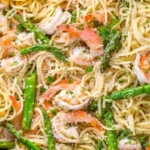
Quick Lemon Garlic Shrimp Scampi with Pasta
- Total Time: 30 minutes
- Yield: 4 servings 1x
- Diet: General
Description
Shrimp Scampi with Pasta and Asparagus has a lemon garlic and herb sauce that packs so much fresh and amazing flavor. A 30 minute shrimp scampi pasta recipe!
Ingredients
- 1/2 lb spaghetti
- 1 lb asparagus, trimmed and cut into 2” pieces
- 3 Tbsp unsalted butter, divided
- 3 Tbsp olive oil, divided
- 4 cloves garlic, minced
- 1/4 tsp red pepper flakes
- 1 lb large shrimp, peeled and deveined
- 1 1/4 tsp fine sea salt, divided
- 1/4 tsp black pepper
- 1 Tbsp grated lemon zest
- 1/4 cup fresh lemon juice
- 1/3 cup fresh parsley, finely chopped
- freshly grated parmesan
Instructions
- Step: Bring a large pot of water to a boil, add 1 Tbsp salt and cook pasta according to package instructions until Al’dente. Reserve 1/2 cup of pasta water, then drain pasta, return to the pot, and cover to keep warm.
- Step: Place a large, deep pan over medium/high heat and add 1 Tbsp olive oil and 1 Tbsp butter. Add asparagus, season lightly with 1/4 tsp salt and 1/8 tsp pepper, and cook uncovered for 5 minutes or until crisp-tender, stirring occasionally. Remove from pan.
- Step: In the same hot skillet, add 2 Tbsp oil and 2 Tbsp butter. Once the butter is melted, add minced garlic and red pepper flakes if using, and sautee, stirring frequently for 1 minute. Add shrimp in a single layer and season with 1 tsp salt and 1/4 tsp black pepper. Saute until shrimp are pink and not translucent (about 1 minute per side).
- Step: Turn off the heat and add lemon zest, juice, and parsley, and stir to combine. Add pasta and asparagus, and toss everything to combine. If the sauce seems dry, add some of the hot pasta water. Serve with freshly grated Parmesan cheese.
Notes
Turn off the heat before adding the lemon zest, juice, and parsley to ensure the most vibrant flavor.
- Prep Time: 10 minutes
- Cook Time: 20 minutes
- Category: Main Course
- Method: Sautéing
- Cuisine: Italian
Nutrition
- Serving Size: 1 serving
- Calories: 493 kcal
- Sugar: 4 g
- Sodium: 1381 mg
- Fat: 21 g
- Saturated Fat: 7 g
- Unsaturated Fat: 12 g
- Trans Fat: 0.4 g
- Carbohydrates: 51 g
- Fiber: 5 g
- Protein: 26 g
- Cholesterol: 165 mg
Keywords: pasta shrimp scampi, shrimp scampi pasta