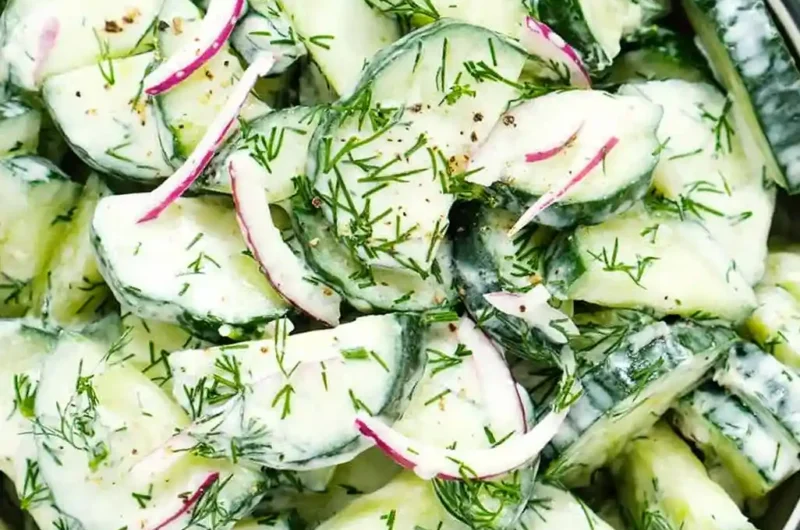
This cooling cucumber salad features a creamy lemon-yogurt dressing and fresh dill. It is an ideal accompaniment for grilled meats or summer gatherings.
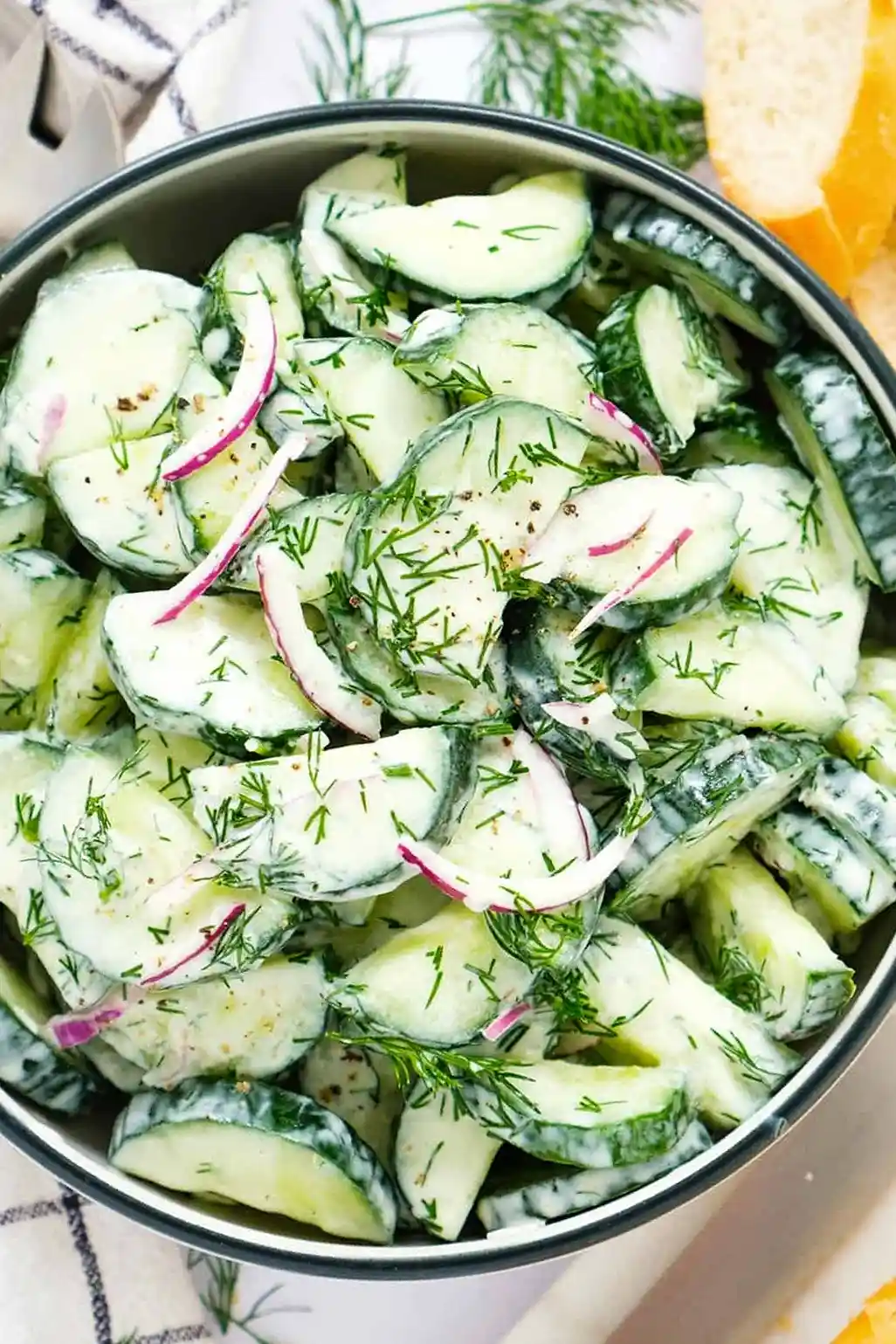
List of ingredients
- 3/4 cup (150 grams) Greek yogurt or plain full-fat – provides a thick, creamy base.
- 1 1/2 tablespoon extra virgin olive oil – adds richness and smooths the texture.
- 1 1/2 tablespoon lemon juice – provides a bright, acidic balance.
- 1/4 teaspoon garlic, grated – adds a sharp, aromatic punch.
- 1/2 teaspoon fine salt – enhances the natural flavors of the vegetables.
- 1/5 teaspoon black pepper – adds a subtle layer of spice.
- 1 1/2 lb (670 grams) cucumbers, sliced (e.g., 2 long English cucumbers) – the main crunchy component.
- 1/2 red onion, finely sliced – adds a sweet and sharp contrast.
- 1/4 cup fresh dill, chopped – gives the salad its characteristic herbal flavor.
step-by-step instructions
- Prepare the Dressing: Place the Greek yogurt, extra virgin olive oil, lemon juice, grated garlic, salt, and black pepper in a small mixing bowl. Stir the ingredients until the mixture is completely smooth and well combined, then set it aside.
- Slice the Vegetables: Finely slice the red onion. Cut the cucumbers in half lengthwise, then slice each half into 3mm (1/8 inch) thick rounds to ensure a consistent, crisp texture.
- Assemble the Salad: Combine the sliced cucumbers, sliced red onion, and chopped fresh dill in a large salad bowl. Pour the prepared yogurt dressing over the vegetables and toss gently until every piece is evenly coated.
- Final Serving: Serve the salad immediately at room temperature or place it in the refrigerator to chill until you are ready to serve.
Cucumber Selection and Preparation
Benefits of Using English Cucumbers for Crispness
English cucumbers are ideal for this recipe because they have a thinner skin and fewer seeds than standard garden cucumbers. This means you do not need to peel them, and they release less water into the dressing, keeping the salad creamier for longer.
Using Persian Cucumbers for a Different Texture
Persian cucumbers are smaller and tend to have a crunchier snap than English varieties. If using these, leave them whole and slice them into rounds, as they are small enough that lengthwise cutting is unnecessary.
Preparing Standard Garden Cucumbers
If you only have access to standard slicing cucumbers, it is recommended to peel the thick skin and scoop out the seeds using a spoon. This step is crucial because the large seeds and thick skin can alter the texture and increase the amount of liquid released.
Customizing the Yogurt Dressing
Switching to Plant-Based Yogurt for Vegan Diets
To make this recipe vegan, replace the Greek yogurt with an unsweetened coconut yogurt or soy yogurt. Coconut yogurt is particularly effective as it mimics the high fat content of full-fat Greek yogurt, maintaining the same creamy mouthfeel.
Replacing Lemon Juice with Apple Cider Vinegar
For a different acidic profile, substitute the lemon juice with apple cider vinegar. While lemon provides a citrusy brightness, apple cider vinegar offers a sharper, fermented tang that pairs well with the red onion.
Using Sour Cream for Increased Richness
Sour cream can be used as a direct replacement for Greek yogurt. Sour cream is naturally thicker and slightly more acidic, which results in a heavier coating on the cucumbers and a more traditional deli-style flavor.
Managing Garlic Intensity
To control the strength of the garlic, grate it directly into the yogurt. The lactic acid in the yogurt helps to mellow the harshness of the raw garlic, creating a more balanced aromatic profile.
Herb and Vegetable Variations
Incorporating Fresh Mint for Added Cooling
Adding a tablespoon of finely chopped fresh mint alongside the dill enhances the refreshing quality of the salad. Mint and dill are complementary herbs that work well together in Mediterranean-style dishes.
Adding Diced Red Bell Peppers for Color
Diced red bell peppers add a vibrant visual contrast and a subtle sweetness. This variation increases the nutritional value by adding vitamin C and creates a more complex crunch in every bite.
Adding Feta Cheese for Saltiness
Crumbled feta cheese is an excellent addition for those who prefer a saltier, more savory salad. The creamy texture of the feta complements the yogurt dressing and balances the acidity of the lemon juice.
Integrating Fresh Parsley for Earthiness
Flat-leaf parsley can be added to provide a fresh, grassy note. This helps round out the brightness of the dill and adds more volume to the herb component of the recipe.
Using Green Onions for a Milder Taste
If red onions are too pungent, replace them with thinly sliced green onions or scallions. Green onions provide a milder onion flavor and a bright green color that fits the aesthetic of the salad.
Adding Radishes for Peppery Notes
Thinly sliced radishes introduce a peppery bite and a crisp texture. This adds an extra layer of flavor that cuts through the richness of the yogurt dressing.
Proper Storage and Freshness
Optimal Refrigeration Times
This salad is best enjoyed on the day it is prepared. Because cucumbers have a high water content, the salt in the dressing will draw moisture out of the vegetables over time, which can dilute the flavor and thin the dressing.
Managing Water Release with Pre-Salting
To extend the shelf life, toss the sliced cucumbers with a pinch of salt and let them sit for 30 minutes. Drain the excess liquid and pat the cucumbers dry with paper towels before adding the dressing to prevent wateriness.
Selecting Airtight Glass Containers
When storing leftovers, use a glass airtight container. Glass is non-reactive and does not absorb odors, ensuring that the acidity of the lemon and the scent of the garlic do not permeate the storage vessel.
Reheating and Temperature Control
This salad should never be heated. Serve it chilled or at room temperature to maintain the structural integrity of the cucumbers and the freshness of the raw herbs.
Practical Serving Ideas
Pairing with Grilled Proteins
This cucumber salad pairs exceptionally well with grilled chicken, lamb skewers, or baked fish. The cooling nature of the yogurt and cucumber balances the charred flavors of grilled meats.
Serving with Mediterranean Breads
Serve the salad alongside warm pita bread, focaccia, or crusti panini. The bread can be used to scoop up the remaining yogurt dressing and cucumber slices.
Using the Salad as a Burger Topping
Instead of using traditional lettuce, place a spoonful of this cucumber dill salad on top of a turkey or veggie burger. This adds moisture and a refreshing contrast to the savory patty.
Plating for Large Gatherings
For parties, serve the salad in a chilled glass bowl to keep it cold. Garnish the top with extra sprigs of fresh dill and a slice of lemon for a professional presentation.
Troubleshooting the Texture
Reducing the Bite of Raw Red Onions
If you find raw red onions too overpowering, soak the slices in a bowl of ice water for 15 minutes. This process removes the harsh sulfur compounds while keeping the onion crisp and colorful.
Achieving Consistent Slice Thickness
To get perfectly uniform 3mm slices, use a mandoline slicer. Consistent thickness ensures that every bite has the same ratio of vegetable to dressing and that the cucumbers maintain a satisfying crunch.
Preventing Dressing Separation
If the dressing appears to separate, whisk it vigorously for 30 seconds before adding it to the vegetables. Ensuring the olive oil is fully emulsified with the yogurt creates a smoother coating.
Adjusting Consistency for Thinner Dressing
If the dressing is too thick for your preference, add a teaspoon of water or extra lemon juice. Stir slowly until the desired pouring consistency is achieved without breaking the emulsion.
Frequently Asked Questions
Can I use dried dill instead of fresh?
You can use dried dill, but the flavor is less bright. Use 1 teaspoon of dried dill for every tablespoon of fresh dill required, as dried herbs are more concentrated.
How do I keep the salad from getting soggy?
The best way to prevent sogginess is to prepare the dressing and slice the vegetables separately, combining them only right before serving. Alternatively, use the pre-salting method described in the storage section.
Can I use a food processor for slicing?
A food processor with a slicing attachment works well for the cucumbers and onions. However, avoid using the pulse button for chopping the dill, as this can bruise the leaves and turn them dark.
Is this salad freezer-friendly?
No, this salad cannot be frozen. The high water content of the cucumbers and the dairy base of the yogurt would separate and lose their texture entirely upon thawing.
Can I add other seeds for nutrition?
Yes, adding toasted sesame seeds or sunflower seeds provides a nutty flavor and added healthy fats. Sprinkle them on top just before serving to maintain their crunch.
What if I don’t have Greek yogurt?
You can use plain full-fat yogurt, but you may need to strain it through a cheesecloth for an hour to remove excess whey. This ensures the dressing is thick enough to cling to the cucumbers.
Print
Refreshing Cucumber Dill Salad
- Total Time: 10 minutes
- Yield: 4 servings 1x
- Diet: Vegetarian
Description
Refreshing, crunchy, and tangy, this cucumber dill salad is a cooling bowl of goodness. It’s a refreshing, simple, and healthy side dish perfect for summer meals and BBQs!
Ingredients
- ¾ cup (150 grams) Greek yogurt or plain full-fat
- 1 ½ tablespoon extra virgin olive oil
- 1 ½ tablespoon lemon juice
- ¼ teaspoon garlic, grated
- ½ teaspoon fine salt
- ⅕ teaspoon black pepper
- 1 ½ lb (670 grams) cucumbers, sliced
- ½ red onion, finely sliced
- ¼ cup fresh dill, chopped
Instructions
- Step 1: Place the yogurt dressing in a small bowl and stir until well combined and smooth. Set aside.
- Step 2: Slice the onion and cut the cucumbers in half lengthwise, then slice each half into 3mm / 1/8″ thick slices.
- Step 3: Place all the salad ingredients in a large salad bowl, add the dressing and toss to combined until well coated.
- Step 4: Serve at room temperature or keep refrigerated until serving.
Notes
Use full-fat Greek yogurt for a richer dressing. English or Persian cucumbers are recommended. For a vegan version, substitute Greek yogurt with coconut yogurt.
- Prep Time: 10 minutes
- Cook Time: 0 minutes
- Category: Salad
- Method: Mixing
- Cuisine: Mediterranean
Nutrition
- Serving Size: 1 serving
- Calories: 104 kcal
- Sugar: 5 g
- Sodium: 311 mg
- Fat: 6 g
- Saturated Fat: 1 g
- Unsaturated Fat: 5 g
- Trans Fat: 0 g
- Carbohydrates: 10 g
- Fiber: 1 g
- Protein: 5 g
- Cholesterol: 2 mg
Keywords: Cucumber dill salad, Mediterranean side dish, refreshing summer salad