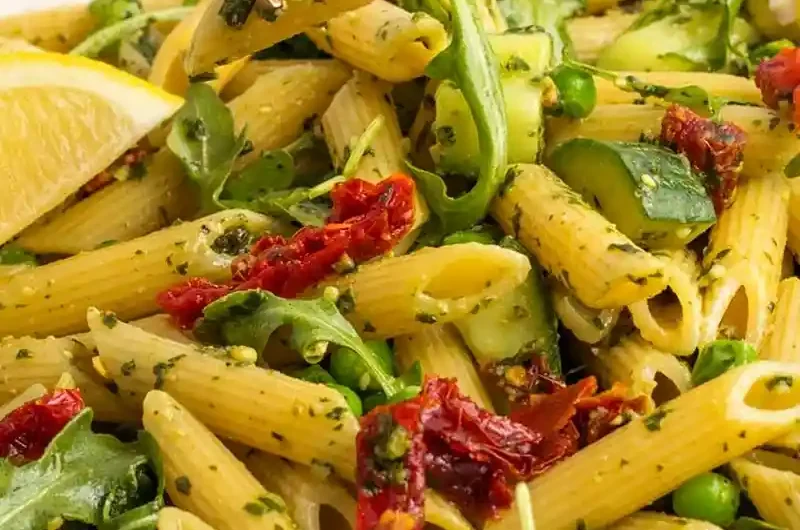
This vibrant vegan pesto pasta salad combines fresh vegetables and a creamy dairy-free sauce for a satisfying meal. It is a versatile dish that works perfectly as a side for summer gatherings or a nutritious weekday lunch.
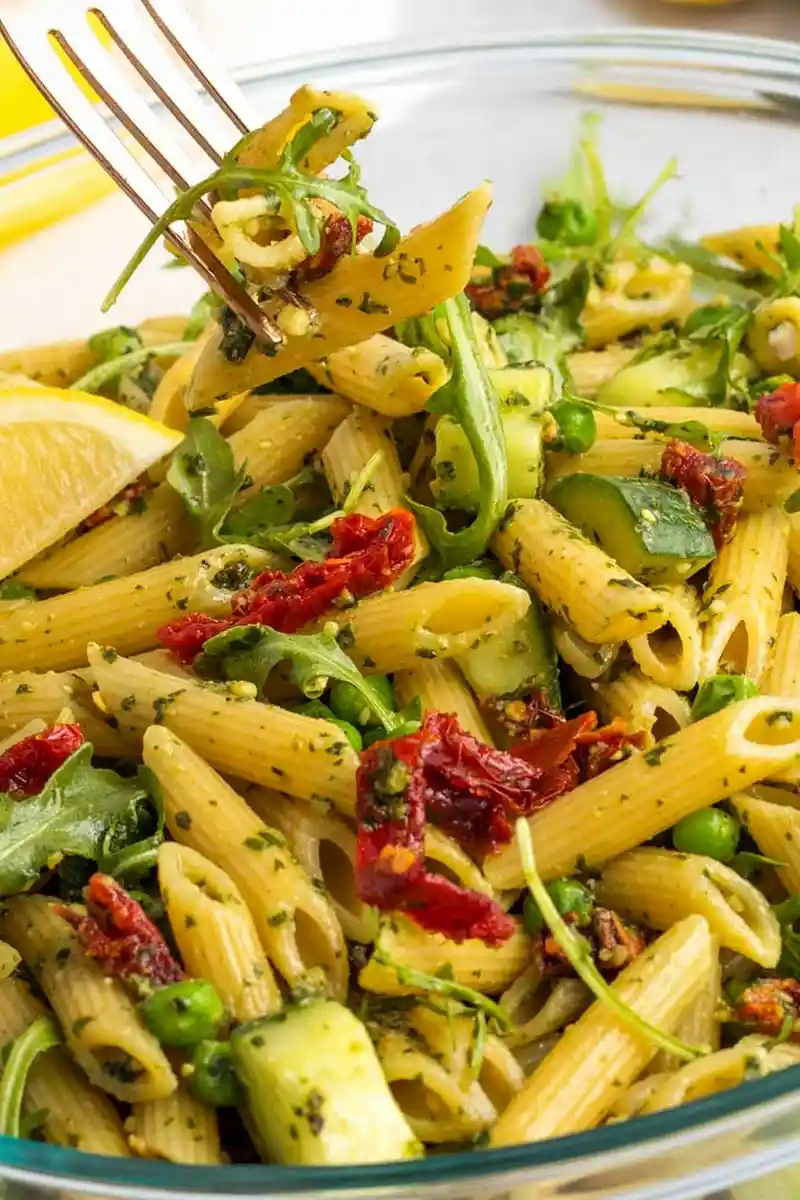
List of ingredients
- 16 ounces penne pasta (or rotini) – provides a sturdy base for the vegetables.
- ¾ cup vegan pesto – adds a rich, herbal flavor profile.
- 1 cup baby arugula – introduces a peppery taste and fresh greens.
- 1 cup peas – contributes a natural sweetness and pop of color.
- ½ cup sundried tomatoes – adds a concentrated, tangy element.
- 1 large cucumber (chopped) – provides a crisp and refreshing crunch.
step-by-step instructions
- Cook the pasta: Boil the penne or rotini according to the package instructions until al dente. Immediately rinse the pasta with cold water to stop the cooking process and cool it down.
- Combine ingredients: In a large mixing bowl, add the cooled and drained pasta. Toss in the vegan pesto, baby arugula, peas, sundried tomatoes, and chopped cucumber until everything is evenly coated.
- Serve and store: Serve the salad immediately while chilled. For leftovers, place the salad in an airtight container and store it in the refrigerator for up to 3 days.
Optimizing Your Pasta Choice
Using Ridged Pasta for Better Coating
Choosing shapes like penne or rotini is beneficial because the ridges and spirals trap the pesto more effectively. Smooth pasta allows the sauce to slide off, which can result in uneven flavor distribution. This ensures every single bite is infused with the herbal pesto sauce.
Achieving the Perfect Al Dente Texture
Cooking the pasta just until it is firm to the bite prevents it from becoming mushy when mixed with other ingredients. Overcooked pasta tends to break apart during the tossing process. Always test the pasta a minute before the package instructions suggest.
The Role of Cold Water Rinsing
Rinsing the pasta with cold water is essential for cold salads to remove excess surface starch. This prevents the pasta from sticking together in a large clump. It also lowers the temperature instantly so that the fresh arugula and cucumber do not wilt upon contact.
Vegan Pesto Selection and Tips
Finding High-Quality Dairy-Free Pesto
Look for vegan pestos that use nutritional yeast or cashew cream to replicate the savory depth of parmesan. Check the ingredient list for plant-based oils like olive oil to maintain a rich texture. High-quality versions prioritize fresh basil and garlic for a bright taste.
Creating a Nut-Free Version
If you need to avoid nuts, replace the pine nuts in your pesto with toasted sunflower seeds or pumpkin seeds. These seeds provide a similar earthy richness and crunch without the allergen risks. The overall flavor profile remains very close to traditional pesto.
Adjusting Sauce Consistency
If the pesto is too thick to coat the pasta evenly, stir in a tablespoon of water or extra olive oil. This thins the sauce enough to glide over the noodles and vegetables. Avoid adding too much liquid, as this can make the salad watery over time.
Vegetable Preparation Techniques
Preventing Cucumber Sogginess
To keep the salad crisp, slice the cucumber in half lengthwise and scrape out the watery seeds with a spoon before chopping. Removing the seed core prevents excess moisture from leaking into the salad. Keeping the skin on adds color and nutritional value.
Handling Sundried Tomatoes
Depending on whether you use dry-packed or oil-packed tomatoes, you may need to adjust the prep. Oil-packed tomatoes are softer and more flavorful, but you should pat them dry with a paper towel first. This prevents excess oil from separating from the pesto.
Preparing Peas for Texture
If using frozen peas, quickly blanch them in boiling water for one minute or microwave them briefly. Let them cool completely before adding them to the pasta. This ensures they are tender but still maintain a bright green color and a slight snap.
Timing the Addition of Arugula
Baby arugula is delicate and can wilt if it sits in the sauce for too long. For the freshest texture, toss the arugula in just before serving. If making the salad in advance, keep the greens in a separate container and mix them in at the last minute.
Customization and Ingredient Swaps
Alternative Leafy Greens
If you prefer a milder taste than arugula, baby spinach or baby kale are excellent substitutes. Spinach provides a smoother flavor, while kale adds more structure and heartiness. Ensure the greens are washed and dried thoroughly before adding them.
Fresh Tomato Alternatives
For a juicier profile, replace the sundried tomatoes with halved cherry or grape tomatoes. These provide a fresh burst of acidity that complements the rich pesto. They also add a vibrant red contrast to the green sauce.
Gluten-Free Pasta Options
This recipe works well with brown rice, chickpea, or corn-based gluten-free pastas. Be mindful that gluten-free varieties can go from undercooked to overcooked very quickly. Rinse them thoroughly as they often release more starch than wheat pasta.
Adding Plant-Based Proteins
To make this a more filling main course, add chickpeas, diced firm tofu, or vegan mozzarella pearls. Chickpeas add a nutty flavor and extra fiber, while tofu absorbs the pesto seasoning. These additions increase the protein content without altering the fresh taste.
Enhancing Flavor with Briny Add-ins
Sliced kalamata olives or capers can add a salty, briny dimension to the salad. These ingredients pair well with the basil and garlic in the pesto. Use them sparingly to avoid overpowering the other vegetables.
Serving and Presentation
Best Plating Methods for Crowds
Serve the pasta salad in a wide, shallow bowl rather than a deep one to showcase the colorful vegetables. Use large serving spoons to avoid bruising the arugula during plating. This presentation makes the dish look more appetizing for guests.
Ideal Main Course Pairings
This cold salad balances well with warm, savory dishes like grilled tofu skewers or vegan pizza. The acidity from the tomatoes and the freshness of the cucumber cut through heavier flavors. It also serves as a refreshing accompaniment to a BBQ feast.
Garnish Suggestions for Visual Appeal
Top the finished salad with a sprinkle of toasted pine nuts or a few whole fresh basil leaves. A light dusting of nutritional yeast or cracked black pepper can also enhance the look. These small additions provide a professional finish to the dish.
Storage and Longevity
Using Airtight Glass Containers
Store the salad in glass containers with locking lids to keep the ingredients fresh and prevent odors. Glass does not absorb smells and keeps the pasta from drying out as quickly as plastic. Ensure the container is fully sealed to maintain the chilled temperature.
Managing Moisture in the Fridge
Over time, vegetables like cucumbers can release water, making the salad less creamy. If you notice liquid pooling at the bottom, gently stir the salad to redistribute the pesto. You can also drain excess liquid before serving the next day.
Maximum Safe Storage Time
This salad is best consumed within 3 days of preparation. After this point, the arugula will wilt significantly, and the pasta may absorb too much sauce. For the best quality, consume the dish as soon as possible after mixing.
Reheating and Refreshing Advice
Avoiding Heat for Cold Salads
Do not reheat this pasta salad, as the heat will destroy the crispness of the cucumber and wilt the arugula. The pesto may also separate or lose its bright green color when heated. This dish is specifically designed to be enjoyed cold.
Refreshing Stored Pasta Salad
If the salad seems dry after a day in the fridge, stir in a teaspoon of lemon juice or a drizzle of olive oil. This wakes up the flavors and restores the creamy consistency of the pesto. Adding a fresh handful of arugula can also revitalize the dish.
Seasoning Adjustments After Storage
Cold temperatures can dull the perception of salt and acidity. Taste the salad before serving it from the fridge and add a pinch of salt or a squeeze of fresh lemon. This ensures the flavors remain bold and balanced.
Make-Ahead Preparation
Component-Based Prepping
Prepare the pasta, chop the cucumber, and measure the other vegetables a day in advance. Store each component in separate containers in the refrigerator. This allows you to assemble the salad in minutes while keeping the vegetables at peak crispness.
Early Assembly for Flavor Infusion
Mixing the pasta and pesto the night before allows the flavors to penetrate the noodles more deeply. However, wait to add the arugula and cucumber until the day of serving. This compromise ensures deep flavor without sacrificing the texture of the fresh produce.
Tips for Transporting to Events
When taking the salad to a potluck or picnic, transport it in an insulated cooler bag with ice packs. Keeping the salad at a constant cold temperature prevents the pesto from separating. Stir the salad gently just before serving to refresh the coating.
Common Troubleshooting
Solving a Bland Flavor Profile
If the salad tastes flat, the pesto may lack enough acidity. Stir in a small amount of lemon juice or apple cider vinegar to brighten the taste. This acidity cuts through the richness of the nuts and oil in the pesto.
Fixing Dry or Clumpy Pasta
If the pasta is too dry, it may have absorbed too much of the sauce during storage. Add a small amount of water or vegan cream to loosen the pesto. Mix gently to avoid breaking the pasta noodles.
Preventing Mushy Vegetables
Ensure all vegetables are completely cooled before mixing them with the pasta. Adding warm peas or pasta to the cucumber will cause the vegetables to soften too quickly. Always prioritize the cooling phase of the pasta preparation.
Frequently Asked Questions
Can I use a different type of pasta?
Yes, you can use farfalle (bow-tie) or fusilli. These shapes also have excellent surface areas for the pesto to cling to, ensuring a flavorful result.
How do I make this recipe oil-free?
To make it oil-free, use a vegan pesto made without oil or substitute the oil in your homemade pesto with a small amount of water or vegetable broth to reach the desired consistency.
Can I add more vegetables?
Absolutely. Small florets of steamed broccoli, cauliflower, or diced red bell peppers are great additions that complement the pesto flavor.
Is this recipe freezer-friendly?
No, this recipe is not suitable for freezing. The fresh cucumber, arugula, and peas would lose their texture and become watery upon thawing.
Print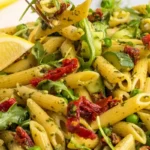
Refreshing Vegan Pesto Pasta Salad
- Total Time: 25 minutes
- Yield: 12 sides 1x
- Diet: Vegan
Description
Bright and flavorful vegan pesto pasta salad is the perfect summer side dish. Totally vegan and can be made gluten-free with GF pasta.
Ingredients
- 16 ounces penne pasta (or rotini)
- ¾ cup vegan pesto
- 1 cup baby arugula
- 1 cup peas
- ½ cup sundried tomatoes
- 1 large cucumber (chopped)
Instructions
- Step 1: Cook the pasta according to the package instructions. Rinse with cold water to cool.
- Step 2: In a large bowl, toss the cooled and drained pasta with pesto, arugula, peas, sundried tomatoes, and cucumber.
- Step 3: Serve cold. Store in the fridge for up to 3 days.
Notes
For a gluten-free version, use GF pasta. To make it oil-free, substitute the oil in the pesto with a little water. Arugula can be substituted with baby kale or baby spinach.
- Prep Time: 15 minutes
- Cook Time: 10 minutes
- Category: Salad, Side Dish
- Method: Boiling, Mixing
- Cuisine: Italian
Nutrition
- Serving Size: 1 side
- Calories: 225 kcal
- Sugar: 4 g
- Sodium: 160 mg
- Fat: 7 g
- Saturated Fat: 1 g
- Unsaturated Fat: 6 g
- Trans Fat: 0 g
- Carbohydrates: 34 g
- Fiber: 3 g
- Protein: 7 g
- Cholesterol: 1 mg
Keywords: vegan pesto pasta salad, dairy-free, summer side dish, Italian vegan pasta