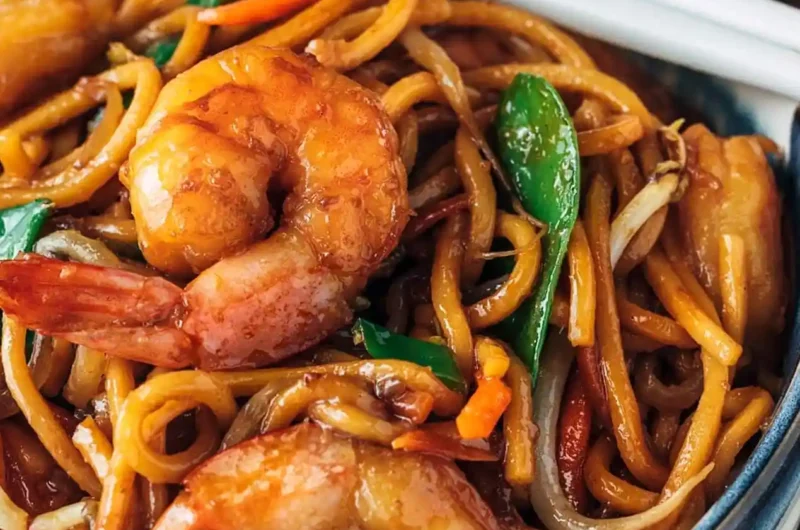
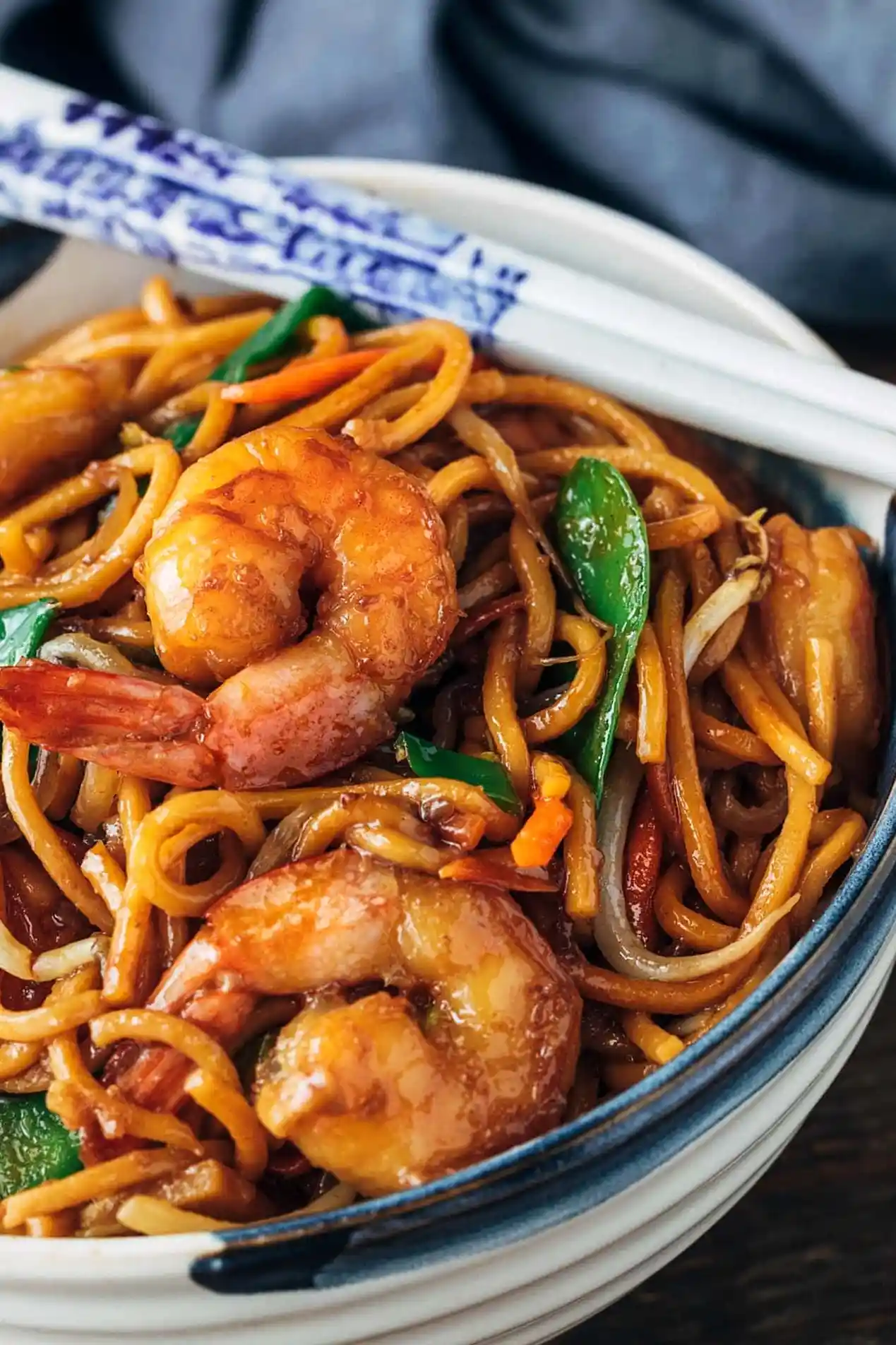
Create a savory and satisfying takeout-style meal in under 30 minutes. This recipe combines tender noodles, crisp vegetables, and succulent shrimp in a rich, umami-packed sauce.
List of ingredients
- 1 pound lo mein noodles (fresh, if possible) – provides the best authentic texture.
- 2 tablespoons light soy sauce – adds saltiness and depth.
- 1 tablespoon dark soy sauce – gives the noodles their characteristic deep brown color.
- 2 tablespoons vegetable broth – a clean alternative for depth of flavor.
- 2 tablespoons oyster sauce – adds a rich, savory thickness.
- 1 teaspoon granulated sugar – balances the salty flavors of the soy sauce.
- 1 teaspoon toasted sesame oil – provides a nutty aroma.
- Pinch ground white pepper – adds a subtle, sharp heat.
- 6 scallions – separated into white/light green and dark green parts.
- 3 tablespoons vegetable oil (divided) – for high-heat sautéing.
- 1 cup shredded carrots – for color and crunch.
- 1 cup snow peas (trimmed) – adds a fresh, snap-like texture.
- 8 ounce can water chestnuts (drained) – provides a unique crunch.
- 8 ounce can bamboo shoots (rinsed and drained) – adds traditional earthy notes.
- 1 pound raw shrimp (26/30) – peeled and deveined, tails on or off.
- 1 tablespoon minced garlic cloves – for aromatic flavor.
- 2 teaspoons grated fresh ginger – adds a zesty, warm punch.
- 2 cups mung bean sprouts – adds lightness and crispness.
- Extra soy sauce, chili oil, and/or rice vinegar (optional) – for customized serving.
step-by-step instructions
- Cook the Noodles: Boil lo mein noodles in a pot of lightly-salted water for 3-5 minutes until al dente. Drain them and rinse under cool water to stop the cooking process. Set aside.
- Prepare the Sauce: While the noodles are boiling, whisk together the light soy sauce, dark soy sauce, vegetable broth, oyster sauce, sugar, sesame oil, and white pepper in a small bowl. Set this mixture aside.
- Prep the Scallions: Cut the scallions in half. Thinly slice the white and light green parts. Cut the dark green parts into segments of about 2 inches. Set them aside separately.
- Sauté the Vegetables: Heat a wok or a large 12-inch skillet over high heat until very hot. Add 1 tablespoon of vegetable oil and sauté the carrots, snow peas, water chestnuts, and bamboo shoots for about 2 minutes until crisp-tender. Remove the vegetables from the pan and set aside.
- Cook the Shrimp: Heat another tablespoon of oil in the same pan. Sauté the shrimp until they are pink, translucent, and lightly brown on the edges, about 2-3 minutes. Remove the shrimp and set them aside.
- Aromatics Stage: Heat the final tablespoon of oil in the pan. Add the minced garlic, grated ginger, and the sliced white and light green scallion parts. Sauté for 1 minute until fragrant.
- Combine Ingredients: Add the previously sautéed vegetables, the cooked shrimp, the boiled noodles, and the bean sprouts to the pan. Toss everything together to combine.
- Final Toss: Pour the prepared sauce mixture around the sides of the pan and add the dark green scallion segments. Cook and toss for 1-2 minutes until everything is evenly coated.
- Season and Serve: Taste the dish and add more soy sauce or white pepper if desired. Serve hot with optional chili oil or rice vinegar.
Guide to Choosing the Best Noodles
Selecting Fresh Lo Mein Noodles
Fresh lo mein noodles are typically found in the refrigerated or freezer section of Asian grocery stores. They provide a softer, more authentic chew compared to dried versions. If using frozen noodles, defrost them overnight in the refrigerator to maintain their structure.
Using Dried Lo Mein Noodles
Dried noodles are a convenient alternative and can be found in most international aisles. They generally require a longer boiling time, usually around 5-6 minutes to reach an al dente texture. Ensure you do not overcook them, as they will soften further during the stir-fry process.
Substituting with Common Pasta
If authentic lo mein noodles are unavailable, long pasta shapes can work as a substitute. Thick spaghetti, linguine, or bucatini are the best options due to their similar thickness. While the texture differs slightly, they hold the sauce well and provide a similar eating experience.
Preventing Mushy Noodles
The key to perfect noodles is avoiding overcooking during the boiling phase. Rinse the noodles under cold water immediately after draining to remove excess starch and stop the cooking. This prevents them from sticking together or becoming too soft when tossed in the wok.
Vegetable Customization and Variations
Adding Bell Peppers and Onions
Sliced red or yellow bell peppers and yellow onions add vibrant color and sweetness to the dish. Sauté these along with the carrots and snow peas. They should be cut into thin strips to ensure they cook at the same rate as the other vegetables.
Incorporating Broccoli and Mushrooms
Broccoli florets and sliced shiitake or button mushrooms add a hearty, earthy dimension. Since broccoli takes longer to cook, you may want to blanch it briefly in the noodle water before draining. Mushrooms should be sautéed early in the process to brown properly.
Using Leafy Greens Like Napa Cabbage
Shredded Napa cabbage or bok choy provides a traditional texture and mild flavor. Add these greens toward the end of the vegetable sauté process. They wilt quickly and only need a minute of heat to reach the desired tenderness.
Customizing the Crunch Factor
While water chestnuts and bamboo shoots provide classic crunch, you can substitute them with sliced jicama or snap peas. Ensure any added vegetables are drained well. Excess moisture can cause the noodles to steam rather than fry, ruining the texture.
Mastering the Stir-Fry Sauce
The Role of Dark Soy Sauce
Dark soy sauce is essential for achieving the deep, caramelized brown color seen in restaurant lo mein. It is thicker and less salty than light soy sauce, providing more color than salt. If you cannot find it, you can use regular soy sauce, but the dish will be lighter in color.
Reducing Sodium Content
To lower the salt levels, substitute light soy sauce with a low-sodium version. You can also slightly increase the amount of ginger and garlic to maintain a bold flavor profile. Avoid reducing the oyster sauce too much, as it provides the necessary viscosity for the sauce to cling to the noodles.
Alternatives to Oyster Sauce
For a different flavor profile, mushroom stir-fry sauce is an excellent alternative to oyster sauce. It provides a similar savory depth and thick consistency. This keeps the sauce rich and glossy without altering the primary taste of the dish.
Adjusting the Sweetness
The teaspoon of sugar is meant to balance the saltiness of the soy and oyster sauces. If you prefer a more savory dish, you can reduce the sugar or omit it entirely. Conversely, a tiny bit more sugar can enhance the caramelized flavor of the dark soy sauce.
Cooking Equipment and Technique
Choosing Between a Wok and a Skillet
A wok is ideal because its sloping sides allow for easy tossing and efficient heat distribution. However, a large 12-inch non-stick skillet works perfectly well for home cooking. The most important factor is having a pan large enough to hold all ingredients without overcrowding.
Achieving High Heat
Stir-frying requires very high heat to sear ingredients quickly without releasing too much moisture. Preheat your pan until a drop of water sizzles and evaporates instantly. This prevents the vegetables from steaming, which would make them mushy instead of crisp-tender.
Managing Pan Crowding
Cooking the shrimp and vegetables in batches is critical to maintaining high temperatures. If the pan is too full, the temperature drops and the ingredients will boil in their own juices. Removing the protein and vegetables before combining everything ensures a professional sear.
Preparing Shrimp for the Pan
Pat the shrimp dry with paper towels before adding them to the oil. Excess moisture on the surface of the shrimp creates steam, which prevents them from browning. Cooking them quickly for 2-3 minutes ensures they remain juicy and tender.
Serving, Storage, and Reheating
Serving Suggestions for Extra Flavor
Offer a variety of condiments at the table to allow guests to customize their bowls. Chili oil provides a spicy kick, while a few drops of rice vinegar add a bright, tangy contrast. Extra light soy sauce can be used for those who prefer a saltier taste.
Refrigeration and Storage Times
Store leftover lo mein in an airtight container in the refrigerator for up to 3 to 4 days. Ensure the dish is cooled slightly before sealing the container to prevent excessive condensation. This helps the noodles maintain their integrity during storage.
Microwaving Leftovers Safely
When reheating in a microwave, it is best to remove the shrimp first. Heat the noodles and vegetables, then add the shrimp back in for the final 30-60 seconds. This prevents the shrimp from becoming rubbery or overcooked.
Adding Moisture During Reheating
Noodles tend to absorb sauce as they sit in the fridge, which can make them dry. Add a splash of water, vegetable broth, or a teaspoon of soy sauce before reheating. This restores the glossy texture and loosens the noodles.
Frequently Asked Questions
Why are my noodles mushy?
Mushy noodles are usually caused by overboiling them or overcrowding the pan during the final toss. Ensure you cook them to al dente and use high heat during the stir-fry stage to quickly evaporate excess moisture.
How can I make the sauce thicker?
If you prefer a thicker sauce, you can whisk a teaspoon of cornstarch into the sauce mixture before adding it to the pan. The heat will activate the starch, creating a glossy, thick glaze that clings tightly to the noodles.
Can I use frozen shrimp?
Yes, frozen shrimp can be used. Ensure they are fully thawed and patted completely dry before cooking. If you add frozen shrimp directly to the pan, they will release too much water and steam the other ingredients.
What is the best oil for stir-frying?
Use a neutral oil with a high smoke point, such as vegetable, canola, or peanut oil. Avoid using extra virgin olive oil or butter, as these can burn at the high temperatures required for a proper stir-fry.
Can I make this recipe without bean sprouts?
Yes, bean sprouts are optional. You can replace them with additional shredded cabbage or simply omit them. They add a light crunch, but the dish remains delicious without them.
Print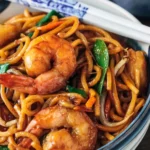
Restaurant Style Shrimp Lo Mein
- Total Time: 30 minutes
- Yield: 6 servings 1x
- Diet: General
Description
It’s easy to make Shrimp Lo Mein at home that tastes like it came from your favorite Chinese-American restaurant! Prep the vegetables ahead to make this recipe just as quick as takeout.
Ingredients
- 1 pound lo mein noodles (fresh, if possible)
- 2 tablespoons light soy sauce
- 1 tablespoon dark soy sauce
- 2 tablespoons vegetable broth
- 2 tablespoons oyster sauce
- 1 teaspoon granulated sugar
- 1 teaspoon toasted sesame oil
- pinch ground white pepper
- 6 scallions
- 3 tablespoons vegetable oil
- 1 cup shredded carrots
- 1 cup snow peas, trimmed
- 8 ounce can water chestnuts, drained
- 8 ounce can bamboo shoots, rinsed and drained
- 1 pound raw shrimp (26/30) peeled, deveined
- 1 tablespoon minced garlic cloves
- 2 teaspoons grated fresh ginger
- 2 cups mung bean sprouts
Instructions
- Make the Noodles: Boil lo mein noodles in a pot of lightly-salted water for 3-5 minutes, until al dente. Drain and rinse under cool water. Set aside.
- Make the Sauce: Whisk together light and dark soy sauces, vegetable broth, oyster sauce, sugar, sesame oil, and white pepper in a bowl. Set aside.
- Prep Scallions: Cut the scallions in half to divide them into the dark green and white/light green parts. Thinly-slice the white/light green parts. Cut the dark green parts into 1 or 2 segments of about 2 inches.
- Sauté Vegetables: Heat a wok or large (12-inch) skillet over high heat until very hot. Add 1 tablespoon vegetable oil and sauté carrots, snow peas, water chestnuts, and bamboo shoots for about 2 minutes, until crisp-tender. Remove from the pan and set aside.
- Sauté Shrimp: Heat another tablespoon of oil in the wok or pan and sauté shrimp until pink, translucent, and lightly brown on the edges, about 2-3 minutes. Remove from the pan and set aside.
- Cook Aromatics: Heat the remaining 1 tablespoon of oil in the wok or pan and add garlic, ginger, and the sliced white and light green scallions. Sauté for 1 minute.
- Combine Ingredients: Add sautéed vegetables, shrimp, noodles, and bean sprouts to the pan, tossing to combine.
- Finish Dish: Pour the sauce mixture around the sides of the pan and add the dark green scallion parts. Cook, tossing, for 1-2 minutes.
Notes
Serve hot or warm. Optional additions for serving include extra soy sauce, a drizzle of chili oil for heat, or a few drops of rice vinegar for a tangy finish.
- Prep Time: 15 minutes
- Cook Time: 15 minutes
- Category: Main Course
- Method: Stir-fry
- Cuisine: Asian
Nutrition
- Serving Size: 1 serving
- Calories: 711 kcal
- Sugar: 8 g
- Sodium: 2263 mg
- Fat: 15 g
- Saturated Fat: 9 g
- Unsaturated Fat: 6 g
- Trans Fat: 0 g
- Carbohydrates: 103 g
- Fiber: 7 g
- Protein: 39 g
- Cholesterol: 285 mg
Keywords: shrimp lo mein, chinese takeout, stir fry, asian noodles, dinner