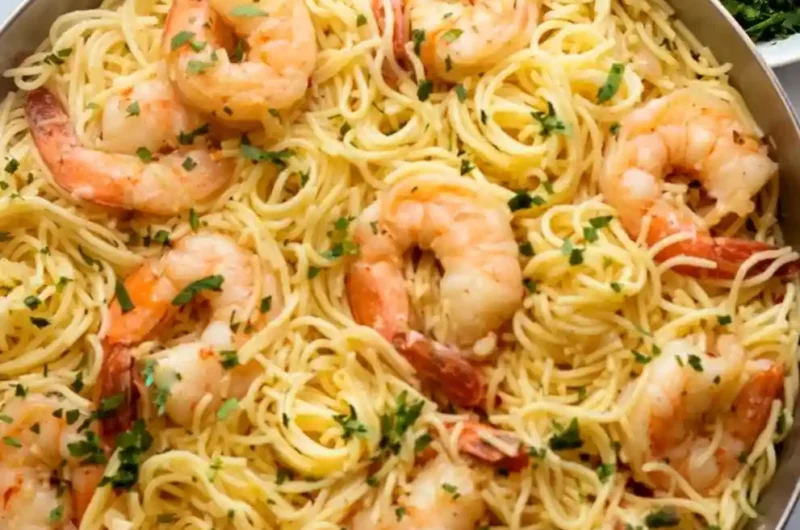
Enjoy a sophisticated garlic butter shrimp pasta that brings professional flavors into your home kitchen. This quick meal balances rich butter with bright citrus for a polished finish.
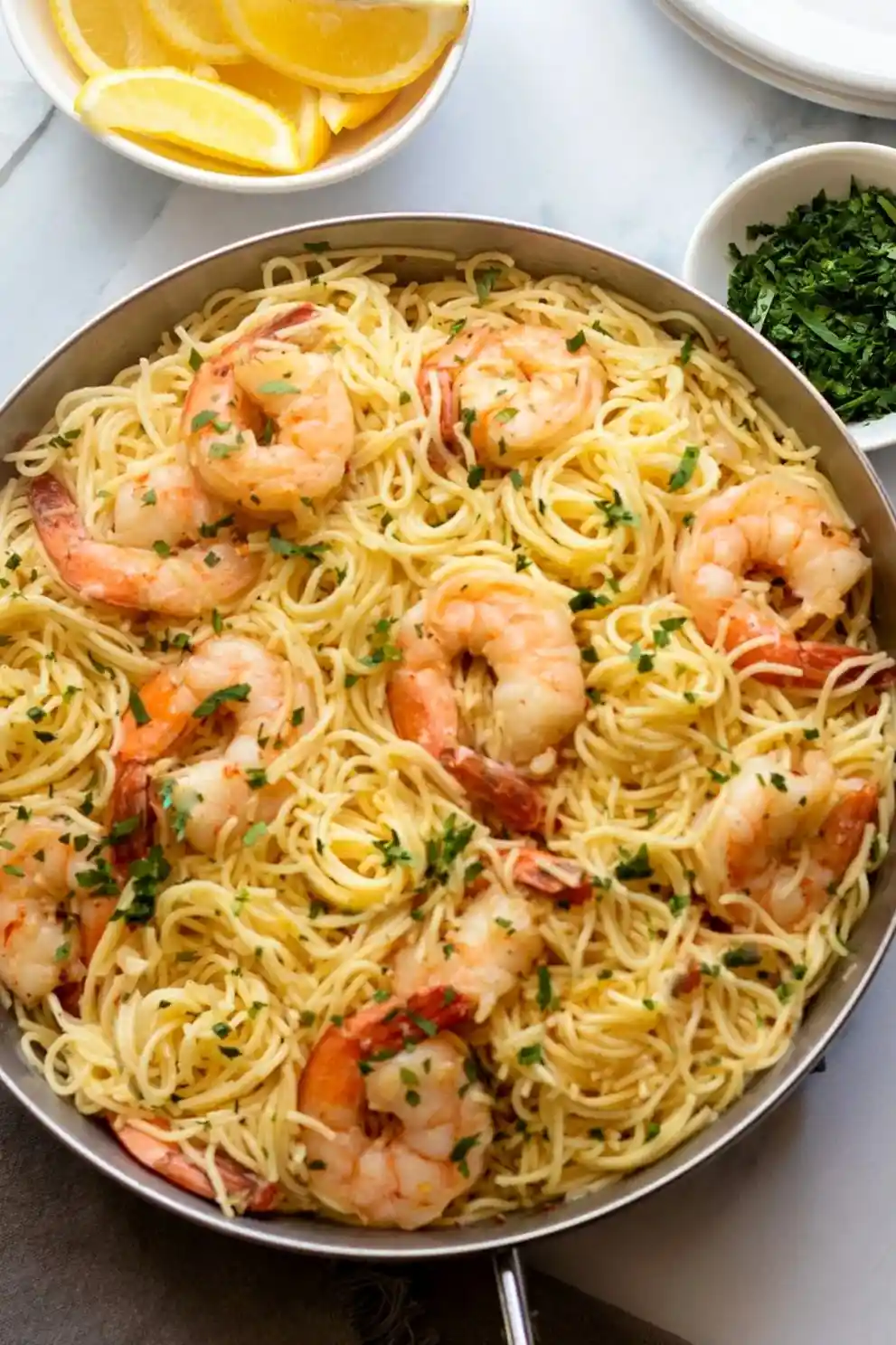
List of ingredients
- Salt – for seasoning the pasta water.
- 1 pound (16 oz) angel hair, spaghetti, linguine, or fettuccini – long pasta strands.
- 1/3 cup extra-virgin olive oil – for sautéing.
- 3/4 cup thinly sliced shallots – from 2 to 3 shallots for aromatic depth.
- 6 large cloves garlic, minced – provide the primary flavor base.
- 1/2 teaspoon red pepper flakes – for a subtle spicy kick.
- 1 1/4 pounds extra-large shrimp – peeled, deveined, and thawed.
- Freshly ground black pepper – to taste.
- 3/4 cup vegetable broth – provides acidity and depth without alcohol.
- 6 tablespoons unsalted butter – cut into 4 pieces for emulsification.
- 3 tablespoons lemon juice plus 1 teaspoon lemon zest – from 1 to 2 lemons.
- Lemon wedges – for final serving garnish.
- 1/4 cup finely chopped fresh parsley – for color and freshness.
step-by-step instructions
- Prepare the pasta: Bring a large pot of salted water to a boil. Add the pasta and cook until al dente according to the package directions. Reserve 1 cup of the cooking water before draining.
- Sauté aromatics: Heat the olive oil in a large skillet over medium heat. Add the sliced shallots and cook, stirring frequently, for approximately 1 minute.
- Cook the shrimp: Stir in the minced garlic, red pepper flakes, shrimp, and 1/4 teaspoon each of salt and pepper. Cook, stirring occasionally, until the shrimp are pink and just cooked through, which takes about 3 minutes. Transfer the shrimp to a plate to prevent overcooking.
- Reduce the liquid: Pour the vegetable broth into the skillet. Simmer the liquid until it has reduced by half, which usually takes 3 to 4 minutes.
- Create the emulsion: Stir in the butter pieces, lemon juice, lemon zest, 1/2 cup of the reserved pasta water, and 1/2 teaspoon of salt. Continue stirring until the butter is completely melted and the sauce is glossy.
- Combine and finish: Add the drained pasta to the skillet. Toss continuously until the pasta is warmed through, adding more reserved cooking water if the sauce appears too dry. Return the shrimp and any accumulated juices to the pan and toss again. Stir in the chopped parsley, adjust seasonings, and serve with lemon wedges.
Pasta Selection Guide
Using Angel Hair or Capellini
Angel hair is the most effective choice for this recipe because of its high surface-area-to-volume ratio. The very thin strands absorb the butter sauce rapidly, ensuring every bite is coated. This pasta cooks quickly, making it ideal for fast weeknight meals.
Choosing Linguine or Spaghetti
Linguine and spaghetti provide a more substantial bite and a traditional texture. These pastas are better if you prefer a distinct contrast between the noodle and the sauce. Ensure you cook them exactly to al dente to prevent them from becoming mushy during the final tossing phase.
Opting for Fettuccine
Fettuccine is a wider ribbon pasta that carries a heavier amount of sauce. It is a great choice if you prefer a richer feel to the dish. Because it is thicker, it may require a bit more of the reserved pasta water to ensure the sauce distributes evenly.
Shrimp Preparation and Handling
Thawing Frozen Shrimp Properly
For the best texture, thaw frozen shrimp in the refrigerator overnight. If you are in a hurry, place them in a sealed bag and submerge them in cold water for 20 minutes. Avoid using warm water, as this can damage the proteins and lead to a rubbery texture.
Removing Excess Moisture
Pat the shrimp dry with paper towels before adding them to the skillet. Excess water creates steam, which prevents the shrimp from searing properly. Dry shrimp develop a better golden color and absorb the garlic oil more effectively.
Preventing Rubbery Shrimp
Shrimp cook extremely fast and can overcook in seconds. Remove them from the pan as soon as they turn opaque and form a C-shape. If they curl into a tight O-shape, they are likely overcooked and will lose their tenderness.
Mastering the Scampi Sauce
The Role of Pasta Water
Reserved pasta water contains starch that acts as a binding agent. When stirred into the butter and broth, it creates an emulsion that prevents the sauce from separating. This results in a silky glaze that clings to the noodles rather than pooling at the bottom of the bowl.
Balancing Acid and Fat
The combination of butter and olive oil provides richness, while the lemon juice and vegetable broth provide acidity. This balance is what makes scampi taste professional. If the sauce feels too heavy, add an extra squeeze of fresh lemon juice right before serving.
Managing Garlic Heat
Garlic burns quickly at high temperatures, which creates a bitter taste. By adding the garlic after the shallots have already softened, you protect the garlic from direct, intense heat. Keep the skillet at a medium temperature to ensure the garlic mellows without browning too deeply.
Serving and Pairing Recommendations
Fresh Arugula Salads
A peppery arugula salad with a light lemon vinaigrette complements the richness of the butter sauce. The bitterness of the greens cuts through the fat of the dish. Adding shaved Parmigiano-Reggiano to the salad adds a salty depth that mirrors the pasta.
Serving with Crusty Bread
A toasted baguette or ciabatta is essential for soaking up the remaining garlic sauce. Brush the bread with olive oil and toast it in the oven until golden. This ensures no part of the flavorful emulsion goes to waste.
Adding Steamed Vegetables
Steamed asparagus or sautéed spinach are excellent sides that add nutritional balance. These vegetables pair well with the lemon and garlic profiles of the main dish. Toss them in a small amount of lemon juice to keep the flavors cohesive.
Storage and Reheating Instructions
Refrigeration Guidelines
Store leftover shrimp scampi in an airtight container in the refrigerator for up to two days. Keep the pasta and shrimp together to maintain moisture. Be aware that the pasta will absorb much of the sauce as it sits.
Best Reheating Methods
Avoid the microwave if possible, as it can make the shrimp rubbery. Instead, reheat the pasta in a skillet over medium-low heat. Add a tablespoon of water or vegetable broth to loosen the sauce and restore the creamy emulsion.
Freezing Considerations
This dish is not recommended for freezing due to the emulsion of butter and the delicate nature of the shrimp. Freezing and thawing often results in a broken sauce and a grainy texture in the seafood. It is best enjoyed fresh or from the refrigerator.
Troubleshooting and Common Questions
What if the sauce is too thin?
If the sauce is too watery, simmer it for an additional minute before adding the pasta. You can also stir in a small knob of cold butter at the very end to thicken the texture. This technique, known as mounting with butter, adds shine and body.
Can I use a different aromatic instead of shallots?
If shallots are unavailable, you can substitute them with finely diced yellow or red onion. While onions are slightly stronger, they provide a similar aromatic base. Use about half the amount of onion compared to the amount of shallots required.
How do I stop the garlic from burning?
Ensure the oil is shimmering but not smoking before adding aromatics. If the pan seems too hot, remove it from the heat for 30 seconds before stirring in the garlic. Constant stirring also helps distribute heat evenly across the garlic pieces.
Which type of butter is best?
Unsalted butter is preferred so you can control the salt level of the final dish. If you only have salted butter, reduce the amount of added salt in the sauce by half. High-quality European-style butter provides a richer flavor due to higher fat content.
What is the best substitute for the broth?
If you do not have vegetable broth, a mixture of water and a pinch of salt or a splash of white grape juice can work. The goal is to provide a savory liquid that reduces to a syrup. Avoid using heavy creams, as they change the fundamental nature of the scampi.
Print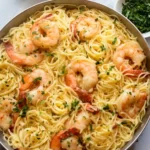
Restaurant-Style Shrimp Scampi with Pasta
- Total Time: 45 minutes
- Yield: 4 servings 1x
- Diet: Seafood
Description
Fast and unfussy, this shrimp scampi with pasta recipe delivers a big flavor with minimal effort.
Ingredients
- Salt
- 1 pound (16 oz) angel hair, spaghetti, linguine, or fettuccini
- ⅓ cup extra-virgin olive oil
- ¾ cup thinly sliced shallots, from 2 to 3 shallots
- 6 large cloves garlic, minced
- ½ teaspoon red pepper flakes
- 1¼ pounds extra-large shrimp, peeled and deveined, thawed if frozen
- Freshly ground black pepper
- ¾ cup vegetable broth
- 6 tablespoons unsalted butter, cut into 4 pieces
- 3 tablespoons lemon juice plus 1 teaspoon lemon zest, from 1 to 2 lemons, plus wedges for serving
- ¼ cup finely chopped fresh parsley
Instructions
- Step: Bring a large pot of salted water to a boil. Add the pasta and cook to al dente according to the package instructions. Reserve 1 cup of the cooking water, then drain.
- Step: Meanwhile, heat the oil in a large skillet over medium heat. Add the shallots and cook, stirring frequently, for about 1 minute. Add the garlic, red pepper flakes, shrimp, and ¼ teaspoon each salt and pepper. Cook, stirring occasionally, until the shrimp are pink and just cooked through, about 3 minutes. Transfer the shrimp to a plate.
- Step: Add the vegetable broth to the skillet and simmer until reduced by half, 3 to 4 minutes.
- Step: Add the butter, lemon juice and lemon zest, ½ cup of the reserved cooking water, and ½ teaspoon salt; stir until the butter is melted.
- Step: Add the drained pasta and continue to cook, tossing, until the pasta is warmed through, adding more of the reserved cooking water as needed if the pasta seems dry. Return the shrimp and any juices from the plate to the skillet and toss with the pasta. Stir in the parsley, then taste and adjust seasoning, if necessary. Serve with lemon wedges.
Notes
Any long pasta works, but angel hair or capellini are excellent for soaking up the sauce. Pair this dish with an arugula salad for a complete meal.
- Prep Time: 25 minutes
- Cook Time: 20 minutes
- Category: Main Course
- Method: Sautéing
- Cuisine: Italian
Nutrition
- Serving Size: 1 serving
- Calories: 925 kcal
- Sugar: 6 g
- Sodium: 187 mg
- Fat: 38 g
- Saturated Fat: 14 g
- Unsaturated Fat: 24 g
- Trans Fat: 0 g
- Carbohydrates: 94 g
- Fiber: 5 g
- Protein: 45 g
- Cholesterol: 274 mg
Keywords: shrimp scampi, seafood pasta, garlic shrimp, Italian dinner